SHT40 Temperature and Humidity
A beginner lab that reads air temperature and humidity from the tiny SHT40 I2C sensor and shows both numbers changing live.
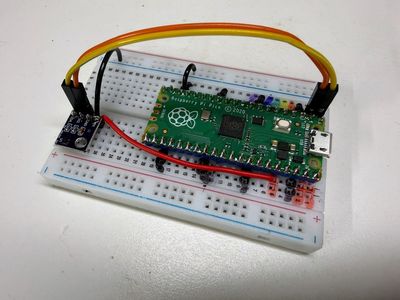
SHT40 Temperature and Humidity
Key Features
- Wire an I2C sensor to a Raspberry Pi Pico.
- Use an I2C scanner to prove your wiring works before you write code.
- Read temperature and humidity from an SHT40.
- Explain what a checksum is and why sensors send one.
- Log data as CSV and draw a live graph in Thonny.
Key Benefits
- Free, open lessons. The Learning MicroPython textbook has the kit page, wiring, and MicroPython code.
- Classroom friendly. Built on a solderless breadboard or no-solder connectors.
- Wireless-ready. The Pico W option adds Wi-Fi for time sync and web projects.
- Real-world data. Students read sensors and turn measurements into decisions.
- Budget. About $10 (sensor about $1.41 on eBay; Pico $4, breadboard $2, wires $1, USB cable $2).
Parts
| Part (price) | Role |
| Raspberry Pi Pico ($4) | Microcontroller |
| BME280 | Sensor |
| DHT11 | Sensor |
| DHT22 | Sensor |
| DS18B20 | Sensor |
| SHT40 | Sensor |
| WS2812B NeoPixels | LEDs |
| 830-Point Breadboard ($1.10) | Breadboard |
| Micro-USB Data Cable ($2.50) | Power and programming cable |
Microcontroller listed first. Prices shown only where known; see the source book for quantities, wiring, and current prices.
About this kit: From the Learning MicroPython collection.
Source: Learning MicroPython
Source: Learning MicroPython