About This Book
Welcome from Scout
Welcome!
 Hi, I'm Scout! This book is your field guide for turning an untested business idea into a real, evidence-backed plan in just eight hours. We'll skip the forty-page business plan and go straight to the people who matter most — your future customers. Between sessions you'll head out on Field Discovery Windows to talk to real people and run small, cheap tests. Ready? Let's find out for real!
Why This Intelligent Textbook
More people are trying to start a business than ever before, but many new ventures close before they ever find customers who will pay. One of the most common reasons is not a lack of effort. It is spending months and savings building something before checking whether anyone wants it.
In the United States:
- Americans filed a record 5.67 million applications to start new businesses in 20251
- Roughly 1 in 5 new business establishments closes within its first year, about half are gone within five years, and only about 1 in 3 is still open after ten years2
- The country has 36.2 million small businesses employing 45.9% of private-sector workers, and 29.8 million of them have no employees other than the owner3
- 18.5% of U.S. adults are starting or running a new business, but only 5.5% own an established one, and 55% of founders rely on personal savings to get started (2025 survey)4
- The National Science Foundation has trained more than 2,500 research teams in customer discovery through its I-Corps program, and nearly 1,400 of those teams have gone on to launch startups5
Around the world and in the research:
- Fear of failure keeps roughly 2 in 5 adults worldwide from starting a business, according to a 2025 survey of more than 160,000 people in 53 economies6
- In an analysis of 431 venture-backed startups that shut down since 2023, 43% cited poor product-market fit, and 70% ran out of capital — usually the final blow rather than the root cause7
- In a randomized controlled trial with 116 startups, founders trained to treat their business ideas as hypotheses to test performed better and were more likely to pivot than founders who were not8
Behind each of these numbers is someone like the founders in your cohort: a person with a real idea, limited savings, and no time to spend a year building the wrong thing. This book exists to help them find out quickly, and cheaply, whether their idea deserves that year.
This book takes a different approach from a traditional business-plan course. It is built on a learning graph of 300 interconnected concepts organized into 14 categories, and concepts are introduced only after the ideas they depend on have been covered. Instead of a multi-year plan, founders complete all 11 blocks of the CO.STARTERS Canvas, interview real customers during Field Discovery Windows between sessions, and run lean validation tests — service before product, manual before automated, pre-selling before building — the same test-your-hypotheses discipline the research above rewards. Interactive MicroSims let founders practice each method in the browser before trying it on real customers. The entire textbook is written in plain language for people with no business background, and it is open source and free — no paywalls, no access codes, no expensive annual editions.
How to Use This Book
The Eight-Hour Entrepreneur is the companion textbook for a four-week virtual learning lab: four 2-hour live sessions separated by 7-day Field Discovery Windows. You can read it alongside a live cohort or work through it on your own. Each chapter builds on the ones before it, so reading in order is recommended. The book includes:
- 17 Chapters that walk through all 11 blocks of the CO.STARTERS Canvas — from customer discovery and problem definition, through alternatives, value propositions, and lean validation tests, to messaging, distribution, pricing, cost planning, a 30-day launch plan, and a 2-minute pitch
- 20 Interactive MicroSims — browser-based tools such as a break-even calculator, a competitive landscape map, and a two-minute pitch timer that let you practice each method before you use it with real customers. Some are still being built; the colored dot beside each MicroSim in the navigation shows its current status.
- Scout the Fox, a learning guide who shows up at key moments with tips, warnings about common founder mistakes, and a push to go test your assumptions
- A Learning Graph of 300 concepts showing how every idea in the course depends on the ones before it
- Search available from any page using the search bar
The Learning Graph visualizes how concepts connect across chapters. If you want to jump to a specific topic or check what you need to know first, start there. The Course Description lists the full learning outcomes.
About the Author
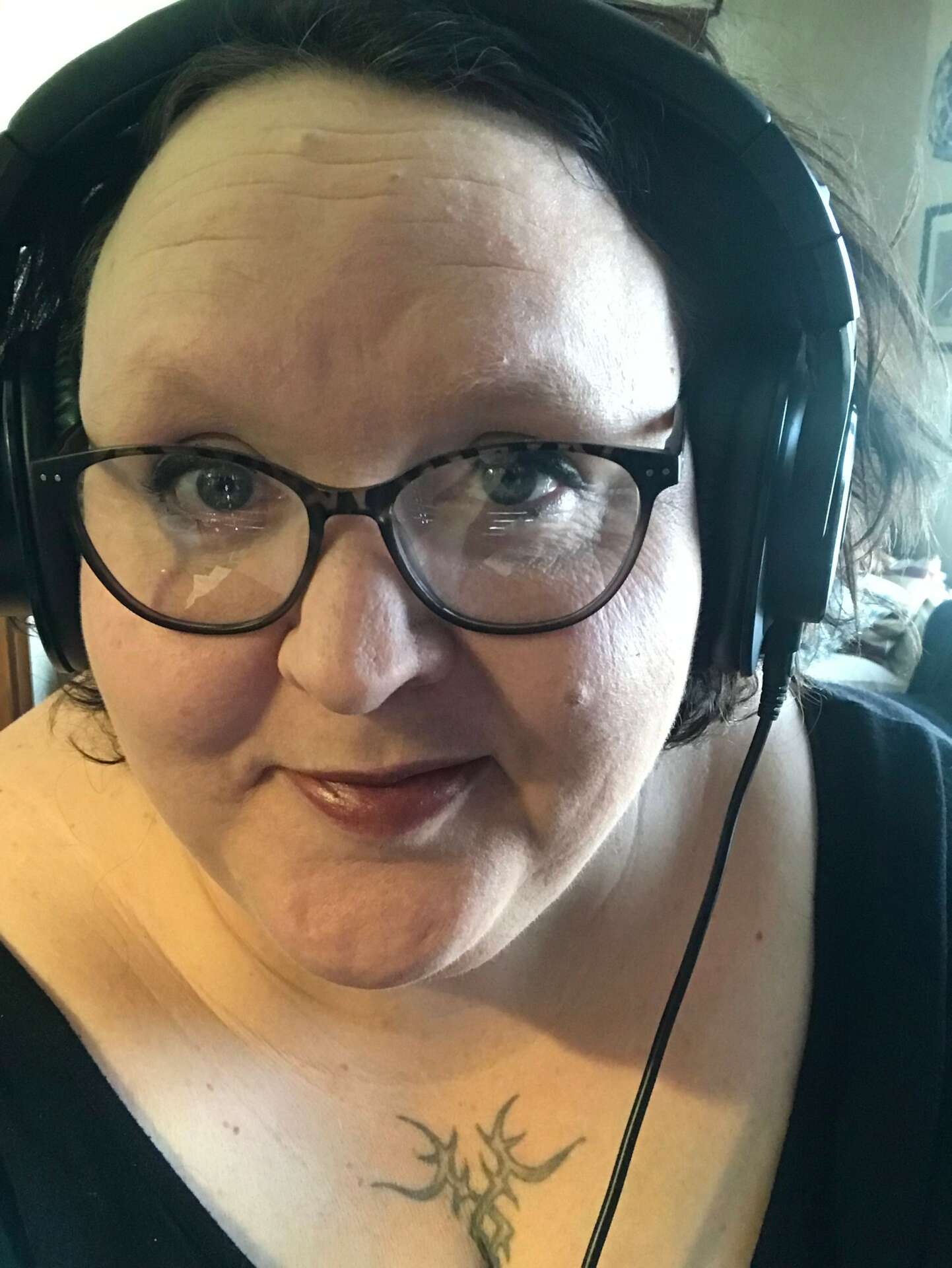
Valerie Lockhart runs MTN.org and has spent the last 30 years providing executive management and operational functions for nonprofits, small businesses, and corporations, including legal compliance and human resources. MTN.org also hosts the online community hub that keeps each cohort of this course connected between live sessions.
Valerie draws on more than 25 years of experience in photography, videography, web development, search engine optimization (SEO), content creation and management, graphic design, and writing and editing to produce engaging training and educational resources for people who want to create with technology. Her expertise spans information and communication technology (ICT), media creation, and the intersection of art and technology.
She is passionate about access, individual rights, and freedom of information and expression, and she works to foster a culture of inclusion, collaboration, and innovation in the technology industry. That commitment is why this book is open and free: every founder who arrives with an idea should have the tools to test it, whatever their background or budget.
Selected Experience
- Runs MTN.org, which hosts the community hub for this course's cohorts
- 30 years of executive management and operations for nonprofits, small businesses, and corporations
- Operational leadership in legal compliance and human resources
- More than 25 years in photography, videography, web development, SEO, and graphic design
- Content creation, management, writing, and editing for training and educational resources
- Background in ICT, media creation, and art and technology
Connect with Valerie on LinkedIn.
How to Cite This Book
If you reference this textbook in academic work, program proposals, workshop materials, or other publications, please use one of the following citation formats.
APA (7th edition)
Lockhart, V. (2026). The Eight-Hour Entrepreneur. https://dmccreary.github.io/eight-hour-entrepreneur/
Chicago (17th edition)
Lockhart, Valerie. 2026. The Eight-Hour Entrepreneur. https://dmccreary.github.io/eight-hour-entrepreneur/.
MLA (9th edition)
Lockhart, Valerie. The Eight-Hour Entrepreneur. 2026, dmccreary.github.io/eight-hour-entrepreneur/.
BibTeX
@book{lockhart2026eighthour,
  title     = {The Eight-Hour Entrepreneur},
  author    = {Lockhart, Valerie},
  year      = {2026},
  url       = {https://dmccreary.github.io/eight-hour-entrepreneur/},
  note      = {Interactive intelligent textbook}
}
To cite a specific chapter, append the chapter number and title — for example:
Lockhart, V. (2026). Chapter 1: Entrepreneurship, Lean Thinking & the Idea Trap. In The Eight-Hour Entrepreneur. https://dmccreary.github.io/eight-hour-entrepreneur/chapters/01-entrepreneurship-lean-thinking/
License
This work is released under the Creative Commons Attribution-NonCommercial-ShareAlike 4.0 International License (CC BY-NC-SA 4.0). You are free to share and adapt the material for non-commercial purposes as long as you give appropriate credit and share your adaptations under the same license.
References
-
U.S. Census Bureau. (2026). Business Formation Statistics (monthly business applications, national total; the 2025 annual figure is the sum of the twelve monthly releases). https://www.census.gov/econ/bfs/index.html ↩
-
U.S. Bureau of Labor Statistics. (2025). Business Employment Dynamics — Table 7: Survival of private sector establishments by opening year (data through March 2025). https://www.bls.gov/bdm/us_age_naics_00_table7.txt ↩
-
U.S. Small Business Administration, Office of Advocacy. (2026). 2026 Small Business Profile: United States. https://advocacy.sba.gov/wp-content/uploads/2026/09/United_States.pdf ↩
-
Babson College. (2026). The GEM U.S. Report Asks: What Happens After a Startup Is Launched? https://entrepreneurship.babson.edu/gem-usa-2026/ ↩
-
U.S. National Science Foundation. (n.d.). Impact Data — NSF I-Corps. https://www.nsf.gov/funding/initiatives/i-corps/impact-data ↩
-
Global Entrepreneurship Monitor. (2026). GEM 2025/2026 Global Report: From Uncertainty to Opportunity. https://www.gemconsortium.org/reports/latest-global-report ↩
-
CB Insights. (2026). The top 9 reasons startups fail. https://www.cbinsights.com/research/report/startup-failure-reasons-top/ ↩
-
Camuffo, A., Cordova, A., Gambardella, A., & Spina, C. (2020). A scientific approach to entrepreneurial decision making: Evidence from a randomized control trial. Management Science, 66(2). https://doi.org/10.1287/mnsc.2018.3249 ↩