About This Book
Welcome from Psy
 Hi there — I'm Psy, the owl who will be flying alongside you through this
book. Psychology is the science of us: why we think the way we think, why
we feel the way we feel, and why we behave the way we behave. Some of what
we cover will feel personal, some will feel surprising, and a lot of it
will challenge what you thought you already knew about the human mind.
That is exactly the point. Let's think about that!
Hi there — I'm Psy, the owl who will be flying alongside you through this
book. Psychology is the science of us: why we think the way we think, why
we feel the way we feel, and why we behave the way we behave. Some of what
we cover will feel personal, some will feel surprising, and a lot of it
will challenge what you thought you already knew about the human mind.
That is exactly the point. Let's think about that!
Why This Intelligent Textbook
Mental health is now one of the defining public health challenges of this generation, and psychology is the discipline best equipped to help students make sense of it. Yet most high school psychology courses still rely on textbooks that were structured for the 1990s — long chapters of definitions to memorize, static figures, and almost no way to experiment with the ideas. This book exists because AP Psychology students deserve better tools for understanding themselves, their peers, and the science behind both.
In the United States (2024–2025):
- The College Board reports that more than 320,000 students sat for the AP Psychology exam in 2023, making it one of the largest AP programs in the country1
- The National Institute of Mental Health estimates that roughly 1 in 5 U.S. adults — about 59 million people — lives with a mental illness in any given year2
- The CDC's Youth Risk Behavior Survey found that 42% of high school students experienced persistent feelings of sadness or hopelessness in the previous year, and 22% had seriously considered attempting suicide3
- The U.S. Bureau of Labor Statistics projects about 7% growth in psychologist employment from 2023 to 2033, faster than the average for all occupations4
Worldwide:
- The World Health Organization estimates that nearly 1 billion people globally were living with a mental disorder in 2019, including 1 in 7 adolescents aged 10–195
- Depression is now a leading cause of disability worldwide, and an estimated 727,000 people die by suicide each year — making it a top cause of death among young people aged 15–296
These numbers represent your classmates, your family members, and — for many readers — yourself. Psychology gives students the vocabulary, the research literacy, and the evidence-based perspective to take those numbers seriously without being overwhelmed by them.
This book takes a fundamentally different approach to teaching the subject. It is built on a learning graph of nearly 400 interconnected concepts organized into the six content domains of the official College Board AP Psychology Course and Exam Description (Effective Fall 2024). Concepts are introduced in the order their prerequisites are established, so understanding builds naturally from chapter to chapter rather than jumping between disconnected topics. Throughout the book you will find interactive MicroSims — browser-based simulations that let students adjust neuron firing thresholds, watch reinforcement schedules shape behavior in real time, and visualize how a standard deviation actually changes a distribution. The entire textbook is open source and free — no paywalls, no access codes, no annual edition fees.
How to Use This Book
This textbook is designed for self-paced study aligned with the AP Psychology Course and Exam Description. Each chapter builds on previous material, so reading in order is recommended. The book includes:
- 16 Chapters covering research methods, biological bases of behavior, sensation and perception, cognition and memory, lifespan development, learning, social psychology, personality and motivation, health psychology, psychological disorders, and treatment
- Interactive MicroSims embedded in chapters — browser-based simulations you can manipulate to explore concepts such as neuron signaling, conditioning, the scientific method, and statistical variation
- Quizzes at the end of each chapter to test understanding
- Glossary with definitions for every key concept
- Learning Graph visualizing how concepts depend on one another across the entire course
- Search available from any page using the search bar in the header
The Learning Graph visualizes how concepts connect across chapters. If you want to explore non-linearly or check the prerequisites for a specific topic, start there.
About the Author
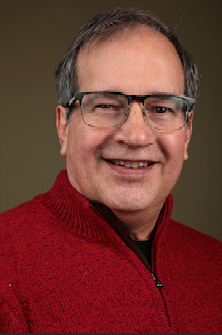
Dan McCreary is a semi-retired AI researcher, solution architect, and educator who has spent more than three decades helping Fortune 100 organizations reason over massive datasets. At Optum he founded the Generative AI Center of Excellence and led the team that built one of the world's largest healthcare knowledge graphs — spanning over 25 billion vertices — to unify member, provider, and patient insights. Dan's deep background in knowledge representation and systems thinking underpins the precise learning graphs and intelligent textbook workflows used throughout this course.
He is the co-author of Making Sense of NoSQL (Manning Publications), the founding chair of the NoSQL Now! conference, and a frequent keynote speaker on semantic search, ontology strategy, and AI hardware. Beyond industry, Dan has mentored students as a STEM volunteer since 2014 and now applies the same rigor to building open educational resources. You can visit the Intelligent Textbooks Case Studies to see over 87 textbooks that Dan has created or co-created with other authors.
Selected Credentials
- B.A. in Physics and Computer Science from Carleton College
- M.S.E.E. from the University of Minnesota
- MBA coursework at the University of St. Thomas
- Patent holder in semantic search and ontology management techniques
- Advocate for large-scale Enterprise Knowledge Graph adoption across healthcare and education
- Long-time promoter of accessible, low-cost AI-powered learning experiences
How to Cite This Book
If you reference this textbook in academic work, curriculum proposals, lesson plans, or other publications, please use one of the following citation formats.
APA (7th edition)
McCreary, D. (2026). Psychology. https://dmccreary.github.io/psychology/
Chicago (17th edition)
McCreary, Dan. 2026. Psychology. https://dmccreary.github.io/psychology/.
MLA (9th edition)
McCreary, Dan. Psychology. 2026, dmccreary.github.io/psychology/.
BibTeX
@book{mccreary2026psychology,
  title     = {Psychology},
  author    = {McCreary, Dan},
  year      = {2026},
  url       = {https://dmccreary.github.io/psychology/},
  note      = {Interactive intelligent textbook for AP Psychology}
}
To cite a specific chapter, append the chapter number and title — for example:
McCreary, D. (2026). Chapter 1: Foundations & Research Methods. In Psychology. https://dmccreary.github.io/psychology/chapters/01-foundations-research-methods/
License
This work is released under the Creative Commons Attribution-NonCommercial-ShareAlike 4.0 International License (CC BY-NC-SA 4.0). You are free to share and adapt the material for non-commercial purposes as long as you give appropriate credit and share your adaptations under the same license.
References
-
College Board. (2023). AP Program Results: Class of 2023 — Score Distributions. https://reports.collegeboard.org/ap-program-results ↩
-
National Institute of Mental Health. (2024). Mental Illness. U.S. Department of Health and Human Services. https://www.nimh.nih.gov/health/statistics/mental-illness ↩
-
Centers for Disease Control and Prevention. (2023). Youth Risk Behavior Survey: Data Summary & Trends Report, 2011–2021. https://www.cdc.gov/yrbs/ ↩
-
U.S. Bureau of Labor Statistics. (2024). Occupational Outlook Handbook: Psychologists. https://www.bls.gov/ooh/life-physical-and-social-science/psychologists.htm ↩
-
World Health Organization. (2022). Mental Health: Strengthening Our Response. https://www.who.int/news-room/fact-sheets/detail/mental-health-strengthening-our-response ↩
-
World Health Organization. (2023). Suicide. https://www.who.int/news-room/fact-sheets/detail/suicide ↩