Ecology: Systems Thinking for a Changing Planet
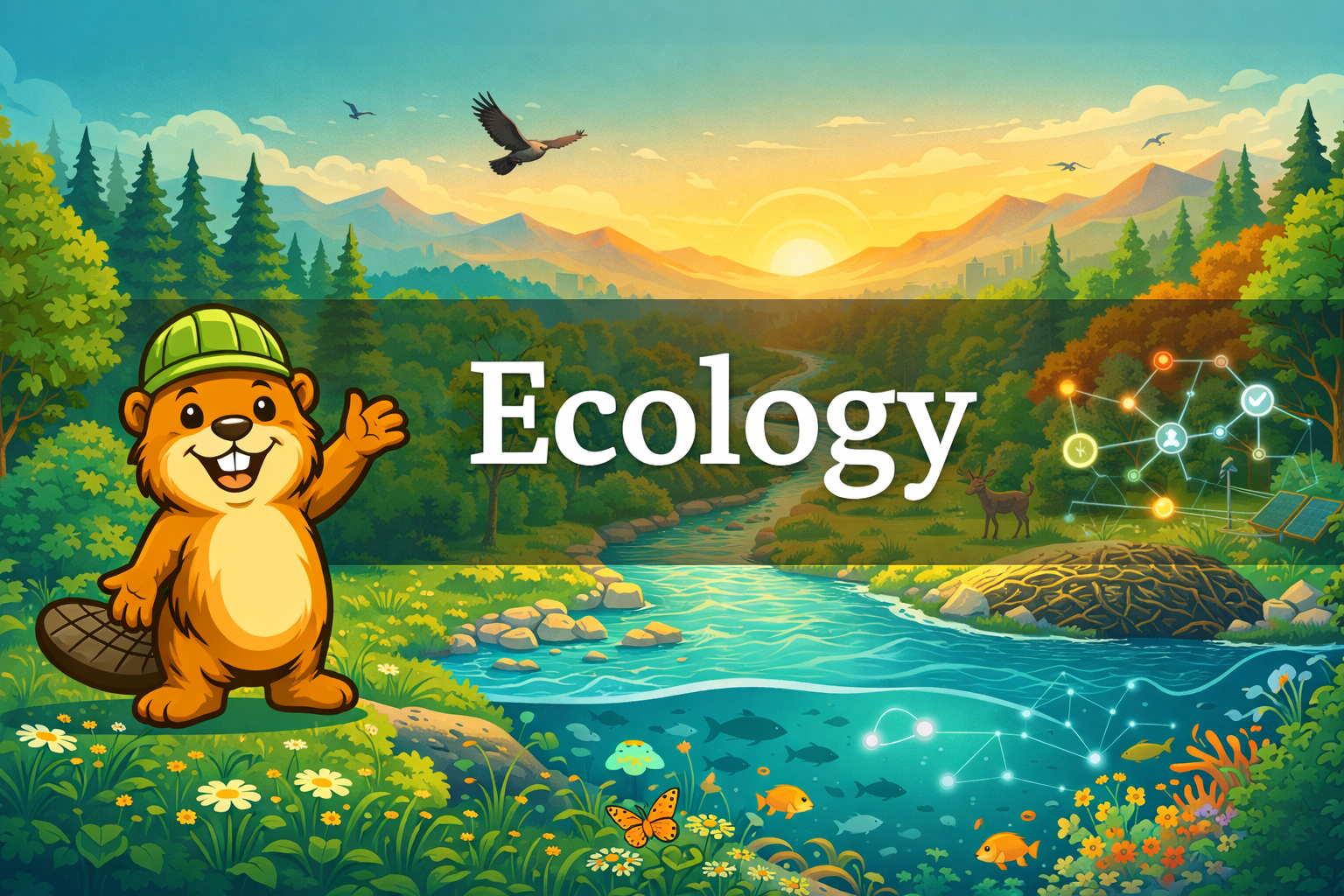
Welcome to our interactive intelligent textbook on Ecology! This textbook is designed for high school students (grades 9-12) who want to understand how natural systems work and how they are connected together. This course covers topics aligned with introductory college-level ecology and college placement Environmental Science frameworks -- from ecosystems and biodiversity to climate change and environmental policy -- with 81 hands-on simulations, an interactive learning graph, and a focus on systems thinking and scientific literacy throughout. This course is not associated with The College Board in any way and no endorsement from The College Board is implied.
What You Will Learn
- Foundations of Ecology -- ecosystems, species, energy, matter
- Ecosystems and Biomes -- terrestrial and aquatic biomes, food webs, trophic levels
- Energy Flow -- primary productivity, thermodynamics, trophic efficiency
- Biogeochemical Cycles -- carbon, nitrogen, phosphorus, and water cycles
- Species Interactions -- predation, competition, mutualism, keystone species
- Biodiversity and Ecosystem Services -- succession, island biogeography, tolerance
- Population Ecology -- growth models, carrying capacity, demographics
- Earth Systems and Resources -- plate tectonics, soils, atmosphere, climate patterns
- Sustainability and Energy Resources -- fossil fuels, renewables, nuclear, EROI
- Land and Water Use -- agriculture, mining, urbanization, sustainable practices
- Atmospheric Pollution -- smog, acid rain, criteria pollutants, Clean Air Act
- Water and Land Pollution -- eutrophication, toxicology, waste management
- Systems Thinking -- feedback loops, leverage points, resilience, emergence
- Scientific Literacy -- peer review, logical fallacies, statistical reasoning
- Global Climate Change -- greenhouse effect, tipping points, policy responses
- Biodiversity Loss and Policy -- HIPPO framework, endangered species, conservation
- Evaluating Environmental Claims -- misinformation, greenwashing, fact-checking
Features
- 81 Interactive MicroSims -- hands-on simulations for every major concept using p5.js, vis-network, and Chart.js
- Learning Graph -- visual map of 360+ course concepts and their dependencies
- Bailey the Beaver -- your learning mascot guides you with humor, puns, and systems thinking connections
- Bloom's Taxonomy Alignment -- objectives at all six cognitive levels (Remember through Create)
- Media Literacy Training -- every chapter includes source-checking and misinformation detection skills
- Chapter Quizzes -- self-assessment questions with collapsible answers
How to Use This Book
Navigate using the sidebar on the left. Start with the Course Description for a full overview, then explore the Learning Graph to see how concepts connect before diving into chapters. Try the MicroSims to interact with ecological concepts hands-on.
Note
This course covers topics aligned with the AP Environmental Science framework but is not affiliated with, endorsed by, or approved by the College Board. AP and Advanced Placement are registered trademarks of the College Board.