About This Textbook
Welcome From Bailey the Beaver
 Hey there, builders! Welcome to the interactive intelligent textbook
Ecology: Systems Thinking for a Changing Planet. My name is Bailey
the Beaver, and I'll be your guide throughout this book. I'll introduce
each chapter, highlight key connections, give you tips and encouragement, warn you about common misunderstanding,
and help you see how everything's connected! Think like an ecologist!
Hey there, builders! Welcome to the interactive intelligent textbook
Ecology: Systems Thinking for a Changing Planet. My name is Bailey
the Beaver, and I'll be your guide throughout this book. I'll introduce
each chapter, highlight key connections, give you tips and encouragement, warn you about common misunderstanding,
and help you see how everything's connected! Think like an ecologist!
Why This Book
Ecology is everywhere — in the food you eat, the air you breathe, the water you drink, and the landscapes you see outside your window. Yet most people never learn the systems thinking tools that ecologists use to understand how the natural world actually works. The result? Misleading environmental claims go unchallenged, viral posts about climate and conservation spread unchecked, and well-meaning people support ideas that ignore fundamental ecological trade-offs.
This book exists because high school students deserve an engaging, evidence-based resource that builds genuine ecological thinking skills — not just memorizing definitions, but developing the ability to trace energy flows, identify feedback loops, evaluate environmental claims with data, and spot misinformation in social media and journalism.
Every chapter is built around interactive MicroSims that let you manipulate population models, explore biogeochemical cycles, build food webs, and see ecological principles come alive. The goal isn't just to teach you ecology — it's to give you a superpower you'll use for the rest of your life.
How to Use This Book
This textbook is designed for self-paced study. Each chapter builds on previous material, so reading in order is recommended. The book includes several types of resources:
- 17 Chapters covering ecosystems, biodiversity, populations, Earth systems, pollution, global change, systems thinking, and scientific literacy
- Interactive MicroSims embedded in chapters — browser-based simulations you can manipulate to explore concepts like predator-prey dynamics, carbon cycles, feedback loops, and population growth
- Quizzes at the end of each chapter to test your understanding
- Annotated References for each chapter linking to Wikipedia articles and authoritative sources
- Glossary with defined terms for every key concept
- FAQ with common questions and answers
- Learning Graph visualizing concept dependencies across the course
- Search available from any page using the search bar in the top navigation
The Learning Graph visualizes how concepts connect across chapters. If you want to explore non-linearly or check prerequisites for a specific topic, start there.
About the Author
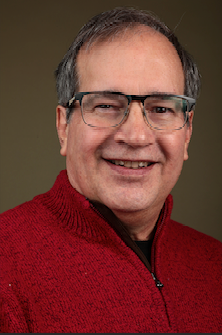
Dan McCreary is a semi-retired AI researcher, solution architect, and educator who has spent more than three decades helping Fortune 100 organizations reason over massive datasets. At Optum he founded the Generative AI Center of Excellence and led the team that built one of the world's largest healthcare knowledge graphs — spanning over 25 billion vertices — to unify member, provider, and patient insights. Dan's deep background in knowledge representation and systems thinking underpins the precise learning graphs and intelligent textbook workflows used throughout this course.
He is the co-author of Making Sense of NoSQL (Manning Publications), the founding chair of the NoSQL Now! conference, and a frequent keynote speaker on semantic search, ontology strategy, and AI hardware. Beyond industry, Dan has mentored students as a STEM volunteer since 2014 and now applies the same rigor to building open educational resources. You can visit the Intelligent Textbooks Case Studies to see over 71 textbooks that Dan has created or co-created with other authors.
Selected Credentials
- B.A. in Physics and Computer Science from Carleton College
- M.S.E.E. from the University of Minnesota
- MBA coursework at the University of St. Thomas
- Patent holder in semantic search and ontology management techniques
- Advocate for large-scale Enterprise Knowledge Graph adoption across healthcare and education
- Long-time promoter of accessible, low-cost AI-powered learning experiences
How to Cite This Book
APA (7th edition)
McCreary, D. (2026). Ecology: Systems thinking for a changing planet — an interactive intelligent textbook with simulations. https://dmccreary.github.io/ecology/
Chicago (17th edition)
McCreary, Dan. 2026. Ecology: Systems Thinking for a Changing Planet — An Interactive Intelligent Textbook with Simulations. https://dmccreary.github.io/ecology/.
MLA (9th edition)
McCreary, Dan. Ecology: Systems Thinking for a Changing Planet — An Interactive Intelligent Textbook with Simulations. 2026, dmccreary.github.io/ecology/.
BibTeX
1 2 3 4 5 6 7 | |
To cite a specific chapter, append the chapter number and title — for example:
McCreary, D. (2026). Chapter 1: Foundations of ecology. In Ecology: Systems thinking for a changing planet — an interactive intelligent textbook with simulations. https://dmccreary.github.io/ecology/chapters/01-foundations-of-ecology/