List of MicroSims
Interactive Micro Simulations to help students explore English Language Arts concepts hands-on. Each sim is embedded directly in the chapter where it is introduced.
-
American Foundational Documents Timeline
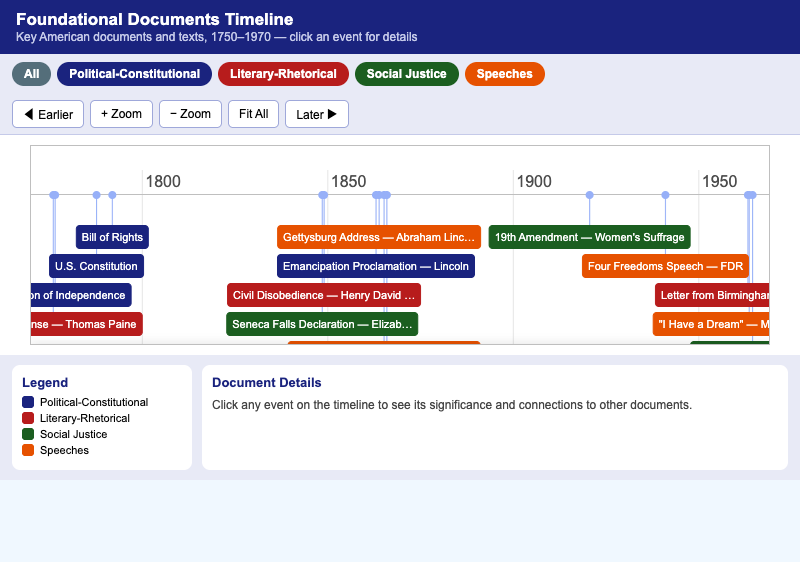
Explore the chronological relationships among key foundational documents and writings that shaped American intellectual and civic life, from 1776 to 1964.
-
American Literary Periods Timeline
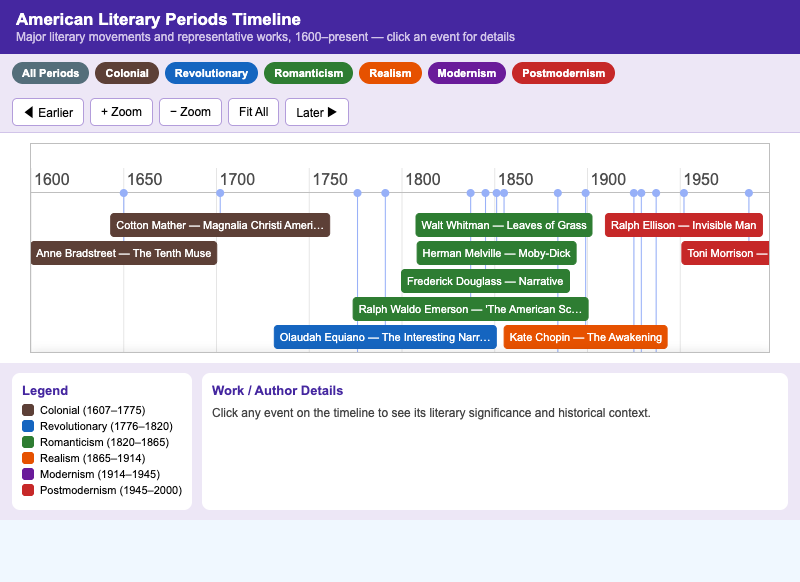
Identify and contextualize the major American literary periods by locating representative works on an interactive timeline spanning the colonial era to postmodernism.
-
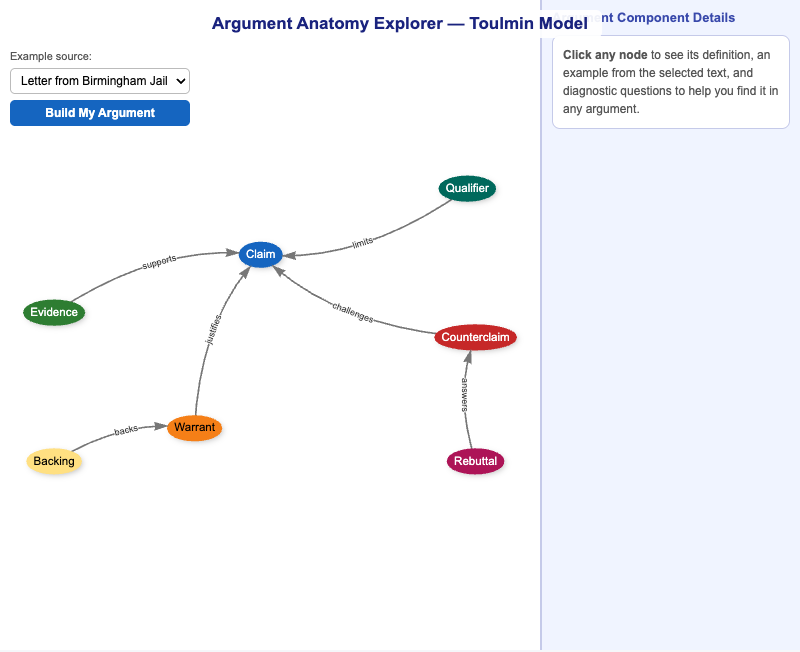
Apply the Toulmin model to identify and label the components of a real argument — claim, evidence, warrant, backing, qualifier, counterclaim, and rebuttal — in three classic texts.
-
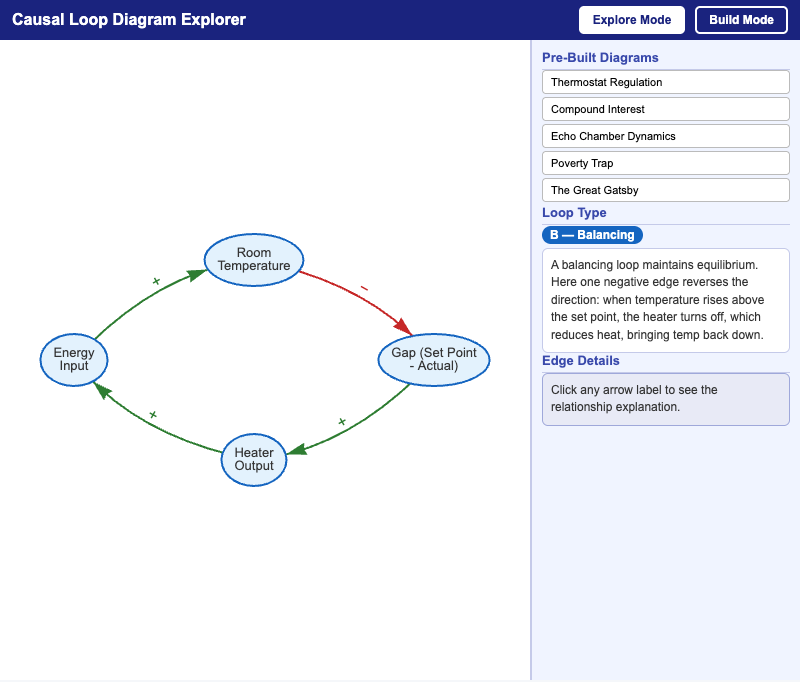
Apply systems thinking by constructing and interpreting causal loop diagrams for real-world phenomena, identifying reinforcing and balancing feedback loops.
-
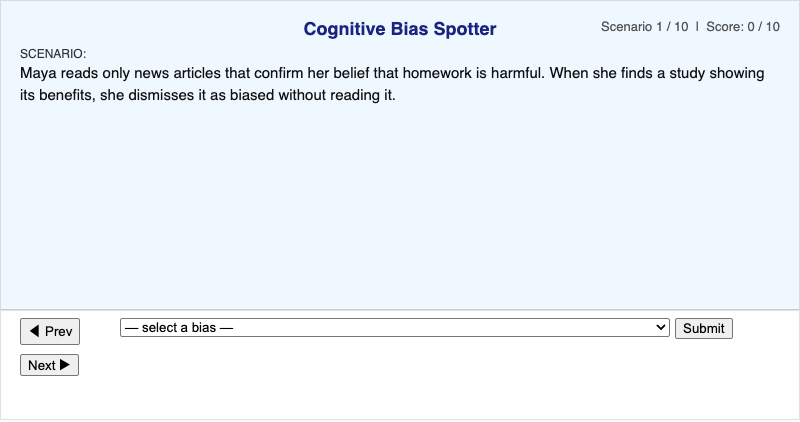
Identify cognitive biases in realistic scenarios and develop strategies for recognizing them in everyday arguments and media.
-
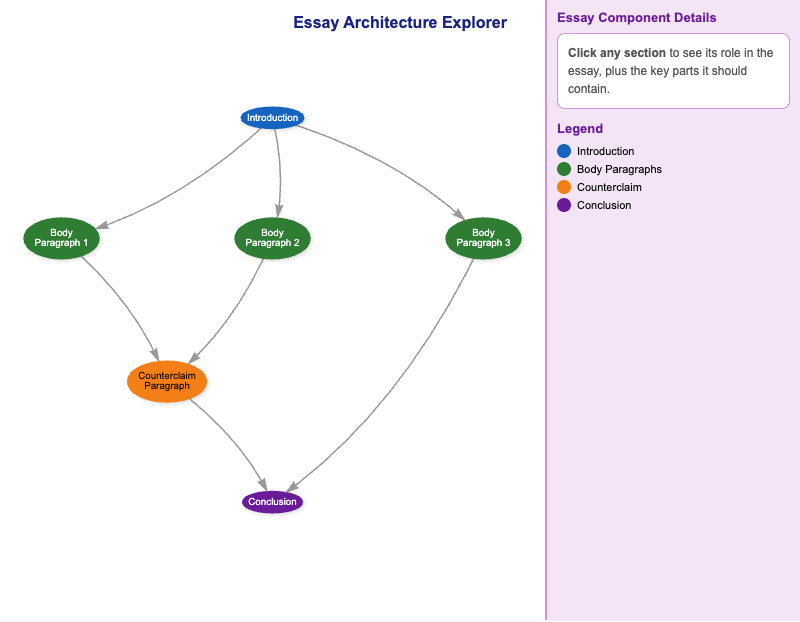
Apply the structural conventions of argumentative essays by identifying and labeling the functional role of each paragraph — introduction, body, counterclaim, and conclusion.
-
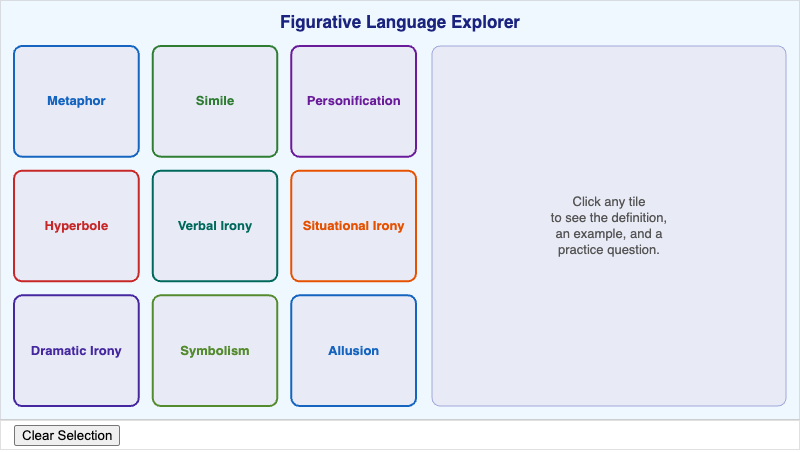
Identify and distinguish nine major figures of speech — metaphor, simile, personification, hyperbole, verbal irony, situational irony, dramatic irony, symbolism, and allusion — with definitions, examples, and practice questions.
-
Five ELA Strands — Interactive Overview
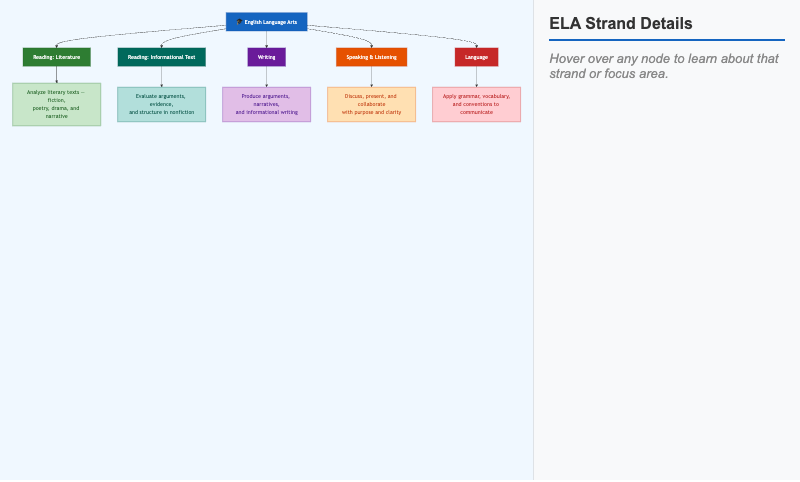
Recall the five ELA strands and explore how reading, writing, speaking & listening, language, and research form an interconnected system.
-
Freytag's Pyramid — Plot Structure Explorer
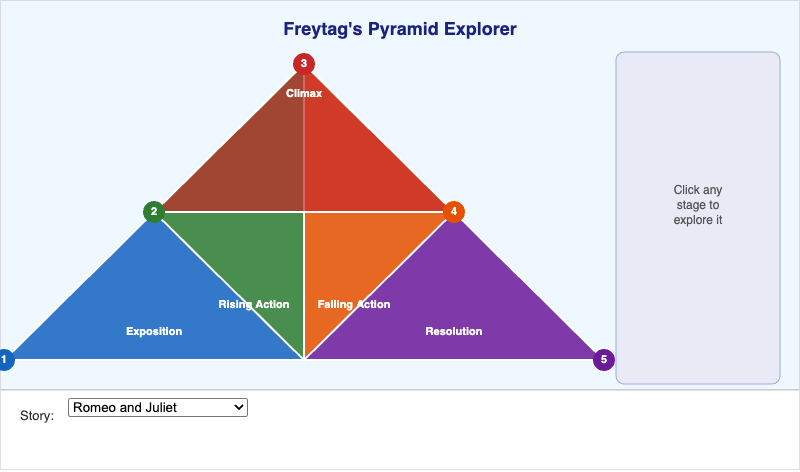
Identify and apply the five stages of Freytag's Pyramid by locating the exposition, rising action, climax, falling action, and resolution in classic literary works.
-
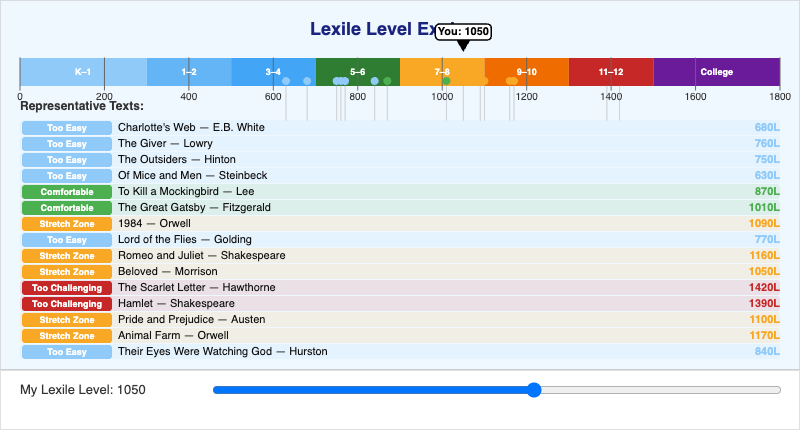
Apply understanding of Lexile levels to identify appropriately challenging texts for a given reader profile and explore representative works across the full Lexile spectrum.
-
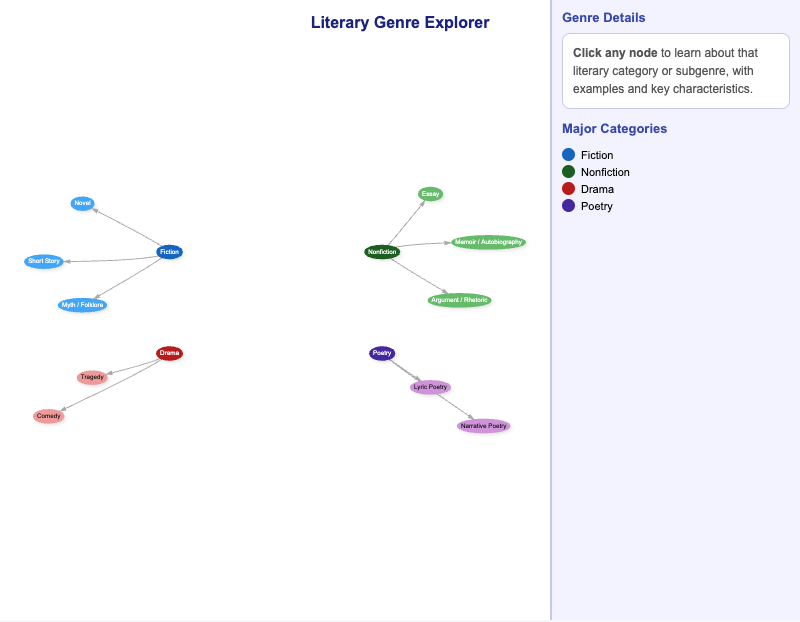
Classify the four major literary categories — fiction, nonfiction, drama, and poetry — and their subgenres by exploring an interactive network diagram.
-
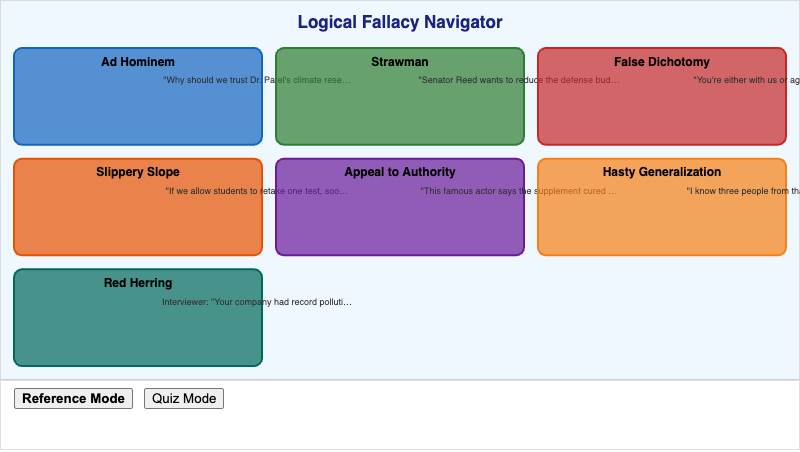
Identify seven common logical fallacies in realistic argument scenarios and practice distinguishing valid reasoning from flawed rhetoric.
-
Narrative Time — Scene, Summary, and Flashback
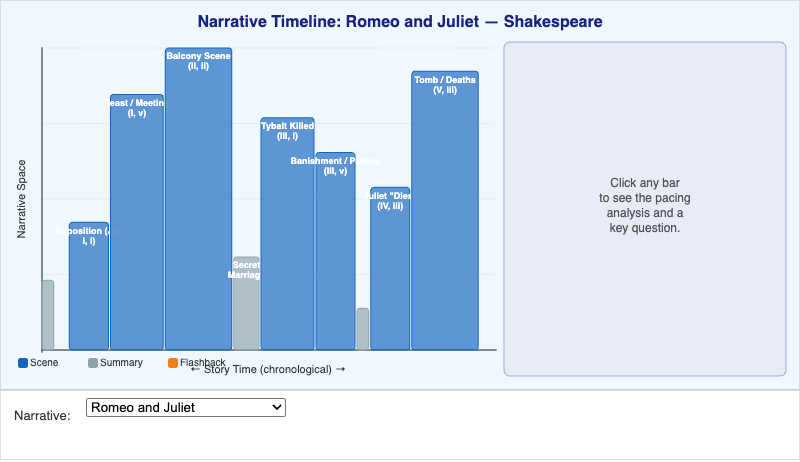
Distinguish between scene, summary, and flashback as narrative techniques by mapping how authors manipulate story time versus narrative space in classic works.
-
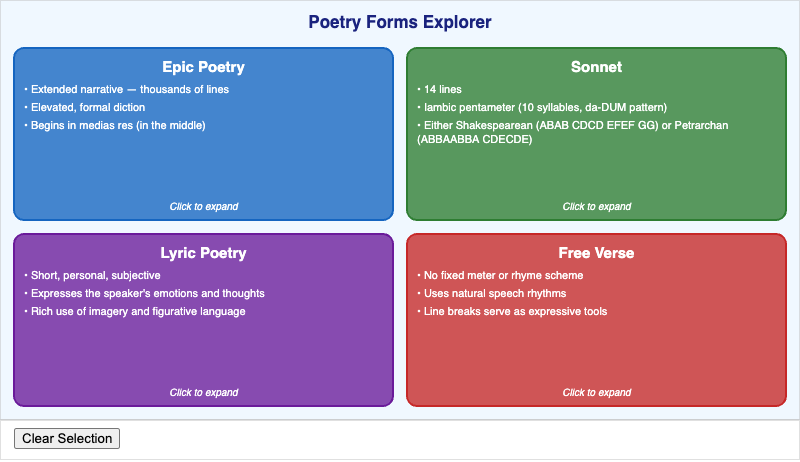
Compare and contrast epic poetry, sonnets, lyric poetry, and free verse by examining their defining traits, representative examples, and structural conventions.
-
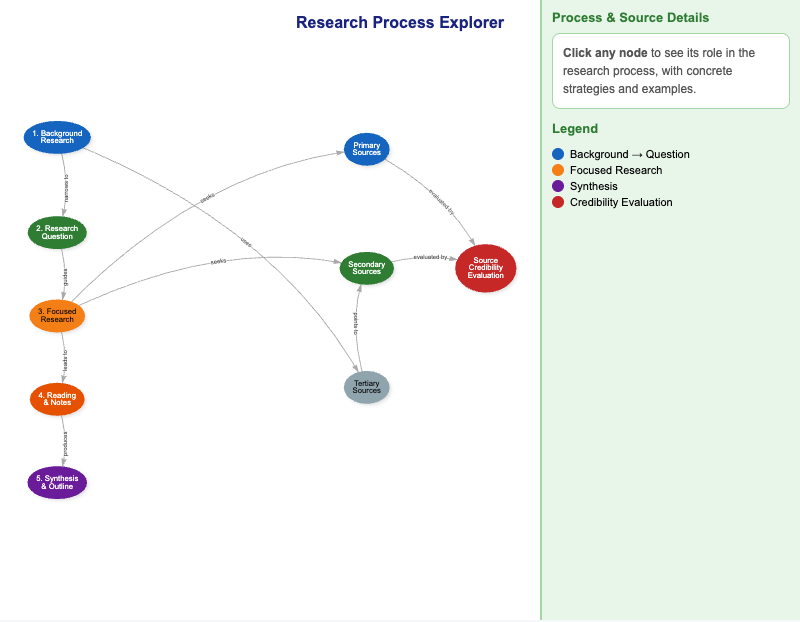
Apply the research methodology framework by mapping a research project's phases — background research, focused inquiry, source evaluation, and synthesis — across primary, secondary, and tertiary sources.
-
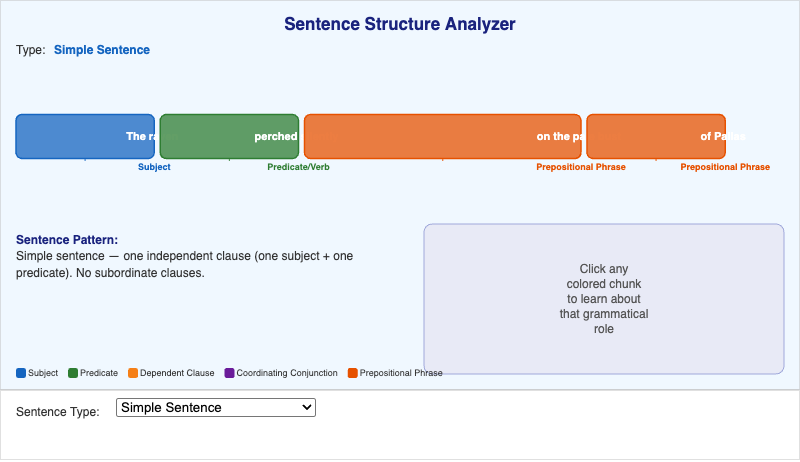
Identify and label clause structure in simple, compound, complex, and compound-complex sentences — and participial phrases — by clicking on color-coded grammatical chunks.
-
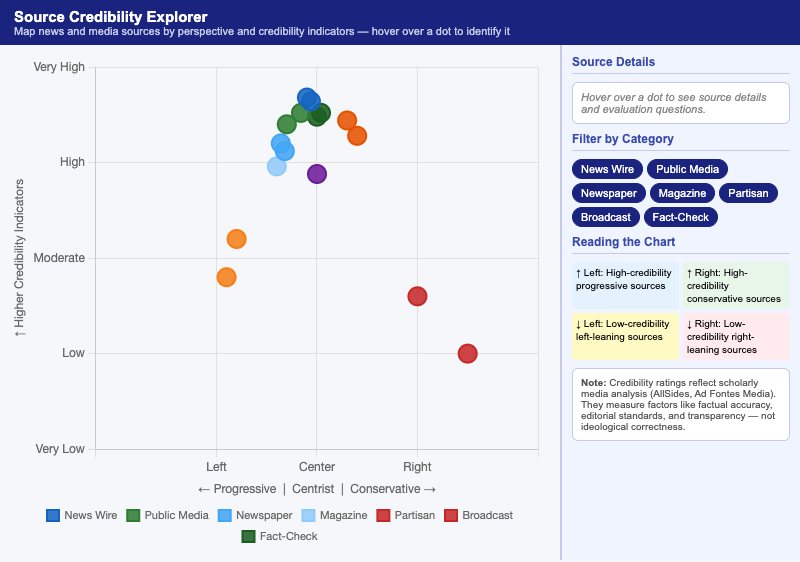
Evaluate multiple news and media sources by mapping them on a two-axis chart of ideological perspective versus credibility indicators, with category filters and evaluation questions.
-
Vocabulary Morphology Explorer
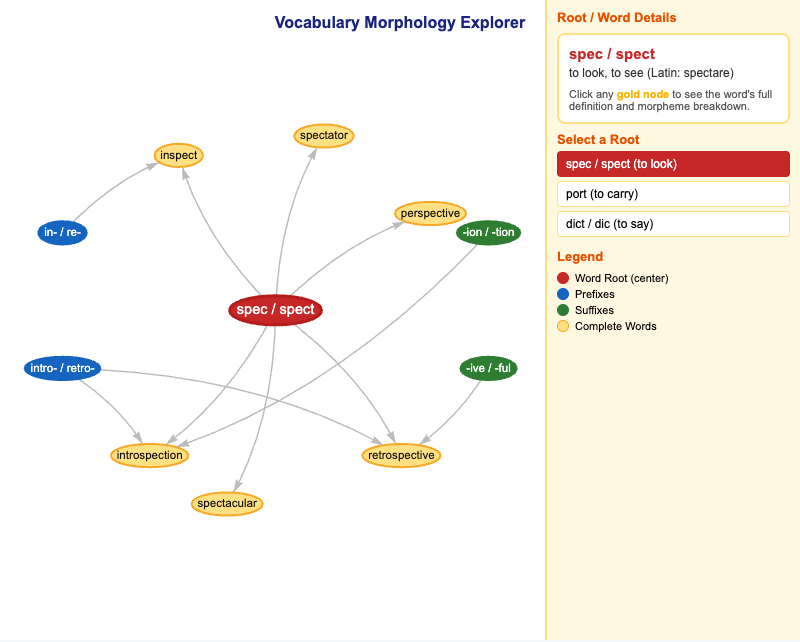
Apply morphological analysis by identifying word roots, prefixes, and suffixes to infer the meanings of unfamiliar vocabulary using three Latin roots: spec/spect, port, and dict/dic.