Chapter Images
A gallery of all chapter images used throughout the U.S. History textbook, ordered by historical period.
-
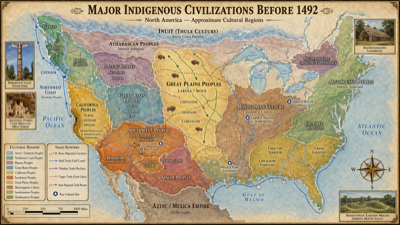
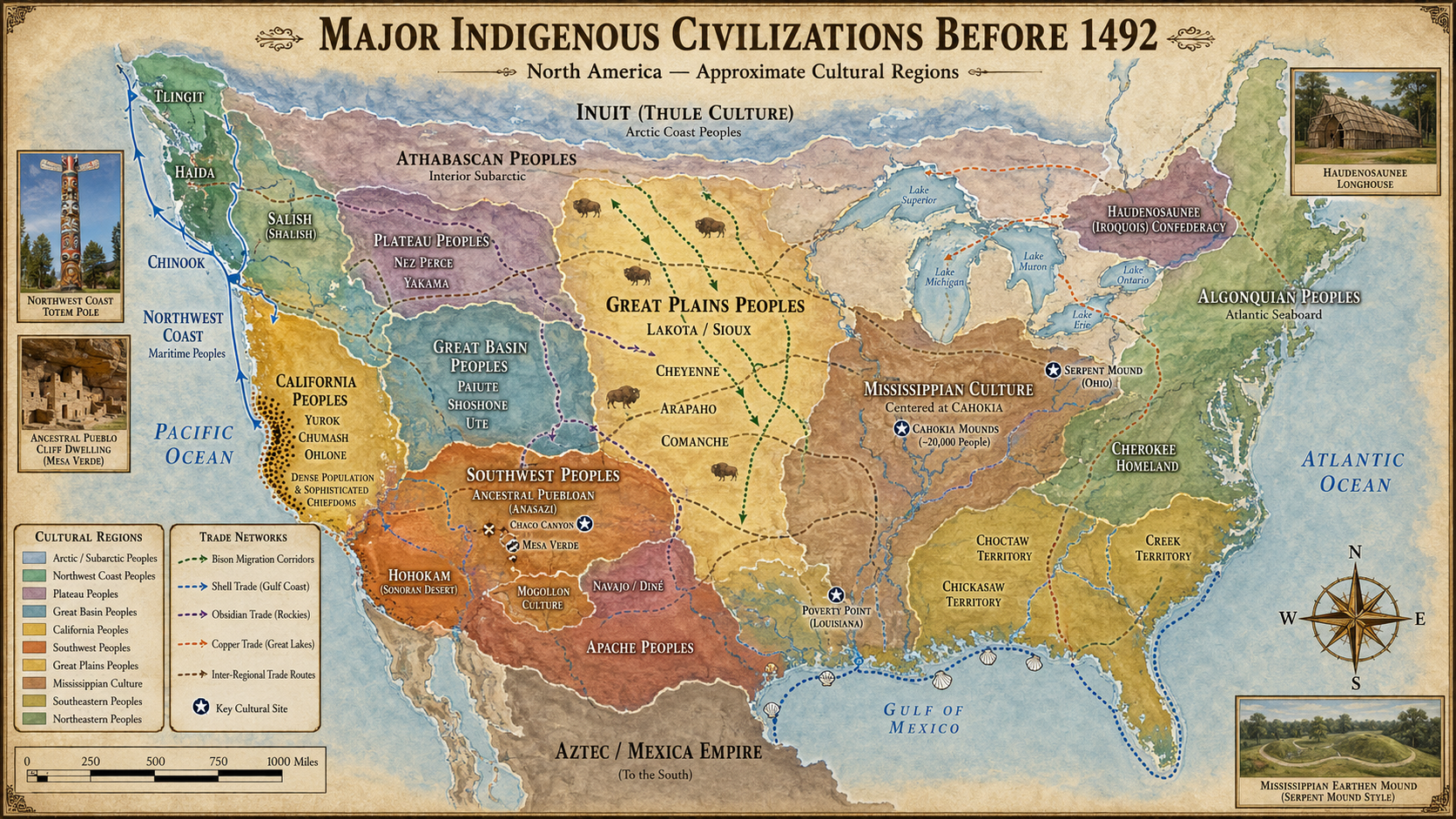
A detailed cartographic map of the major Indigenous nations and cultural regions across North America before European contact in 1492.
-
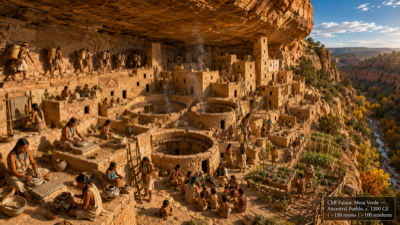
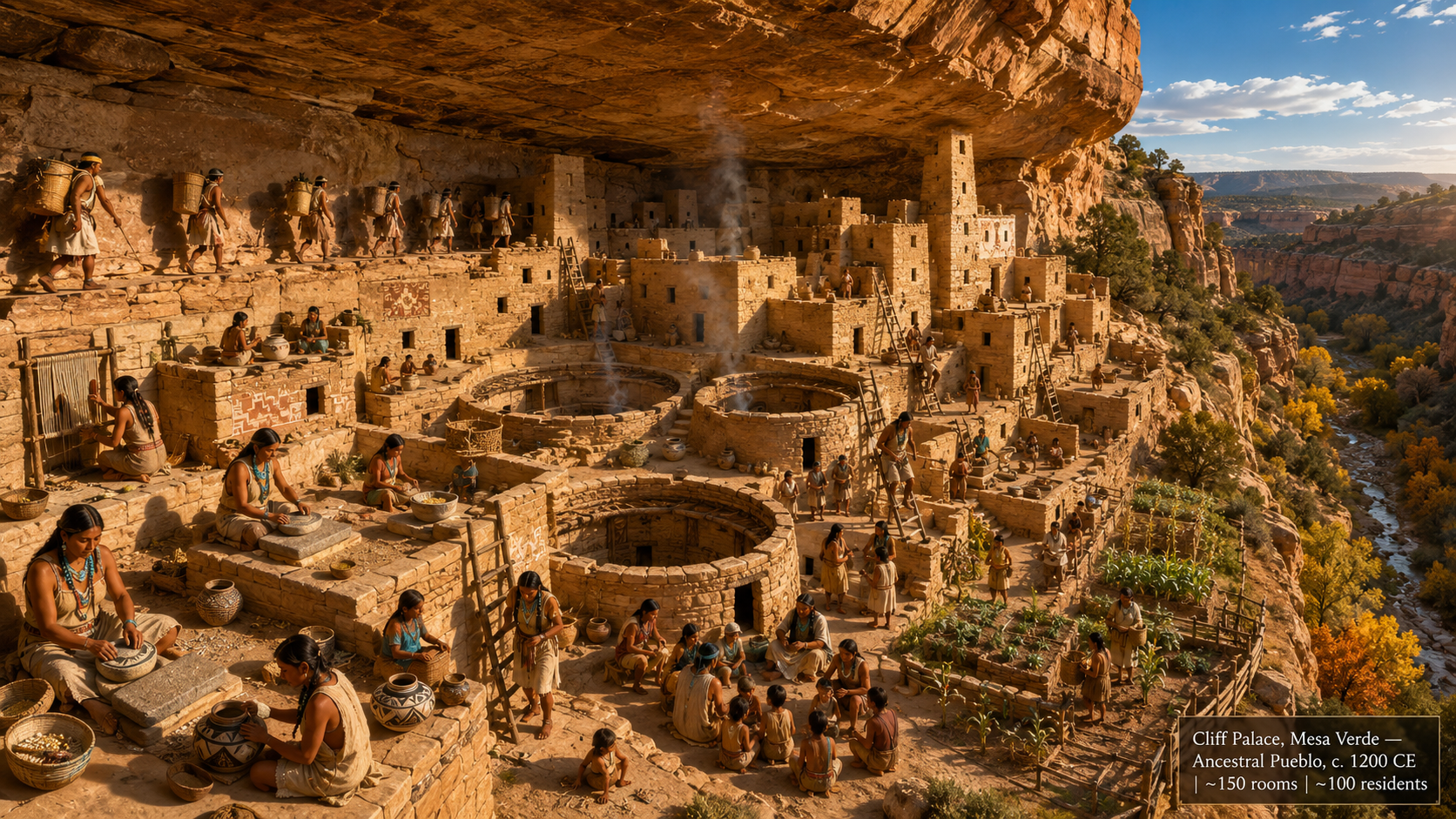
Ancestral Pueblo cliff dwellings at Mesa Verde, Colorado, built between 600 and 1300 CE as sophisticated multi-story stone communities.
-
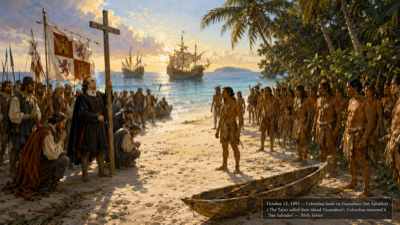
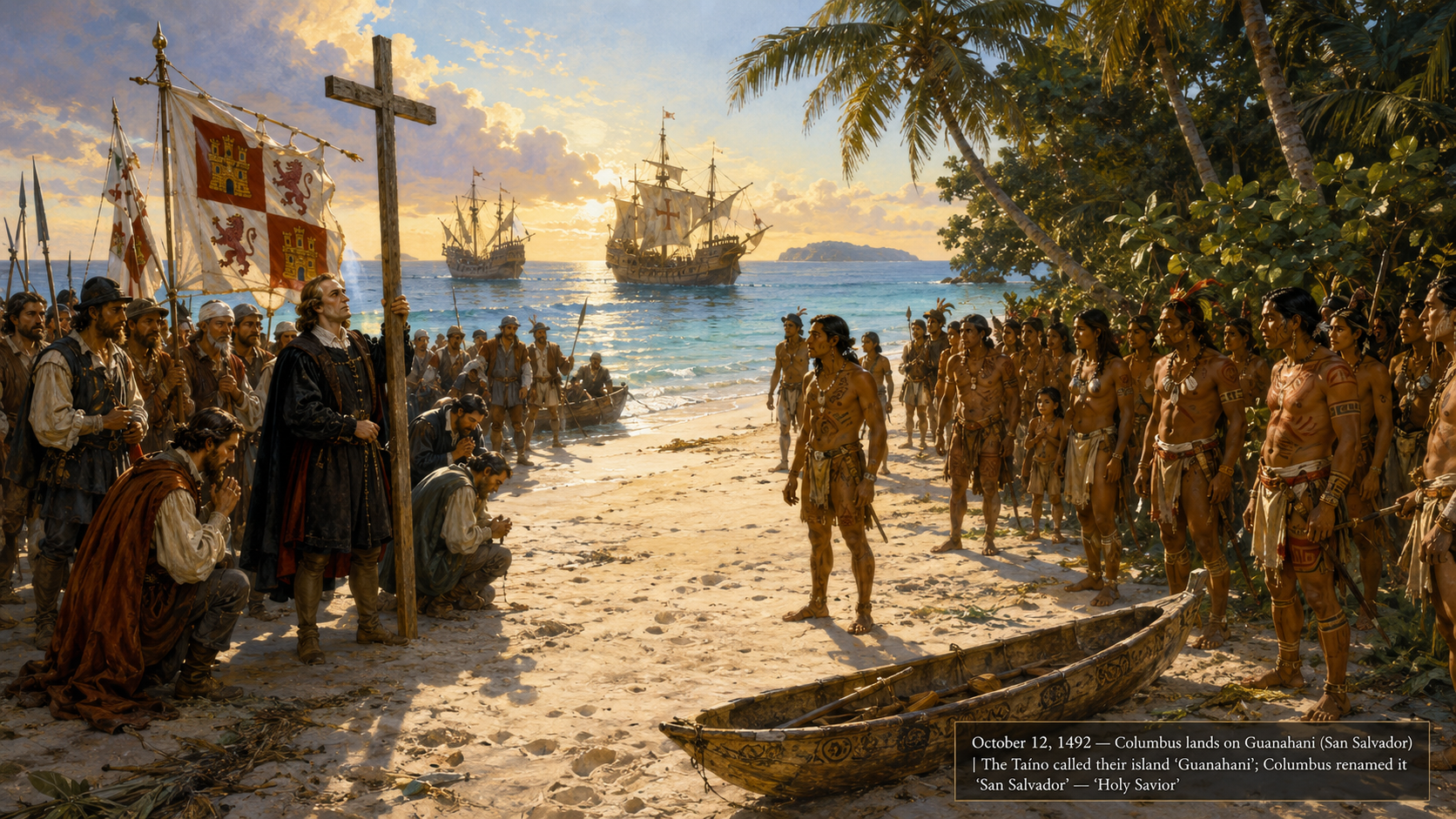
Christopher Columbus and his crew landing on the island of Guanahani (San Salvador) on October 12, 1492, the moment of first contact between Europe and the Americas.
-
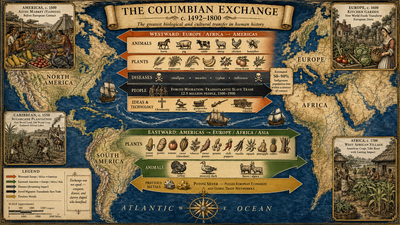
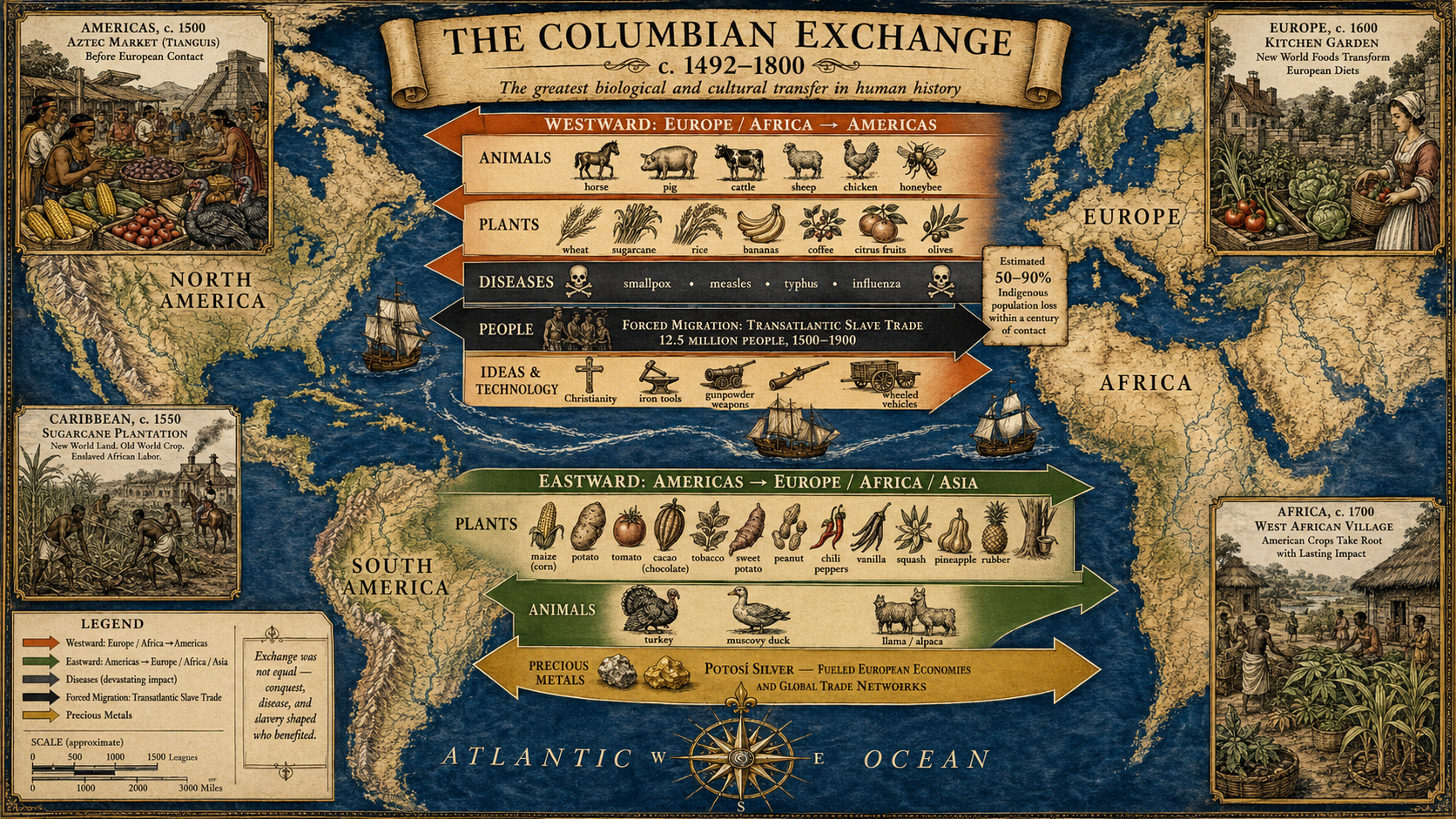
A map illustrating the Columbian Exchange — the transfer of plants, animals, diseases, and ideas between the Old and New Worlds after 1492.
-
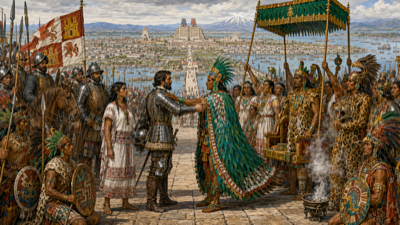
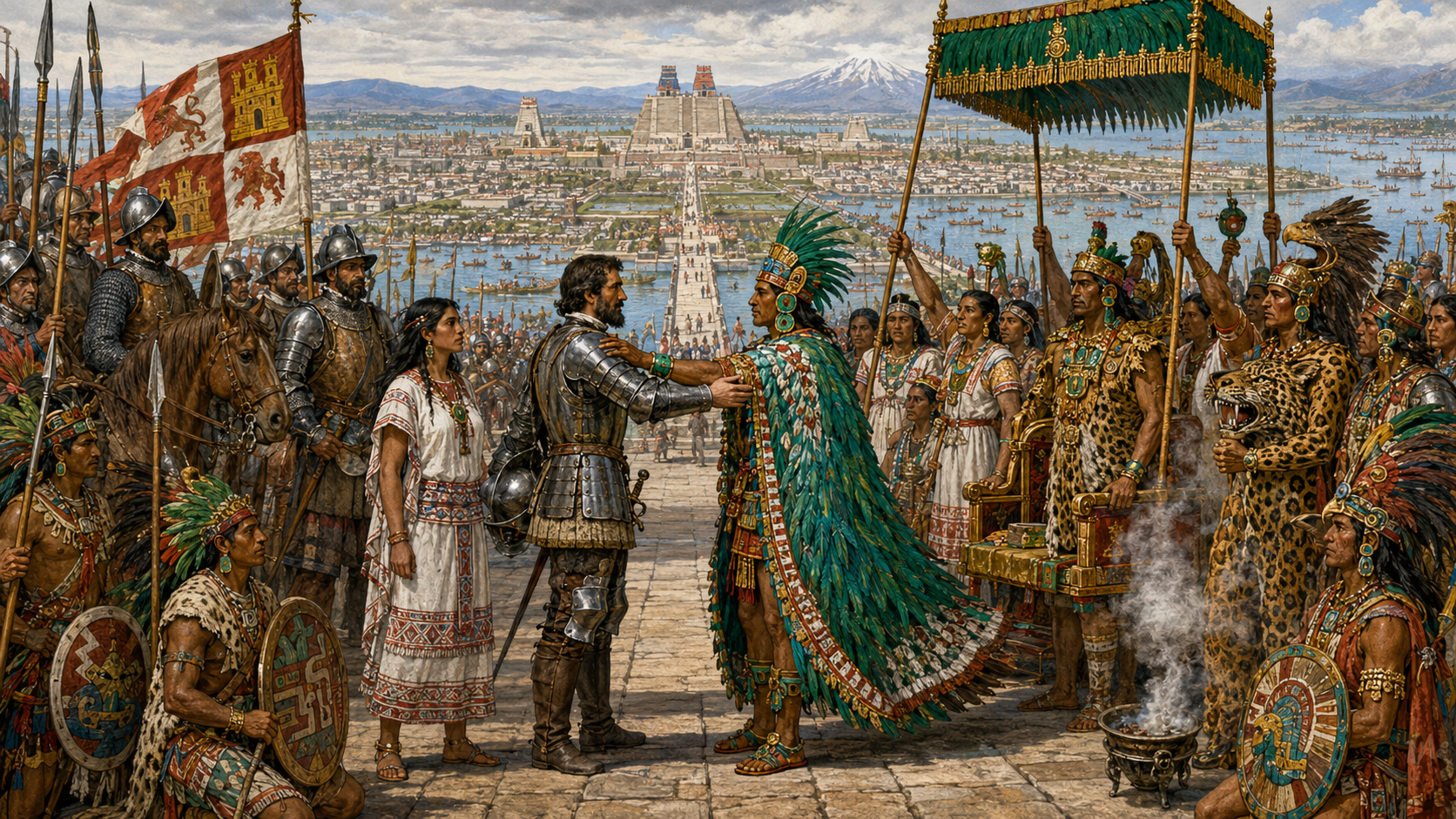
The historic meeting between Spanish conquistador Hernán Cortés and Aztec Emperor Moctezuma II in Tenochtitlan in November 1519.
-
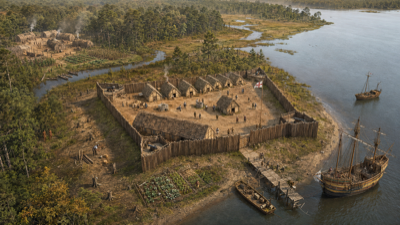
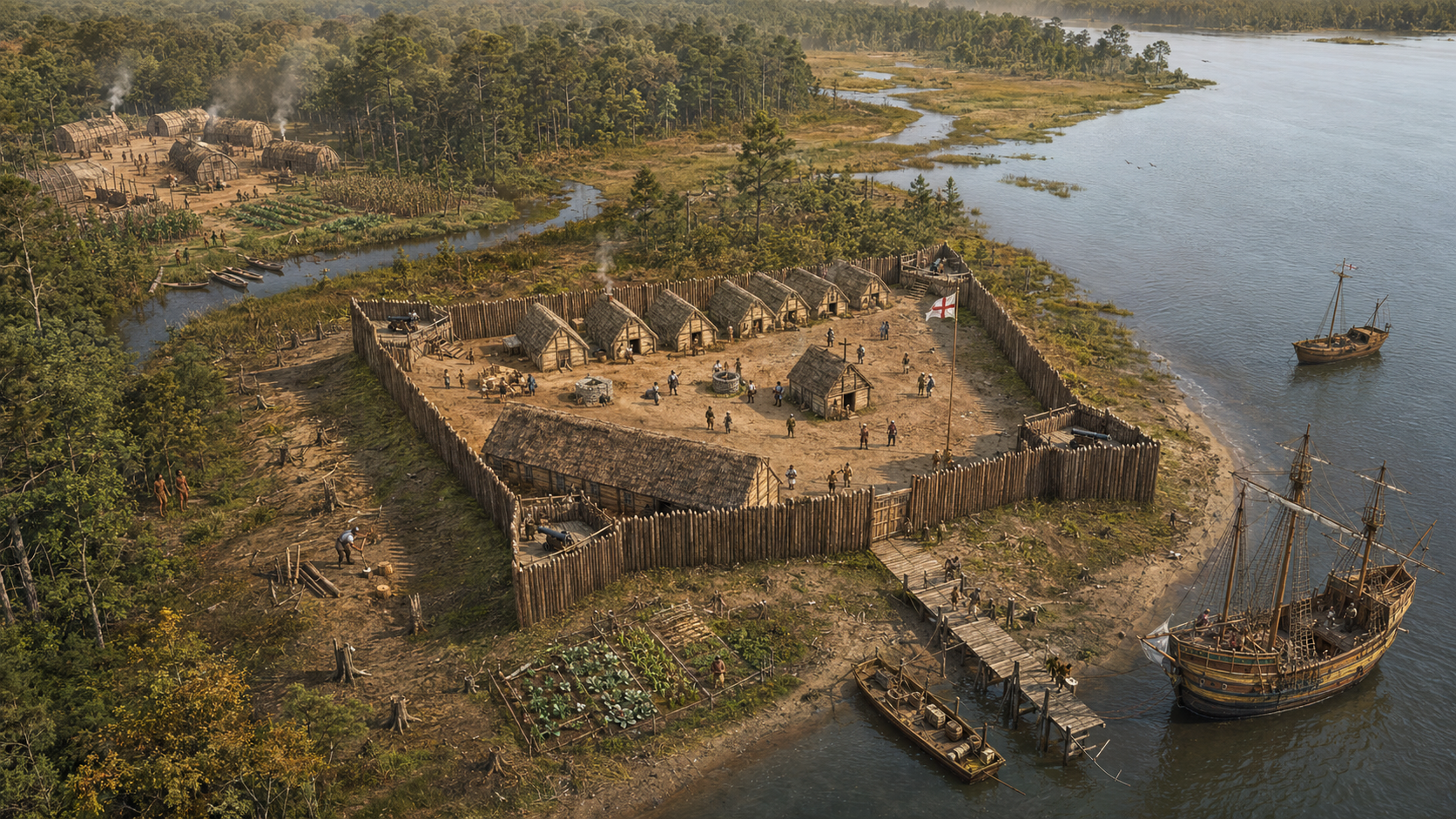
Aerial reconstruction of the Jamestown fort circa 1607–1610, England's first permanent European settlement in North America.
-
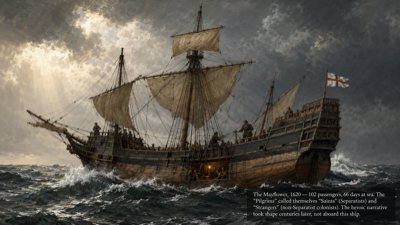
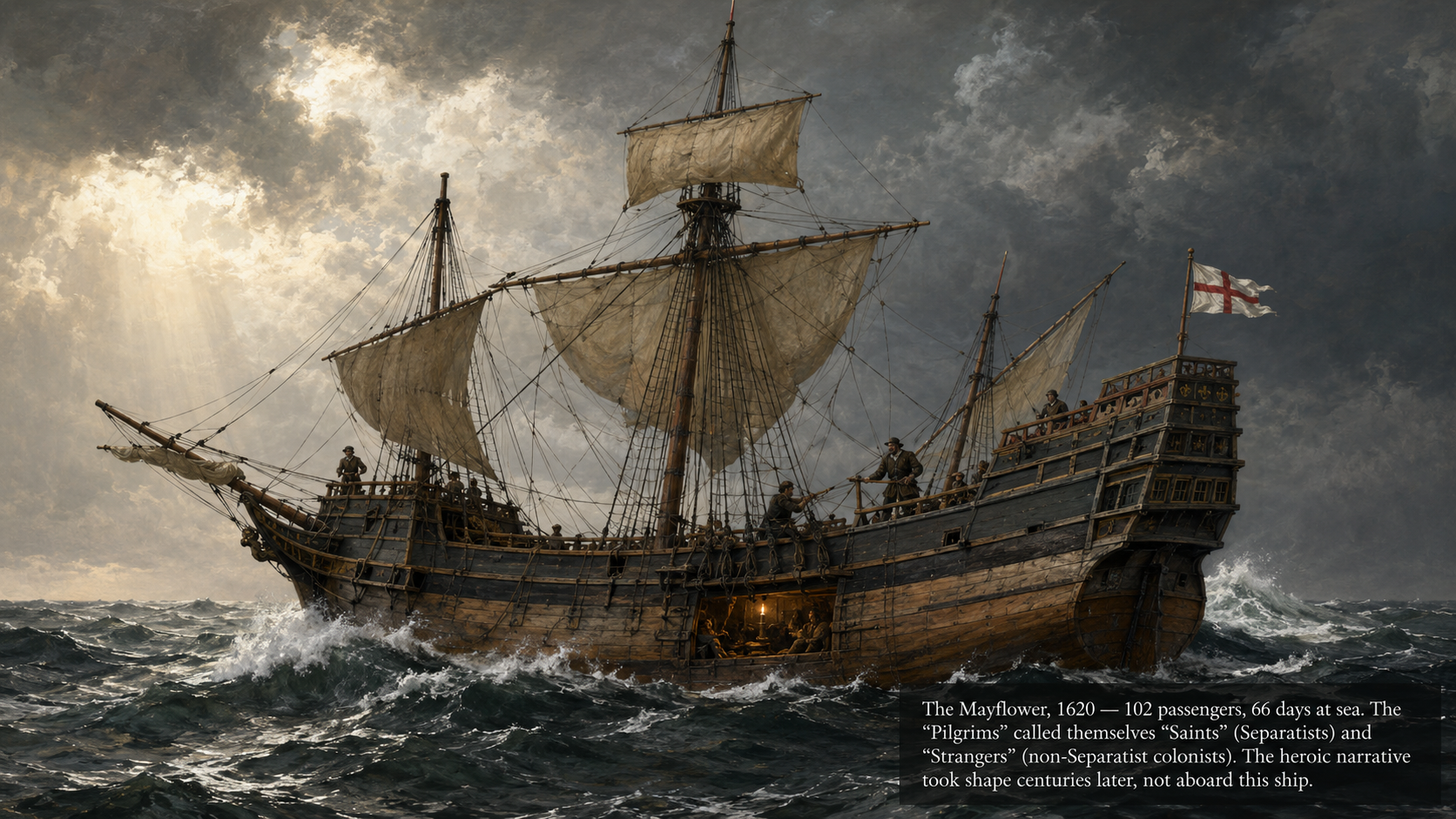
The Mayflower ship carrying Separatist Pilgrims across the Atlantic Ocean to Plymouth, Massachusetts in 1620.
-
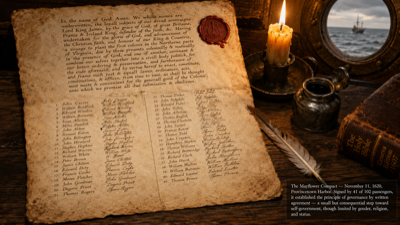
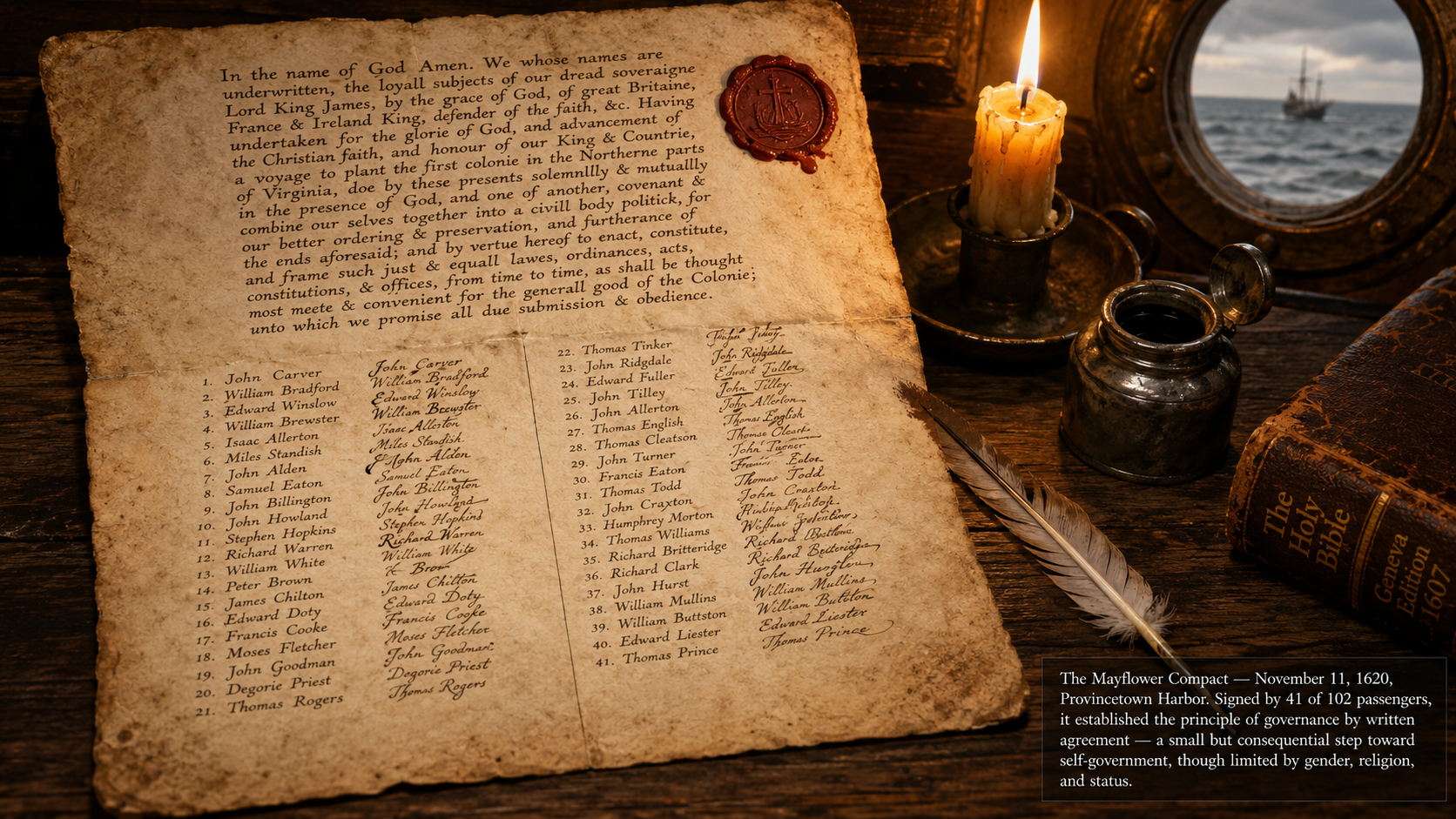
The signing of the Mayflower Compact aboard ship in 1620, one of the earliest examples of self-governance in colonial America.
-
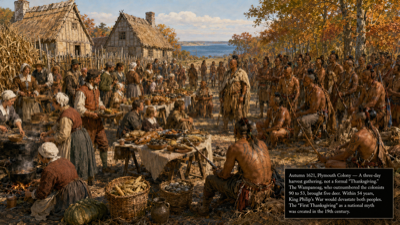
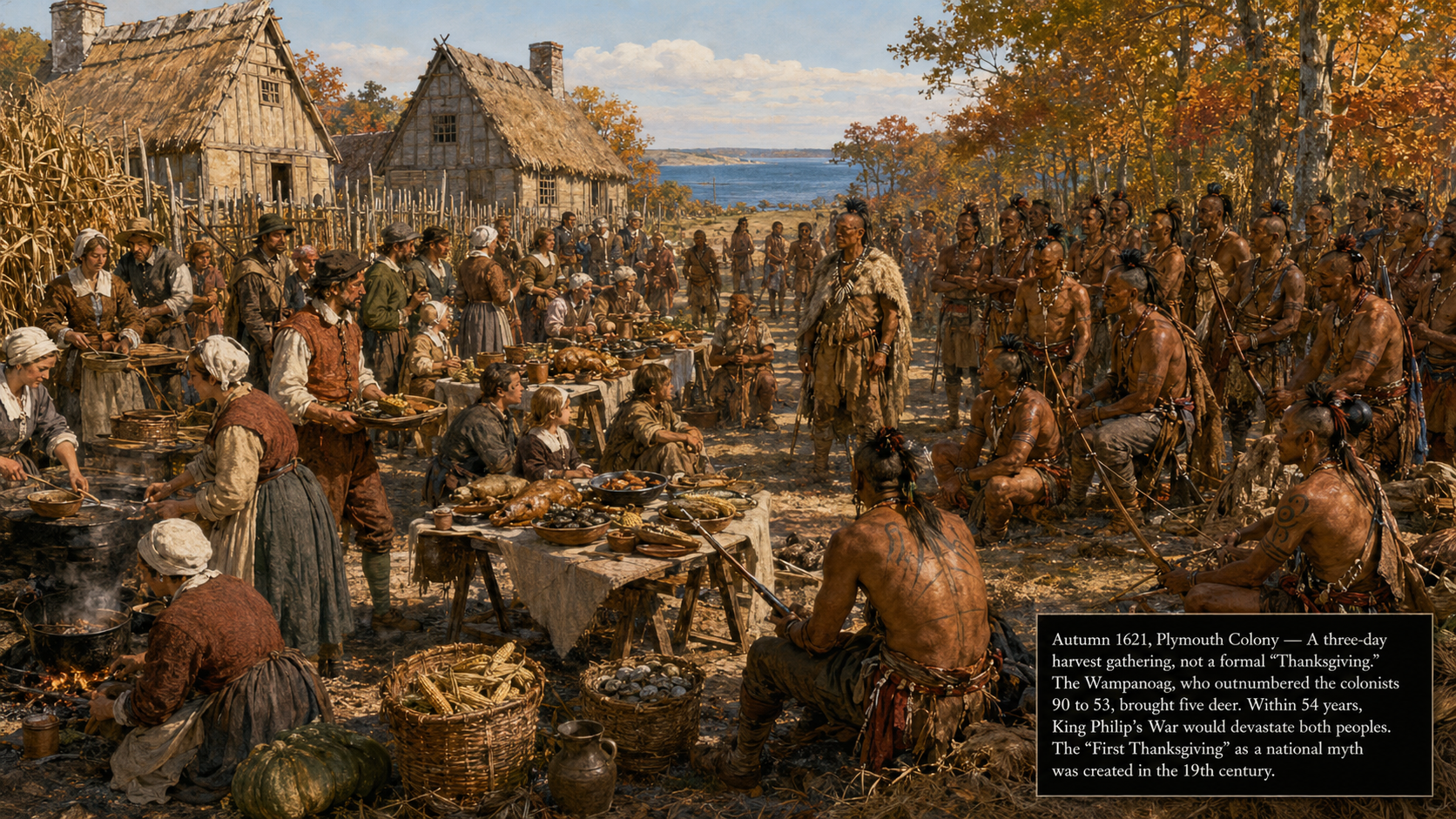
The 1621 harvest gathering at Plymouth Colony between Wampanoag people and Separatist colonists, correcting common myths about the event.
-
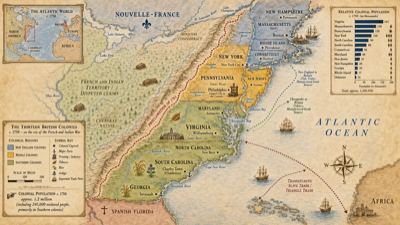
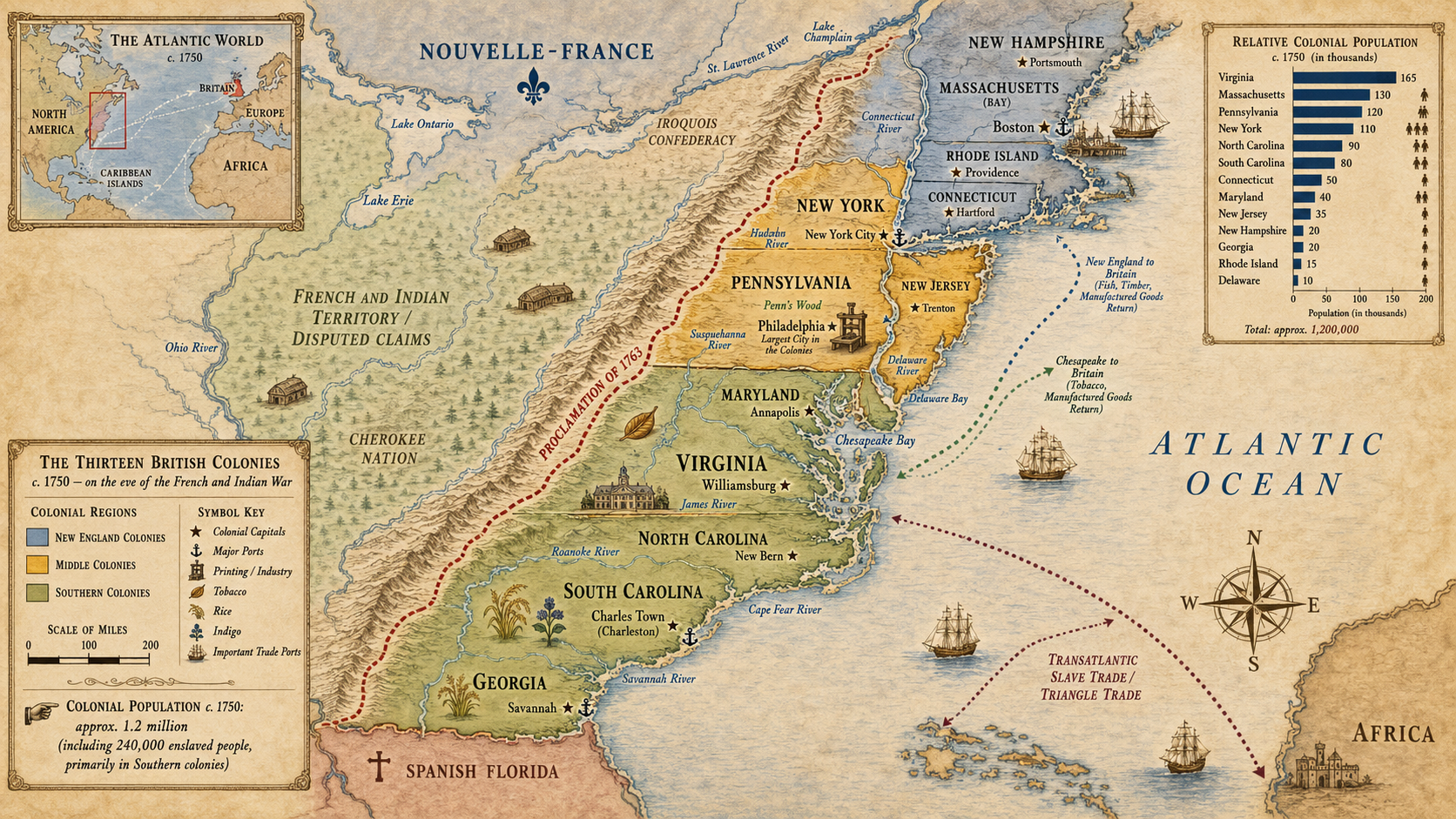
A map of the thirteen British colonies established along North America's eastern seaboard between 1607 and 1733.
-
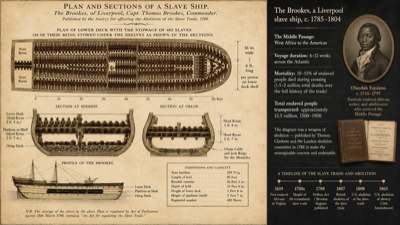
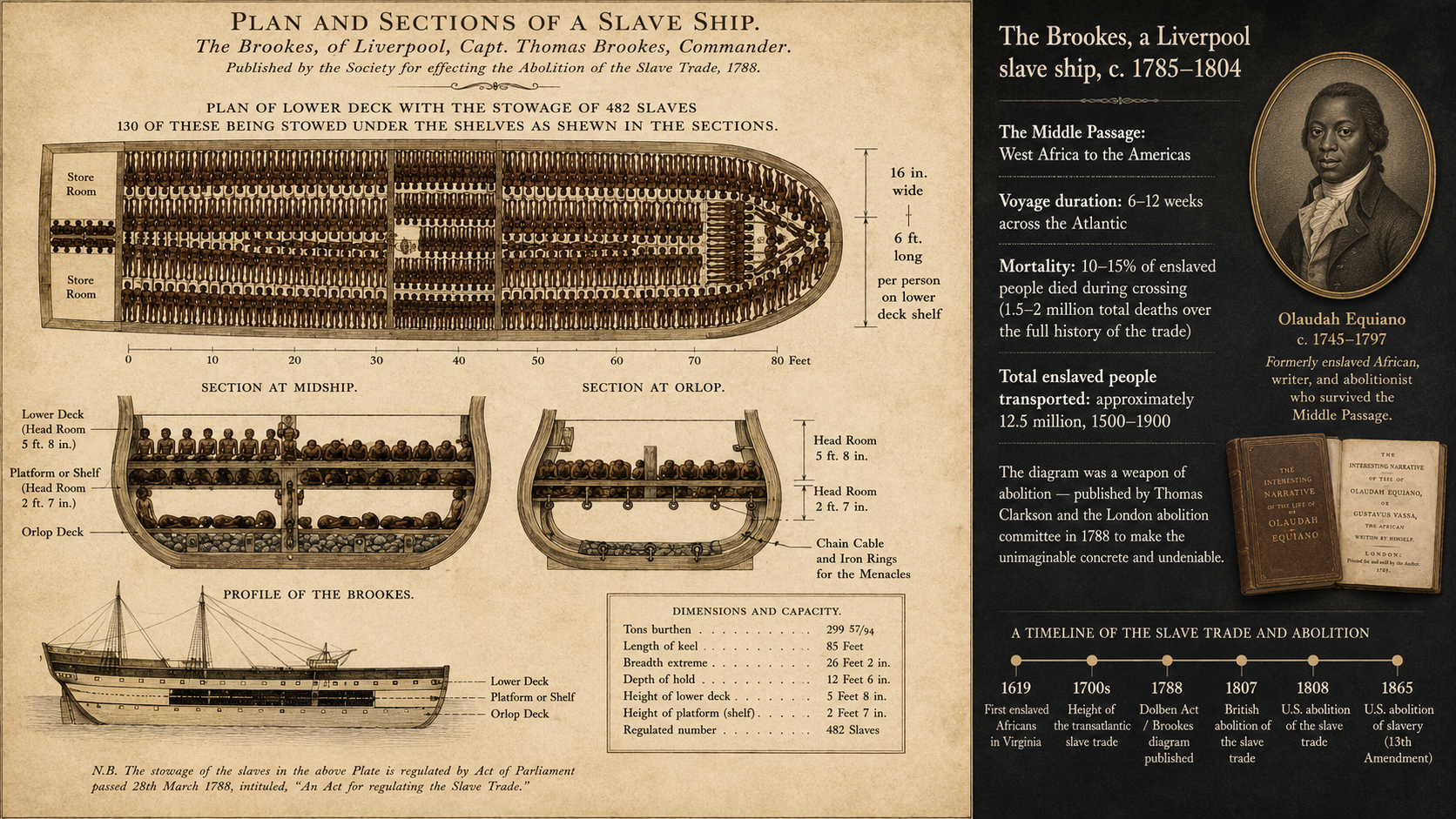
The infamous diagram of the slave ship Brookes showing the inhumane conditions endured by enslaved Africans during the Middle Passage.
-
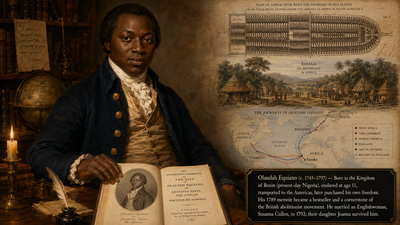
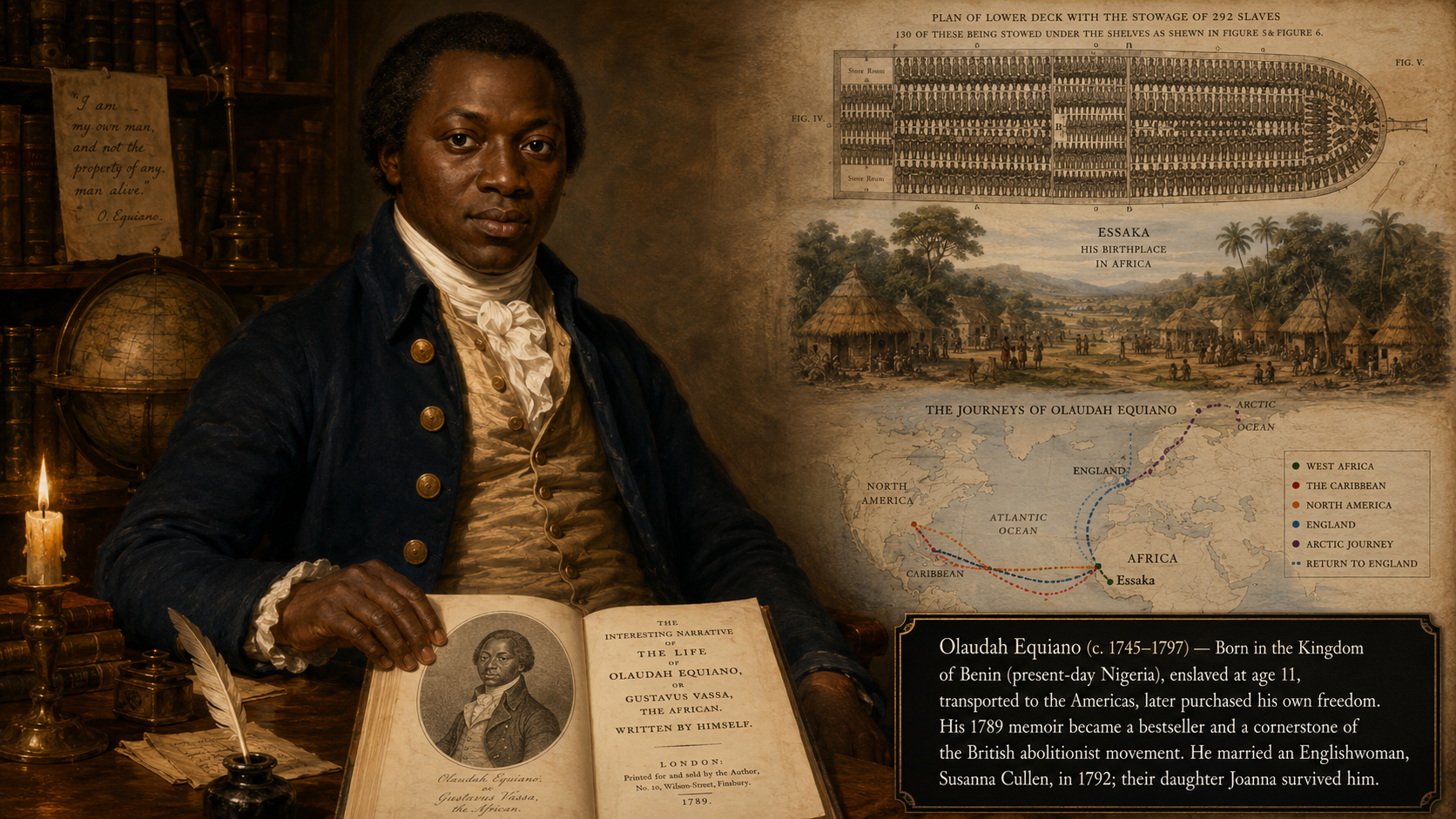
Portrait of Olaudah Equiano, a formerly enslaved African who wrote a landmark narrative of his experiences, published in 1789.
-
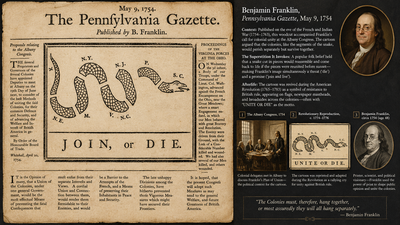
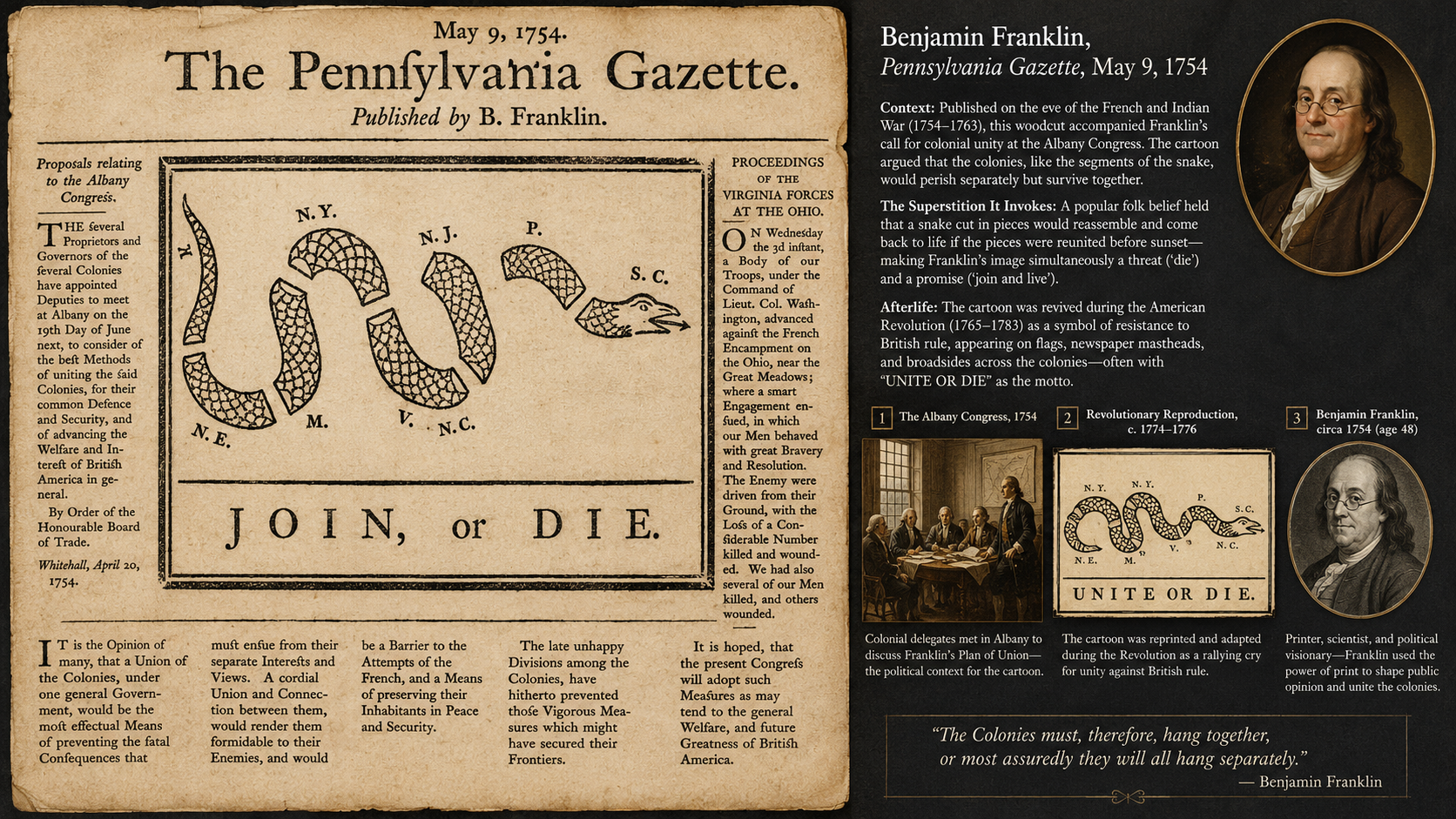
Benjamin Franklin's 1754 "Join, or Die" political cartoon depicting a severed snake representing the disunited American colonies.
-
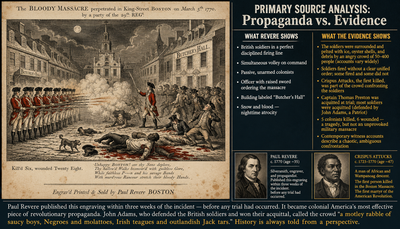
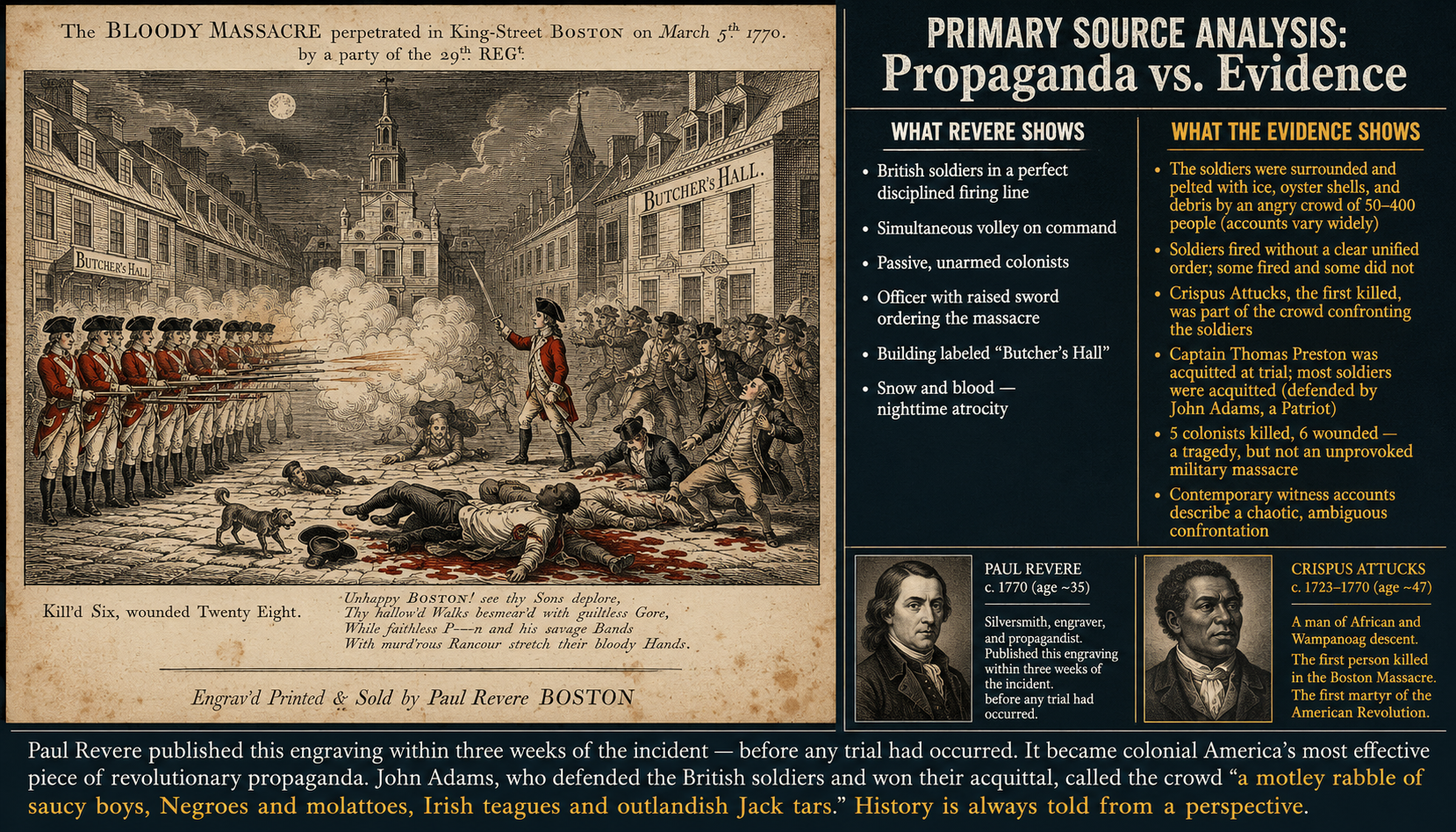
The Boston Massacre of March 5, 1770, when British soldiers fired into a crowd of colonists, killing five people and inflaming colonial resistance.
-
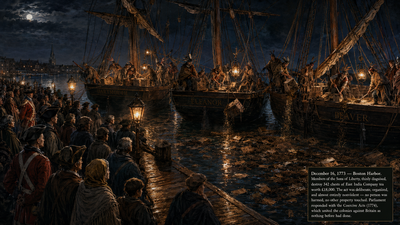
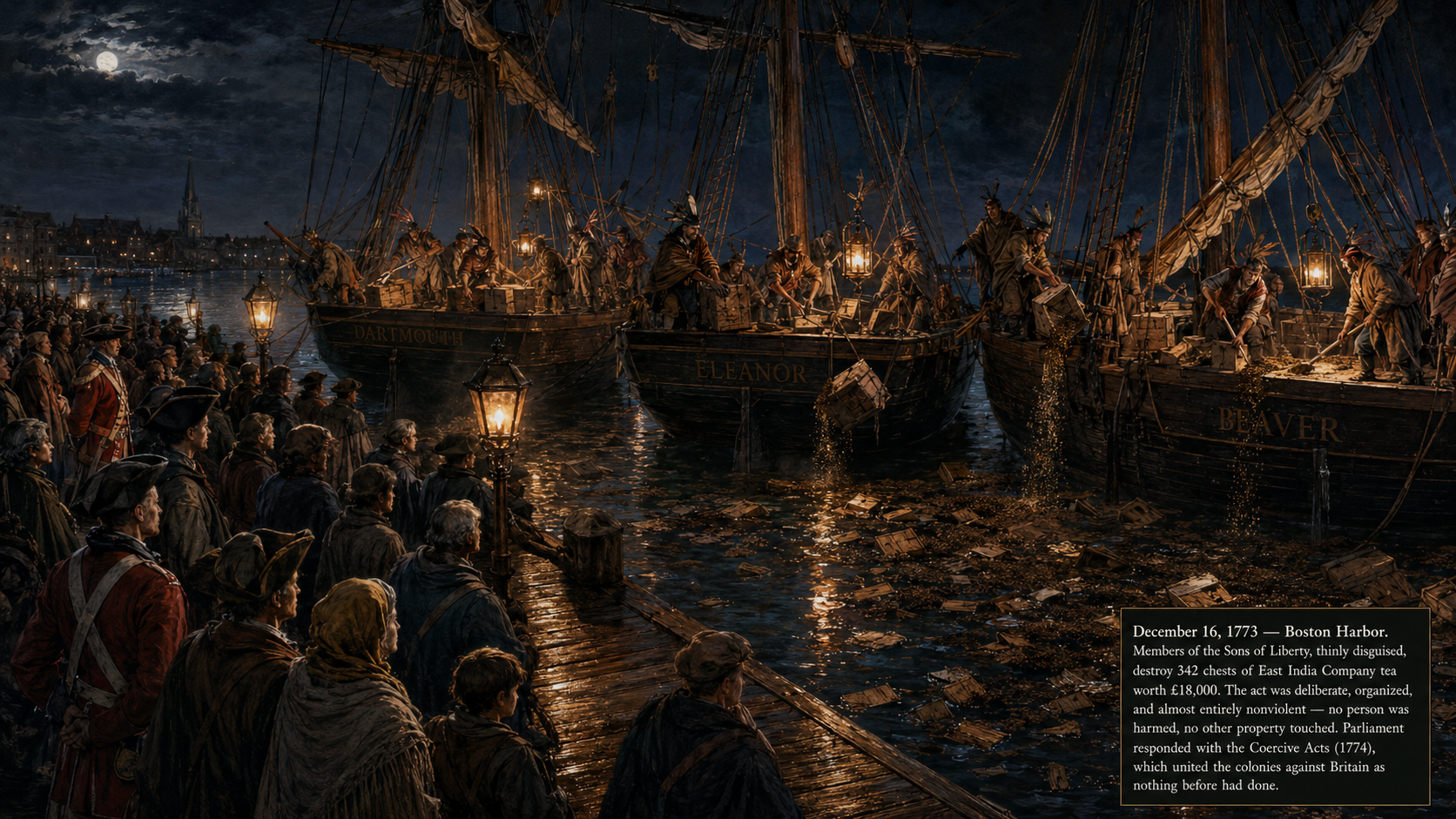
The Boston Tea Party of December 16, 1773, when colonists dumped 342 chests of British tea into Boston Harbor to protest taxation without representation.
-
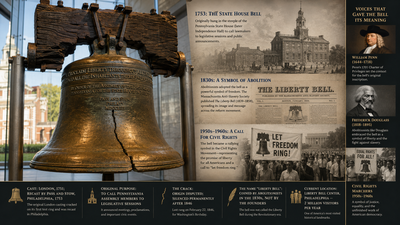
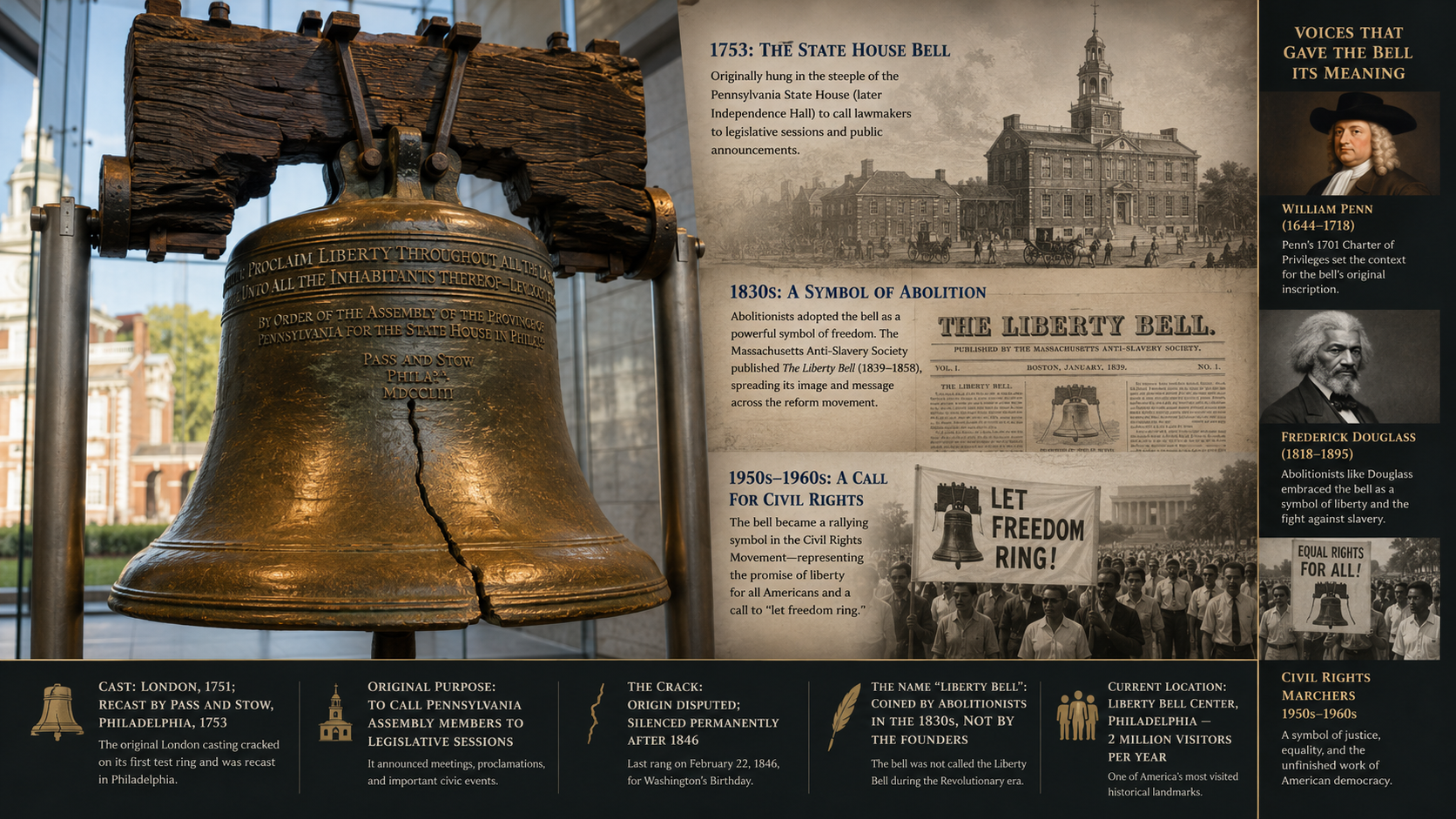
The Liberty Bell, the iconic symbol of American independence and freedom located in Philadelphia, Pennsylvania.
-
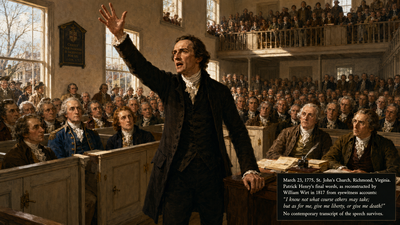
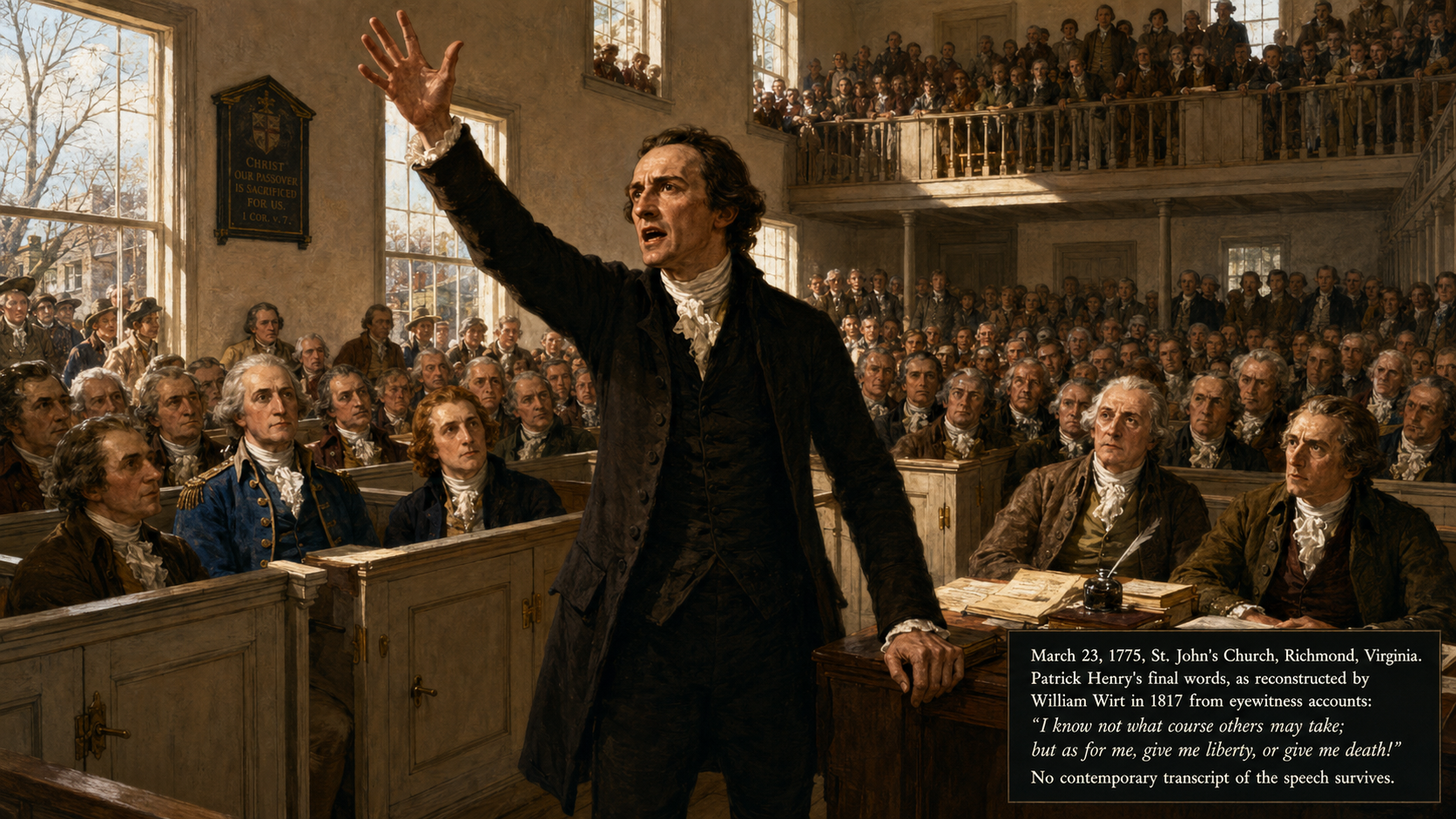
Patrick Henry delivering his famous "Give me liberty, or give me death!" speech to the Virginia Convention in March 1775.
-
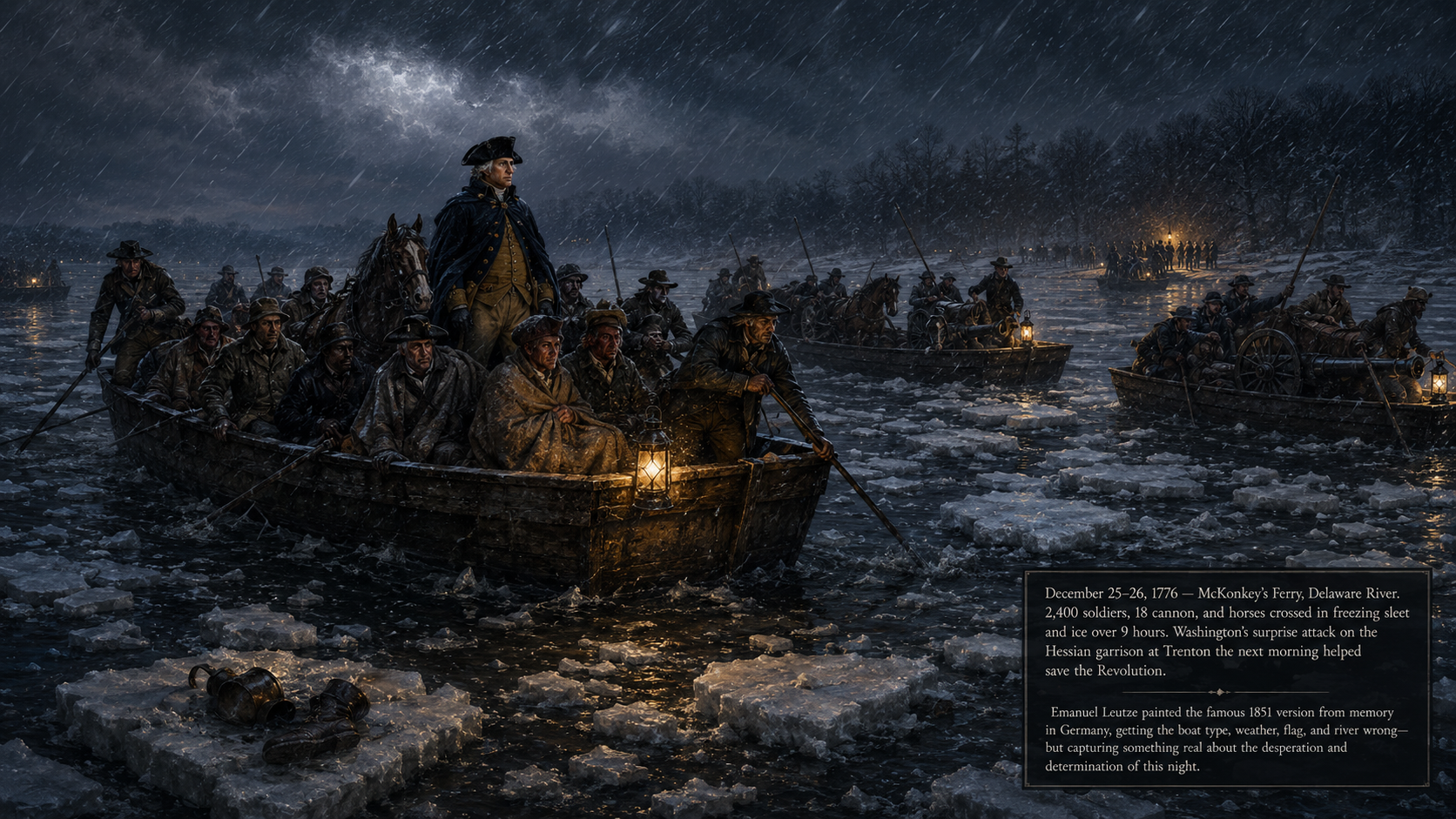
18 Washington Crossing the Delaware
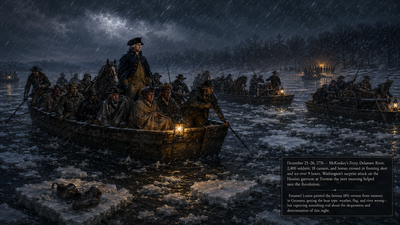
George Washington's daring crossing of the Delaware River on the night of December 25–26, 1776, before the surprise attack at the Battle of Trenton.
-
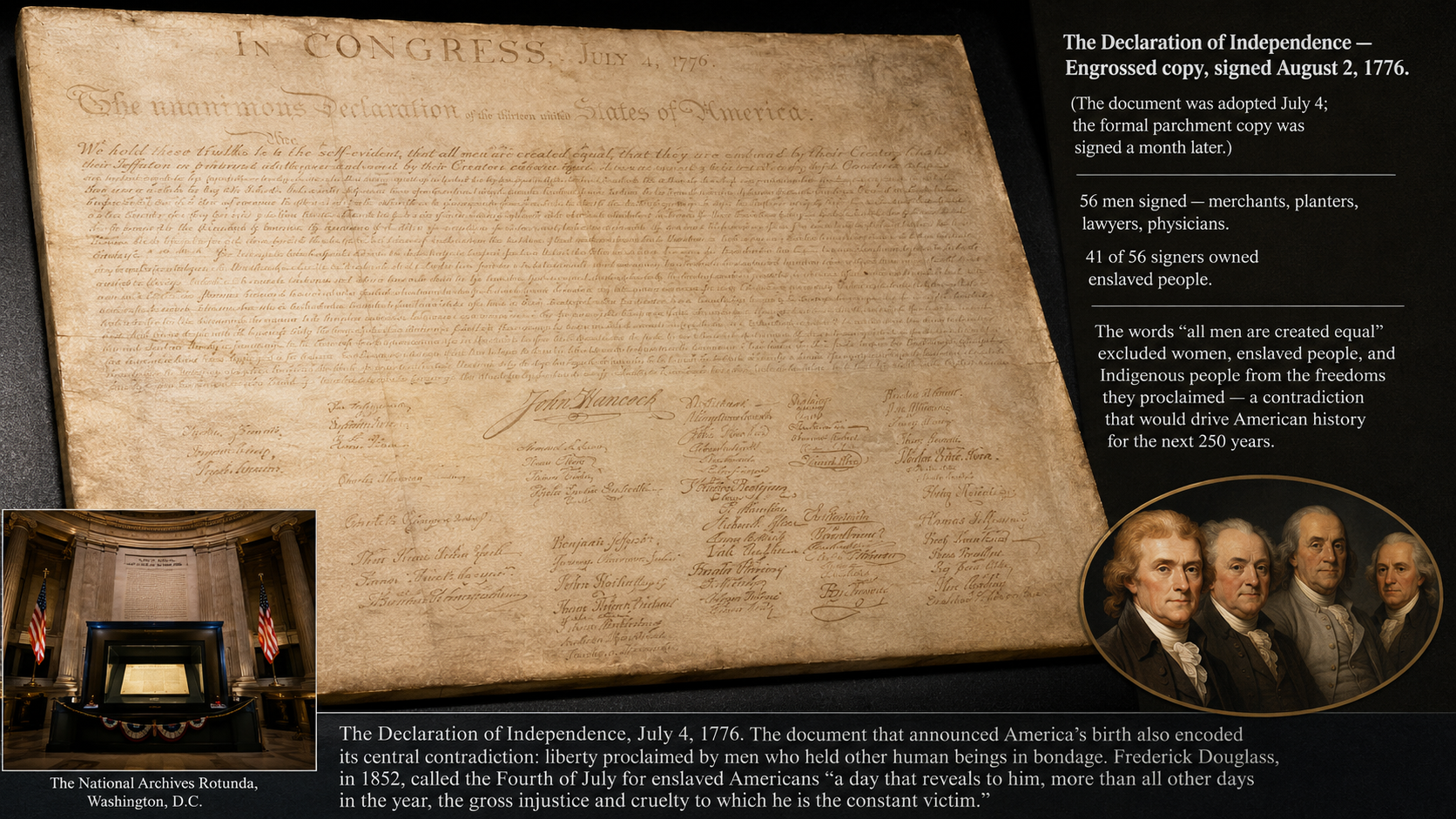
19 Declaration of Independence
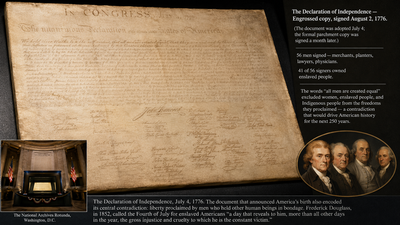
The Declaration of Independence, adopted by the Continental Congress on July 4, 1776, asserting the colonies' separation from Britain.
-
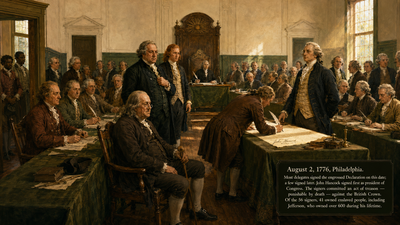
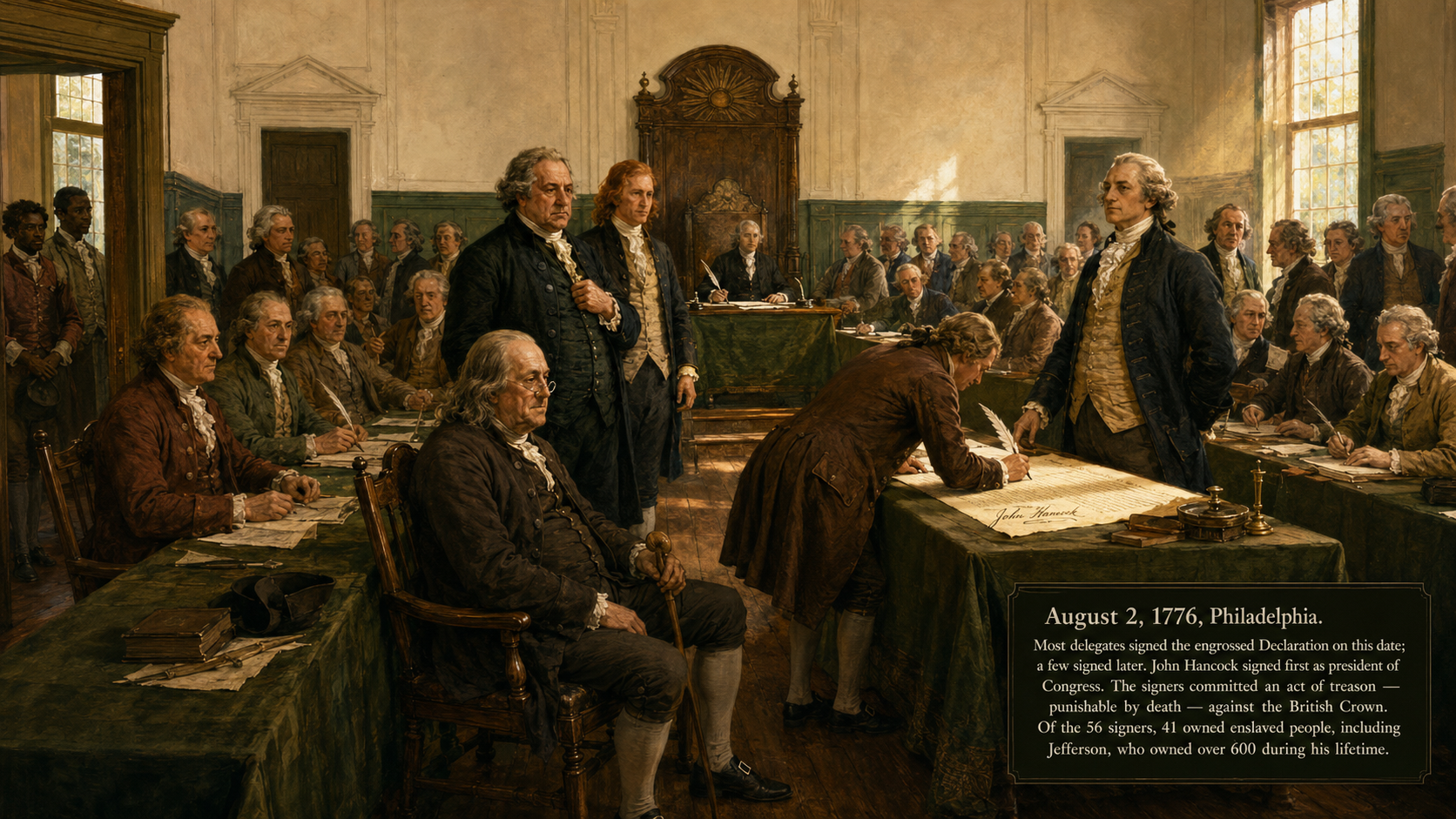
Members of the Second Continental Congress signing the Declaration of Independence in Philadelphia's Independence Hall in 1776.
-
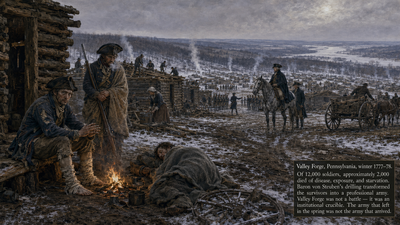
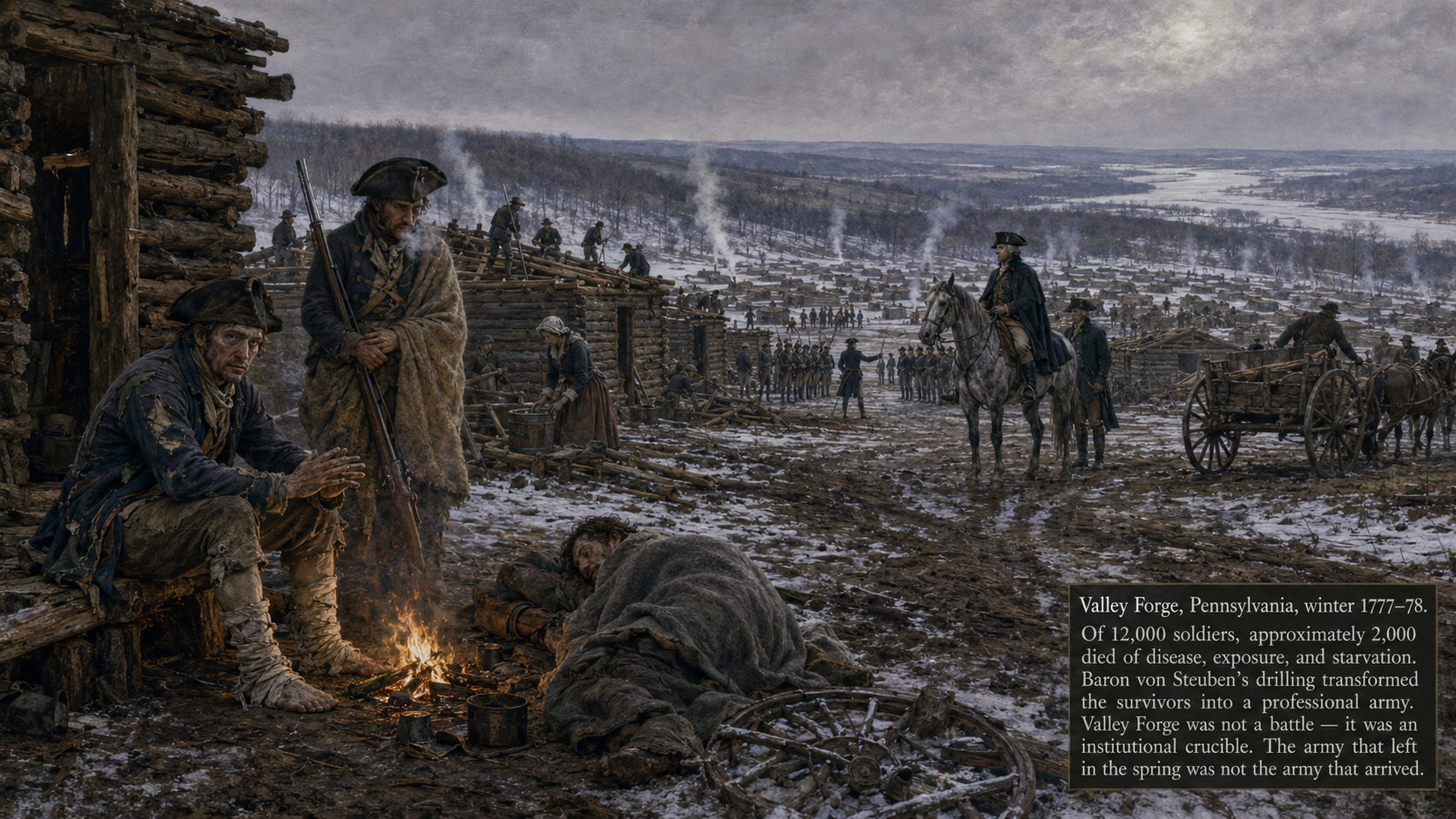
The Continental Army enduring the brutal winter encampment at Valley Forge, Pennsylvania, from December 1777 to June 1778.
-
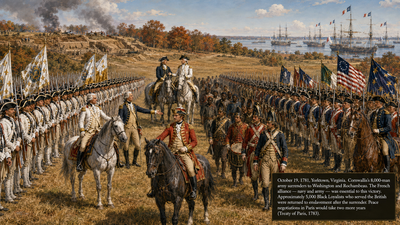
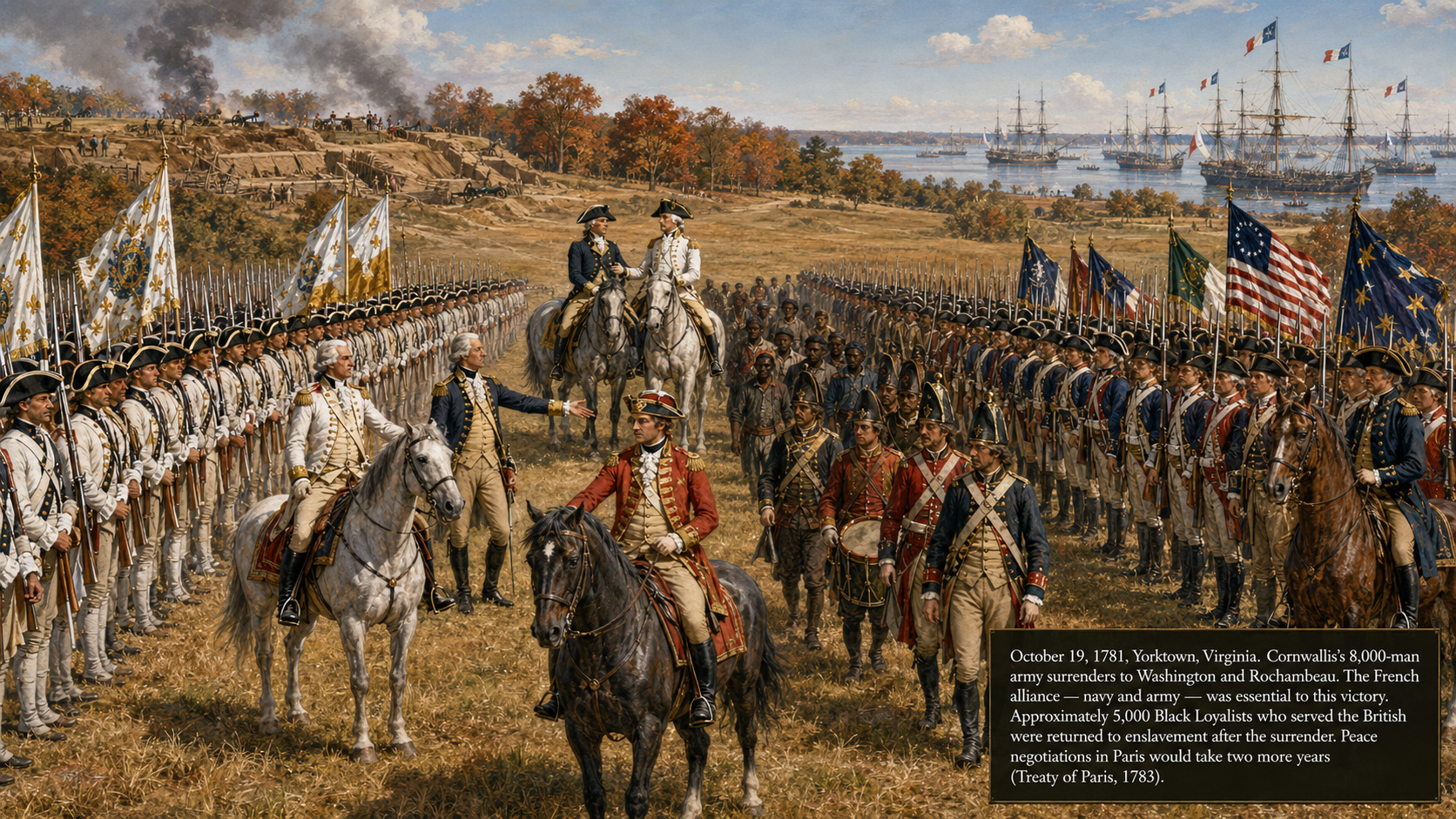
The Siege of Yorktown in 1781, the decisive final campaign of the American Revolutionary War that secured independence.
-
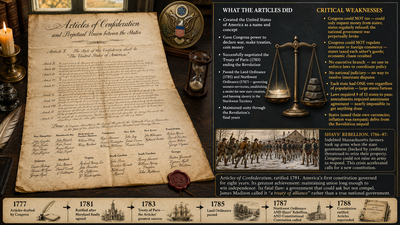
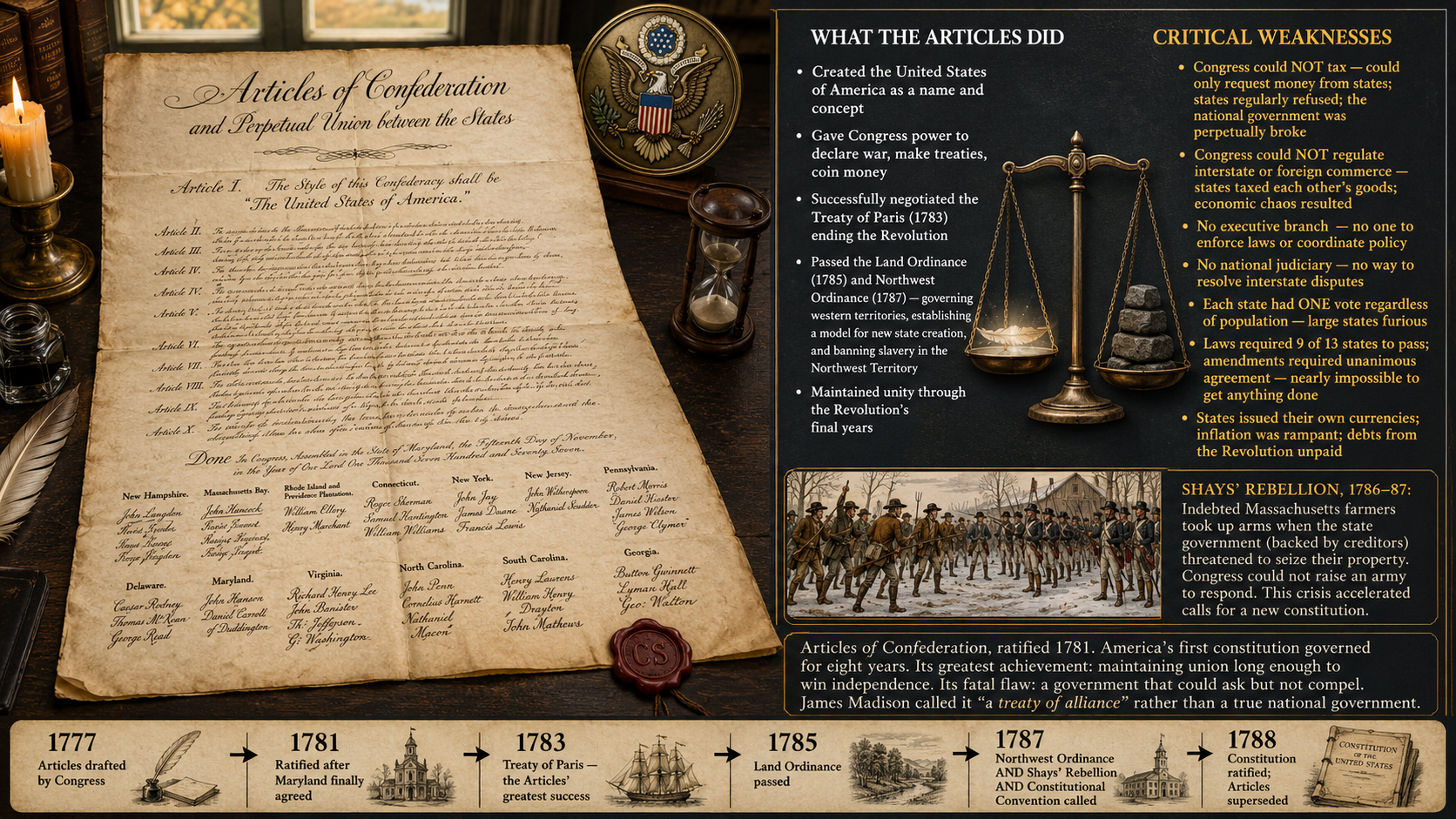
The Articles of Confederation, America's first national constitution, which proved too weak and was replaced by the U.S. Constitution.
-
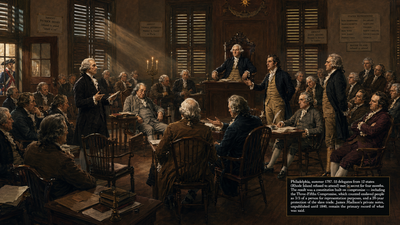
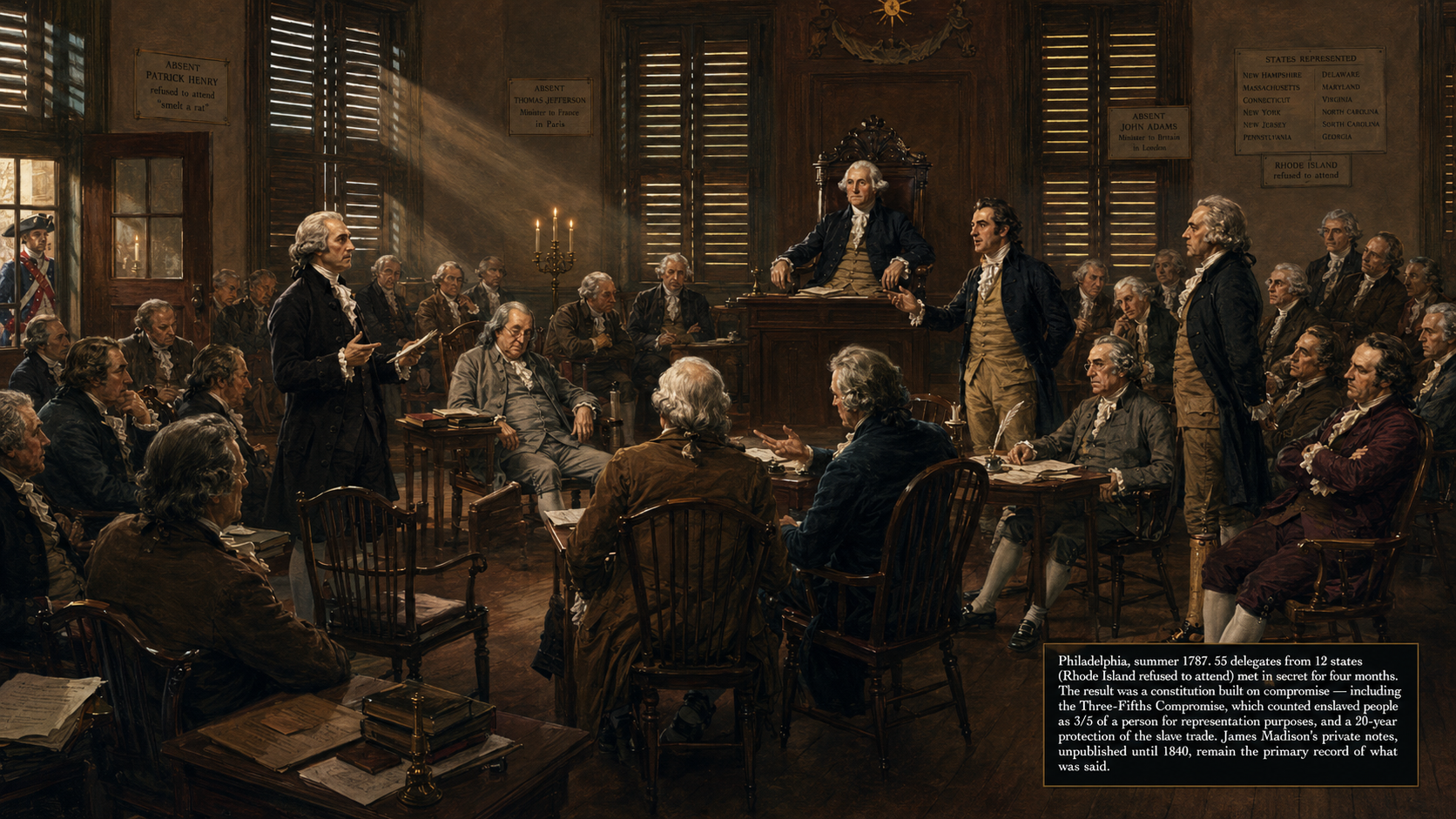
Delegates gathering at the Constitutional Convention in Philadelphia in 1787 to draft a new framework of government for the United States.
-
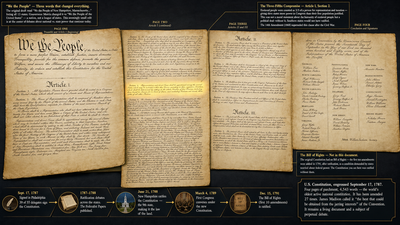
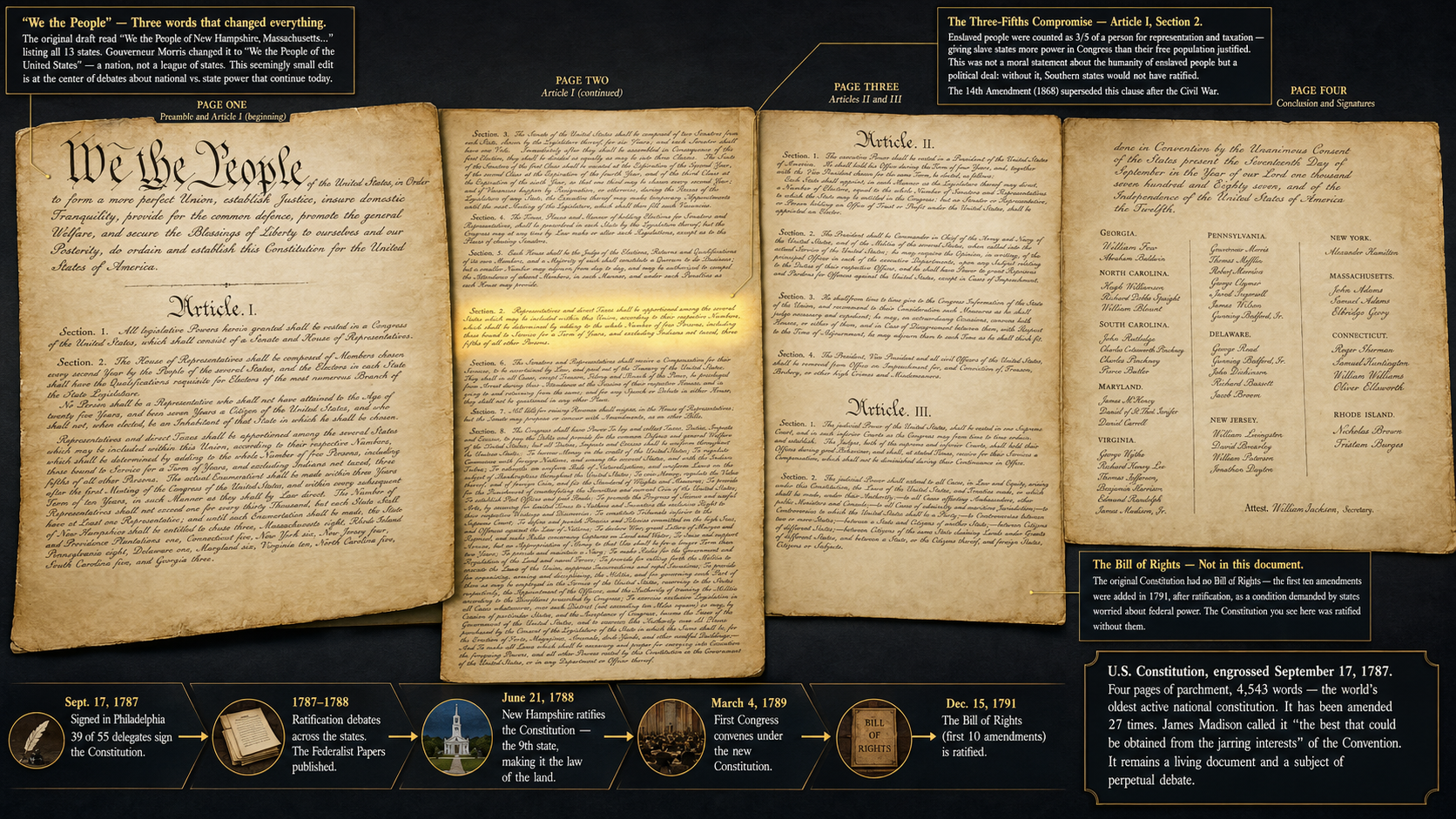
The United States Constitution, drafted in 1787 and ratified in 1788, establishing the enduring framework of American government.
-
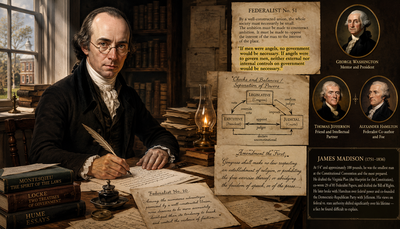
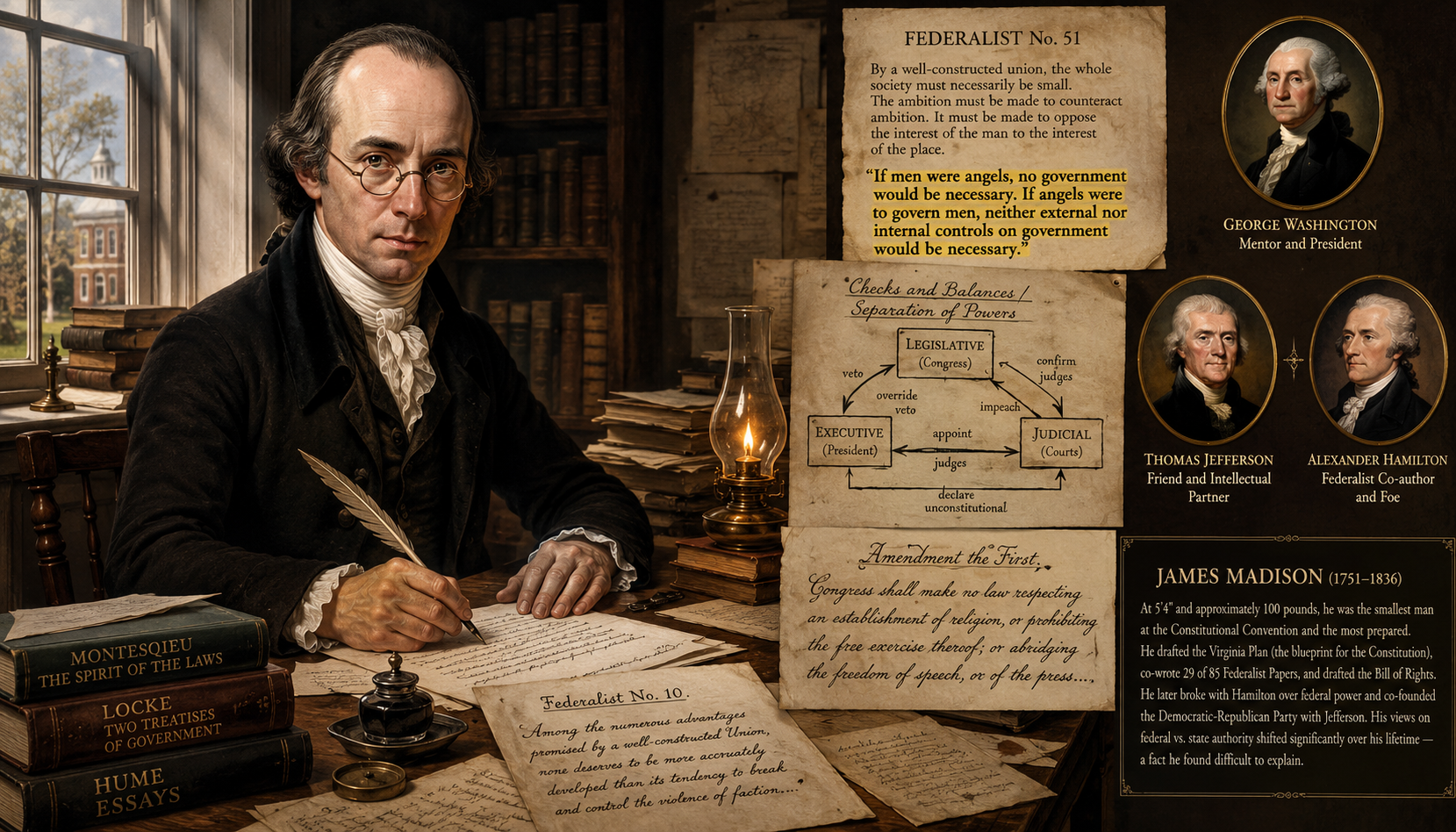
Portrait of James Madison, the "Father of the Constitution" and fourth President of the United States.
-
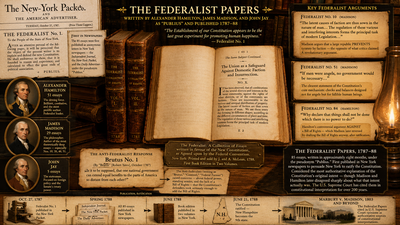
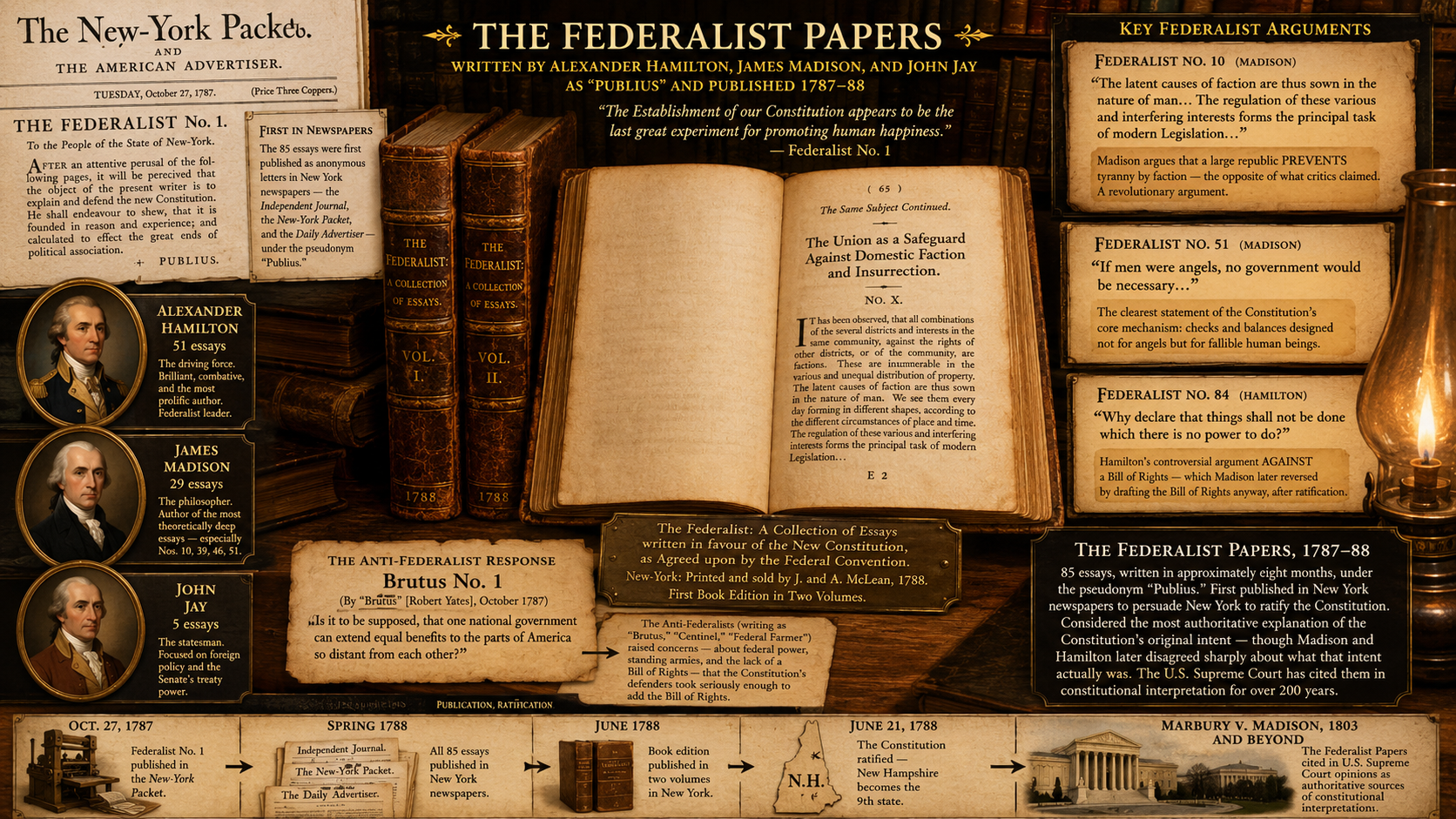
The Federalist Papers, 85 essays by Hamilton, Madison, and Jay advocating ratification of the Constitution and explaining its principles.
-
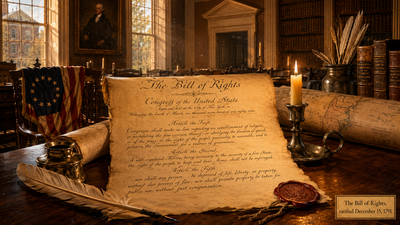
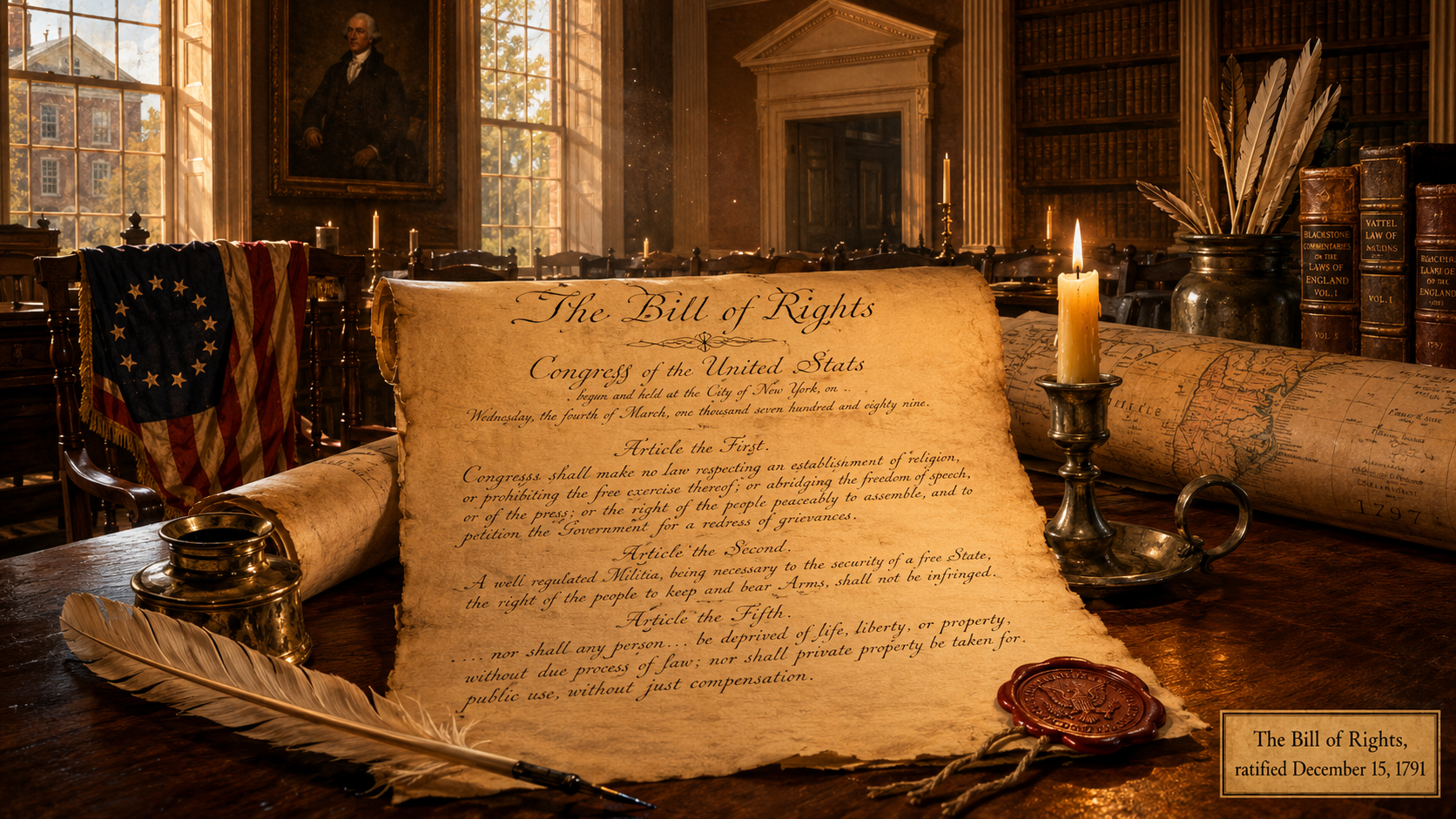
The Bill of Rights — the first ten amendments to the Constitution, ratified in 1791 to protect individual liberties from federal overreach.
-
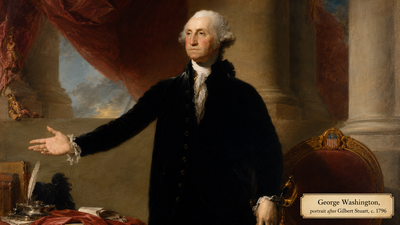
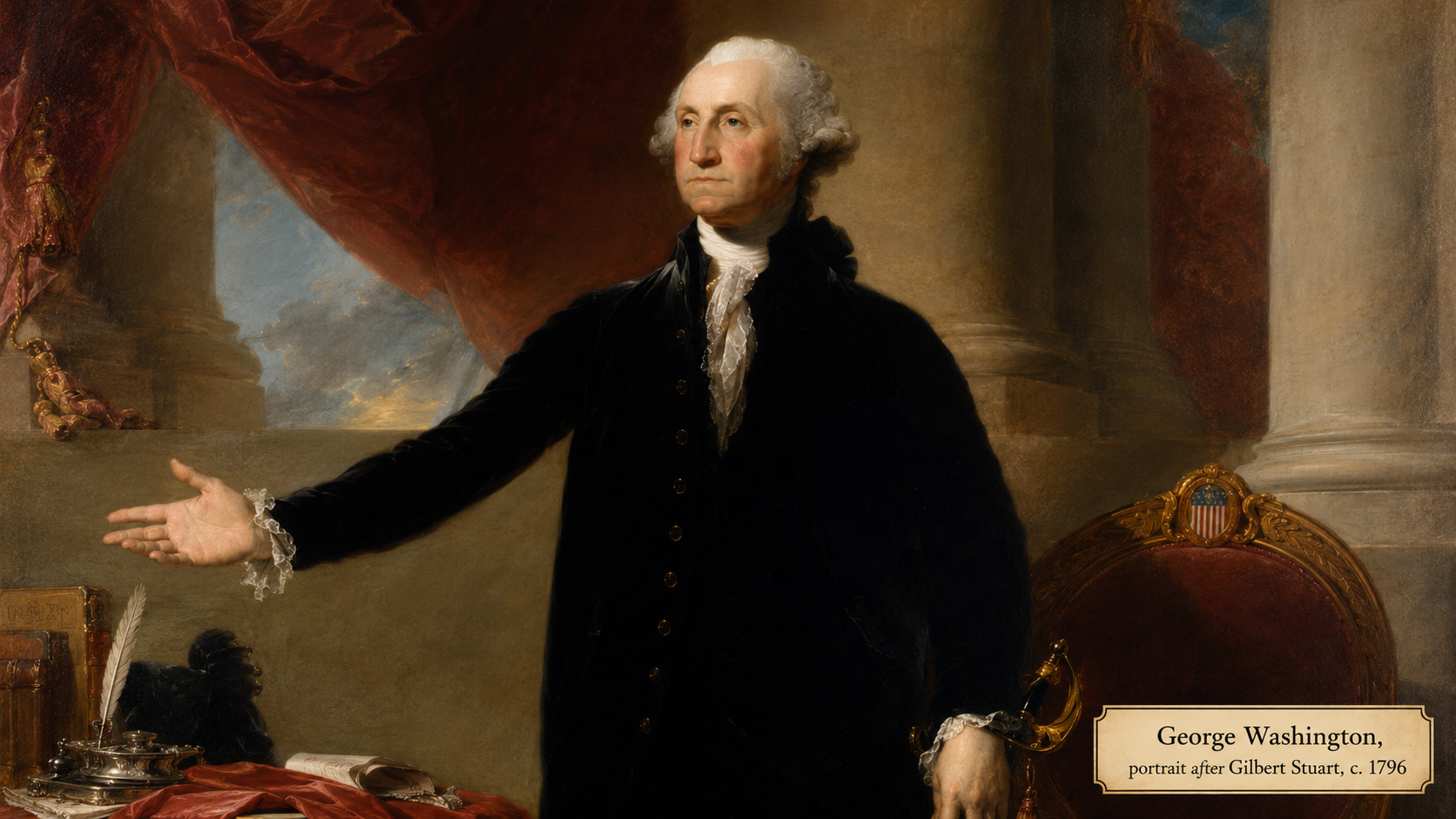
Portrait of George Washington, commander of the Continental Army, presiding officer of the Constitutional Convention, and first President of the United States.
-
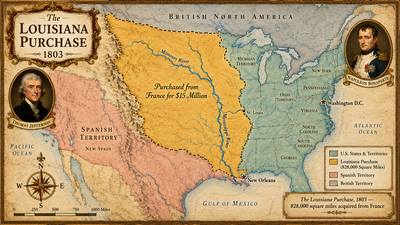
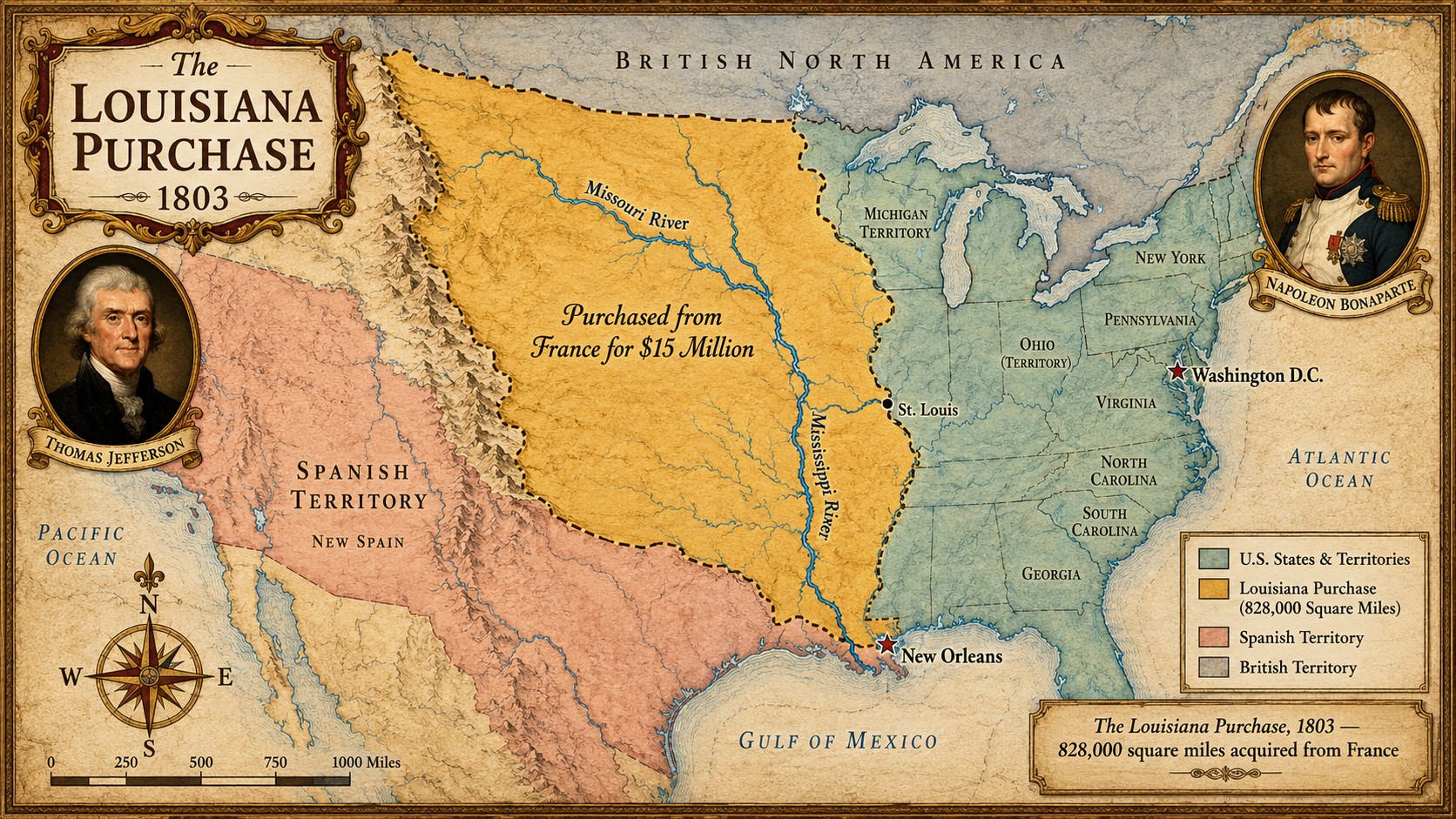
A map showing the Louisiana Purchase of 1803, in which the United States acquired 828,000 square miles from France, doubling the nation's size.
-
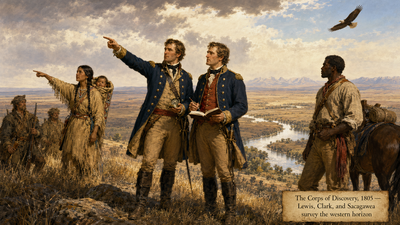
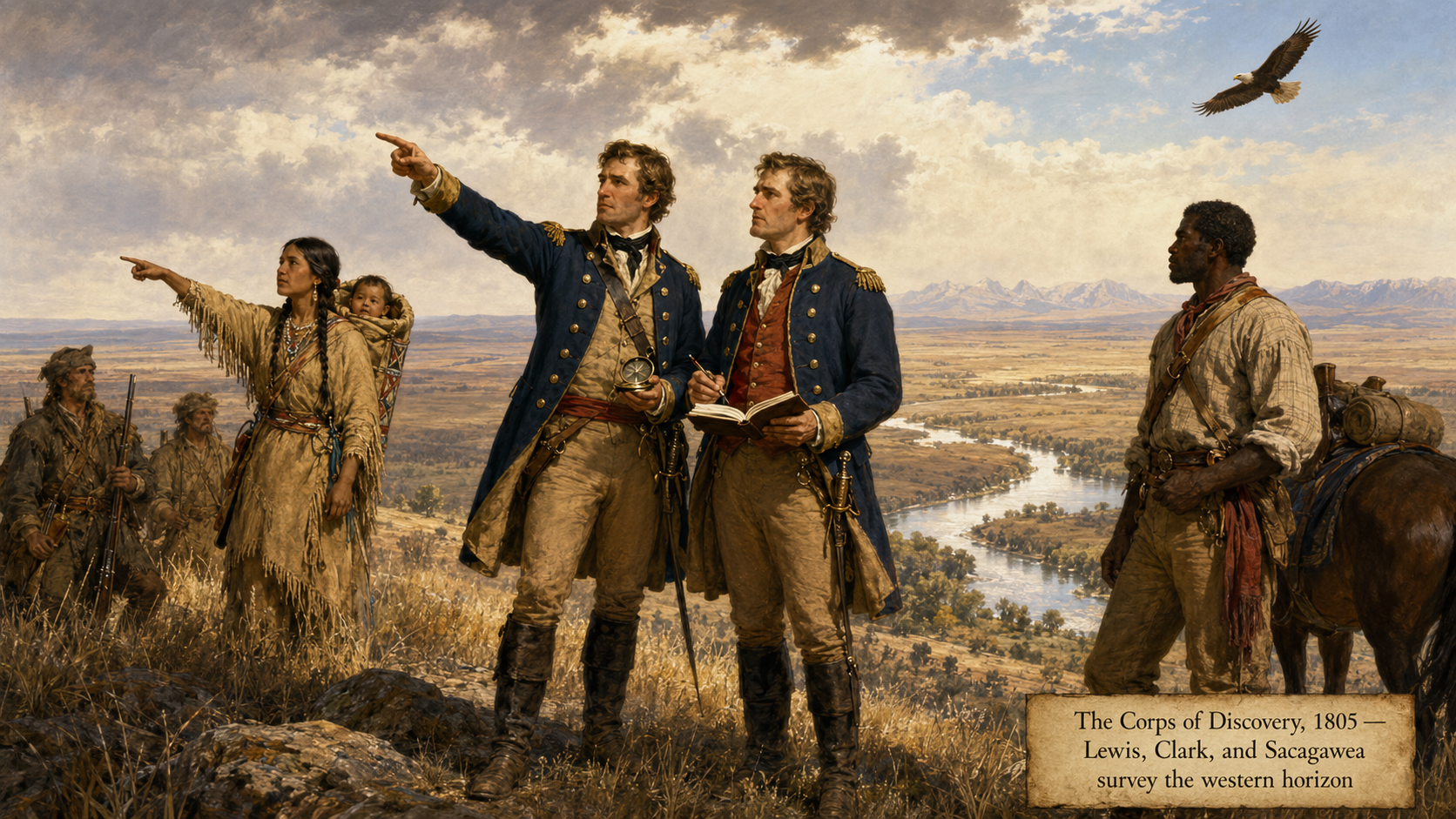
The Lewis and Clark Expedition (1804–1806) exploring the western territories acquired through the Louisiana Purchase and reaching the Pacific Coast.
-
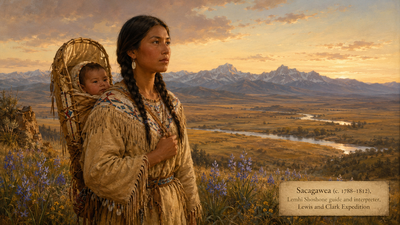
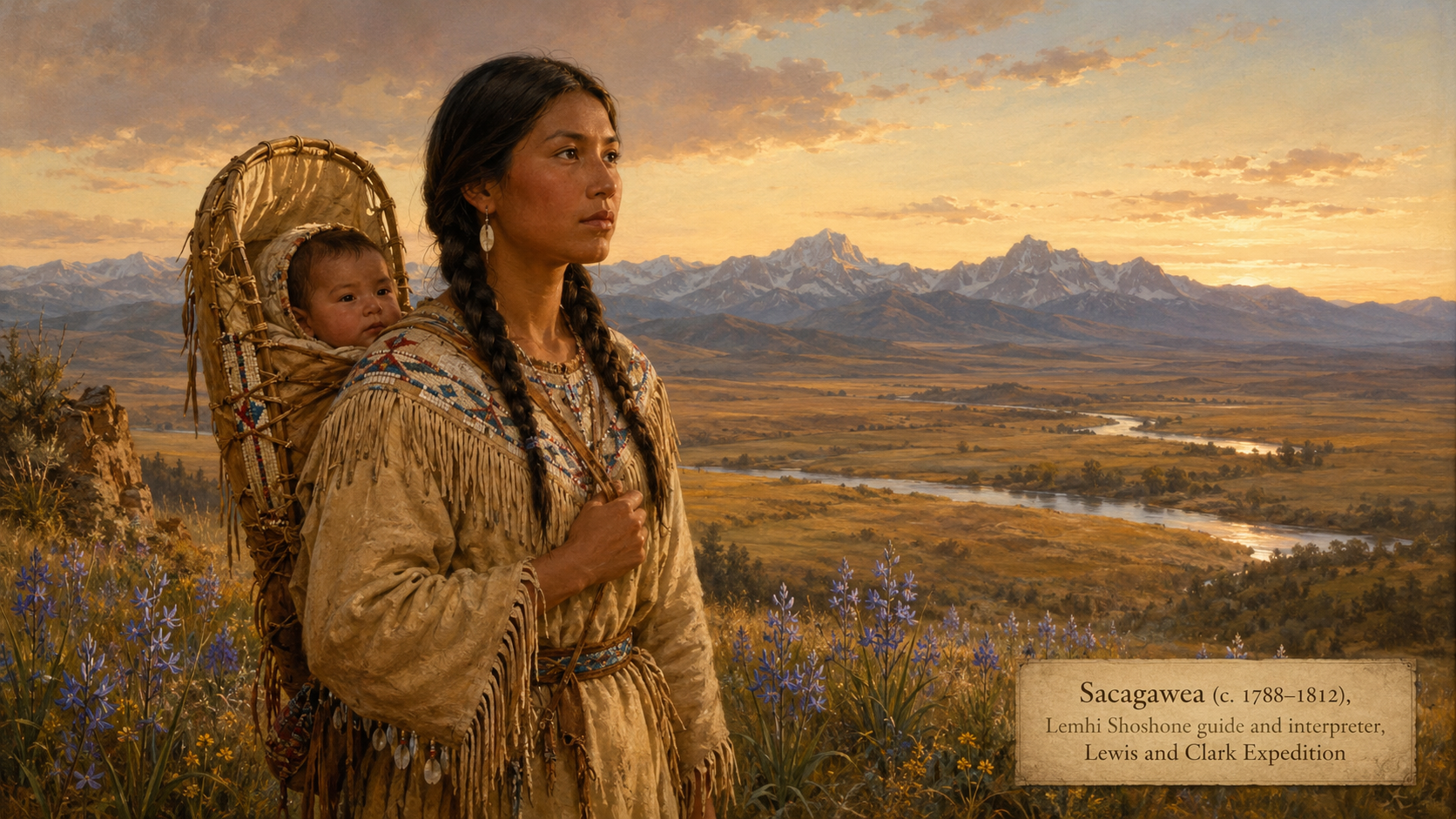
Portrait of Sacagawea, the Shoshone woman who served as guide, interpreter, and diplomatic asset for the Lewis and Clark Expedition.
-
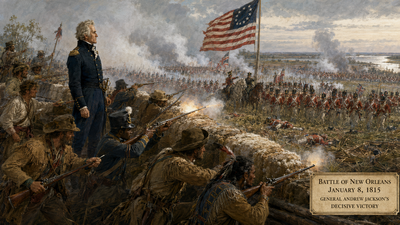
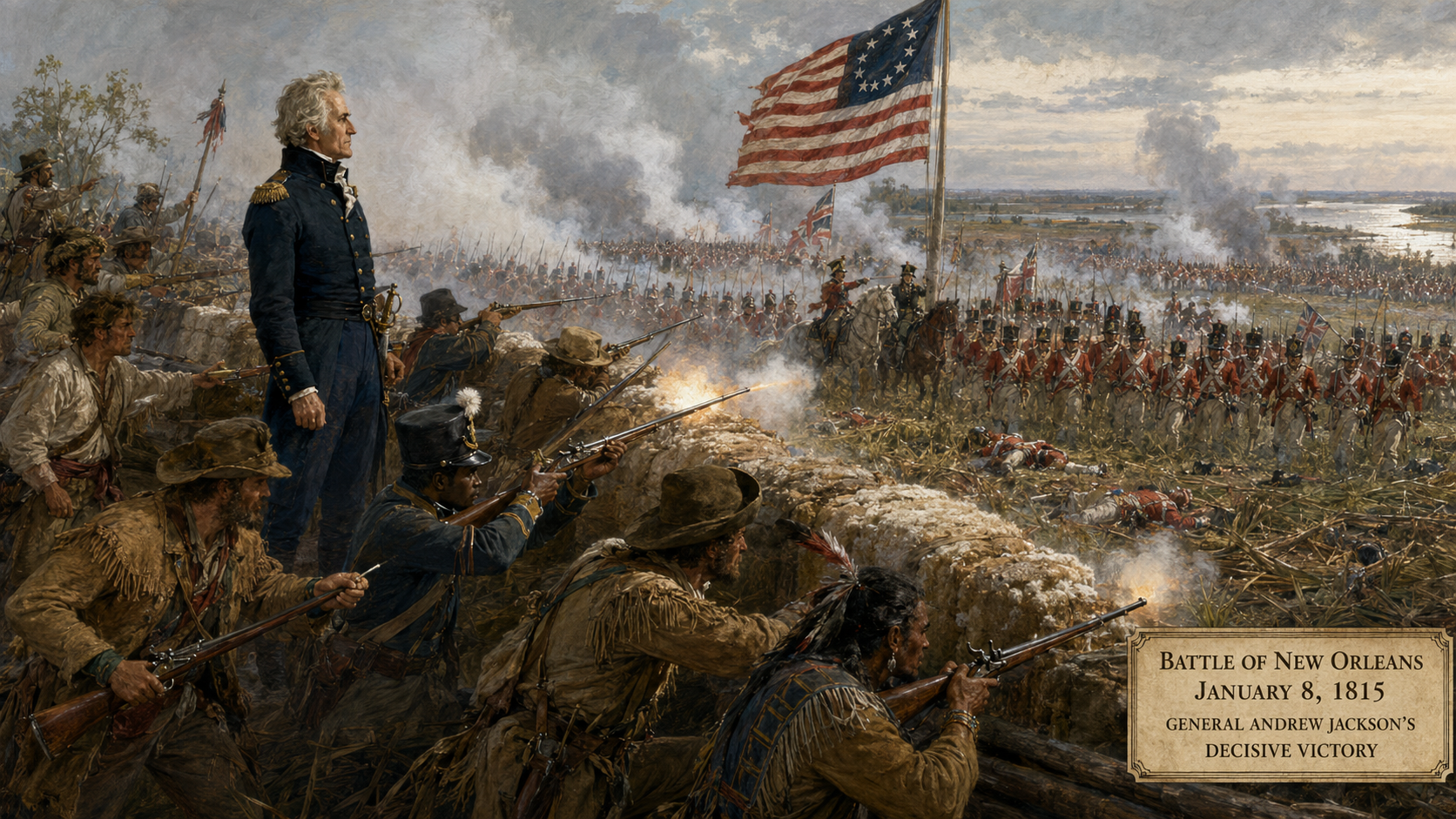
The Battle of New Orleans in January 1815, Andrew Jackson's decisive victory and the final major battle of the War of 1812.
-
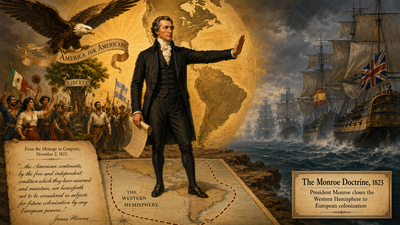
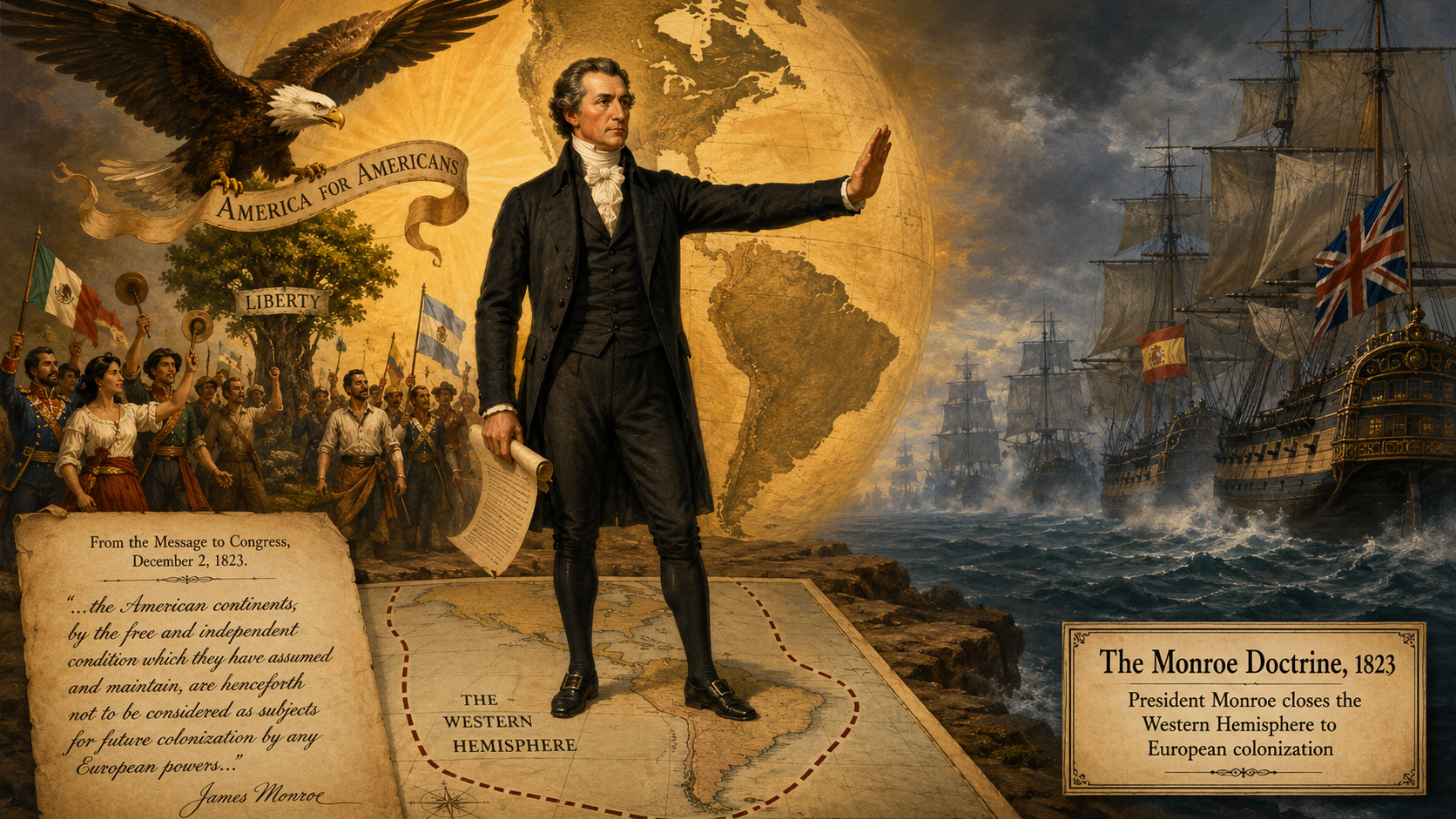
President James Monroe announcing the Monroe Doctrine in 1823, declaring the Western Hemisphere closed to further European colonization or interference.
-
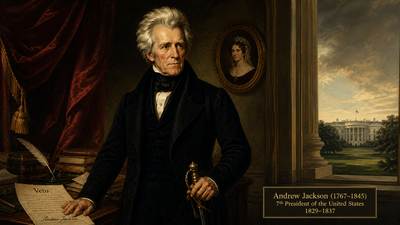
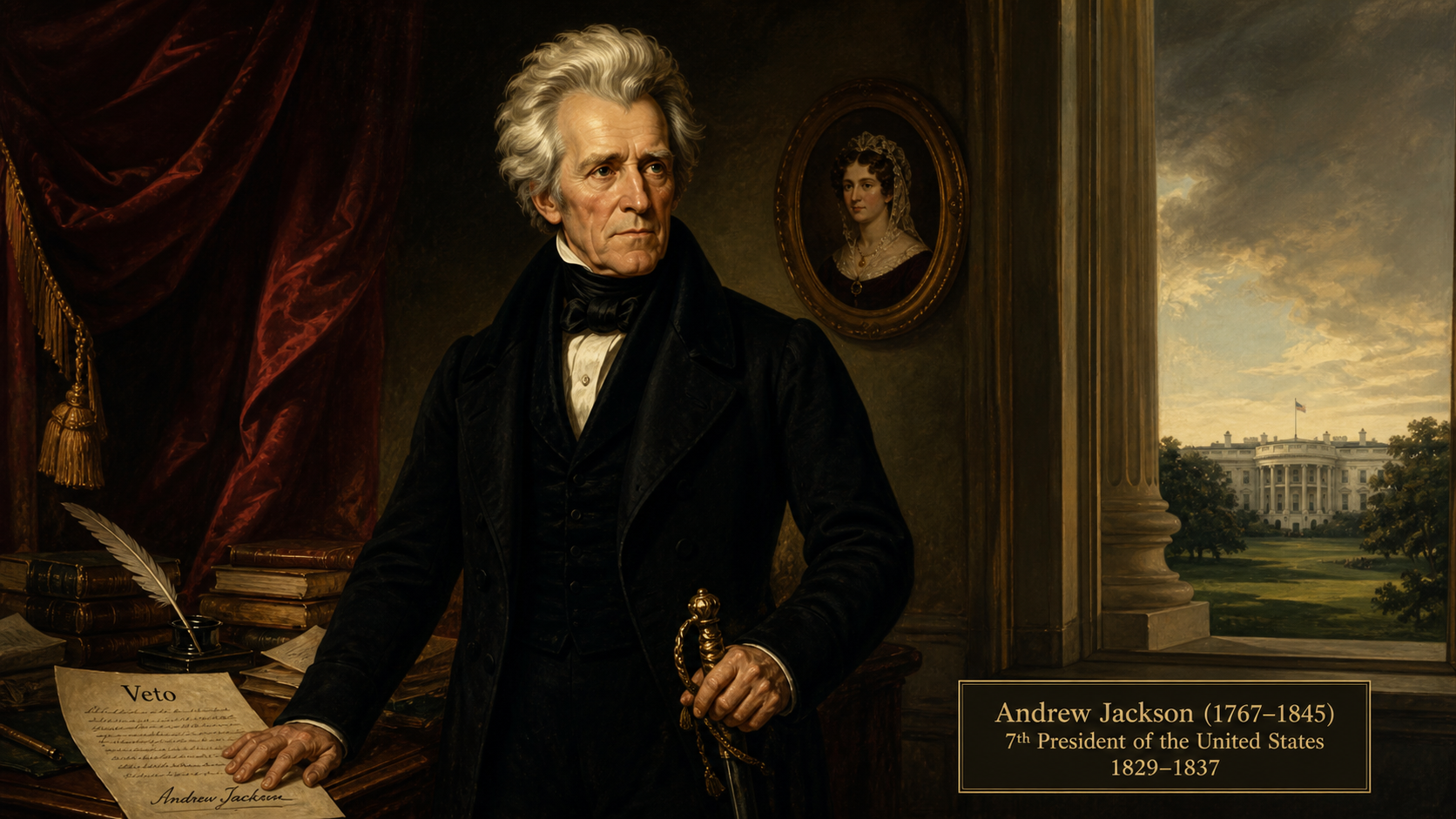
Portrait of Andrew Jackson, the seventh President of the United States and controversial champion of "Jacksonian Democracy" and westward expansion.
-
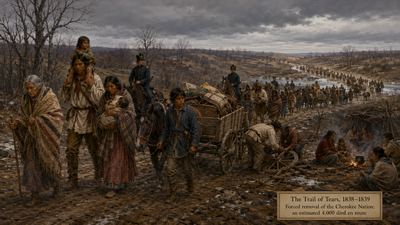
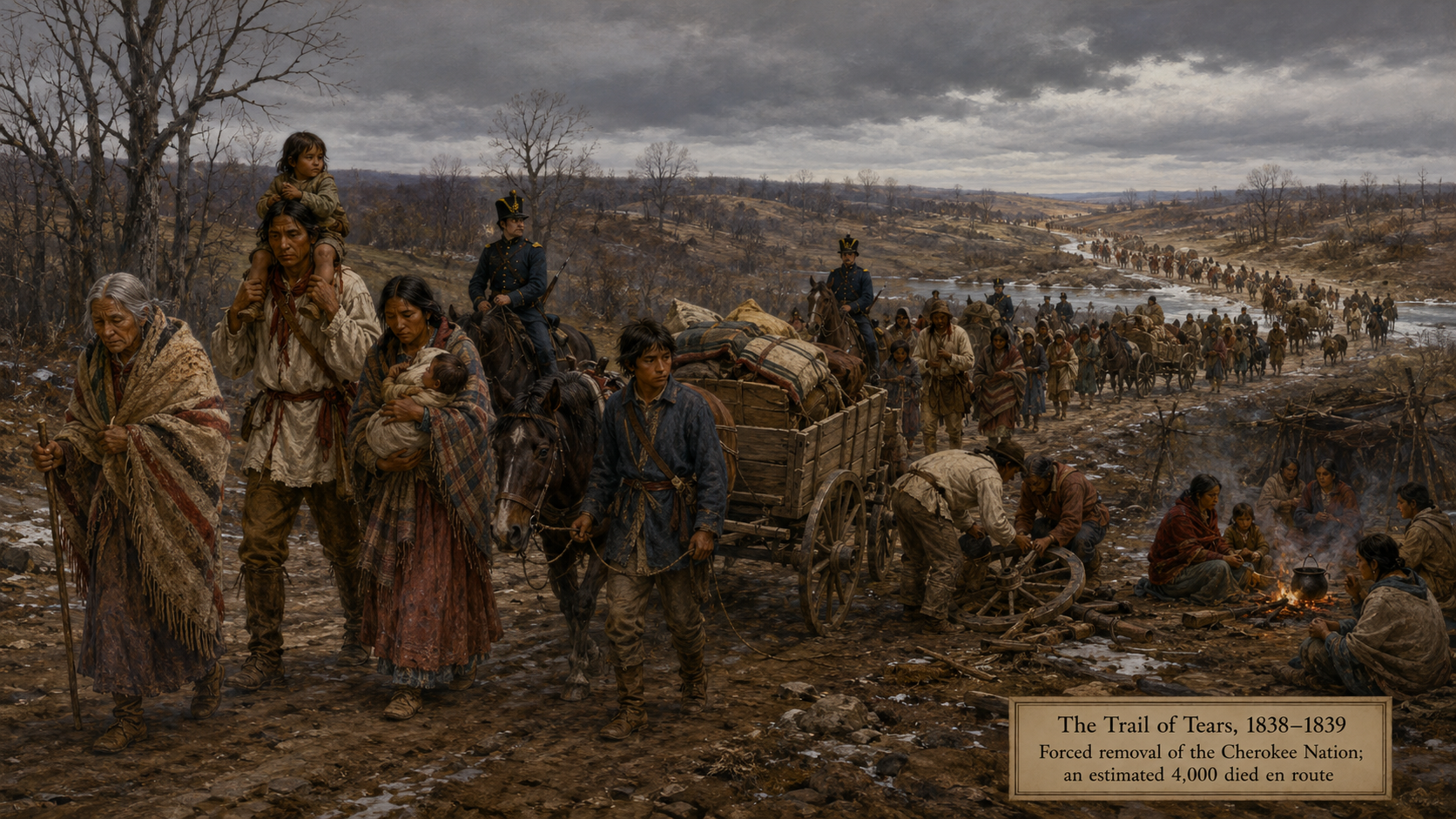
The forced removal of the Cherokee and other Indigenous nations from their homelands in the 1830s along the deadly Trail of Tears.
-
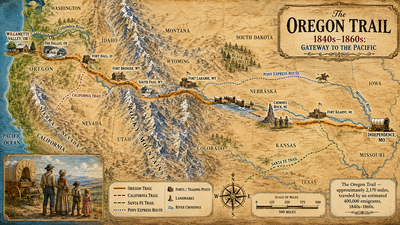
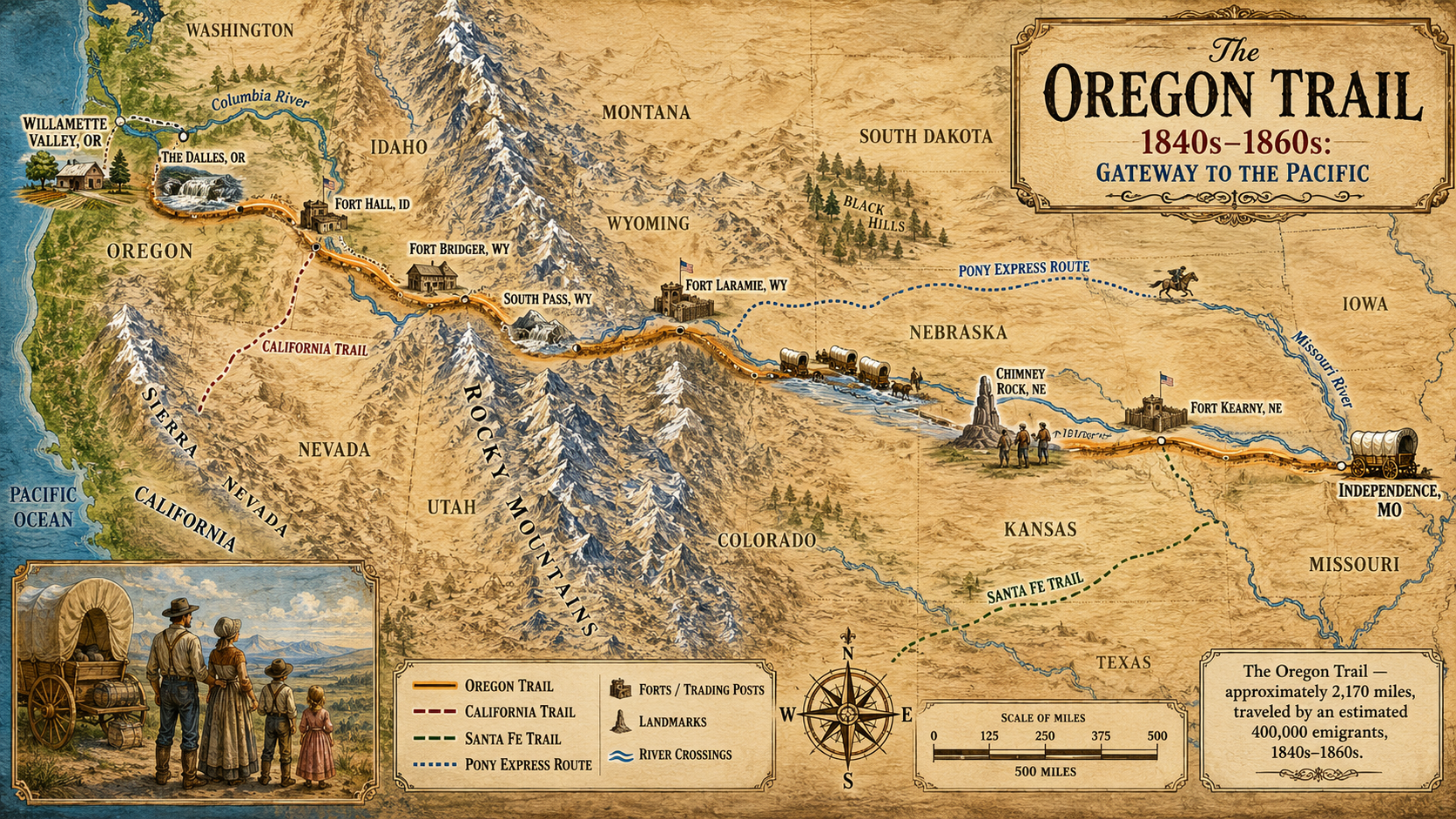
A map of the Oregon Trail, the 2,000-mile emigrant route used by hundreds of thousands of settlers heading to the Pacific Northwest in the 1840s–1860s.
-
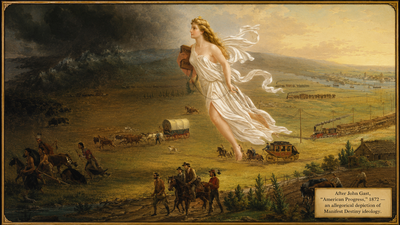
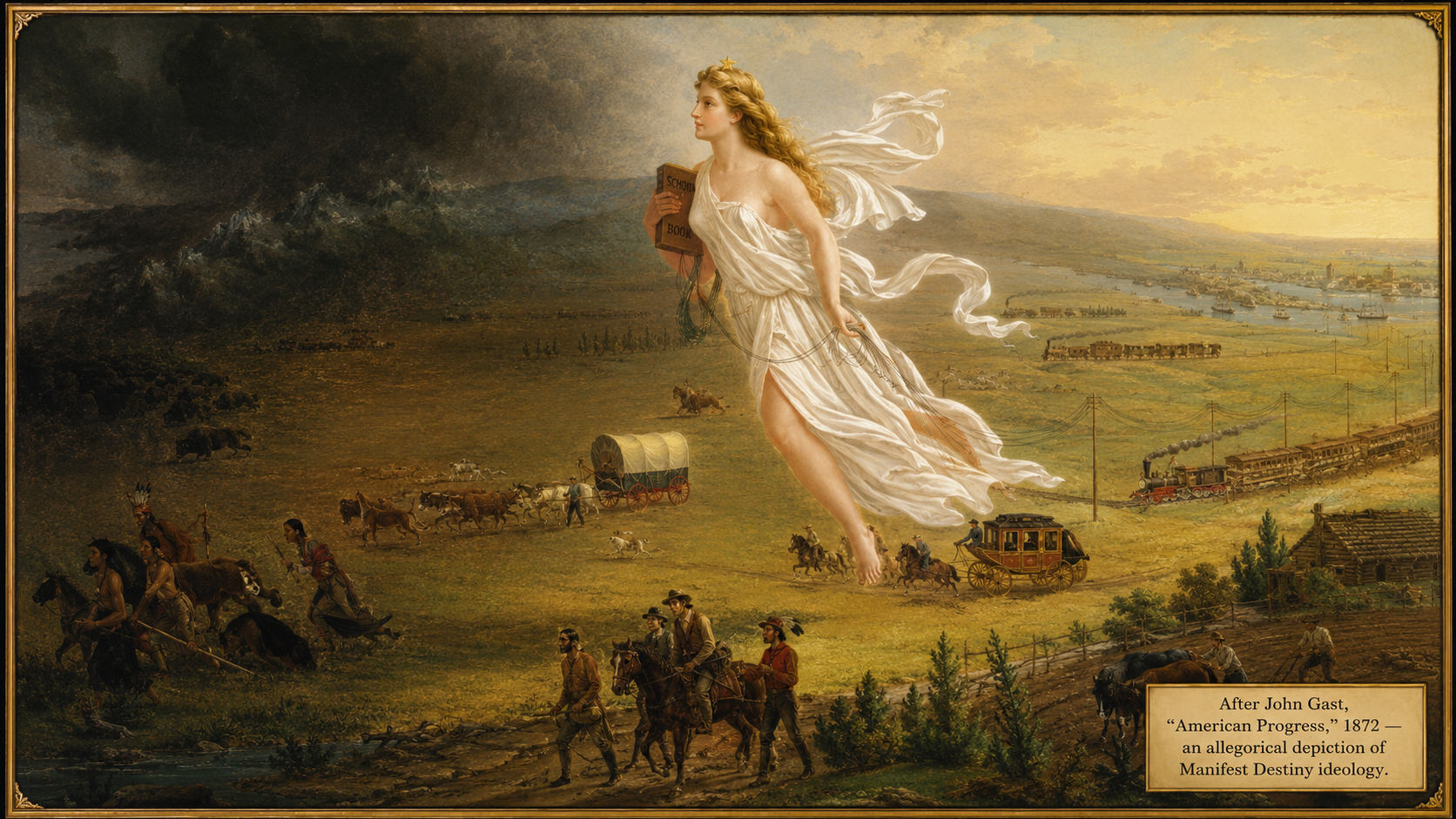
John Gast's allegorical painting "American Progress" (1872) depicting the concept of Manifest Destiny as a heavenly figure leading settlers westward.
-
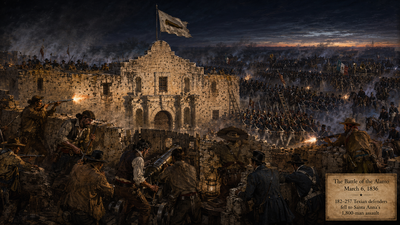
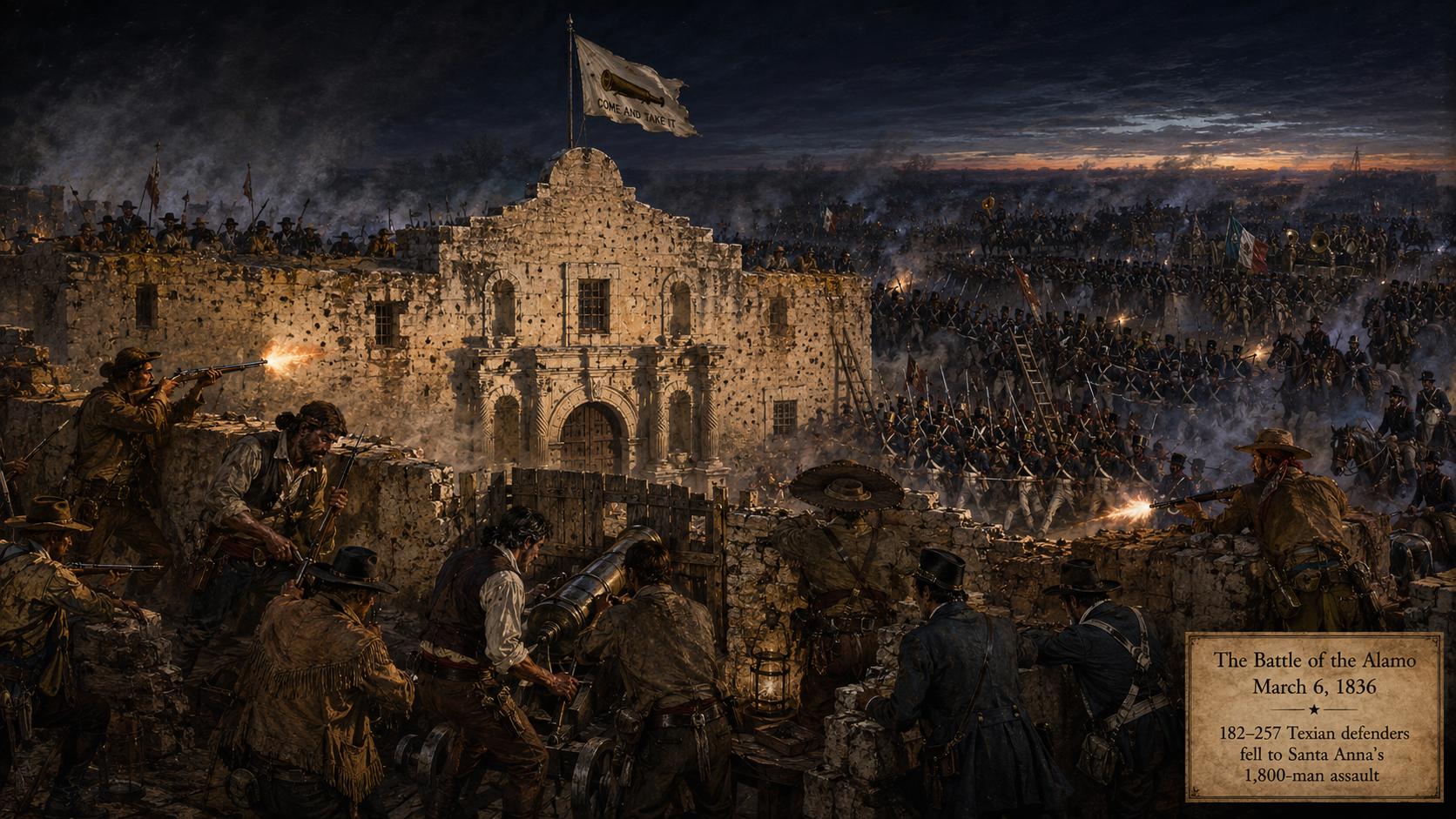
The Battle of the Alamo in February–March 1836, where a small band of Texas defenders held out against a larger Mexican army for thirteen days.
-
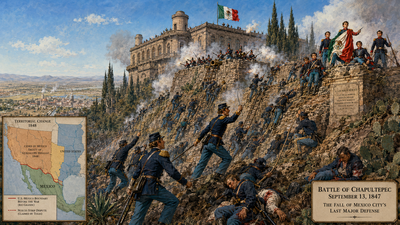
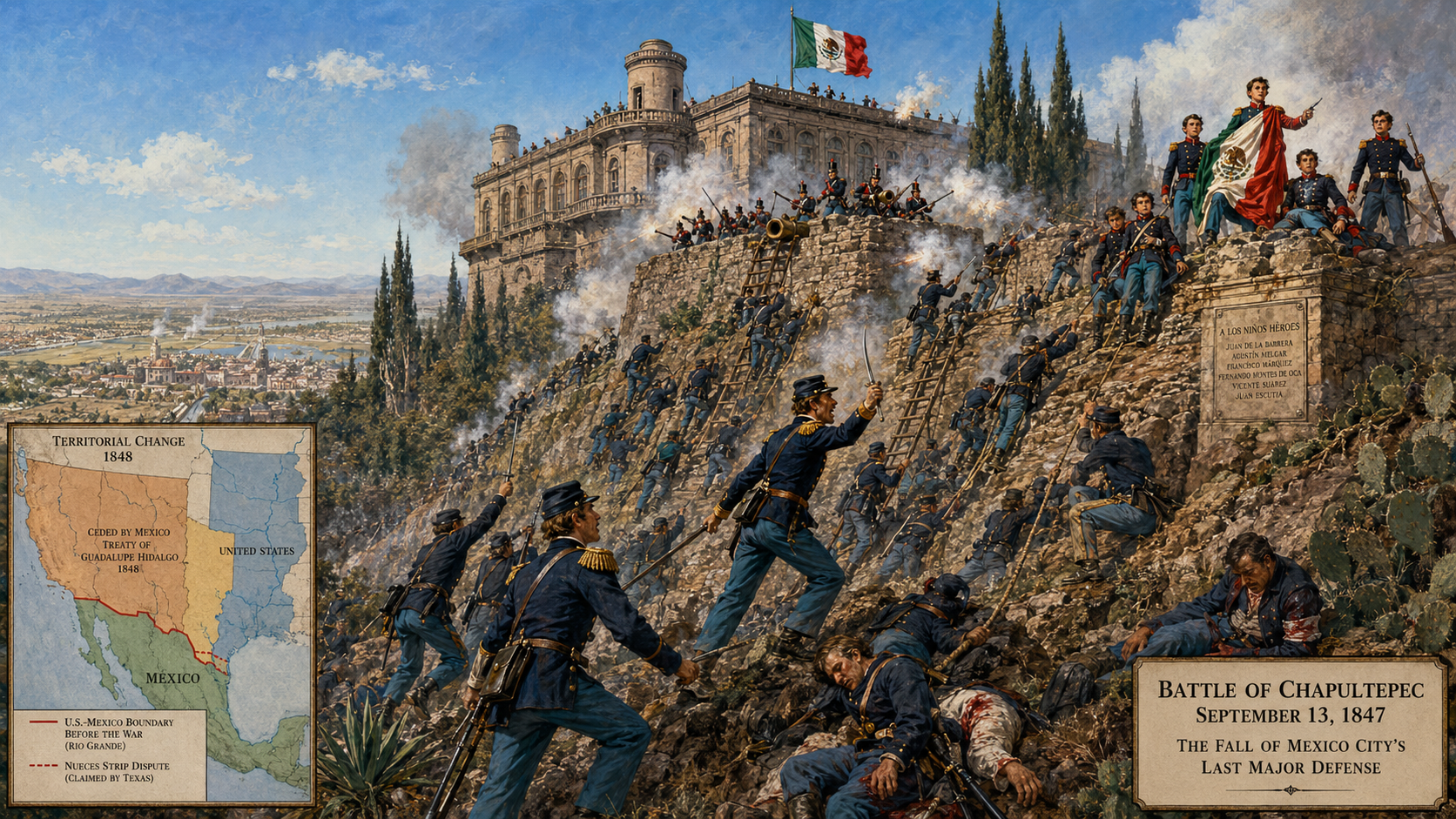
The Mexican-American War (1846–1848), which resulted in the United States acquiring the vast Southwest and California from Mexico.
-
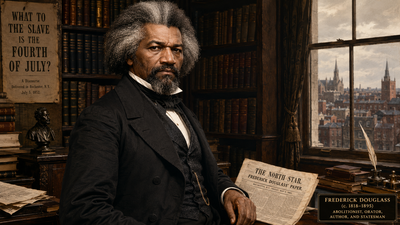
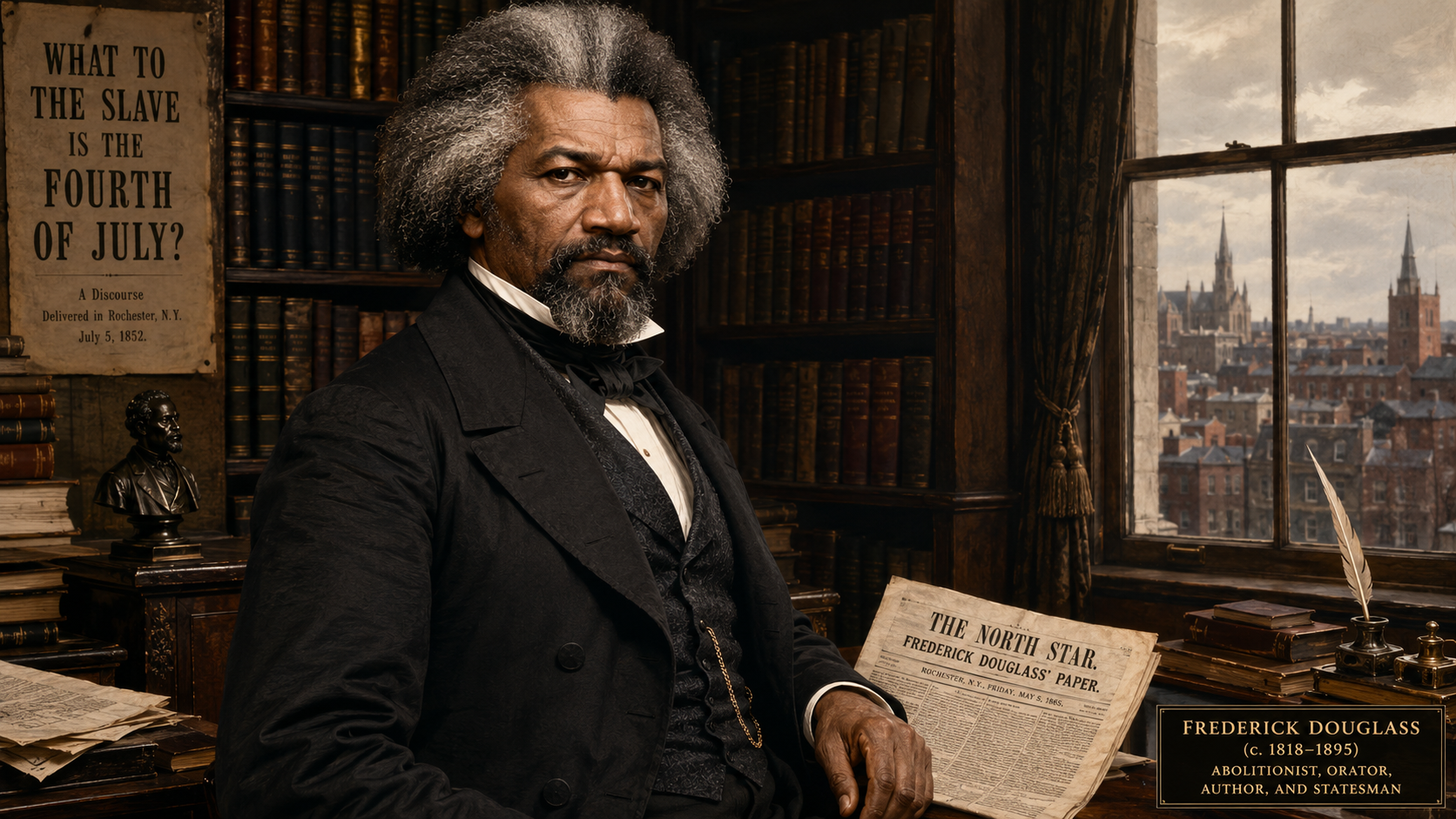
Portrait of Frederick Douglass, formerly enslaved abolitionist, orator, and author whose narrative became a landmark anti-slavery text.
-
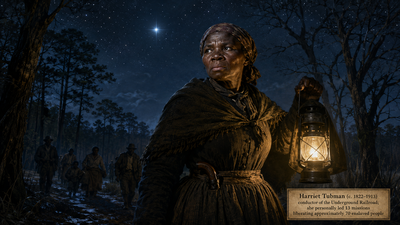
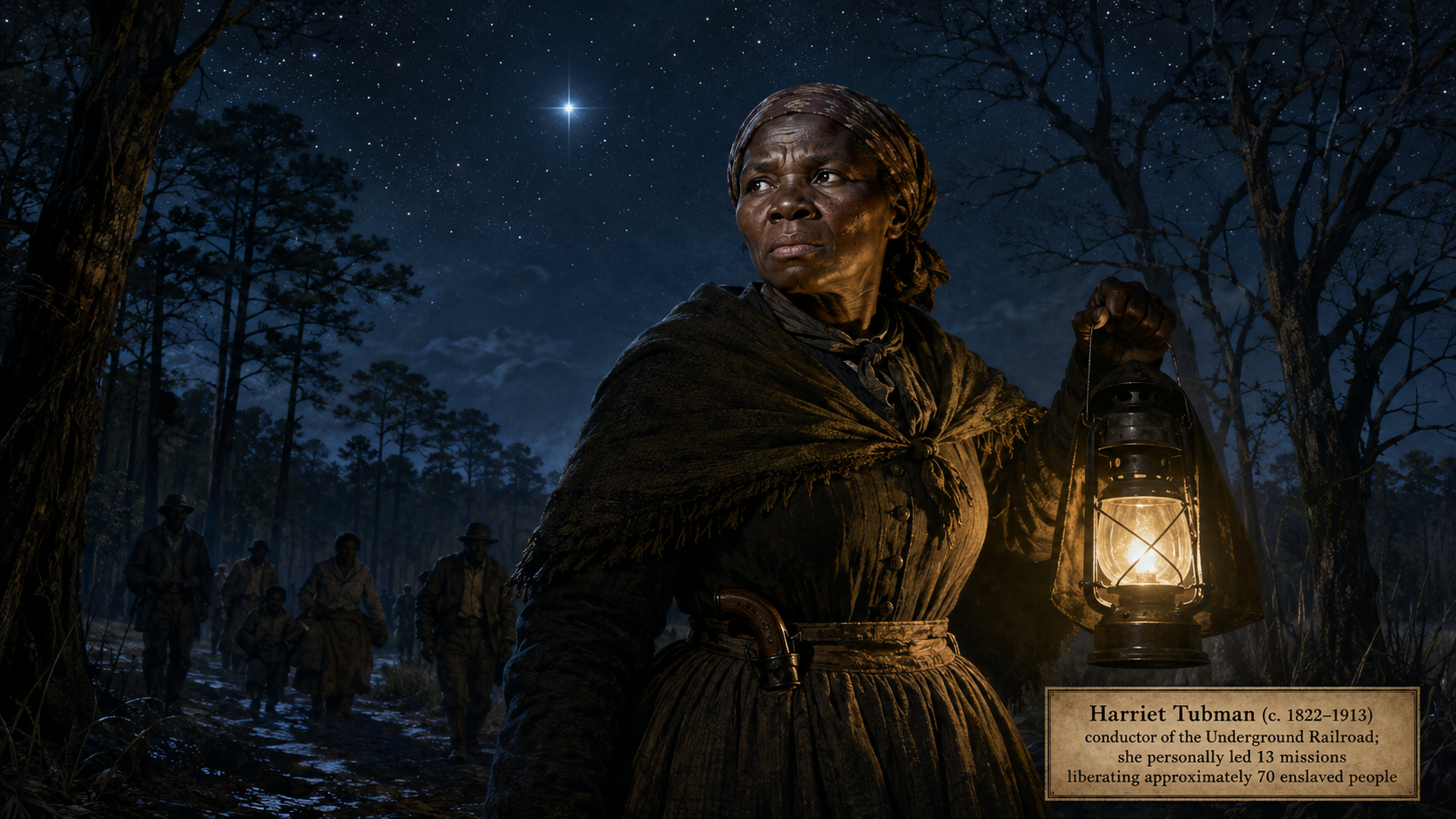
Portrait of Harriet Tubman, abolitionist who escaped slavery and conducted approximately thirteen rescue missions on the Underground Railroad.
-
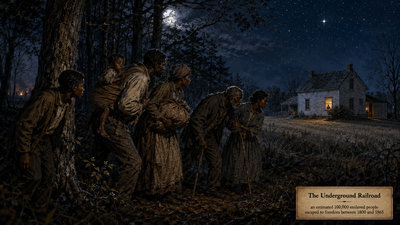
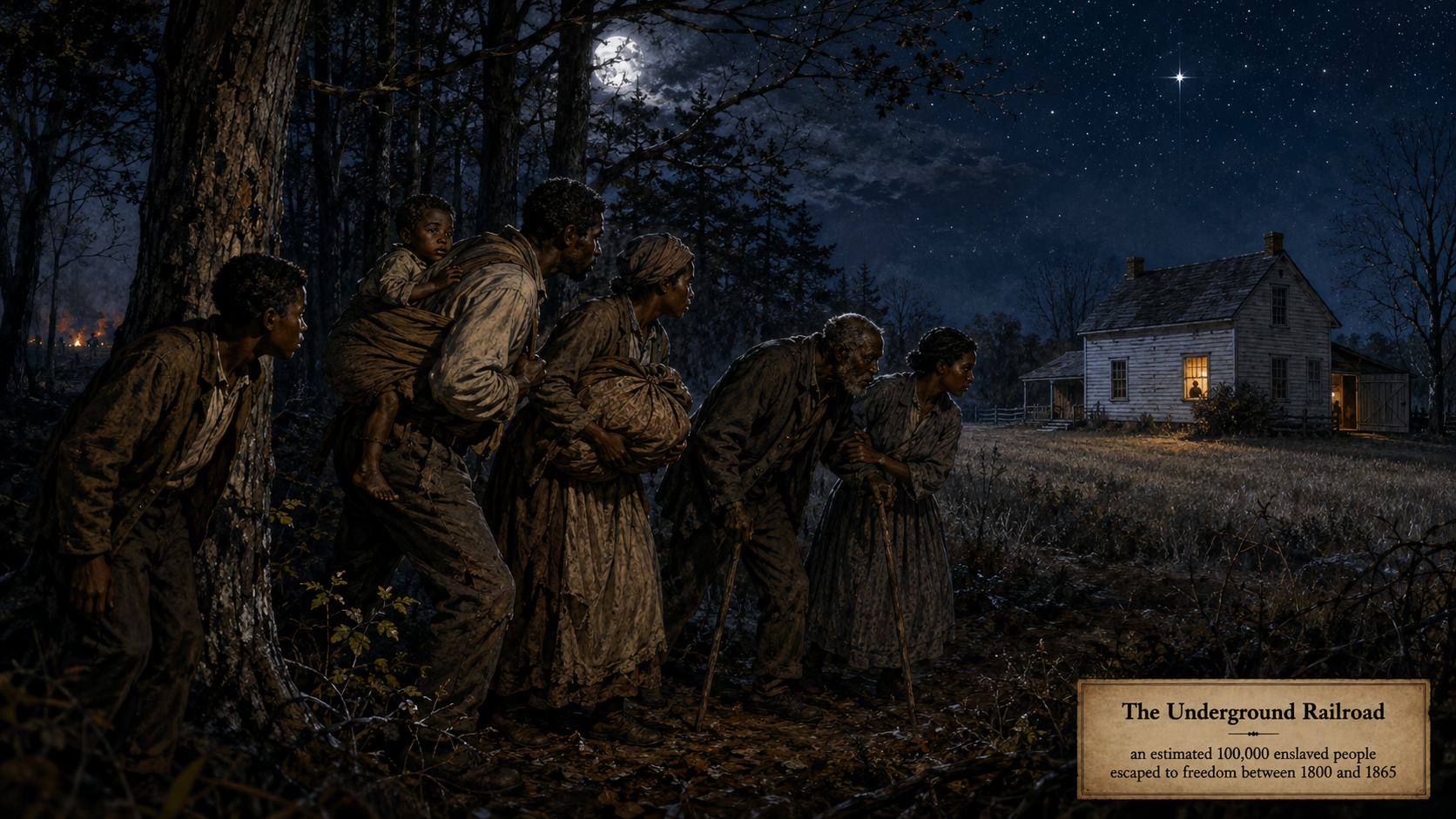
The Underground Railroad — the clandestine network of routes, safe houses, and conductors who helped enslaved people escape to freedom.
-
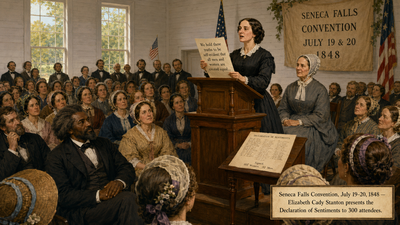
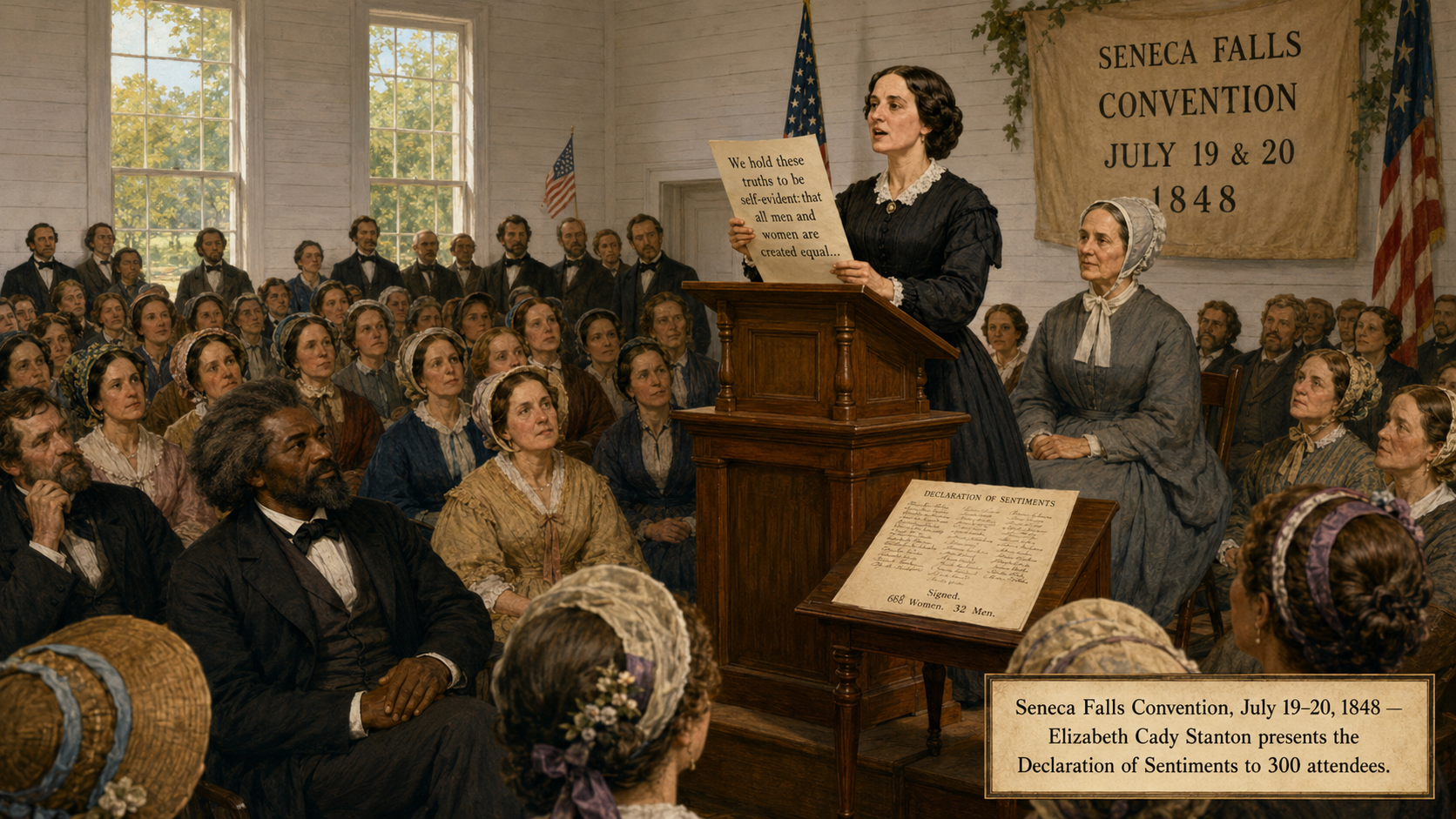
The Seneca Falls Convention of July 1848, the first women's rights convention in the United States, which produced the Declaration of Sentiments.
-
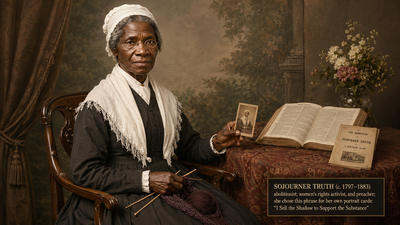
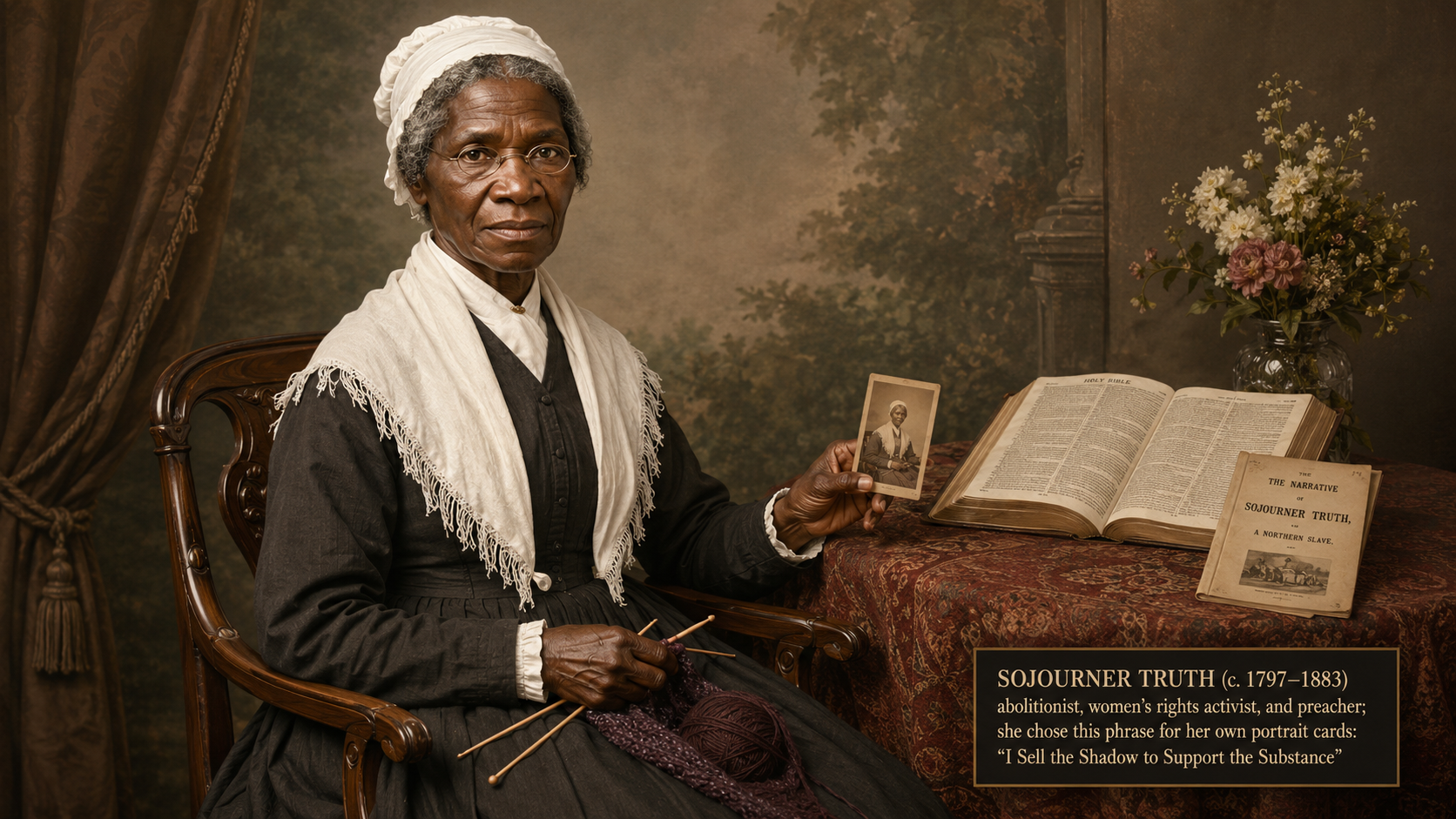
Portrait of Sojourner Truth, formerly enslaved abolitionist and women's rights activist famous for her 1851 "Ain't I a Woman?" speech.
-
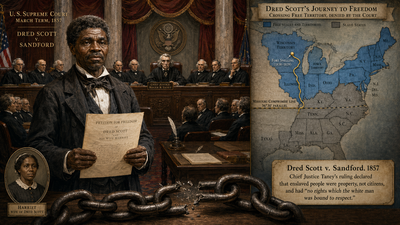
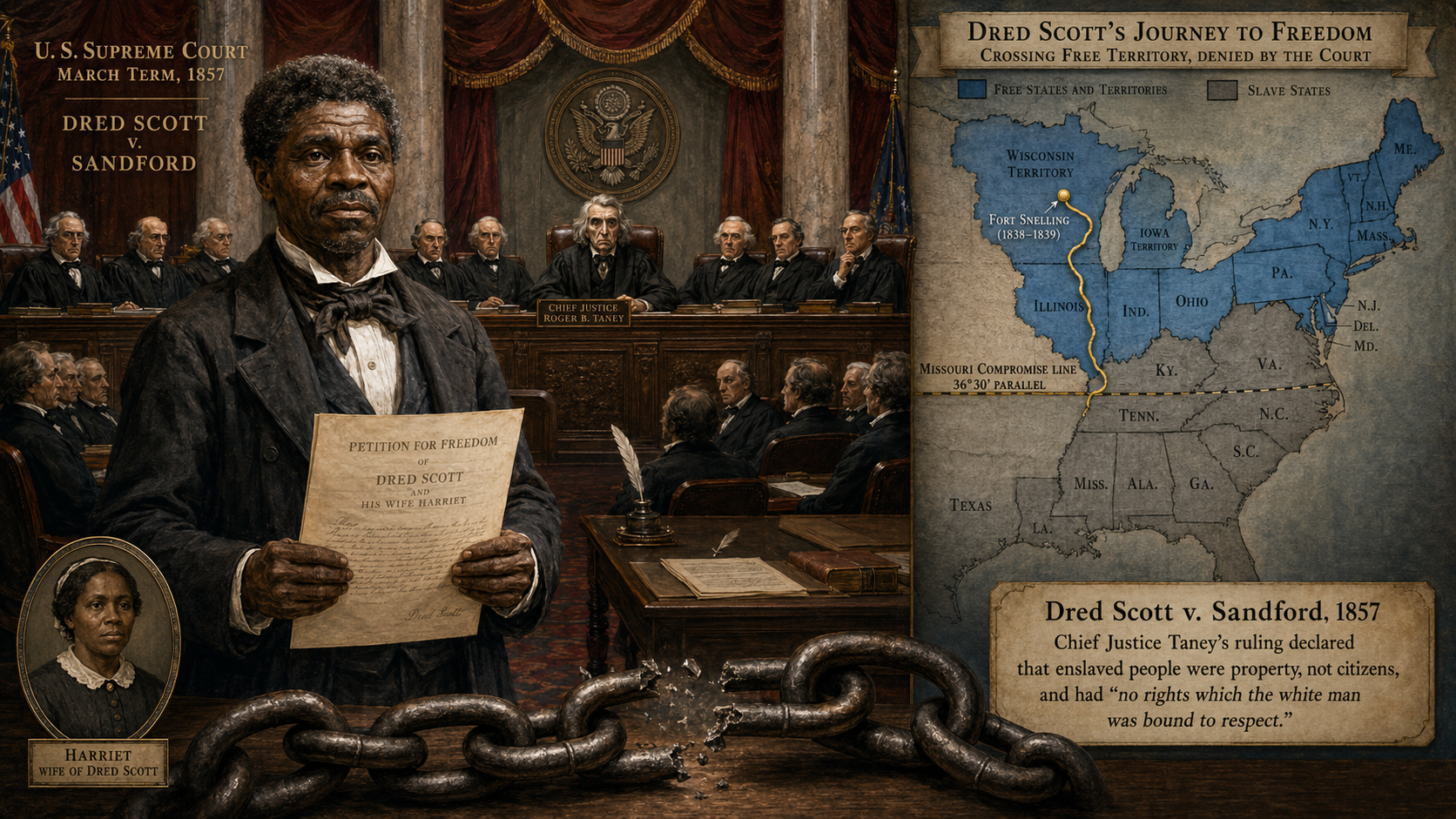
Dred Scott, whose 1857 Supreme Court case ruled that African Americans were not citizens and intensified the national crisis over slavery.
-
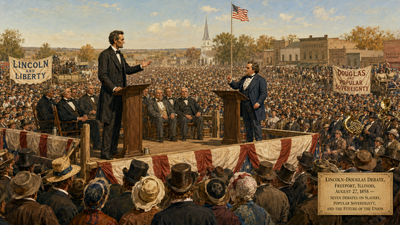
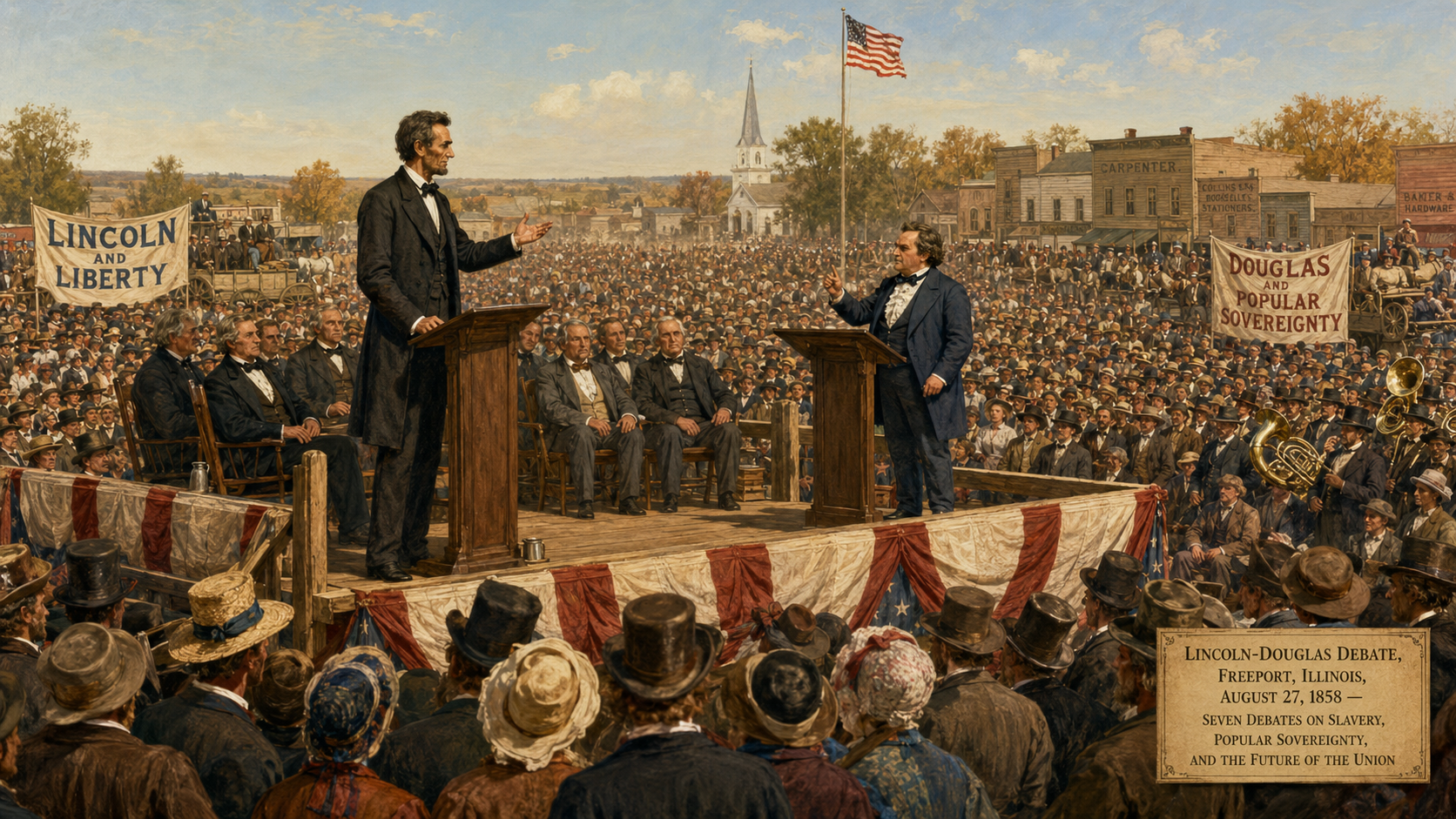
The Lincoln-Douglas debates of 1858, seven pivotal public debates on slavery in the territories that brought Abraham Lincoln to national attention.
-
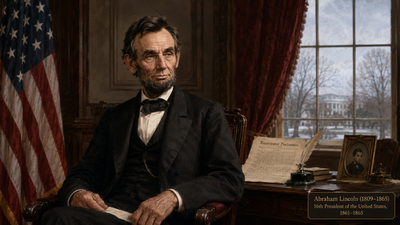
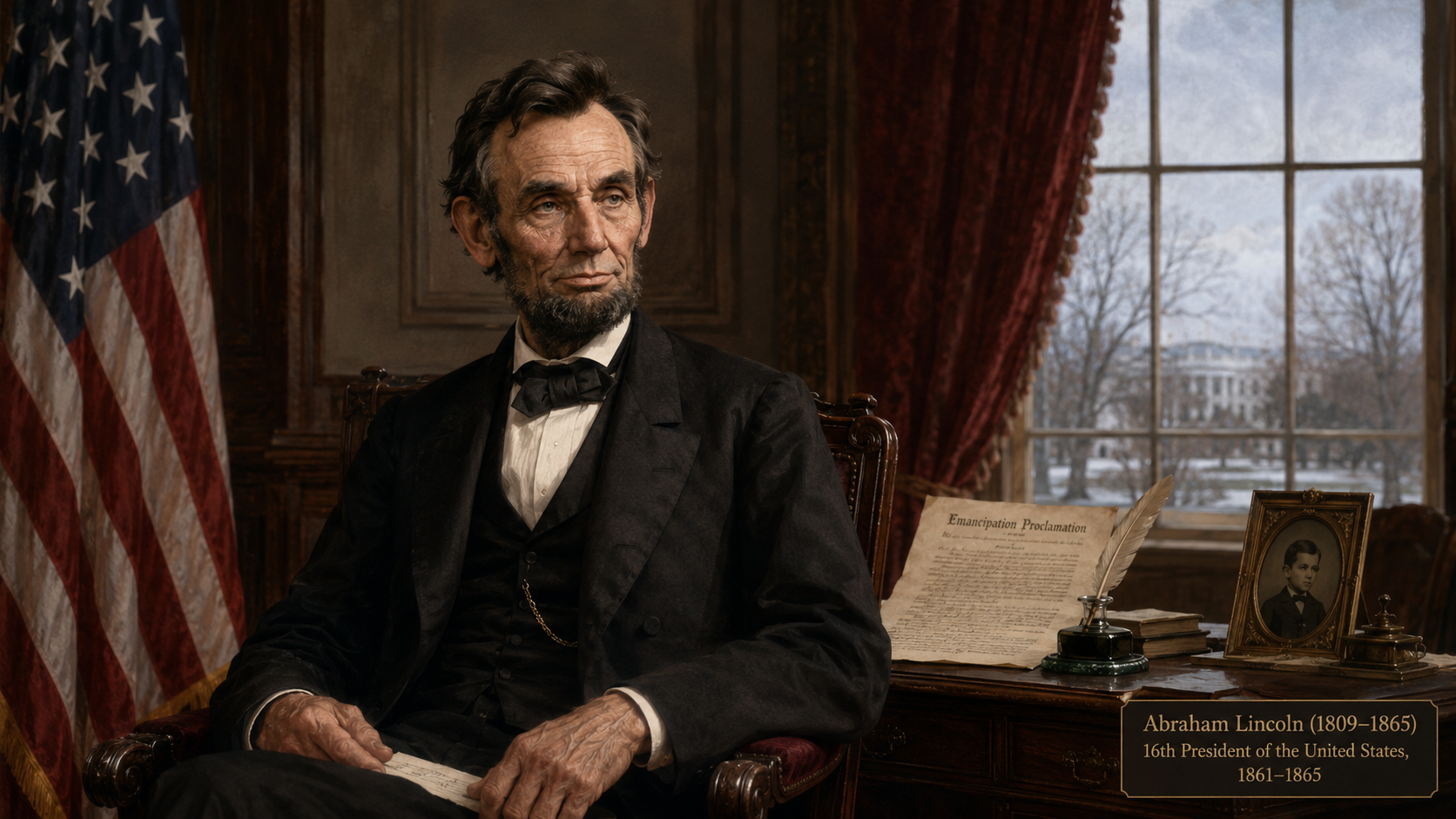
Portrait of Abraham Lincoln, the sixteenth President of the United States, who led the nation through the Civil War and issued the Emancipation Proclamation.
-
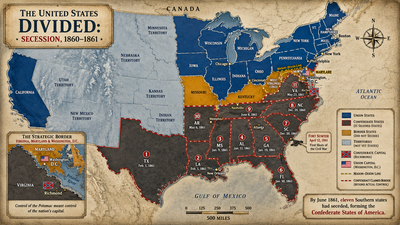
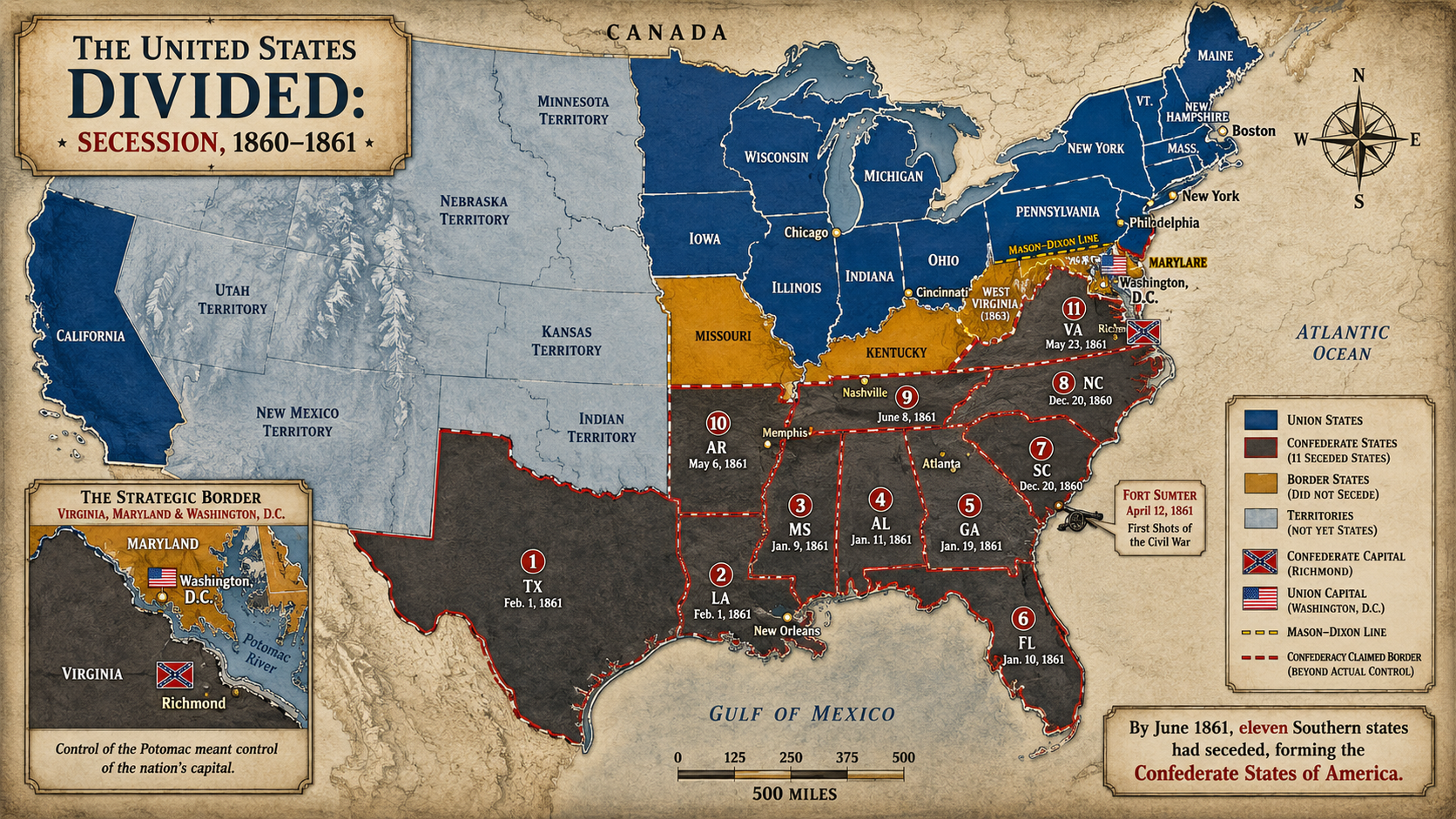
A map showing the eleven Southern states that seceded from the Union between 1860 and 1861 to form the Confederate States of America.
-
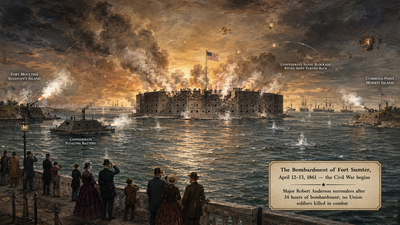
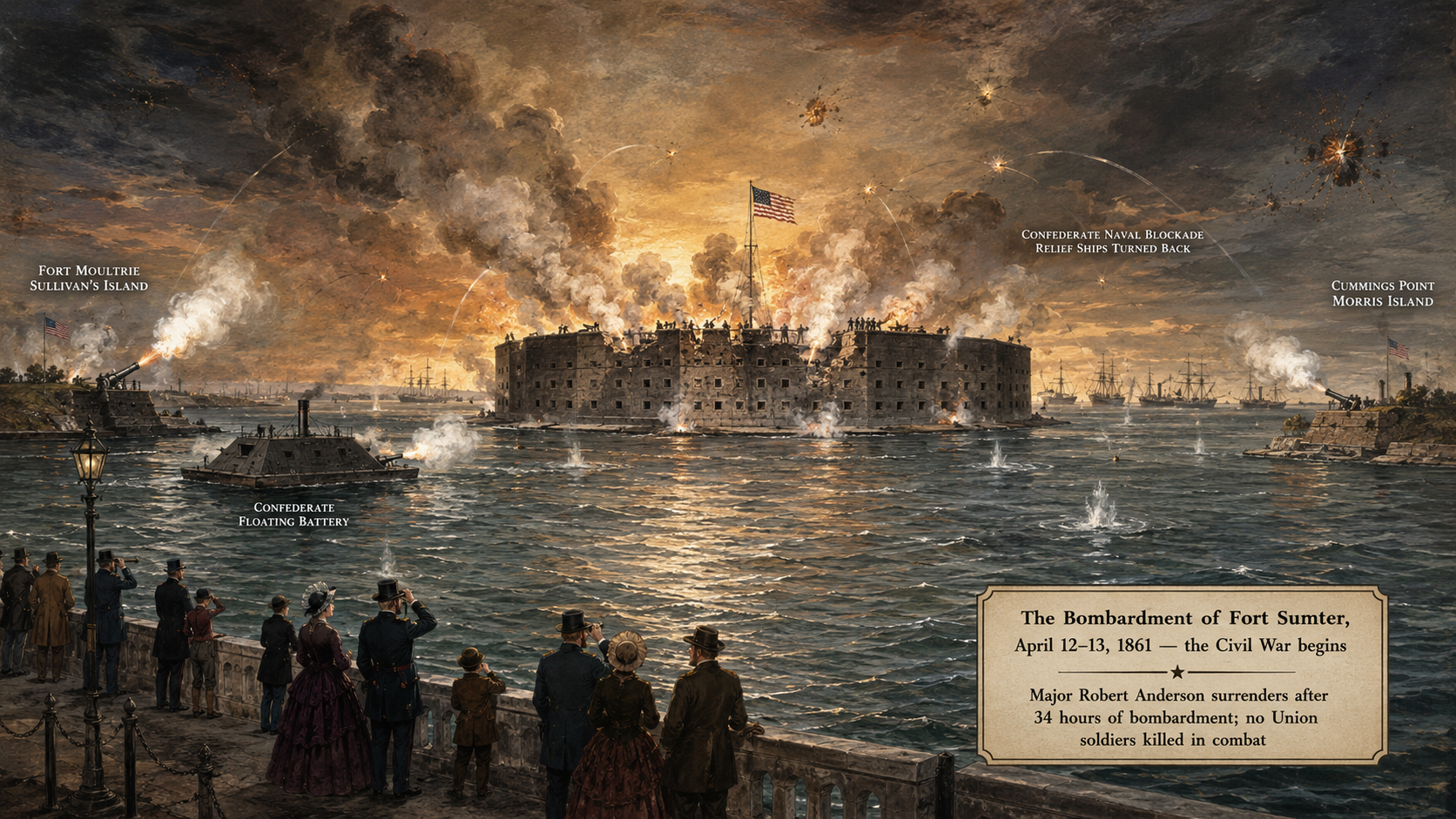
The Confederate bombardment of Fort Sumter in Charleston Harbor beginning April 12, 1861 — the first battle of the Civil War.
-
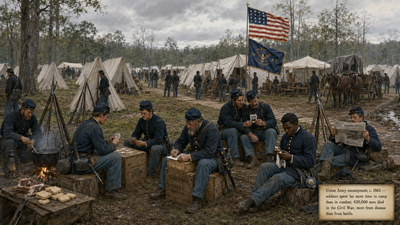
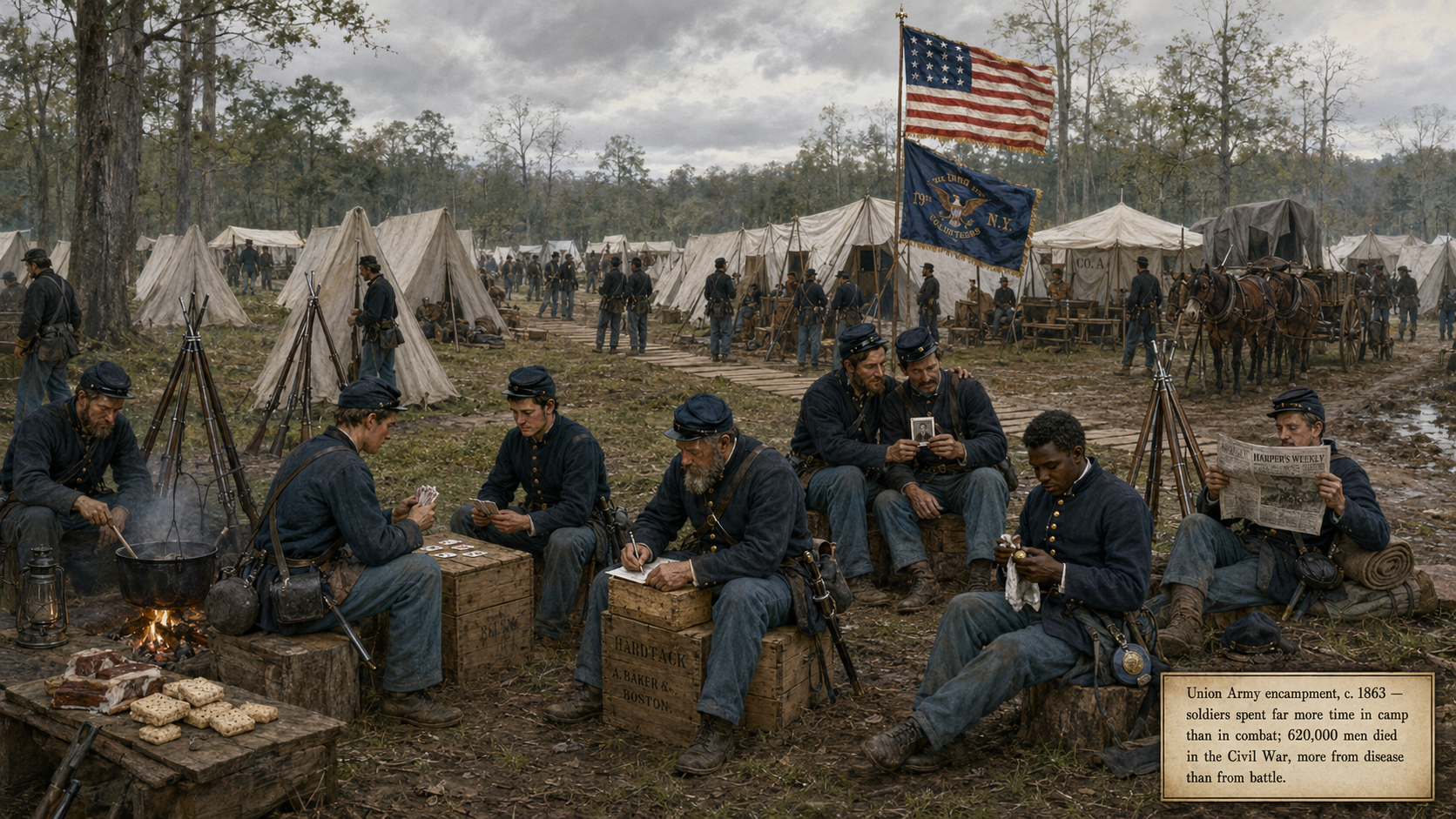
A Union Army encampment during the Civil War, depicting the daily life, hardships, and camaraderie of soldiers in the field.
-
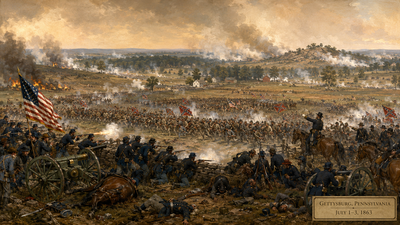
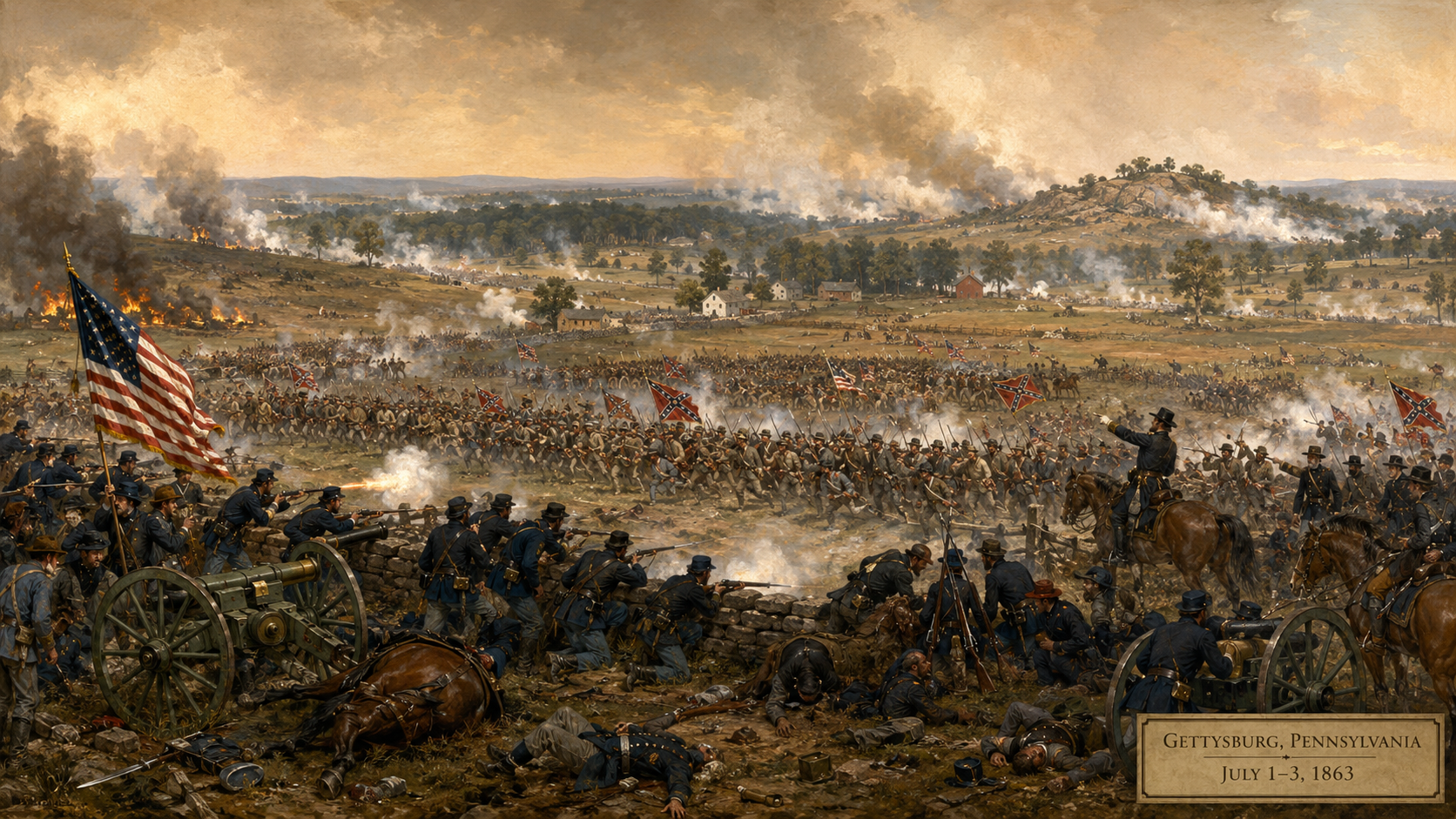
The Battle of Gettysburg in July 1863, the bloodiest battle of the Civil War with over 50,000 casualties and a critical turning point of the conflict.
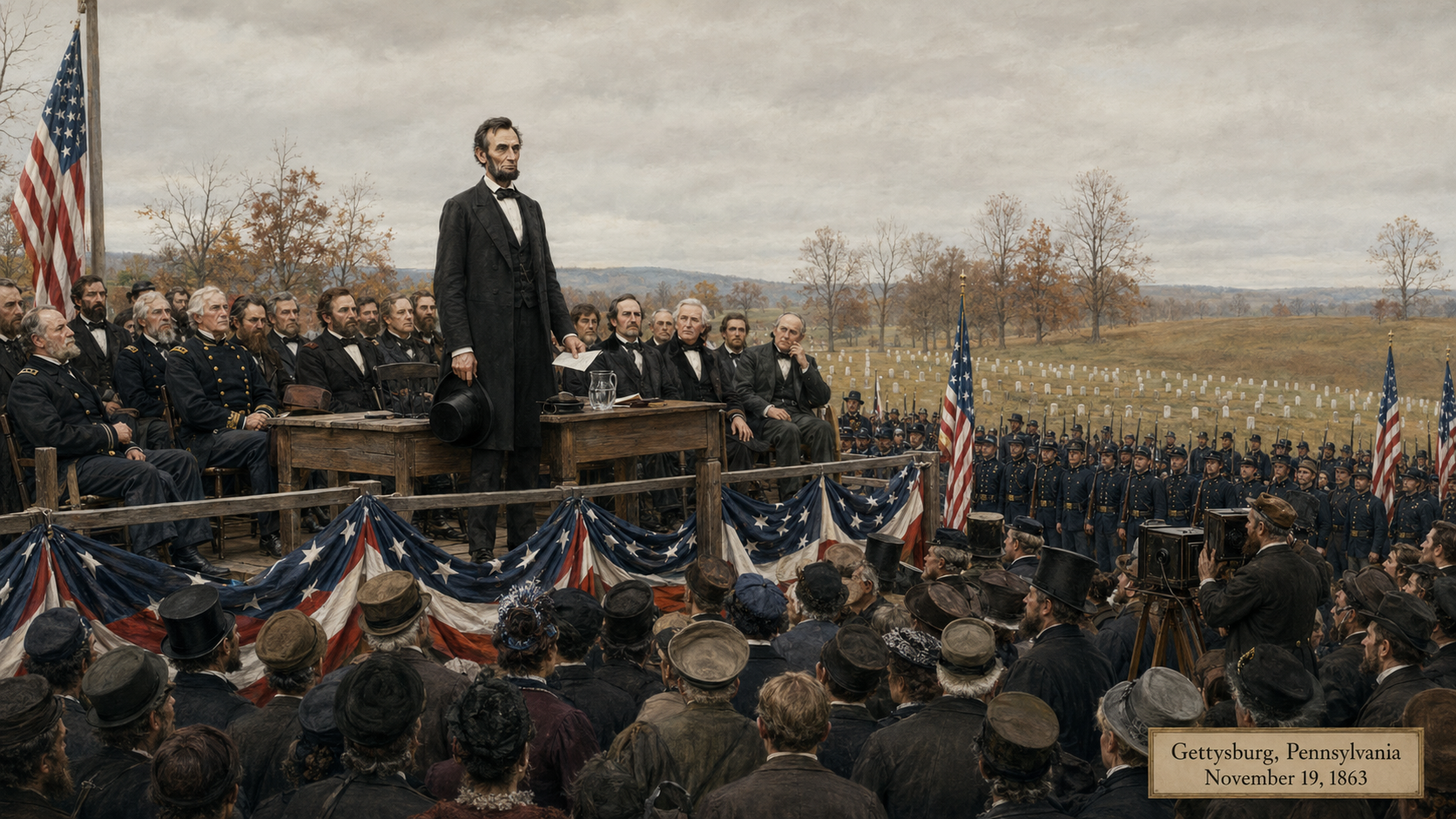
-
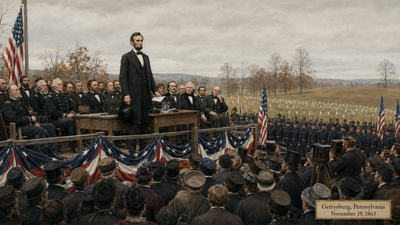
Abraham Lincoln delivering the Gettysburg Address on November 19, 1863, redefining the Civil War as a struggle for equality and national unity.
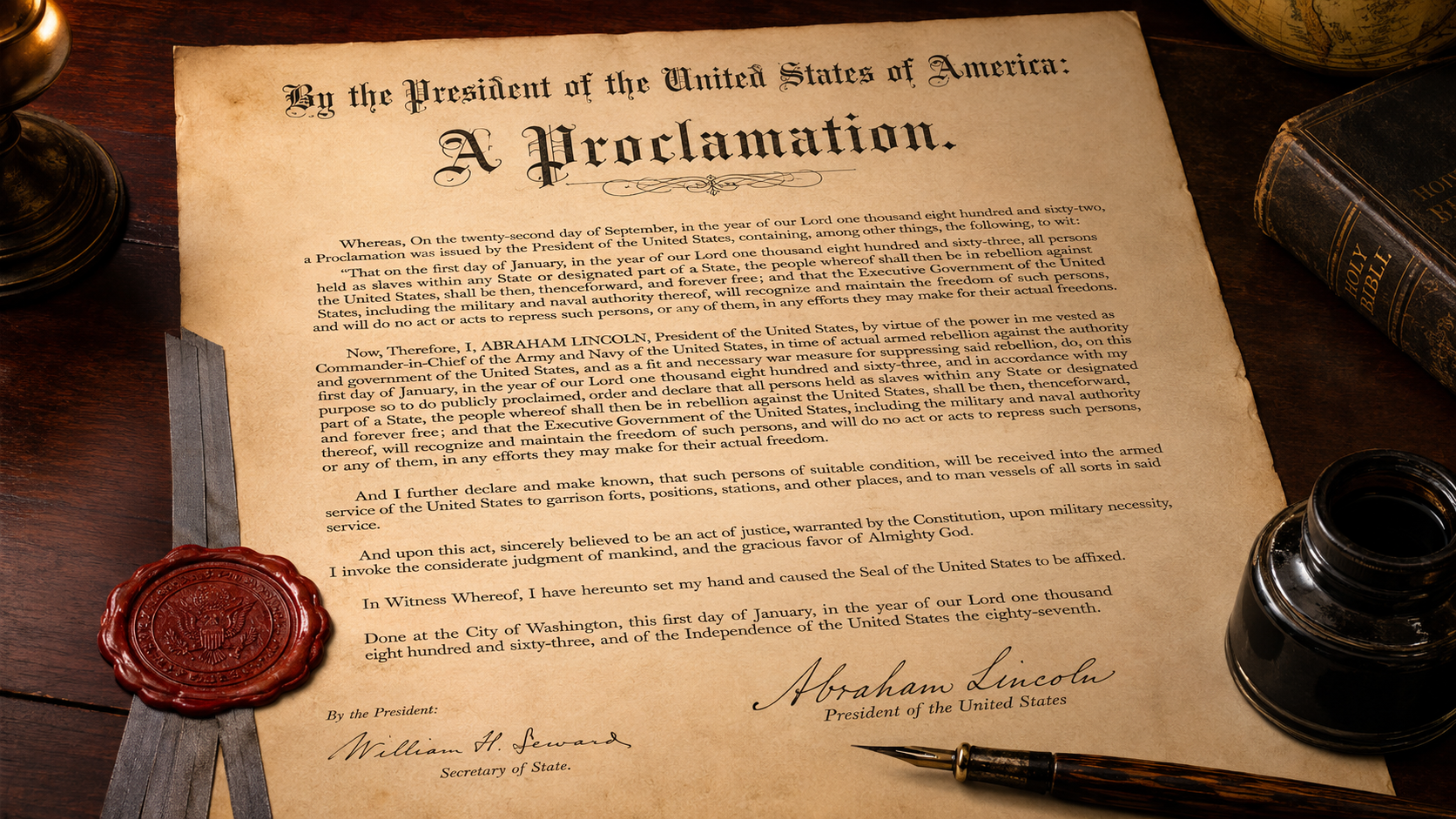
-
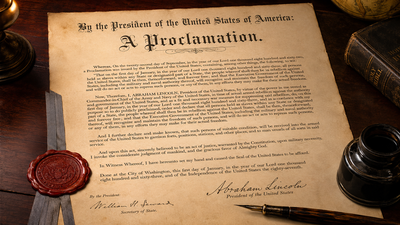
The Emancipation Proclamation, issued by President Lincoln on January 1, 1863, declaring enslaved people in Confederate states to be forever free.
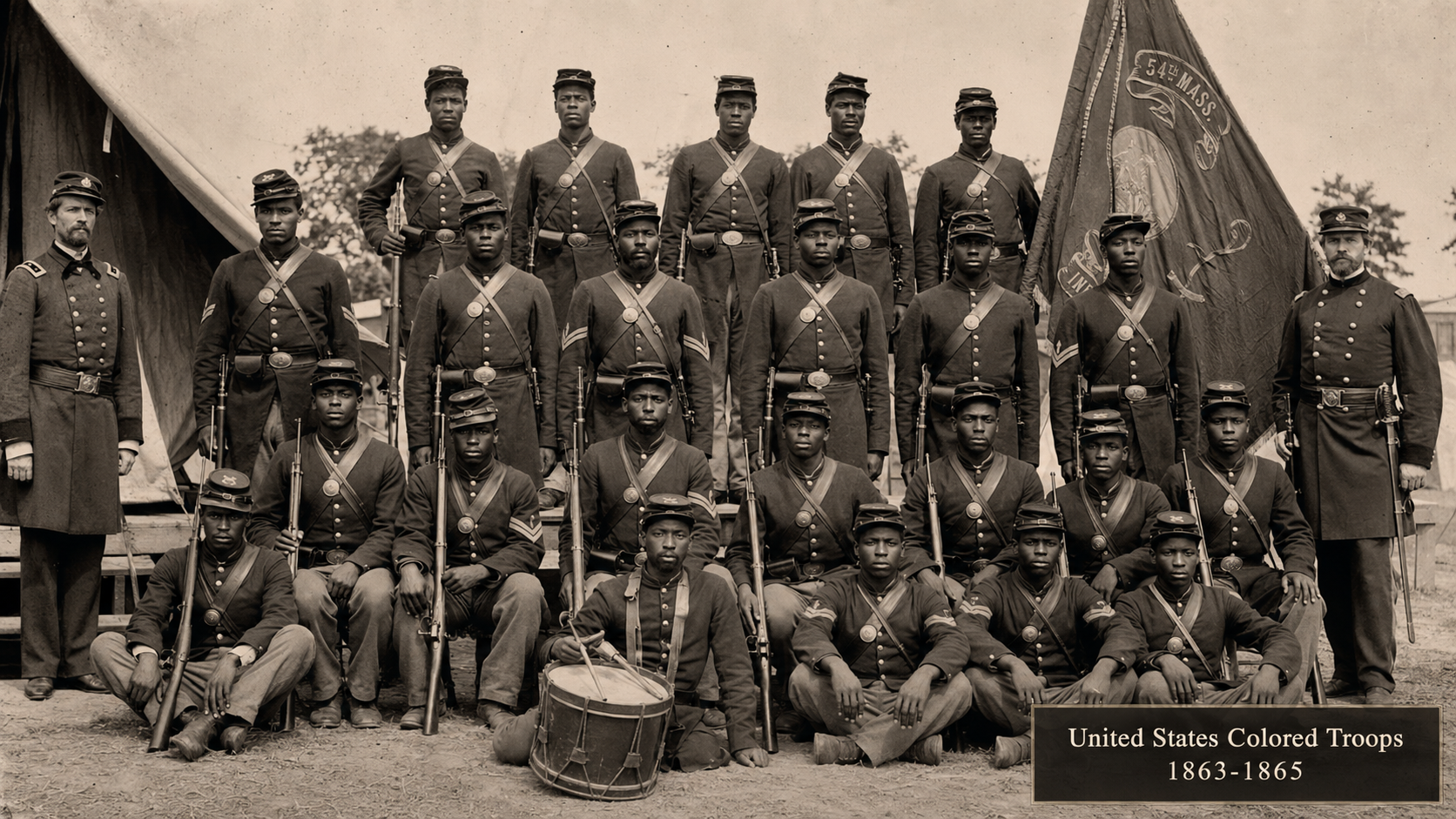
-
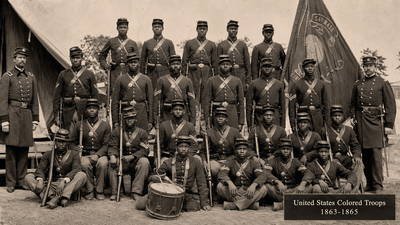
African American soldiers of the United States Colored Troops, who served with distinction in the Civil War and fought for both Union and freedom.
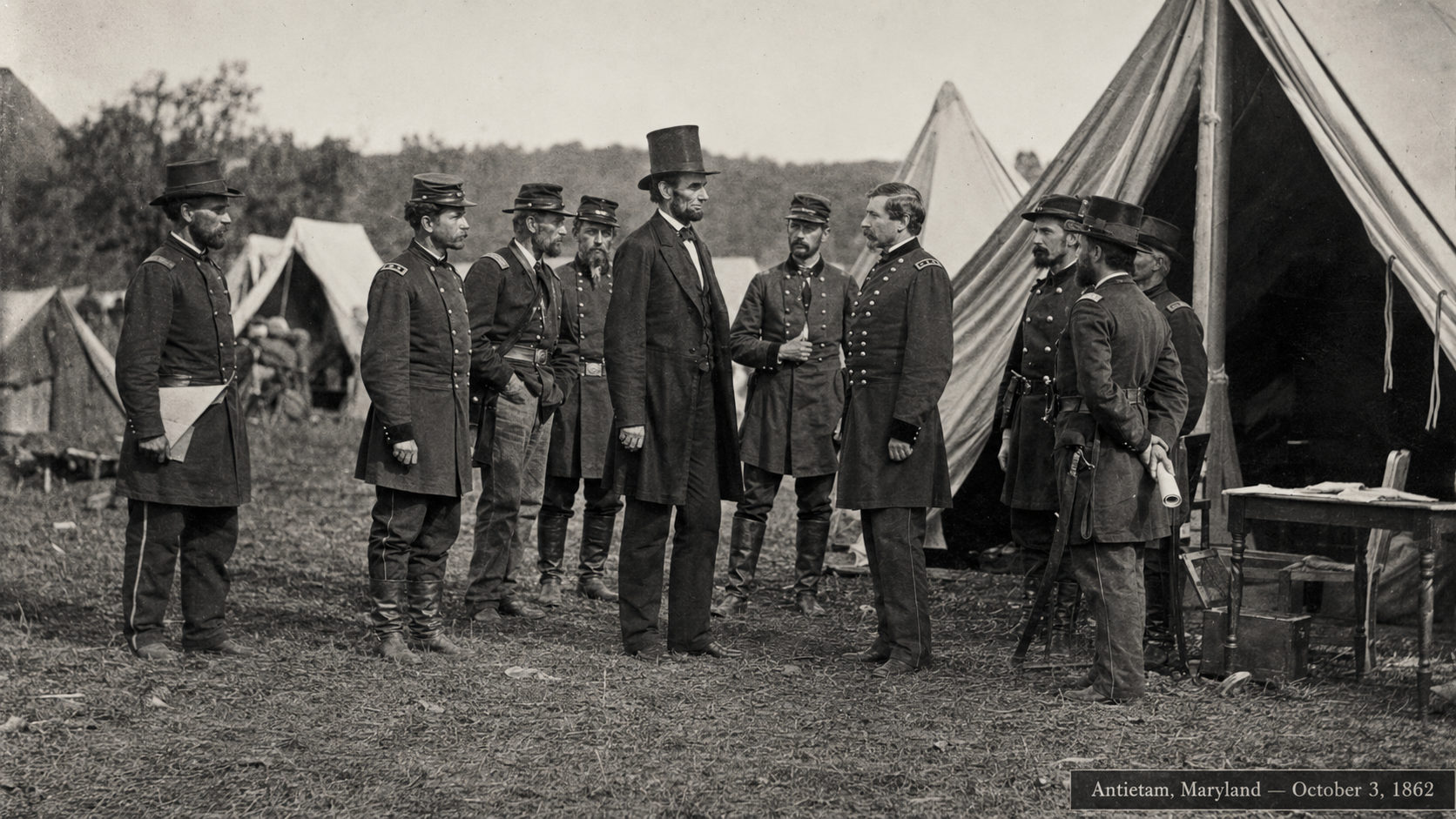
-
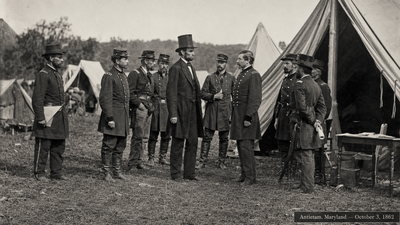
President Lincoln meeting with General McClellan and officers at the Antietam battlefield in October 1862 following the war's bloodiest single day.
-
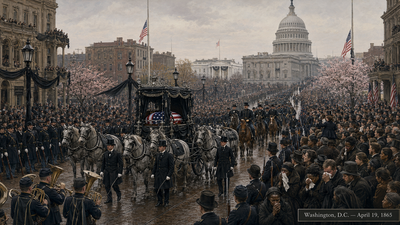
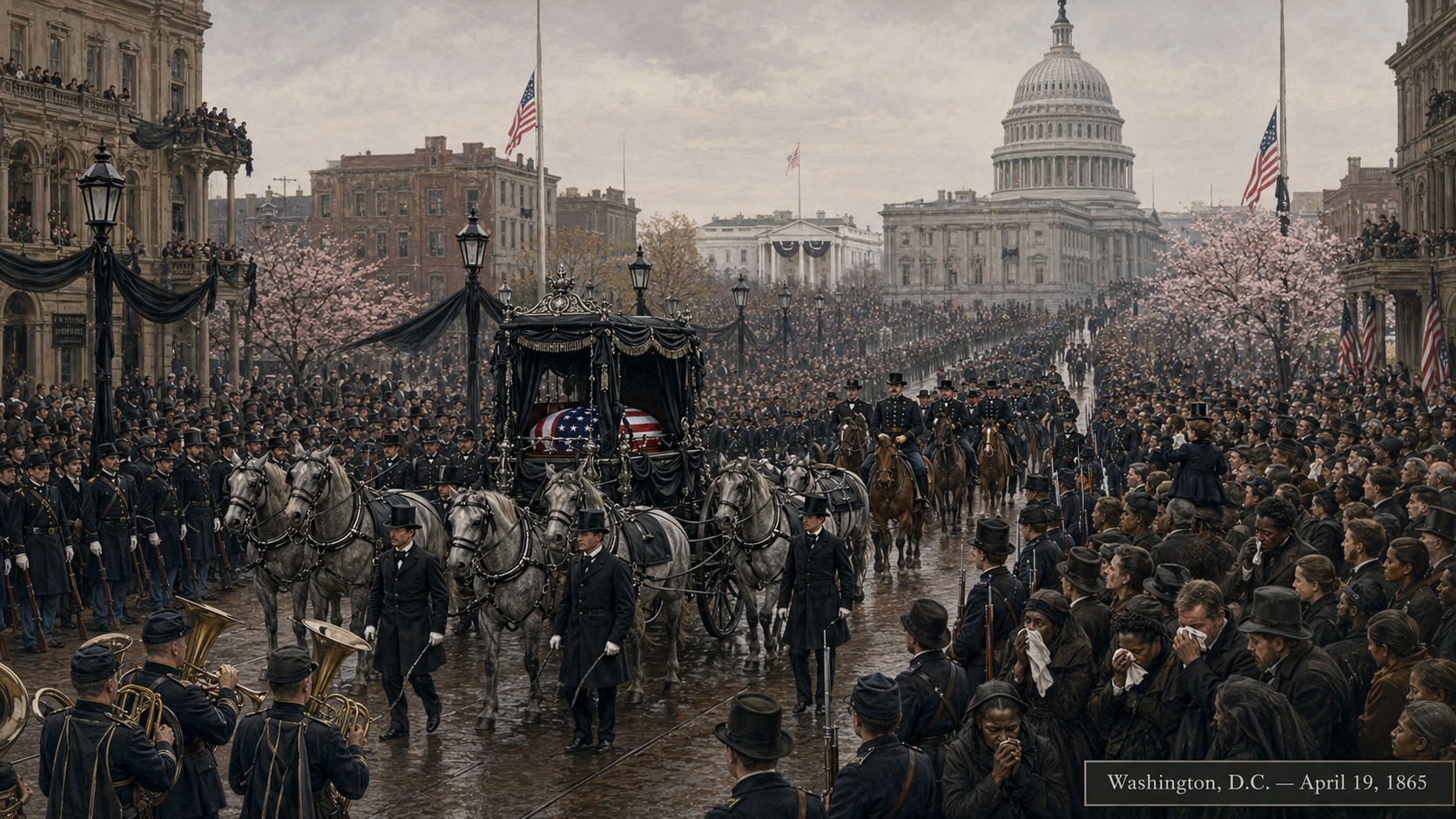
The Lincoln Memorial in Washington, D.C., the neoclassical monument completed in 1922 that has become a site of national reflection and protest.
-
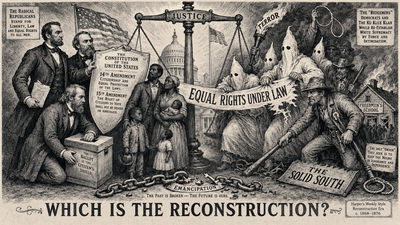
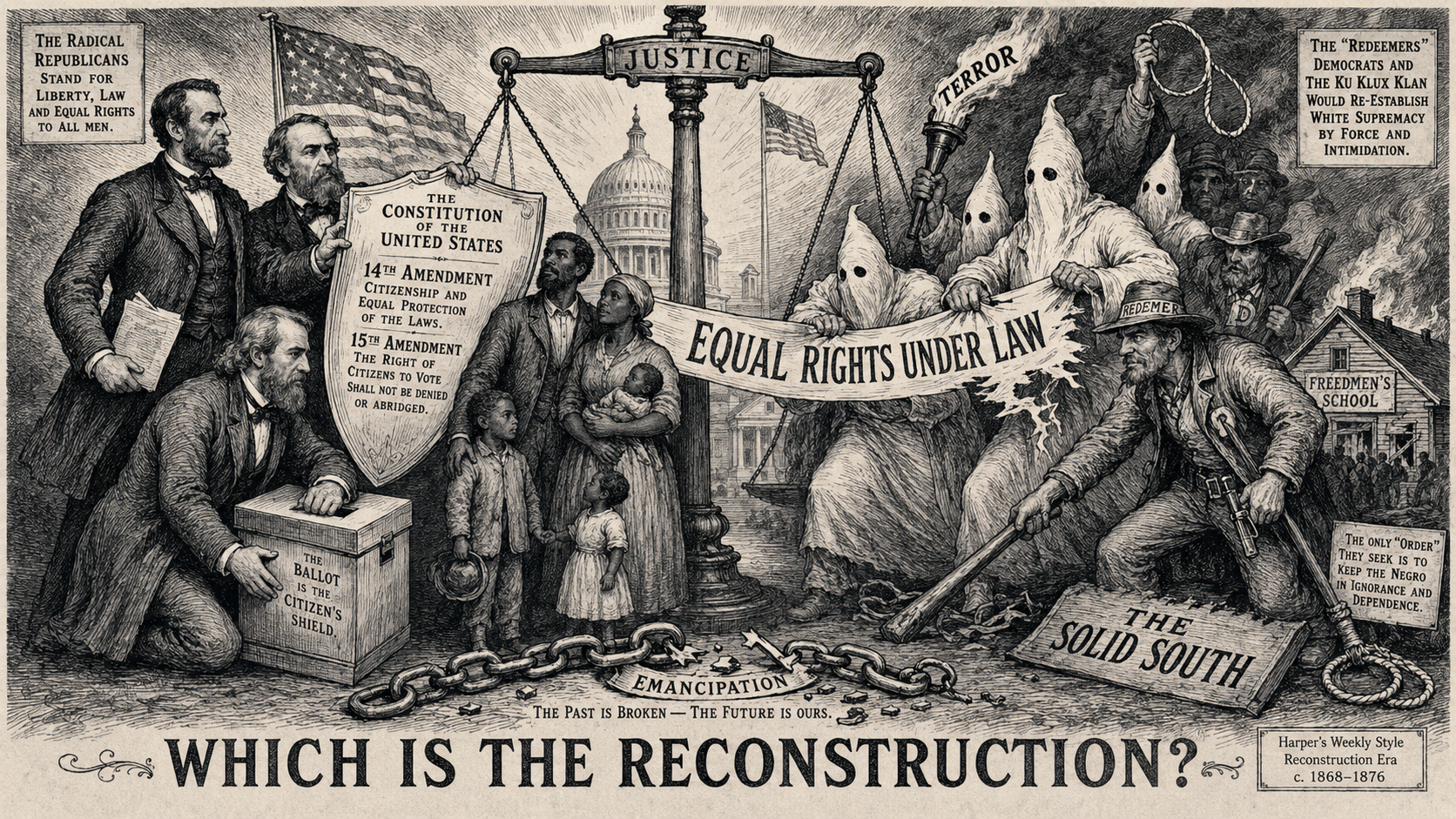
A political cartoon depicting the contested politics of Reconstruction, the turbulent effort to rebuild the South and secure rights for freedpeople.
-
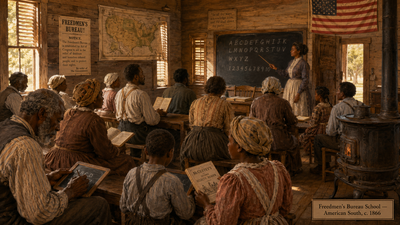
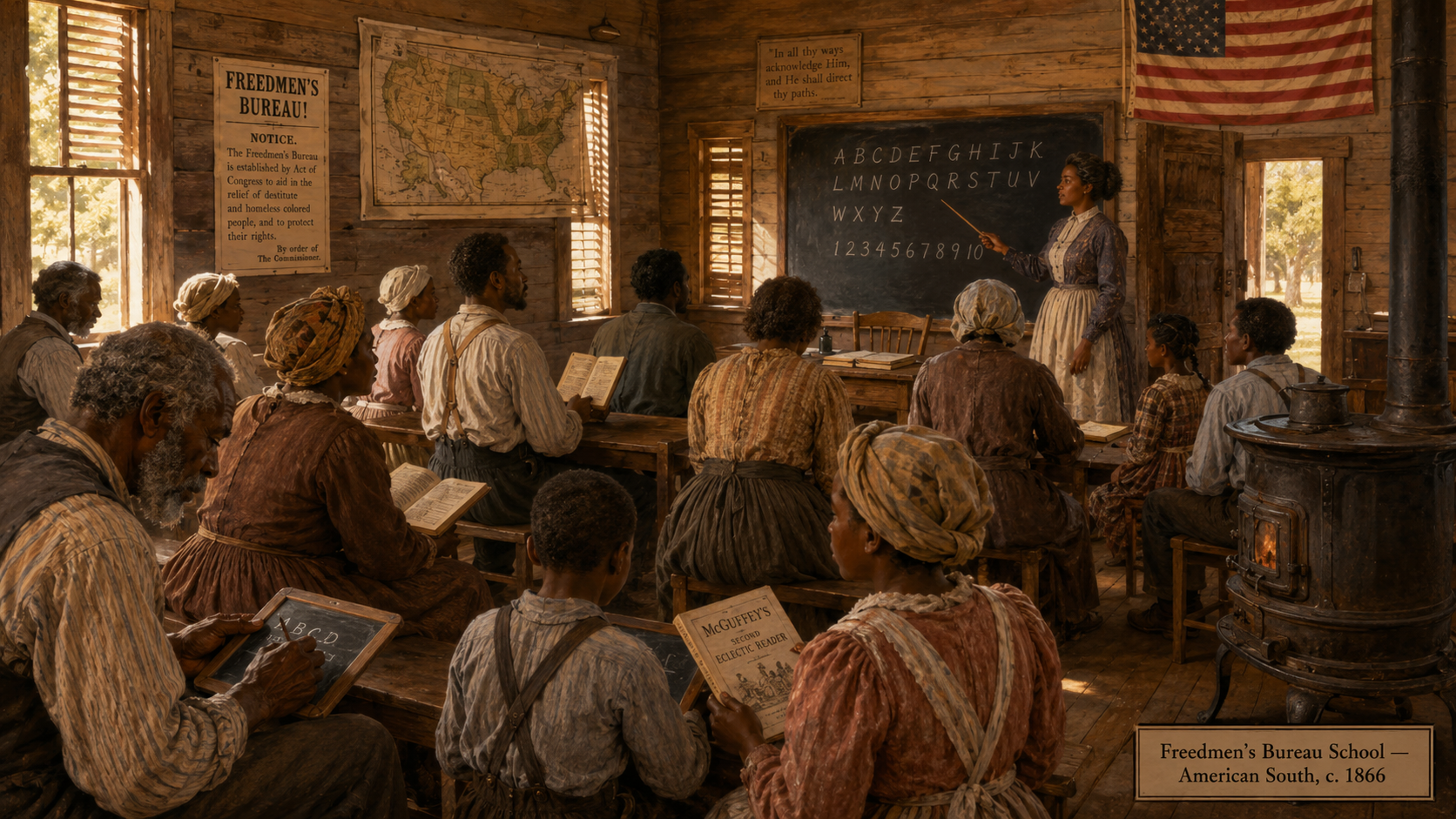
A Freedmen's Bureau school during Reconstruction, where formerly enslaved people — of all ages — pursued education denied them under slavery.
-
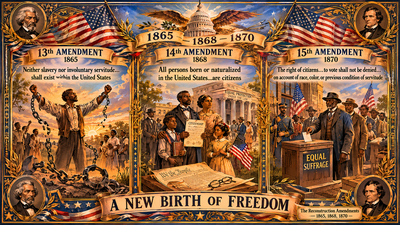
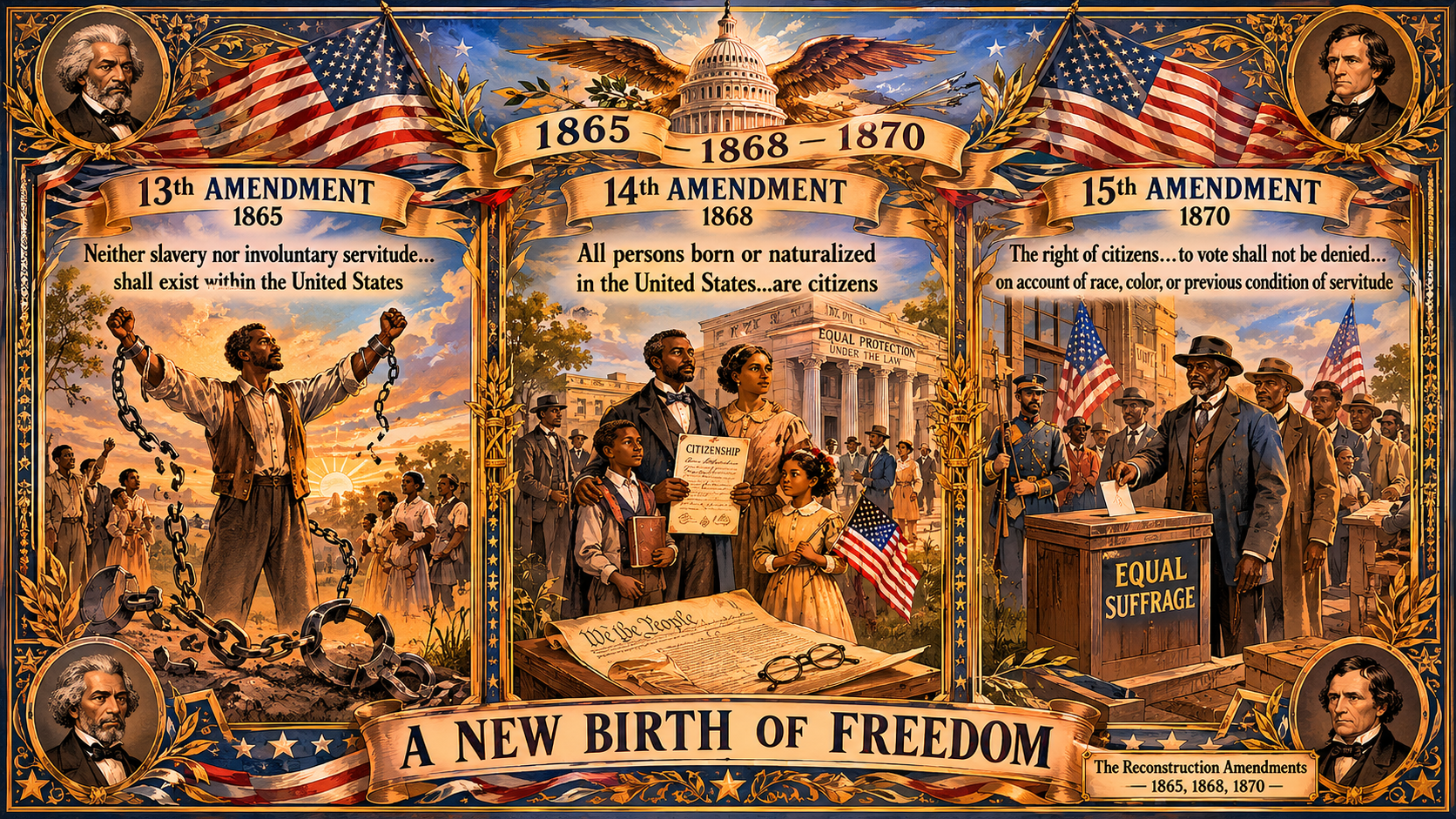
The Reconstruction Amendments — the 13th, 14th, and 15th Amendments — which abolished slavery, established citizenship, and guaranteed voting rights.
-
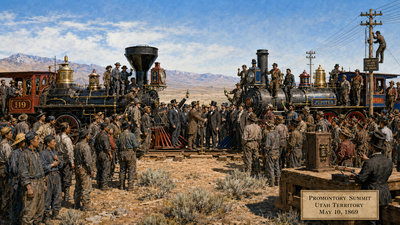
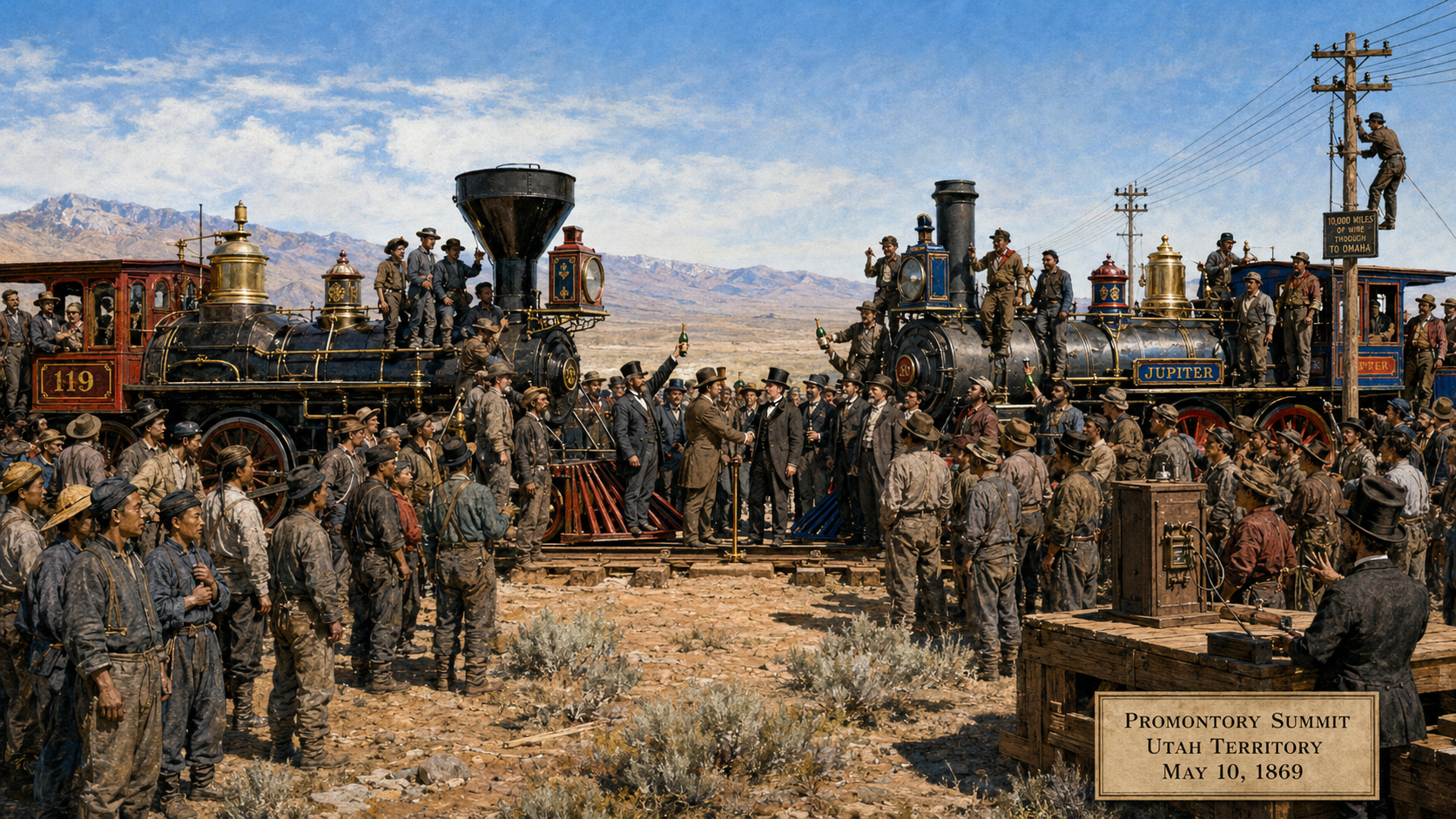
The driving of the golden spike at Promontory Summit, Utah, on May 10, 1869, completing the First Transcontinental Railroad.
-
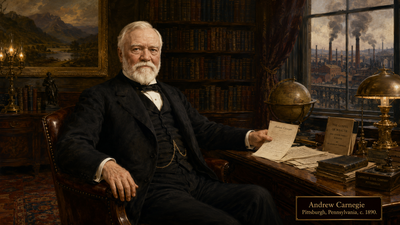
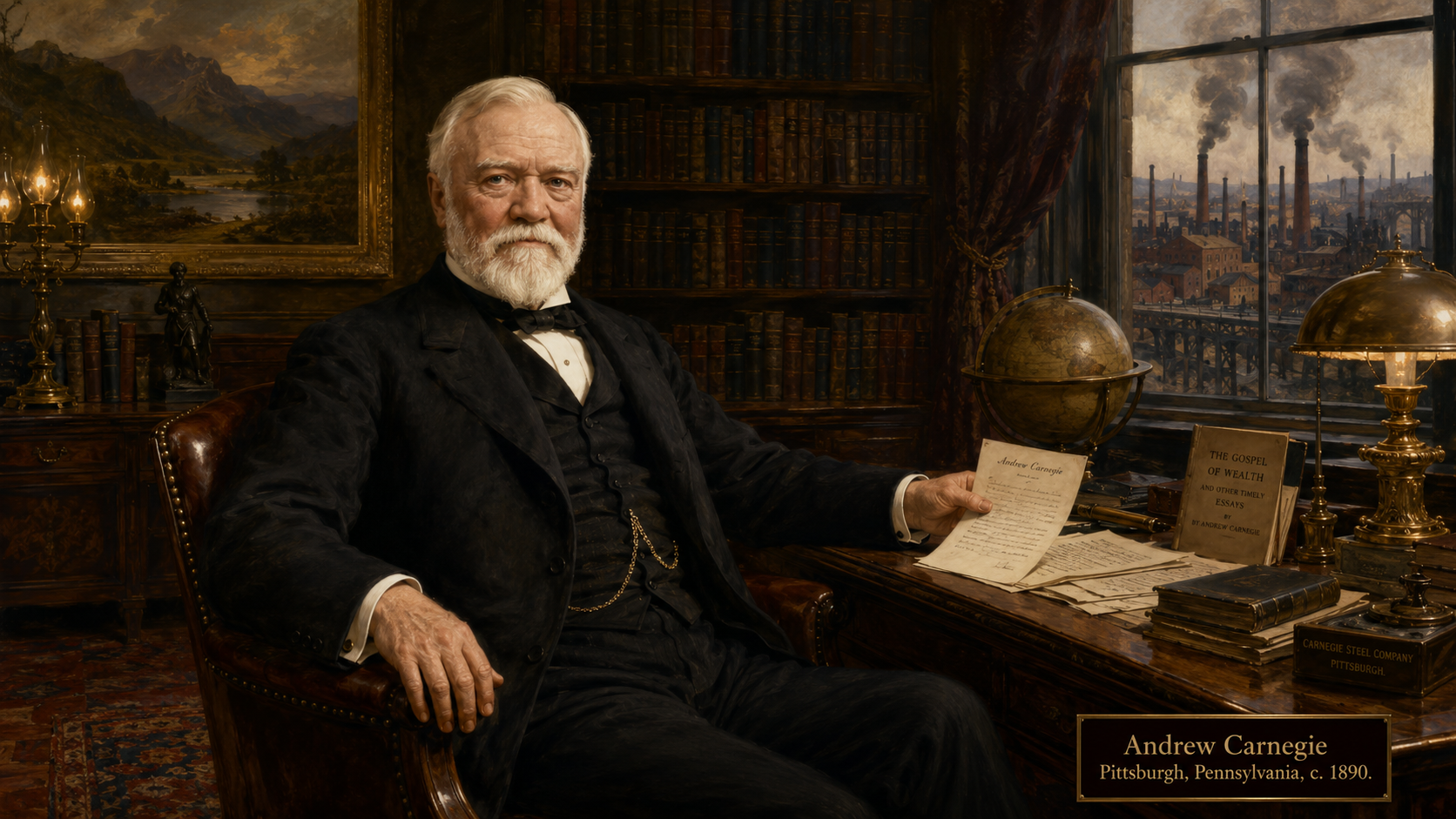
Portrait of Andrew Carnegie, Scottish-American industrialist who built a steel empire and became a symbol of both Gilded Age wealth and philanthropy.
-
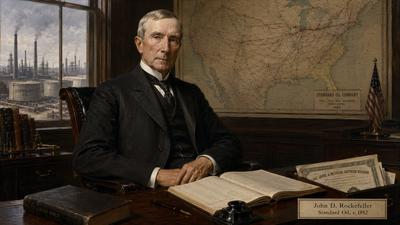
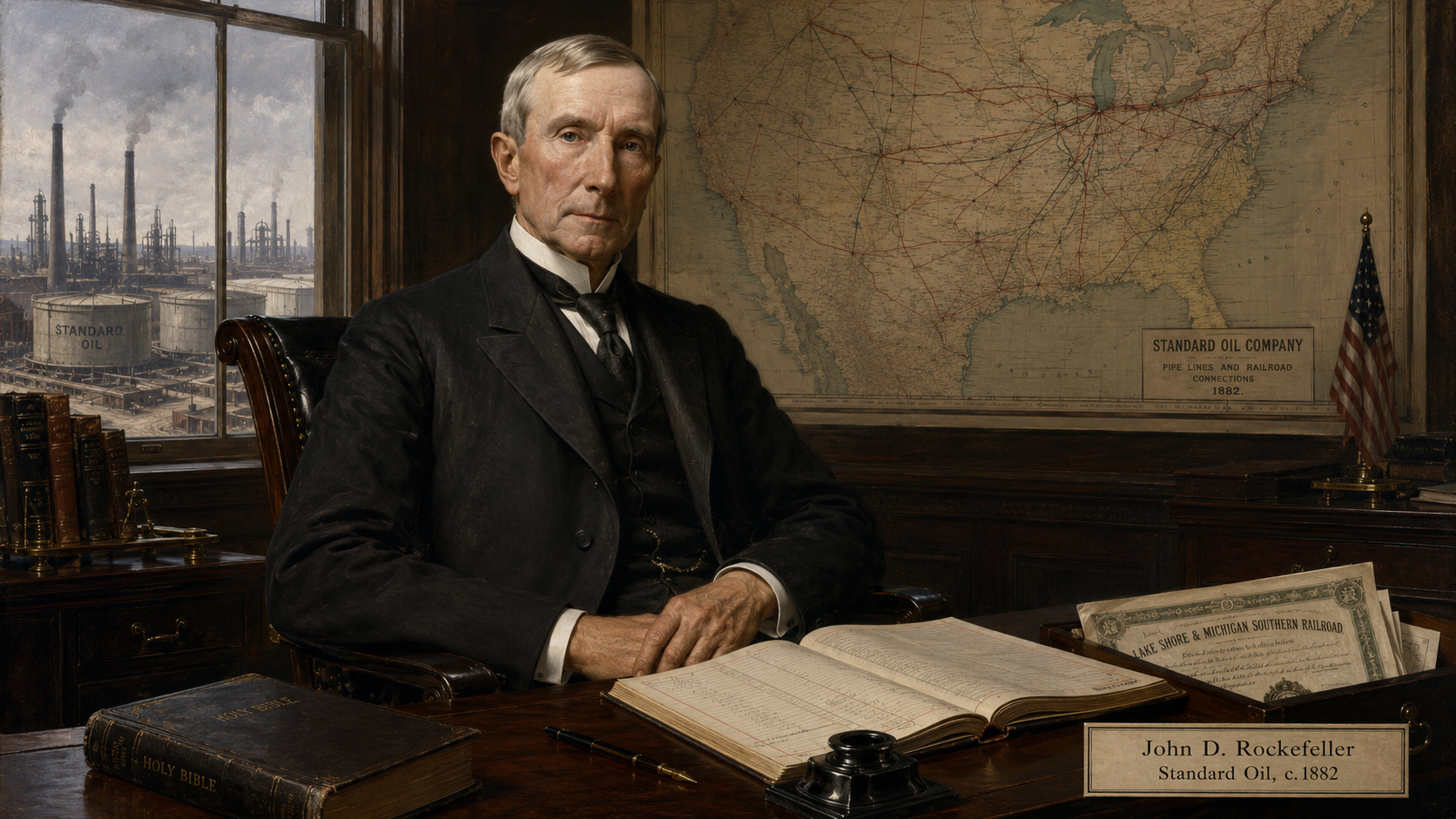
Portrait of John D. Rockefeller, founder of Standard Oil and America's first billionaire, whose monopoly exemplified Gilded Age capitalism.
-
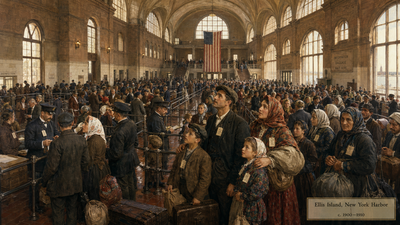
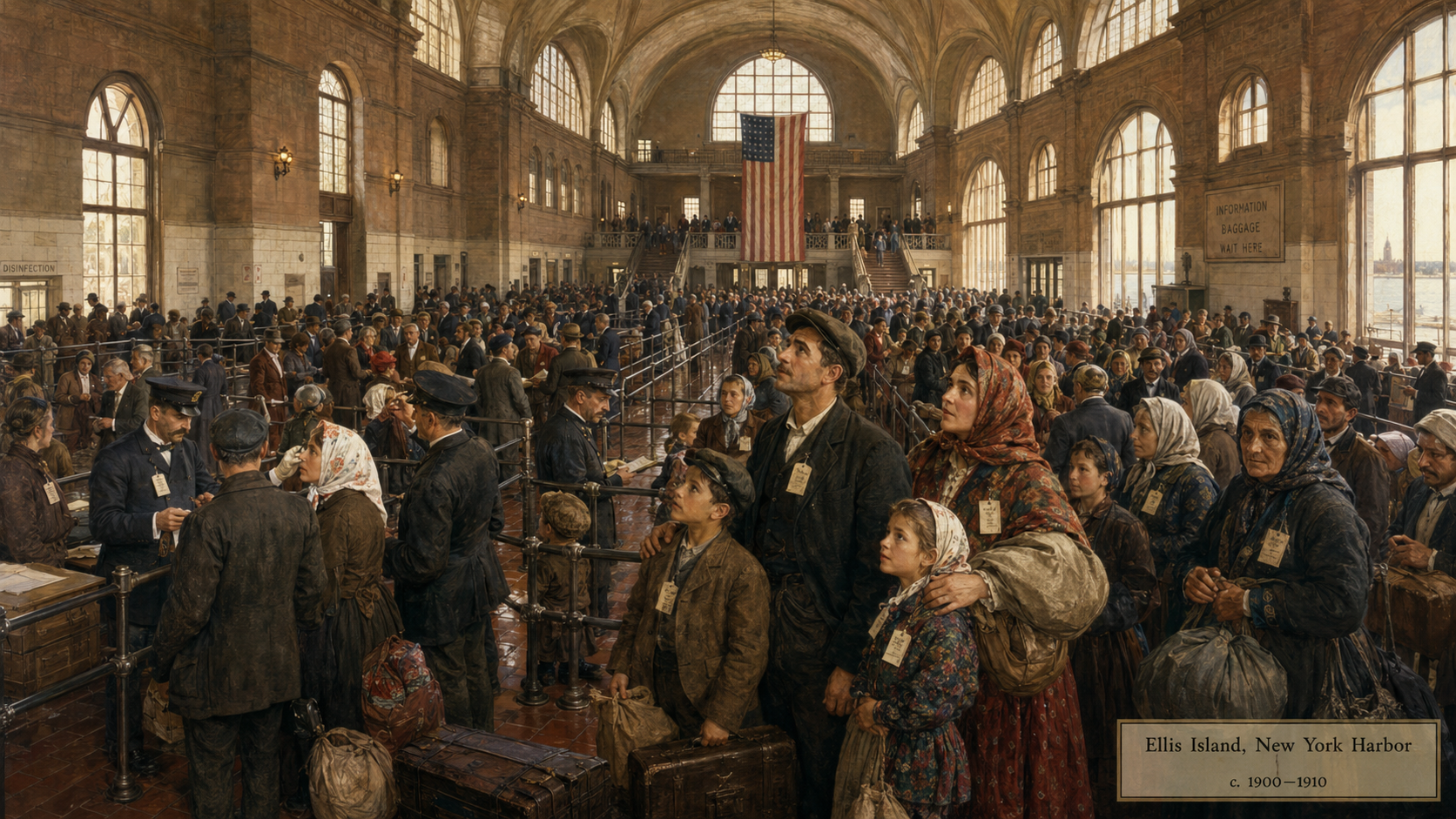
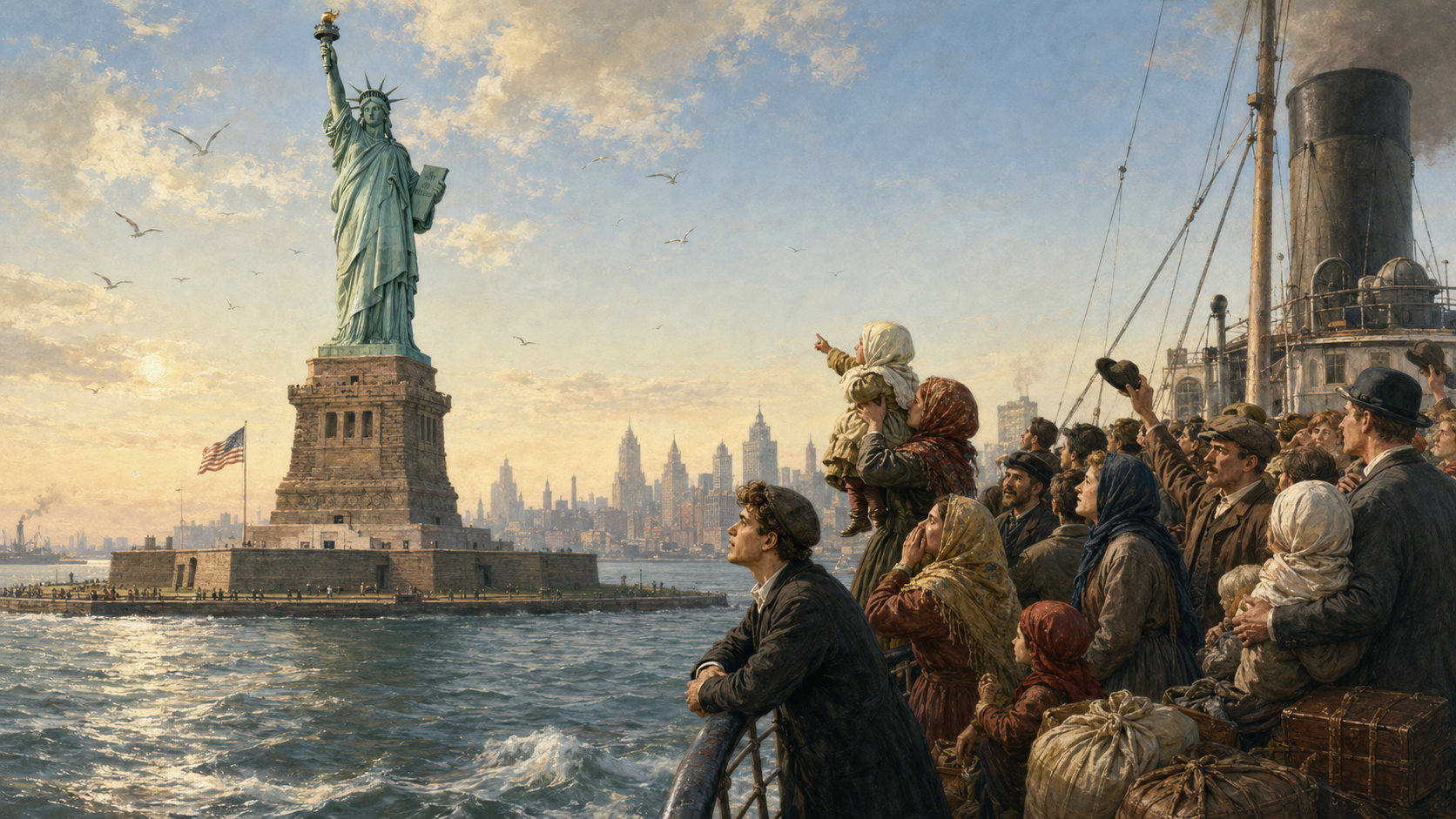
Immigrants arriving at Ellis Island in New York Harbor, the main gateway through which over 12 million people entered the United States between 1892 and 1954.
-
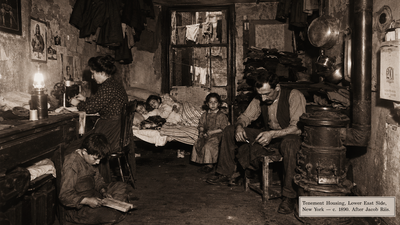
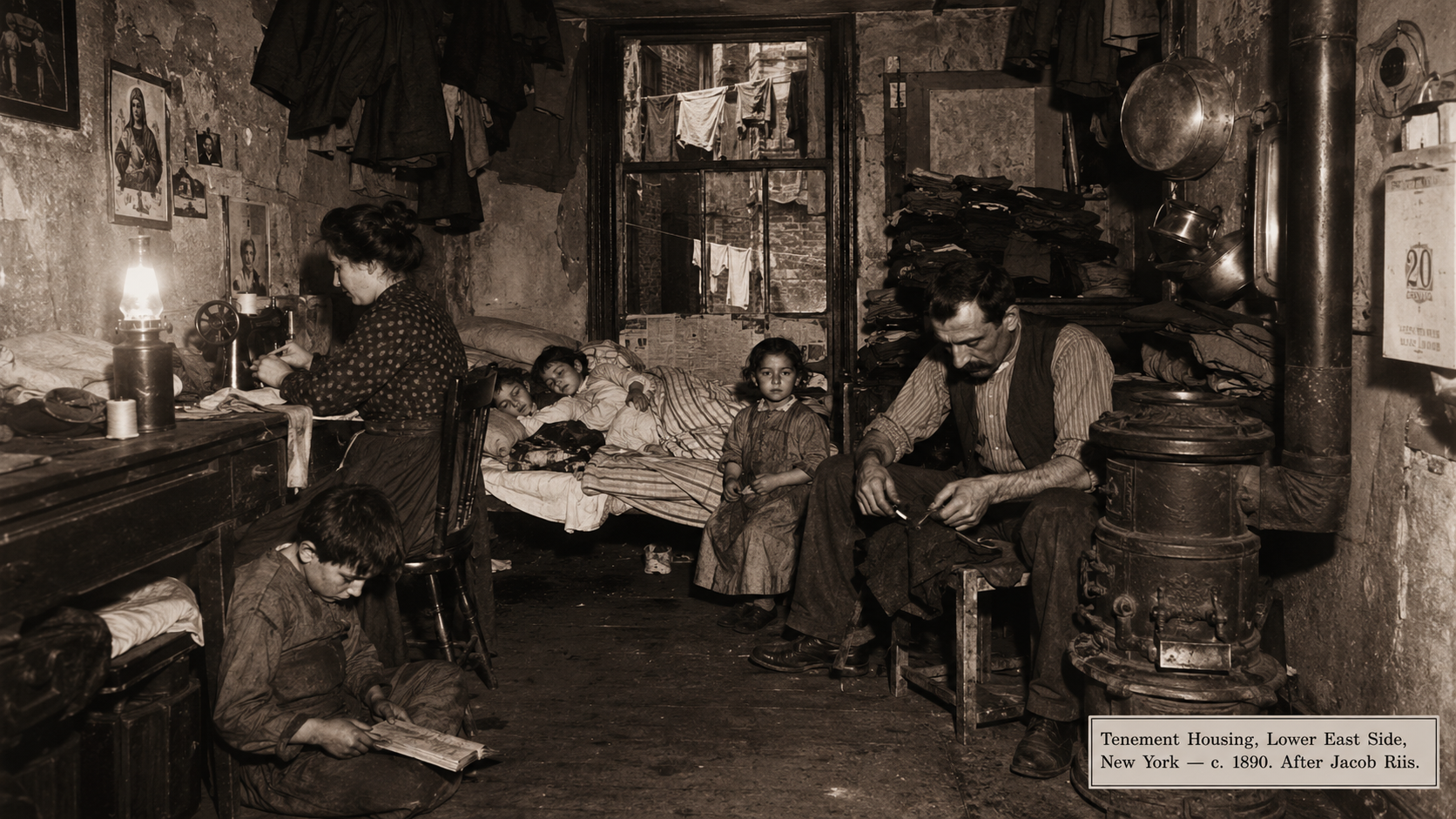
Tenement housing conditions in New York City's Lower East Side, as documented by reformer Jacob Riis in "How the Other Half Lives" (1890).
-
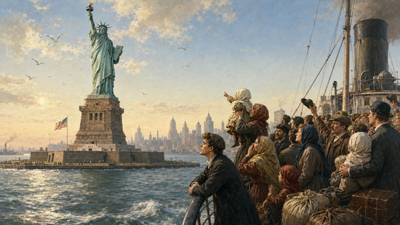
The Statue of Liberty in New York Harbor, a gift from France unveiled in 1886 as an enduring symbol of freedom and welcome to immigrants.
-
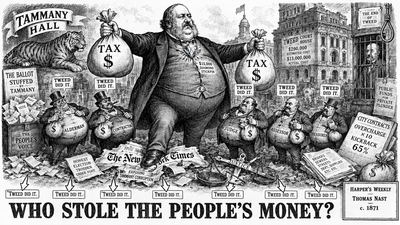
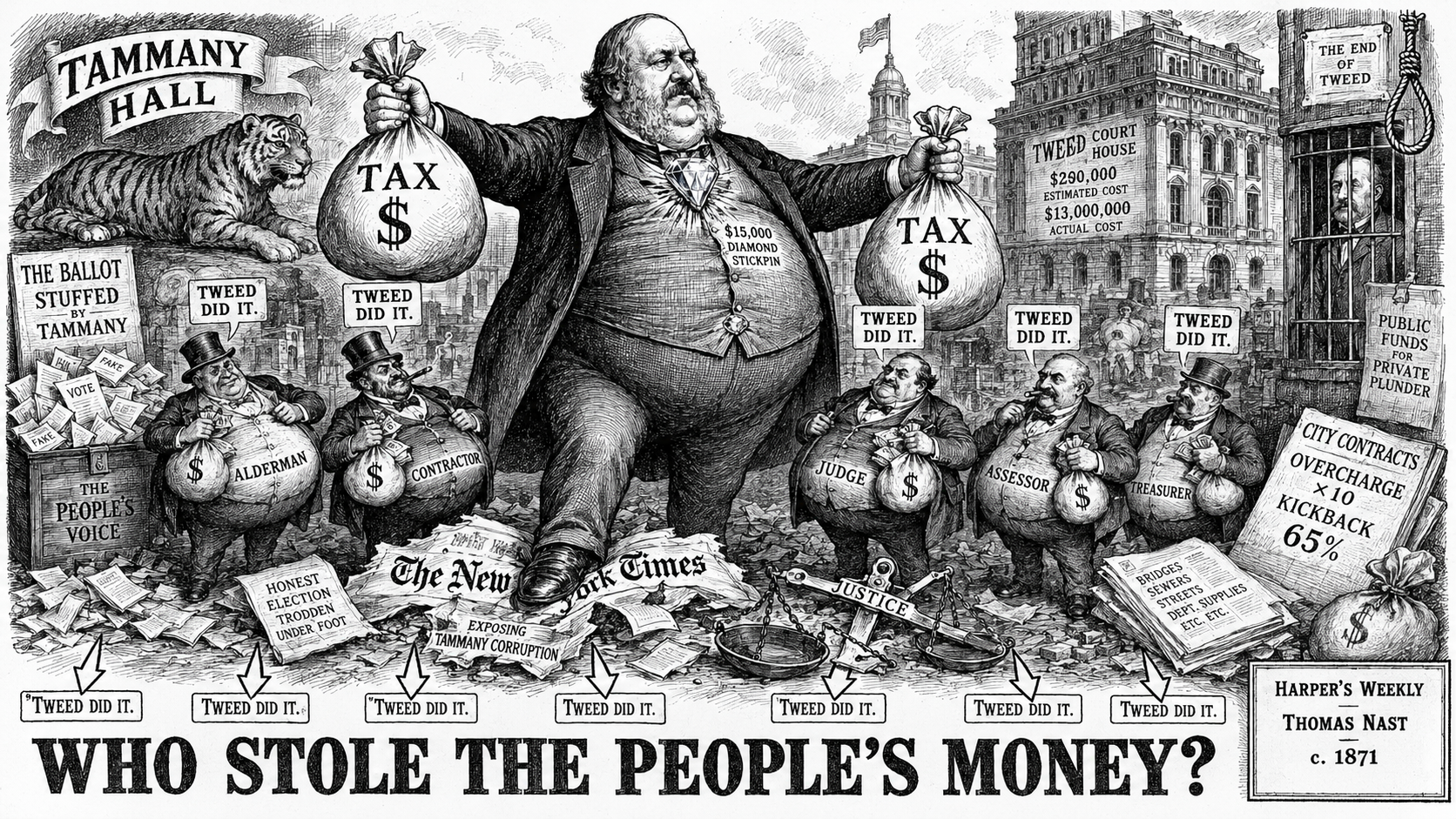
Thomas Nast's biting political cartoons exposing the corruption of Boss Tweed and Tammany Hall's stranglehold on New York City politics.
-
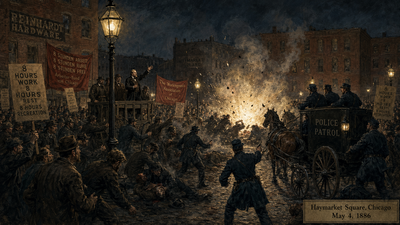
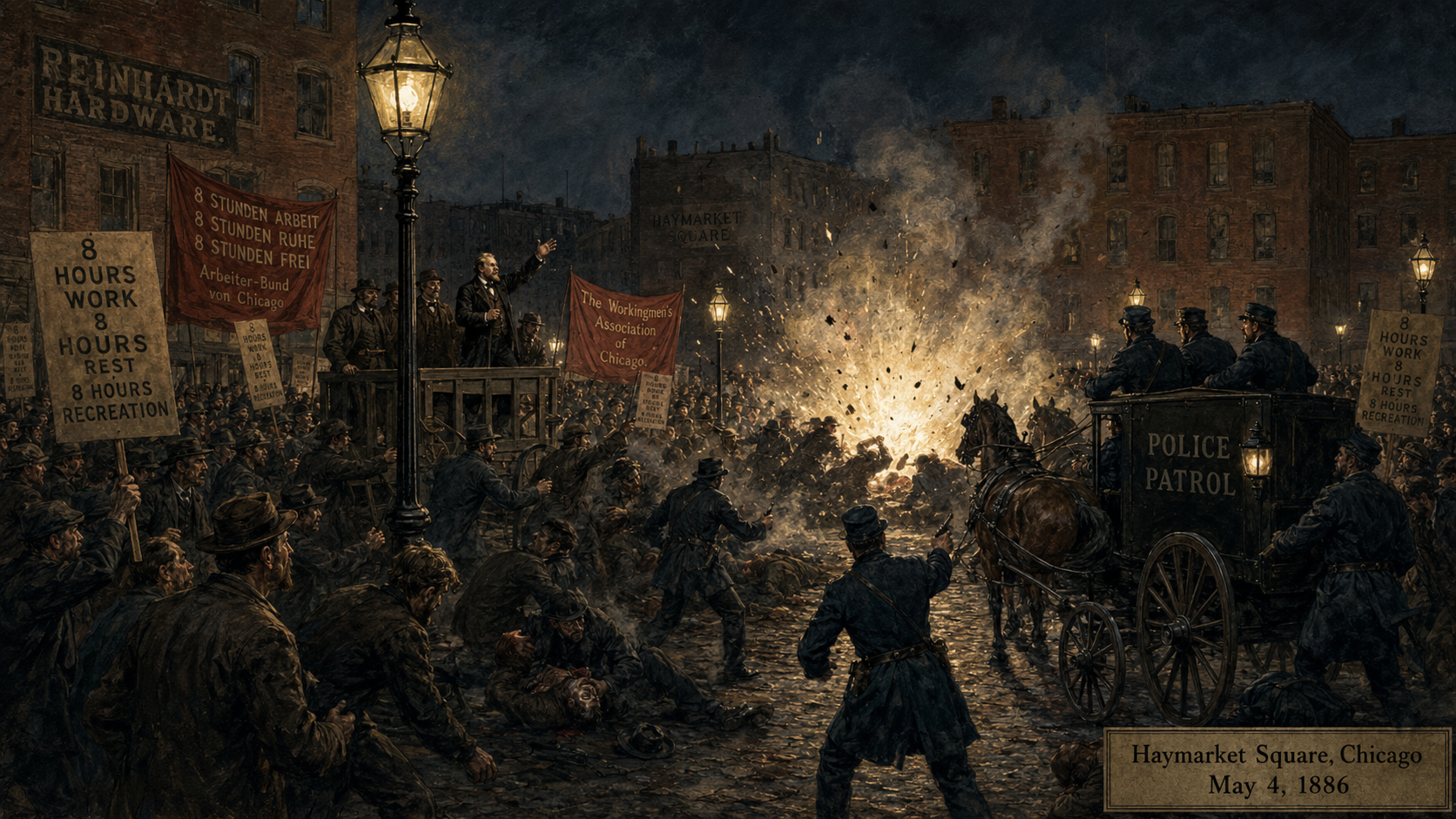
The Haymarket Affair of May 4, 1886, when a bomb exploded at a Chicago labor rally, killing police officers and setting back the labor movement.
-
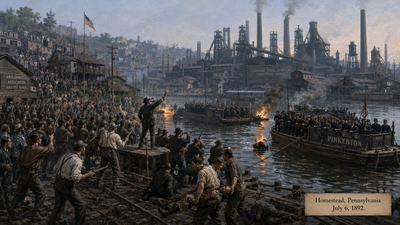
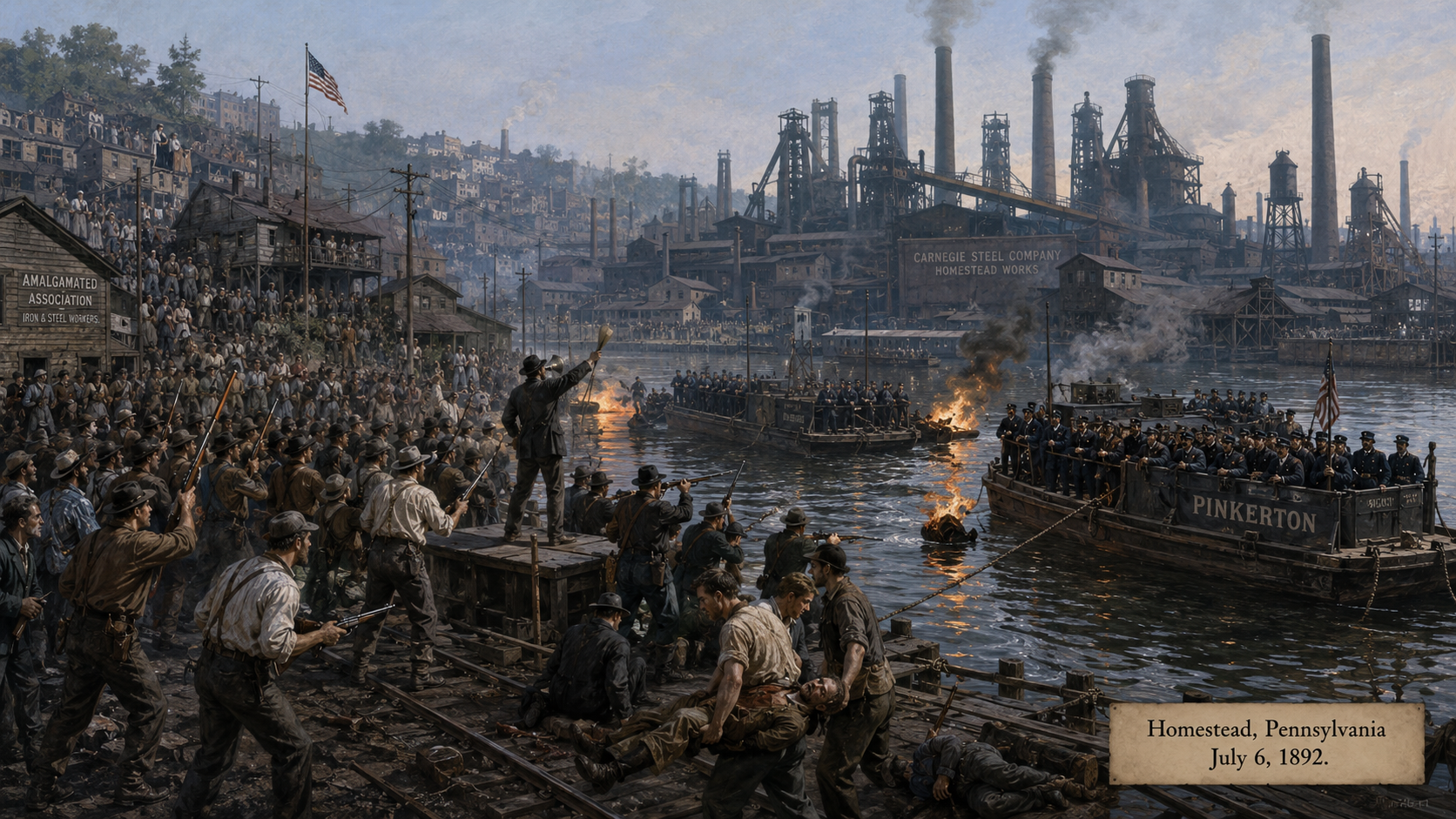
The Homestead Strike of 1892, a violent clash between Carnegie Steel and steelworkers at Homestead, Pennsylvania that crushed union organizing.
-
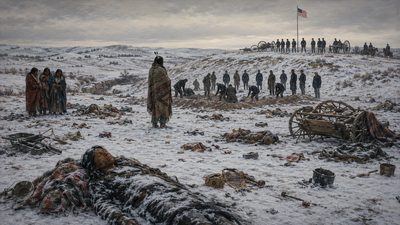
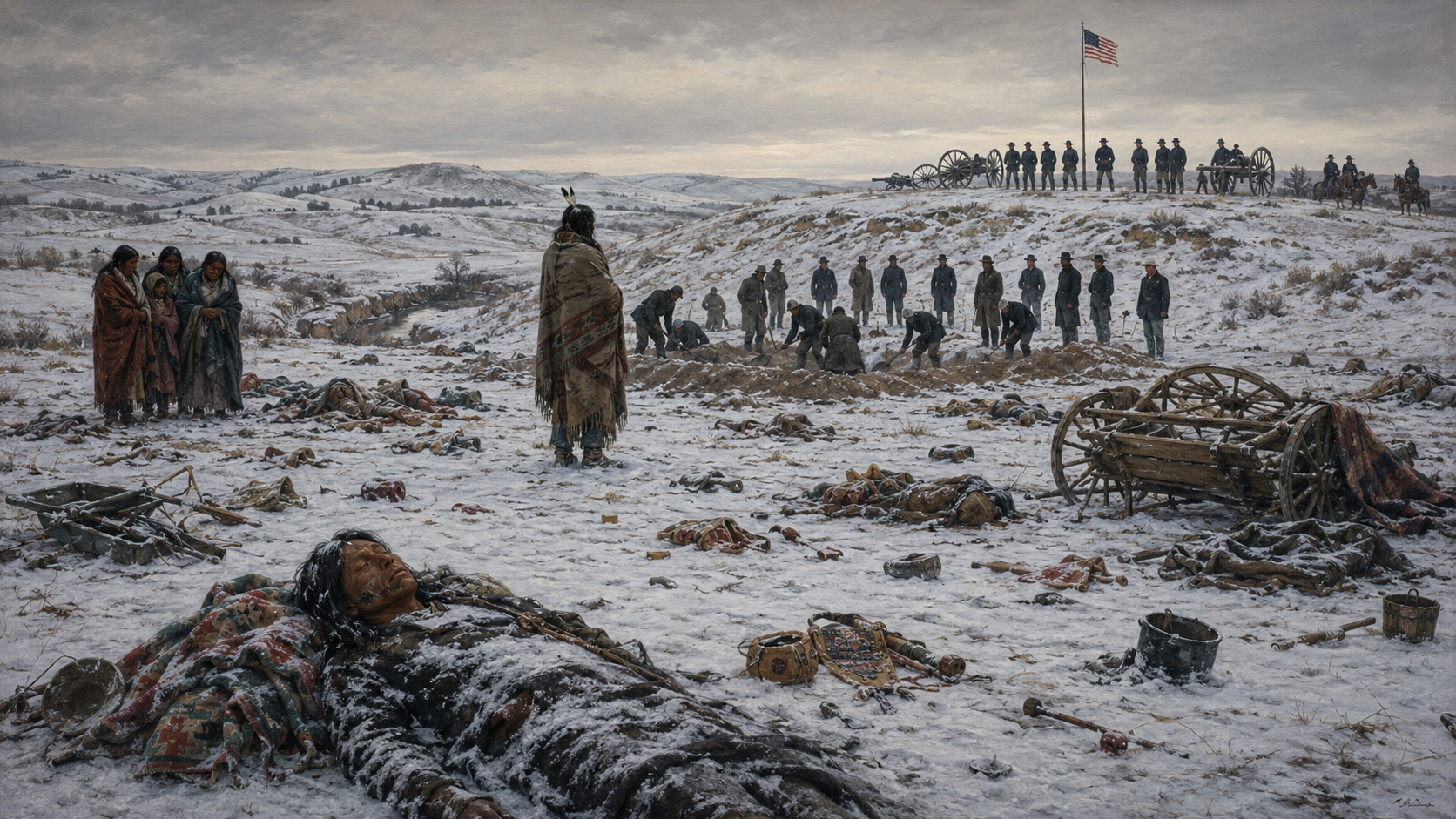
The Wounded Knee Massacre of December 29, 1890, in which U.S. Army troops killed approximately 250 Lakota men, women, and children in South Dakota.
-
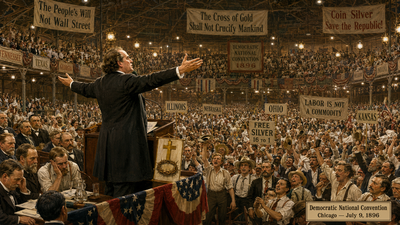
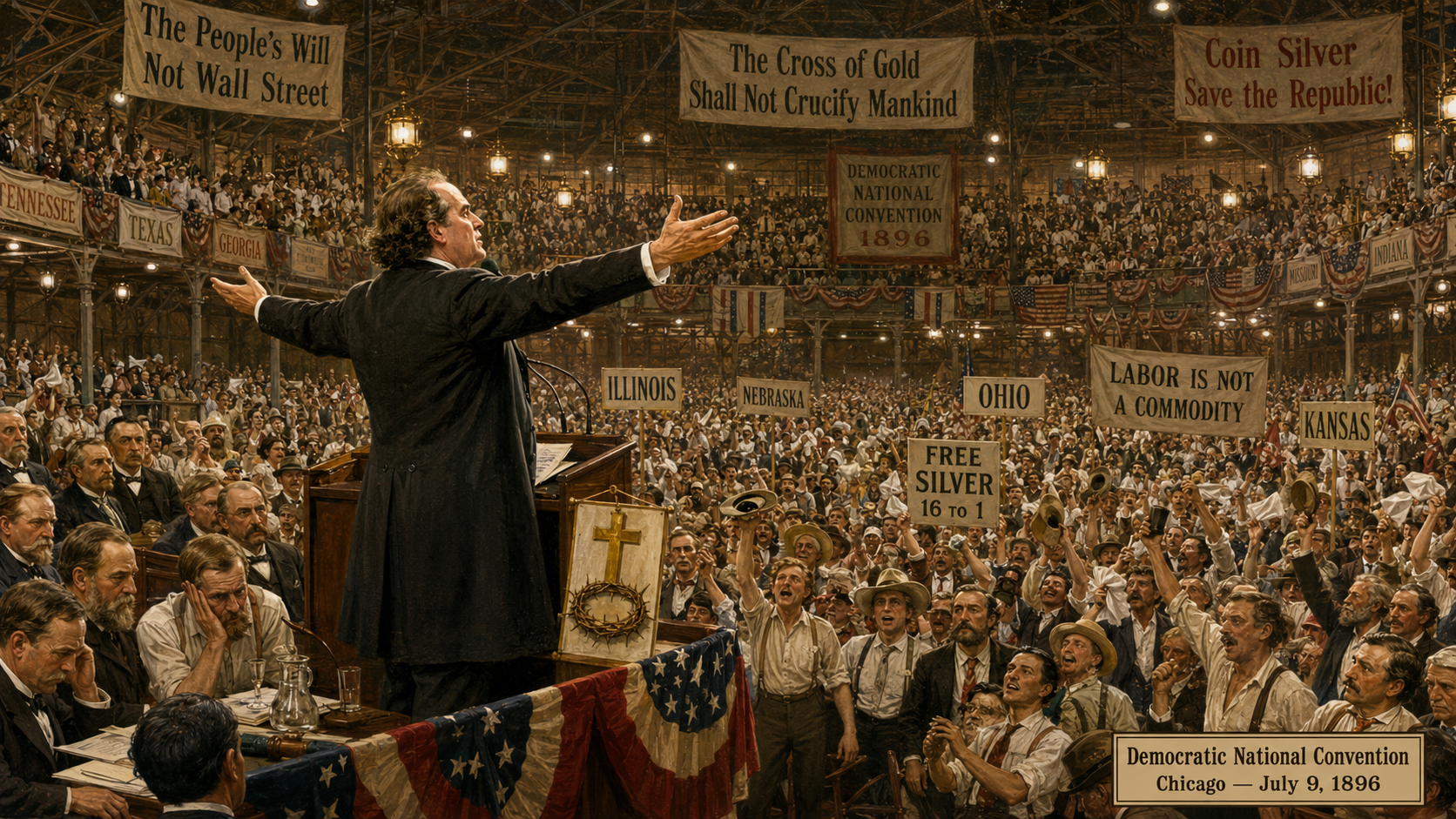
Portrait of William Jennings Bryan, the Populist Democratic orator famous for his 1896 "Cross of Gold" speech demanding relief for indebted farmers.
-
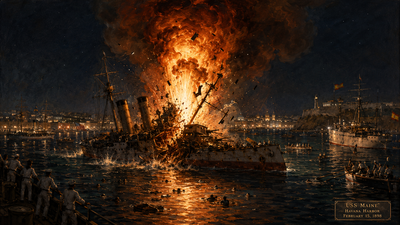
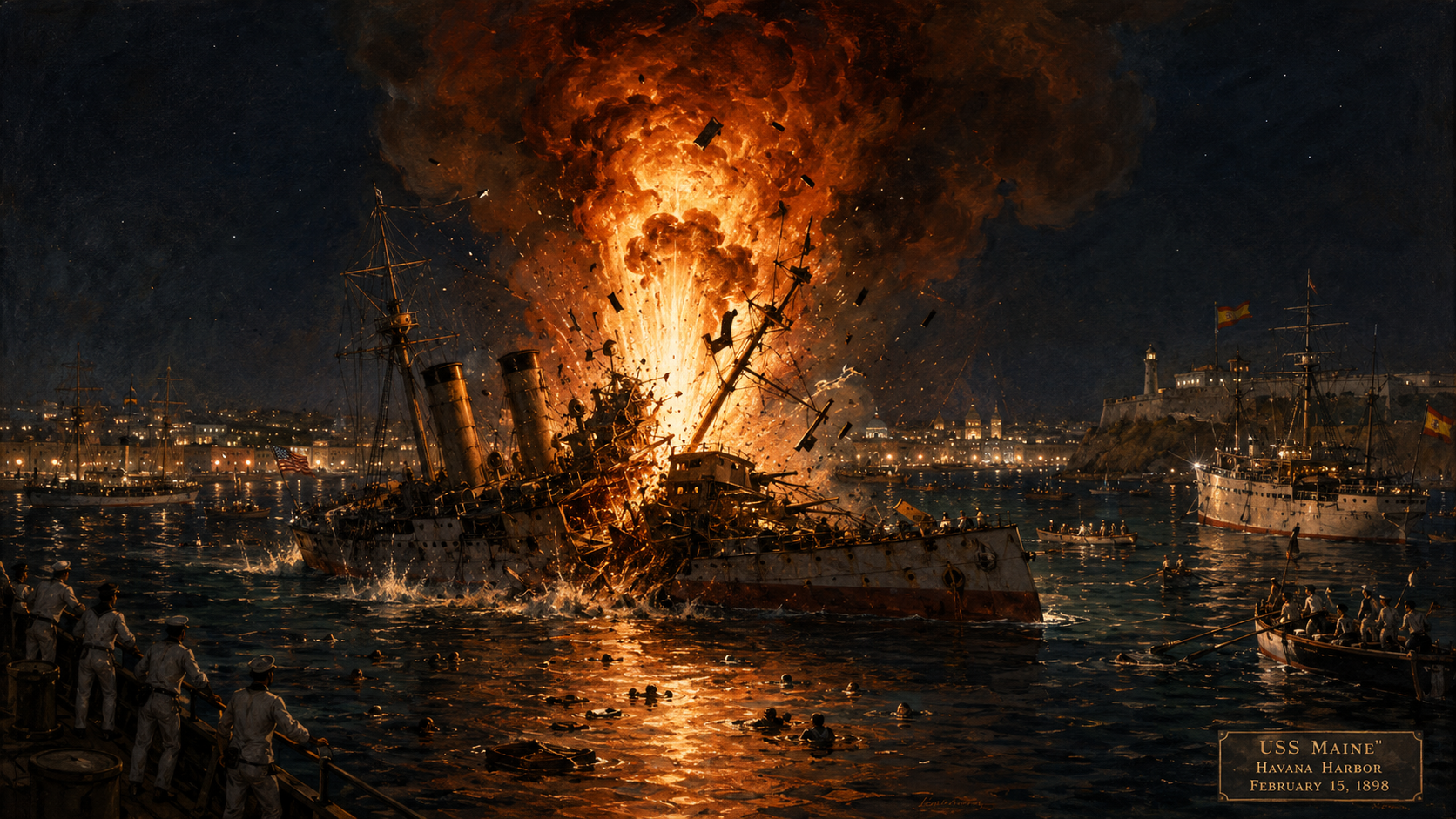
The mysterious explosion of the USS Maine in Havana Harbor on February 15, 1898, which became the rallying cry for the Spanish-American War.
-
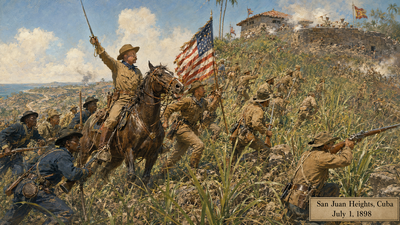
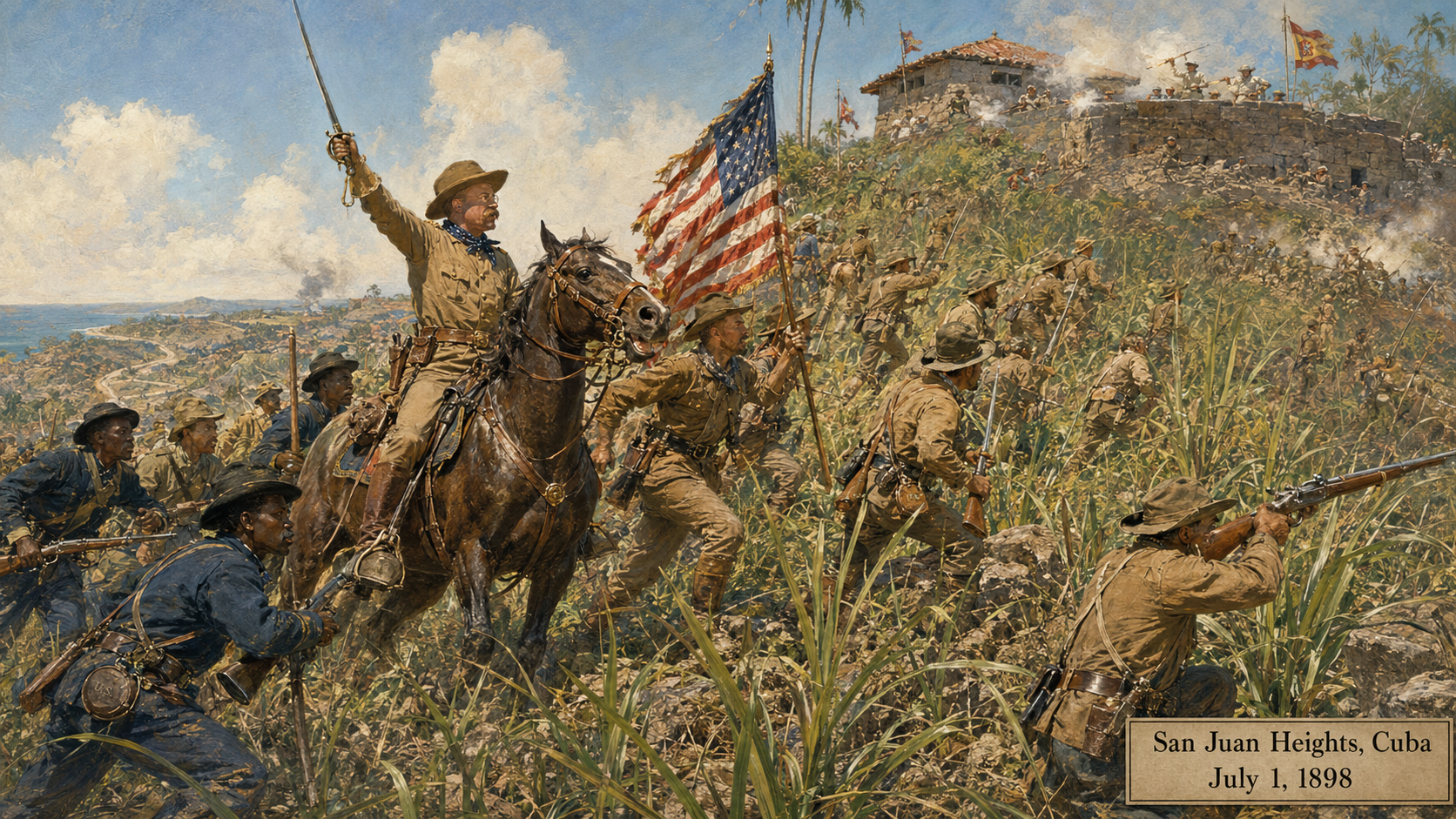
Theodore Roosevelt and his Rough Riders at the Battle of San Juan Hill during the Spanish-American War in Cuba, 1898.
-
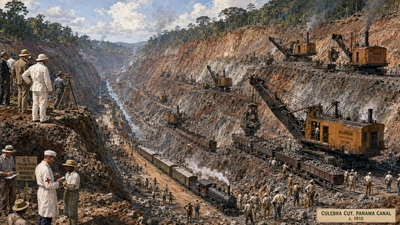
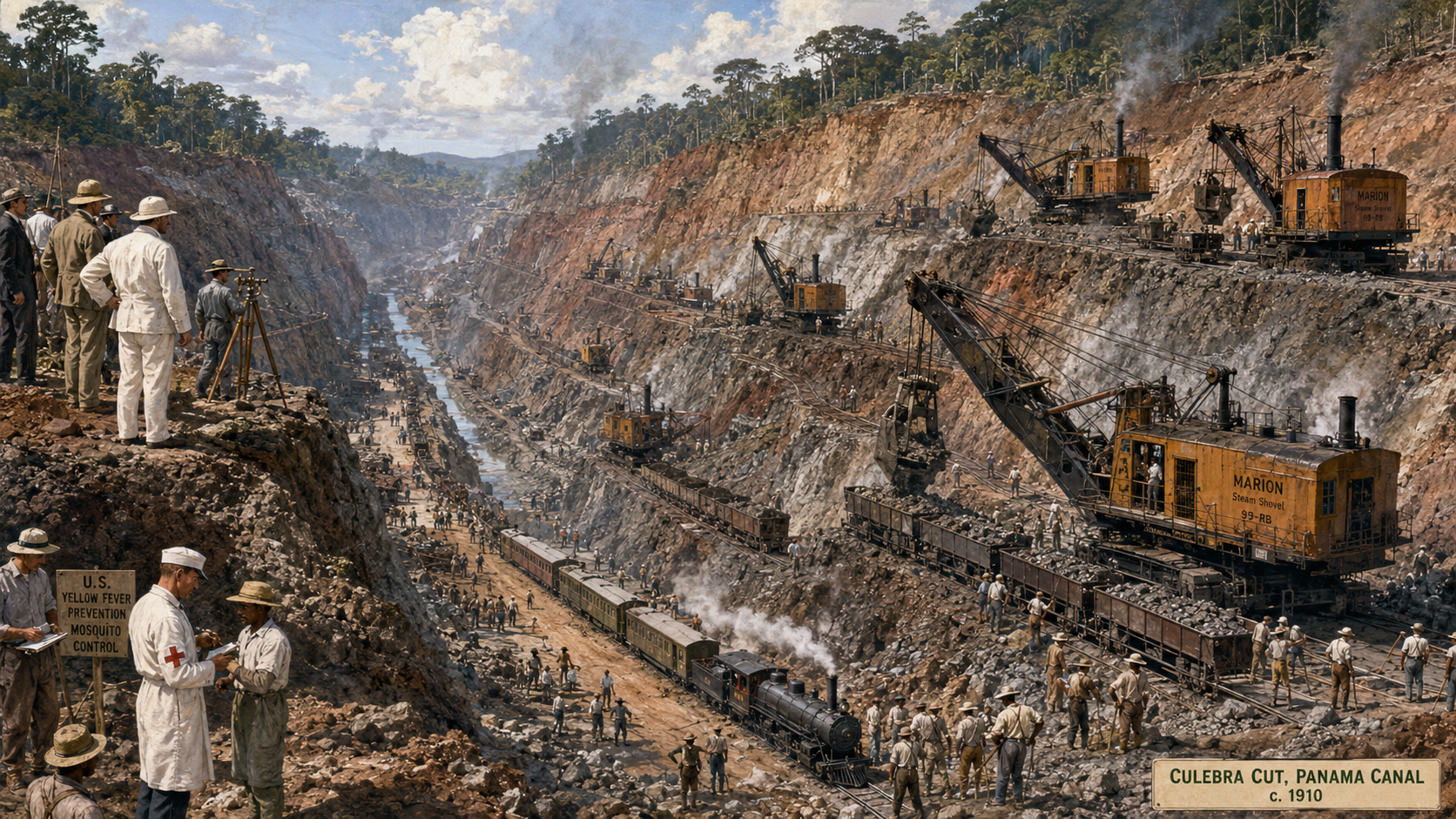
Construction of the Panama Canal, the massive engineering project completed in 1914 that connected the Atlantic and Pacific Oceans.
-
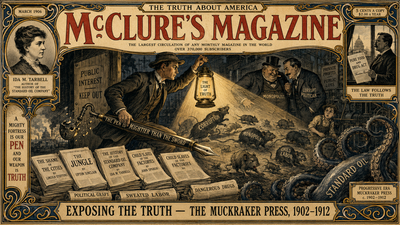
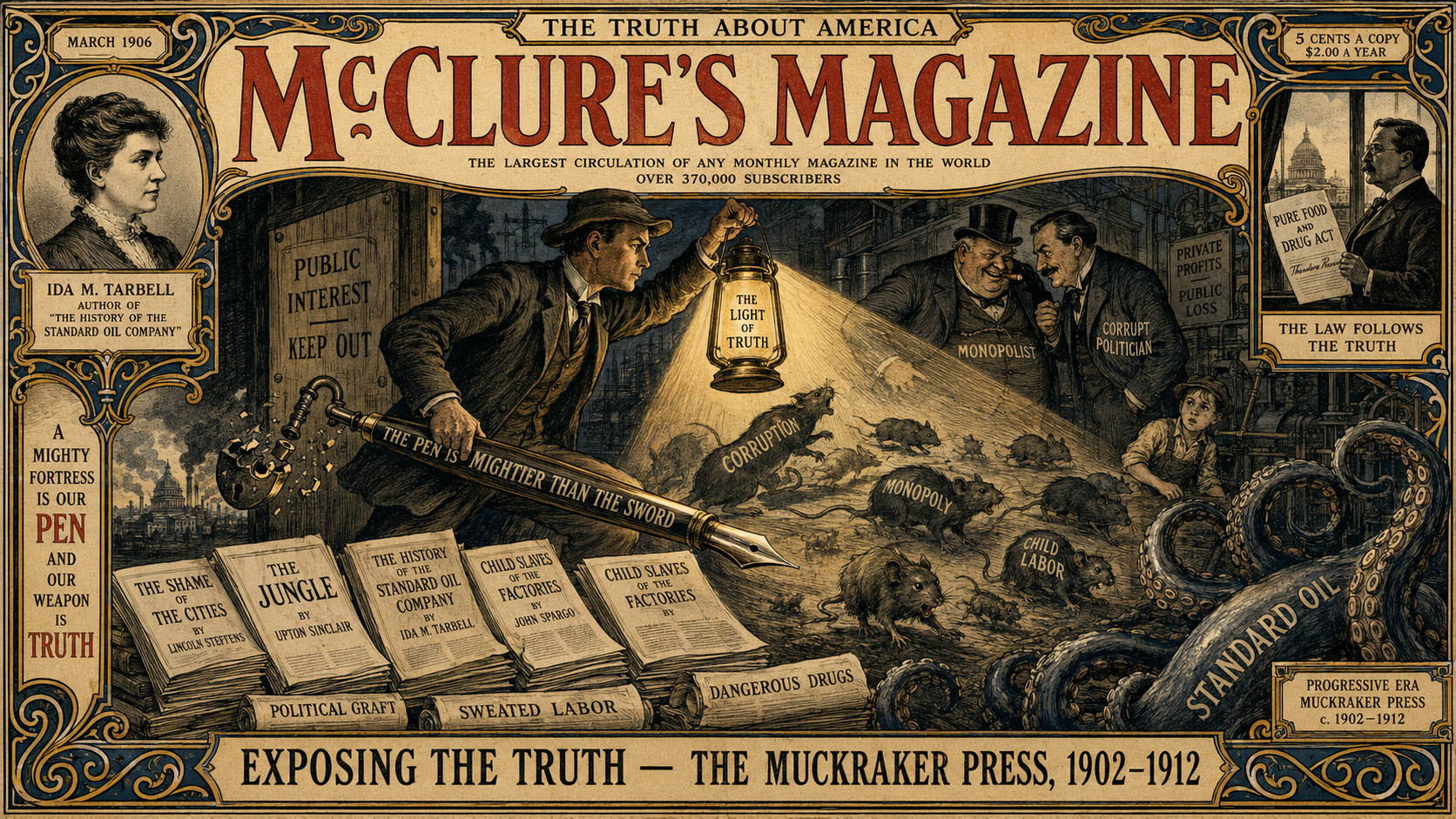
A political cartoon celebrating the Progressive Era muckraker journalists who exposed corruption, dangerous industries, and social inequality.
-
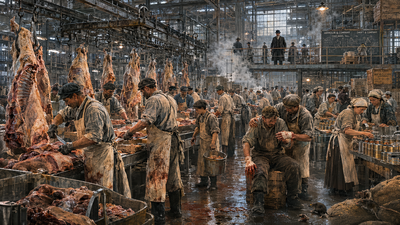
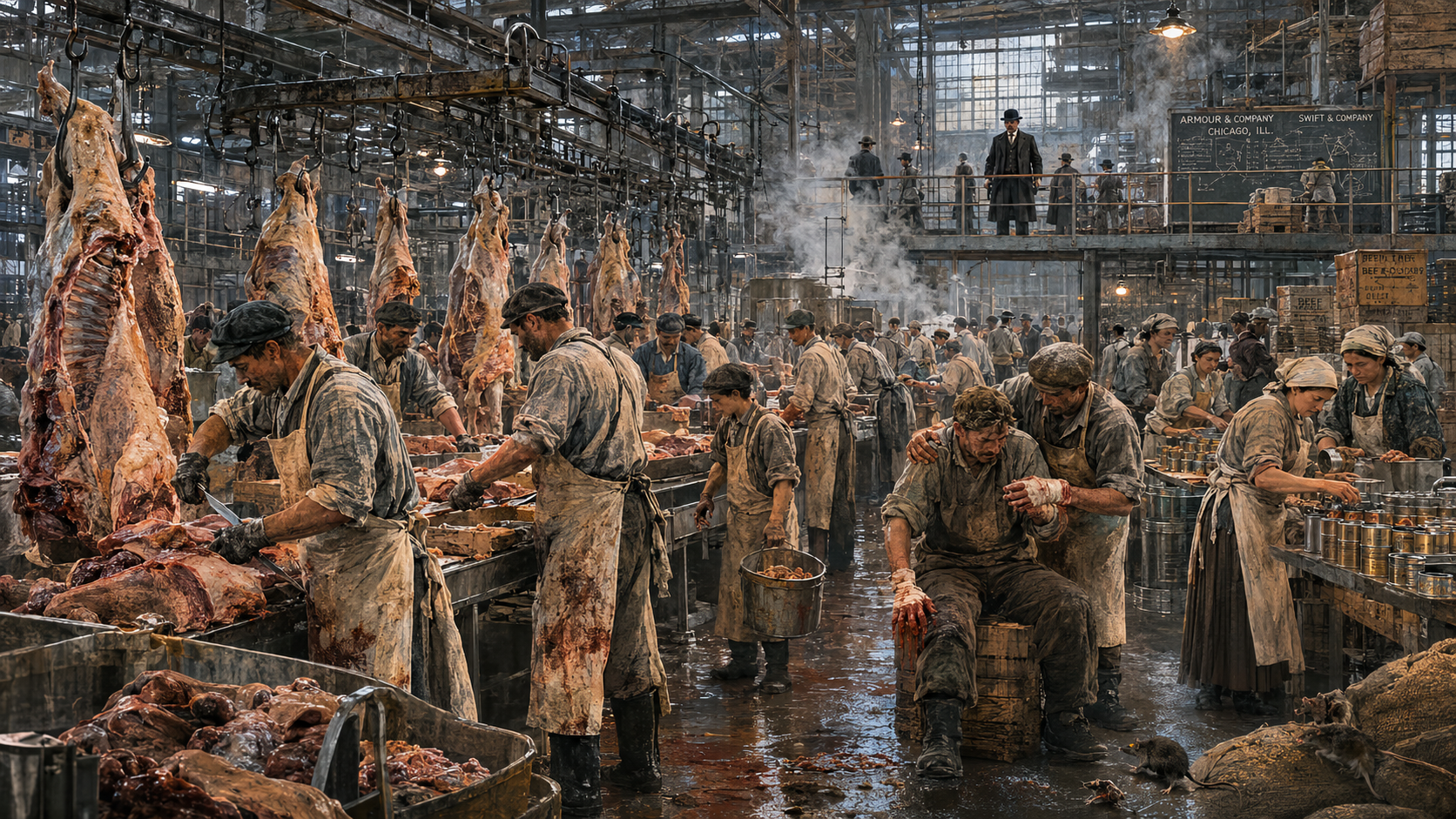
An illustration of conditions in Chicago's meatpacking industry as exposed by Upton Sinclair's shocking novel "The Jungle" (1906).
-
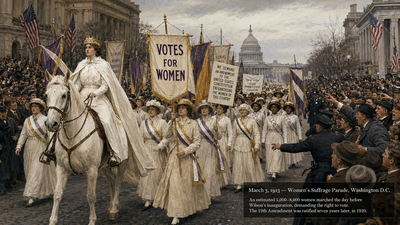
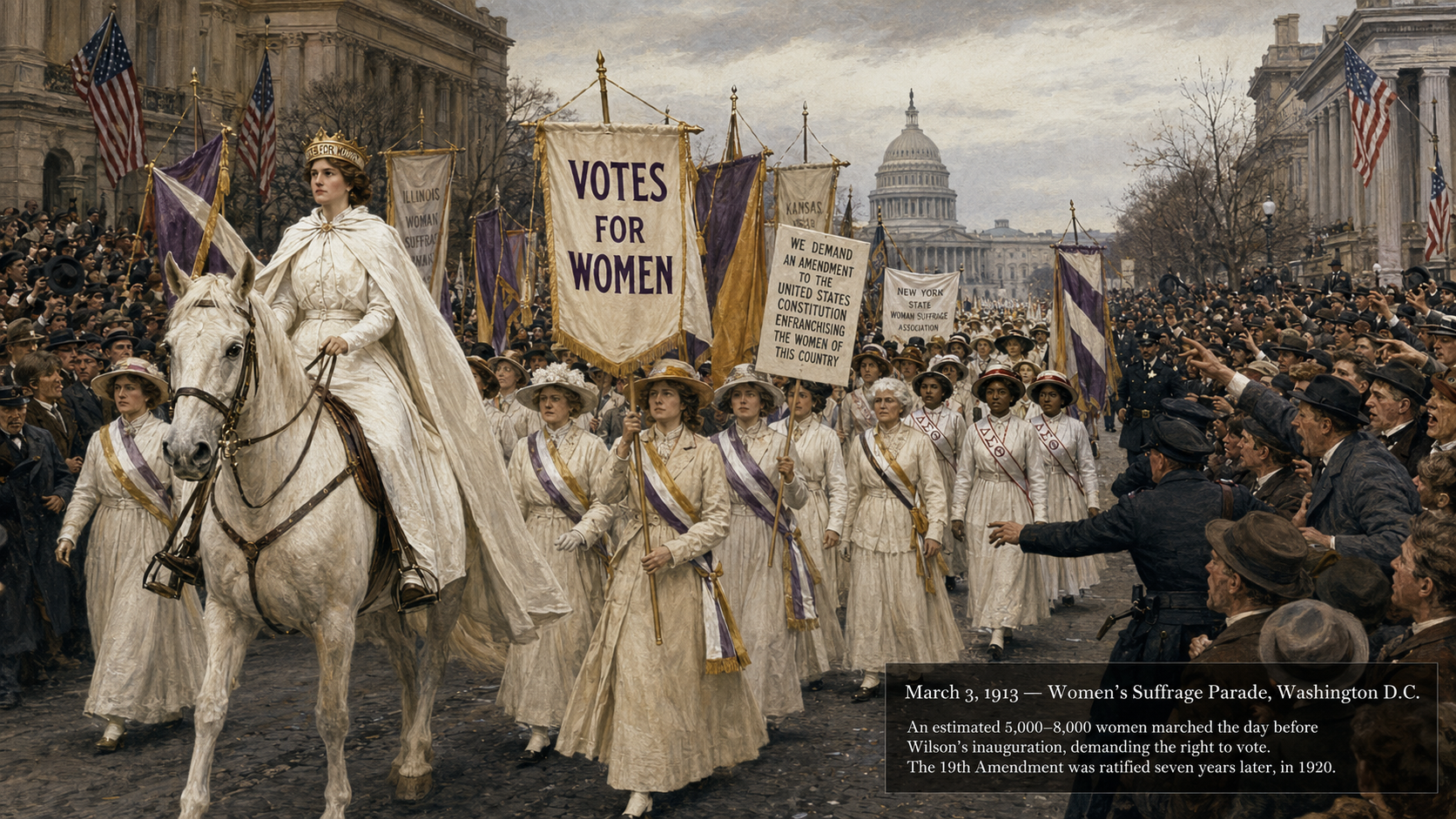
Women's suffrage marchers demanding the right to vote, a decades-long campaign that culminated in the 19th Amendment's ratification in 1920.
-
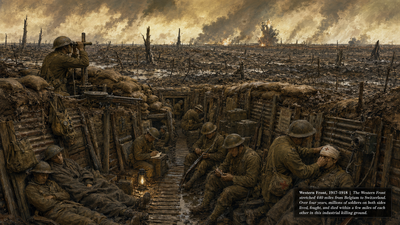
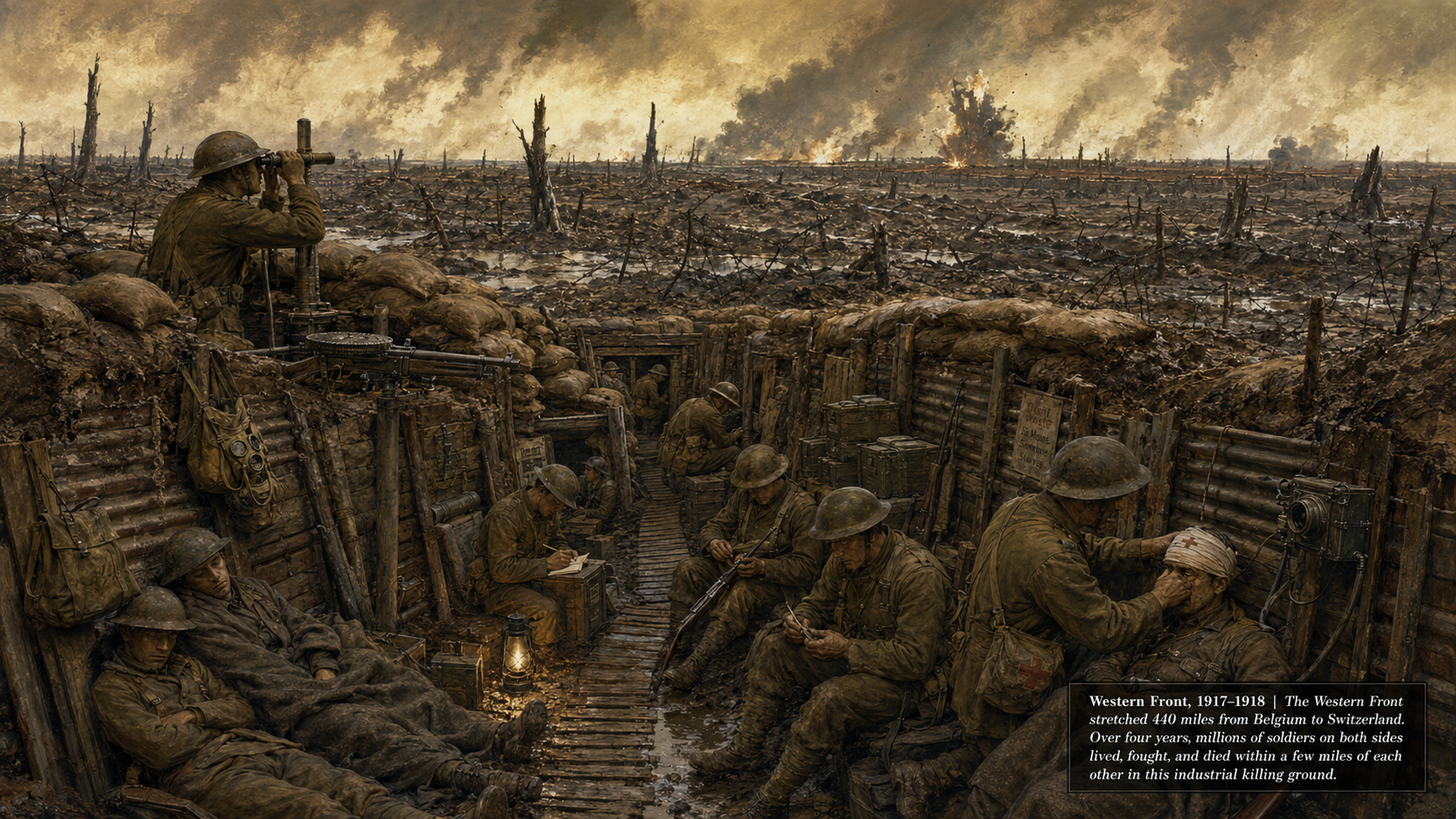
Soldiers in the trenches of World War I, depicting the brutal stalemate and horrific conditions of trench warfare on the Western Front.
-
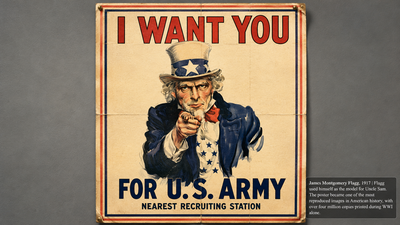
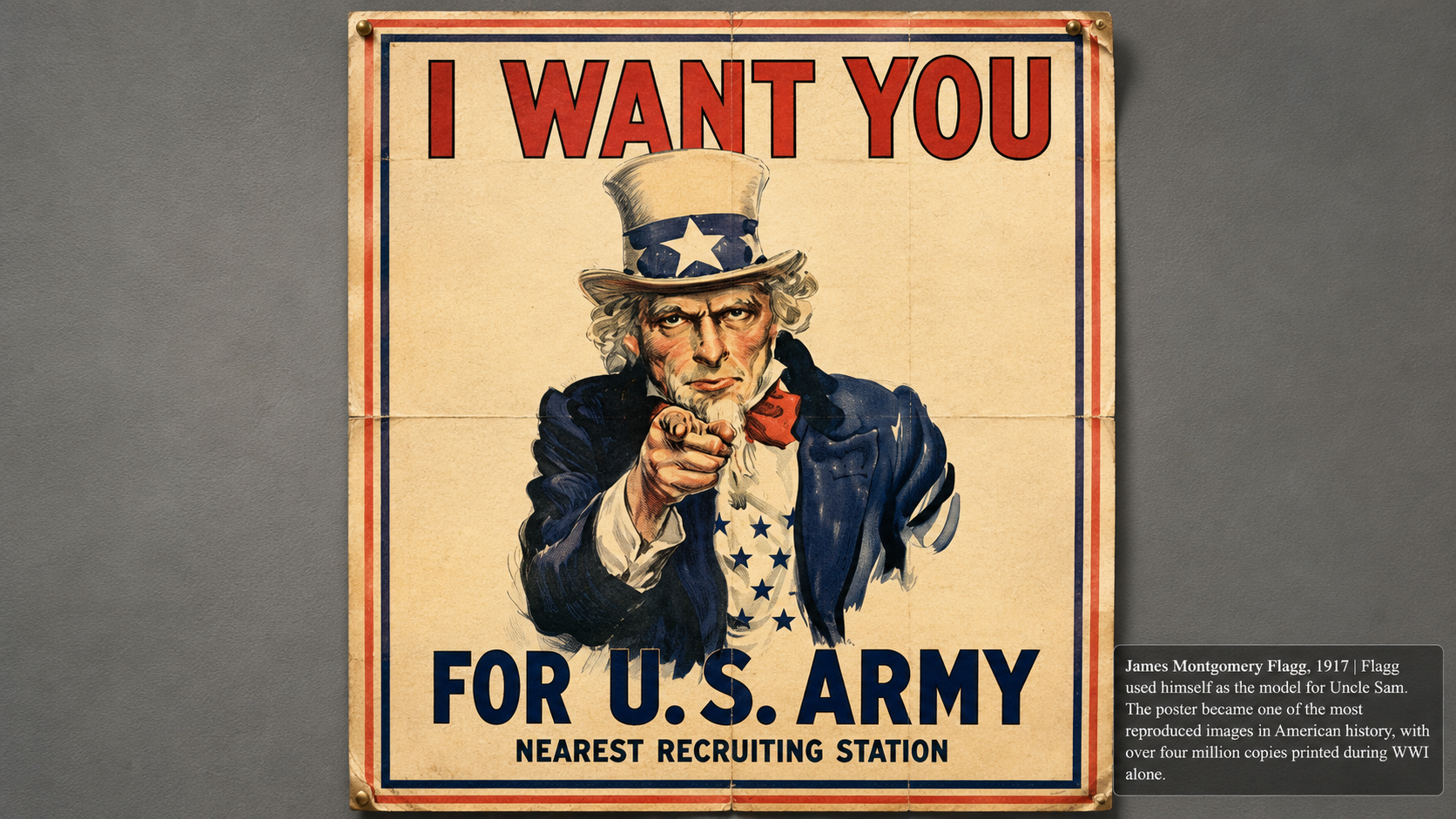
The iconic "I Want YOU for U.S. Army" recruiting poster featuring Uncle Sam, painted by James Montgomery Flagg and first used in 1917.
-
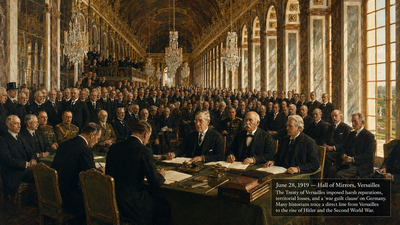
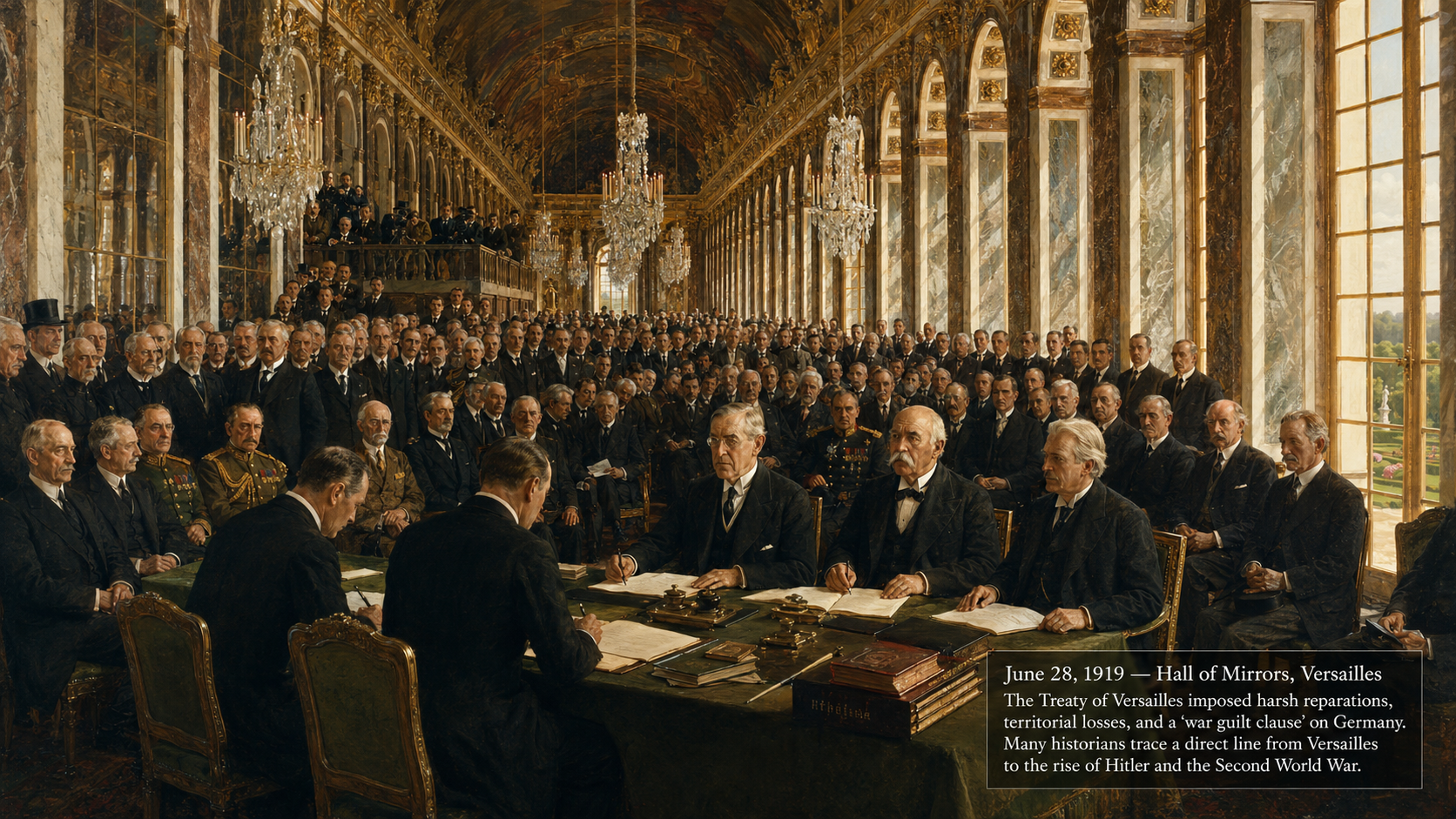
The signing of the Treaty of Versailles on June 28, 1919, formally ending World War I and imposing punishing reparations on Germany.
-
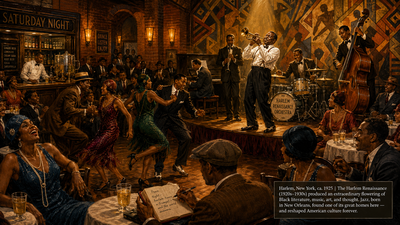
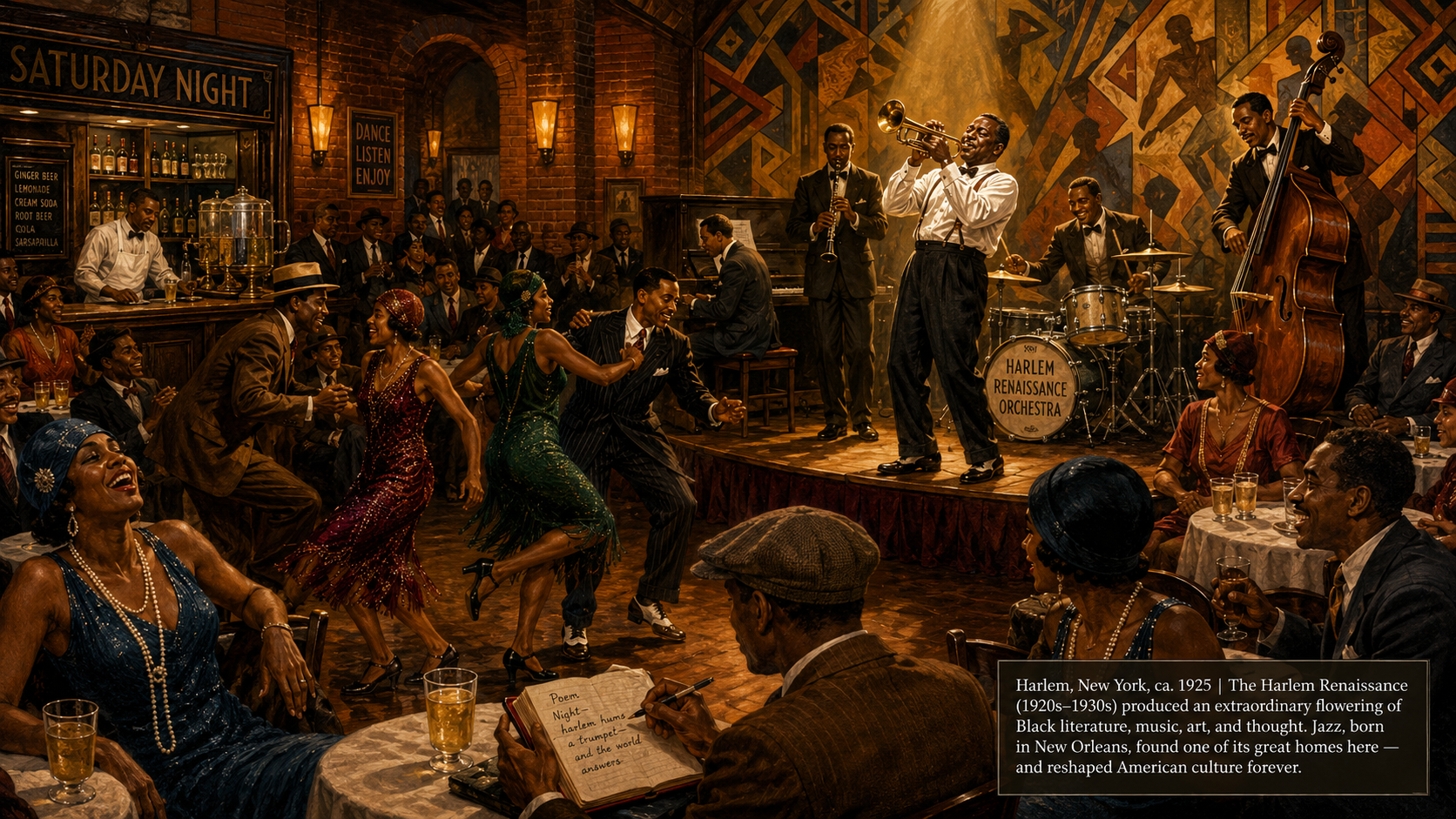
Jazz musicians and artists of the Harlem Renaissance, the vibrant African American cultural movement that transformed American music and arts in the 1920s.
-
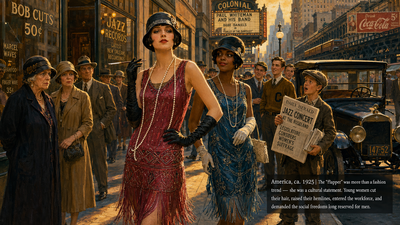
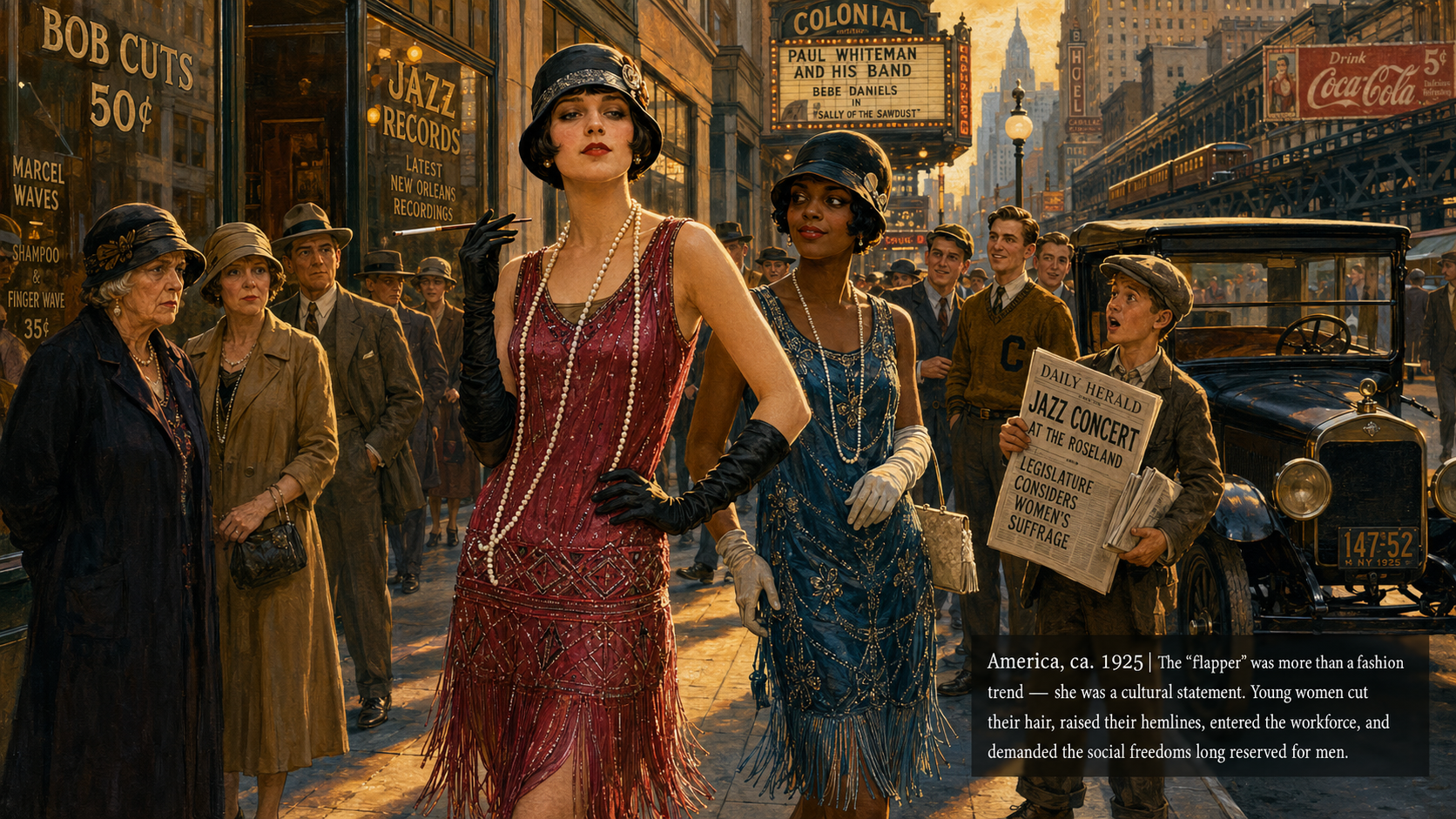
A "flapper" of the 1920s Jazz Age, representing the dramatic shift in women's fashion, independence, and social norms after World War I.
-
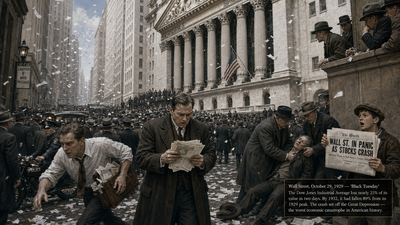
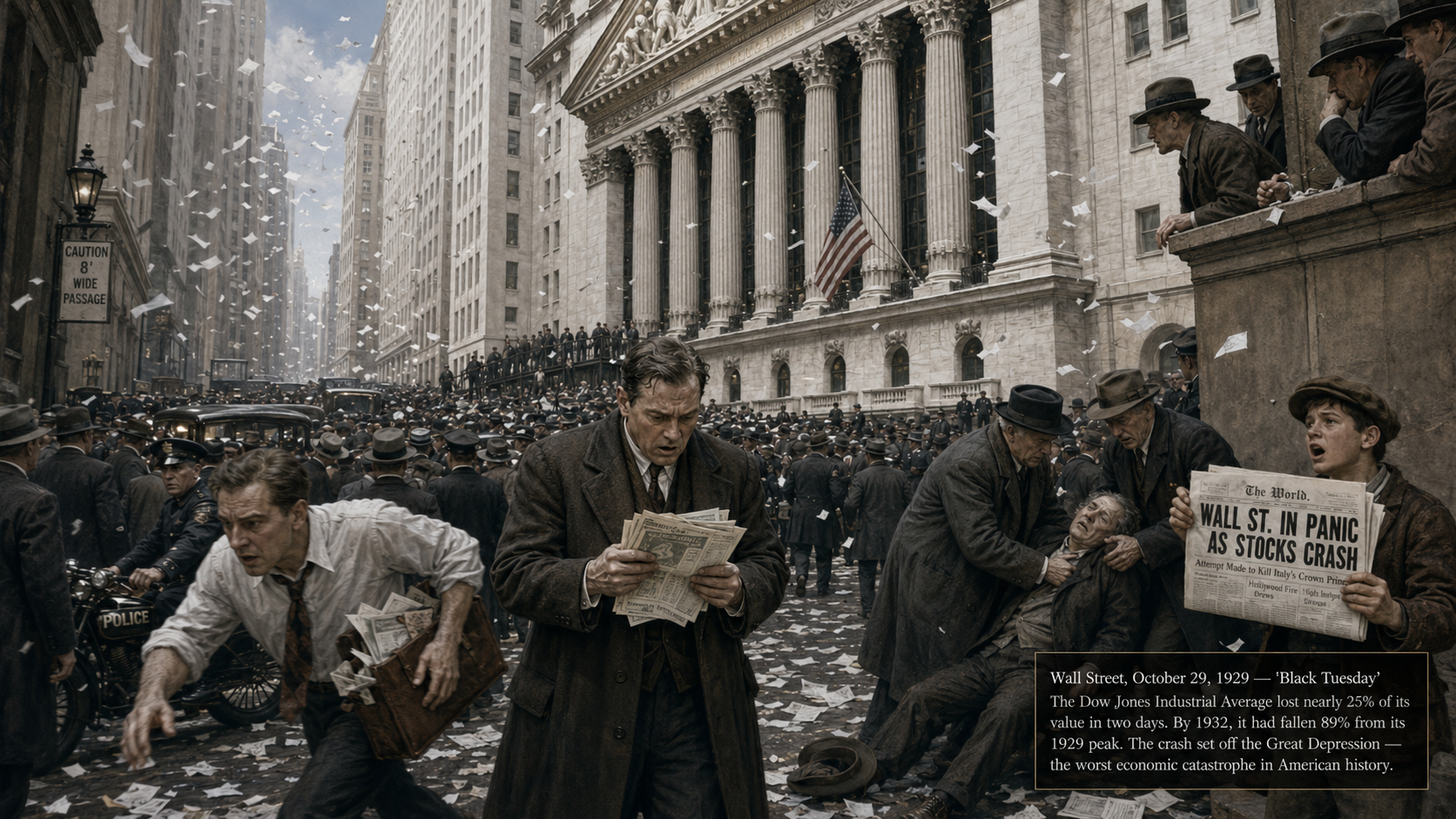
The stock market crash of October 1929, which wiped out fortunes overnight and triggered the Great Depression, the worst economic crisis in U.S. history.
-
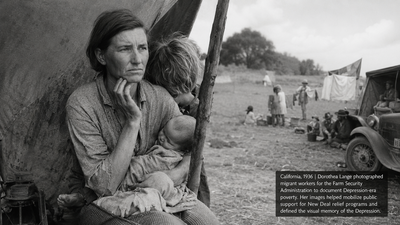
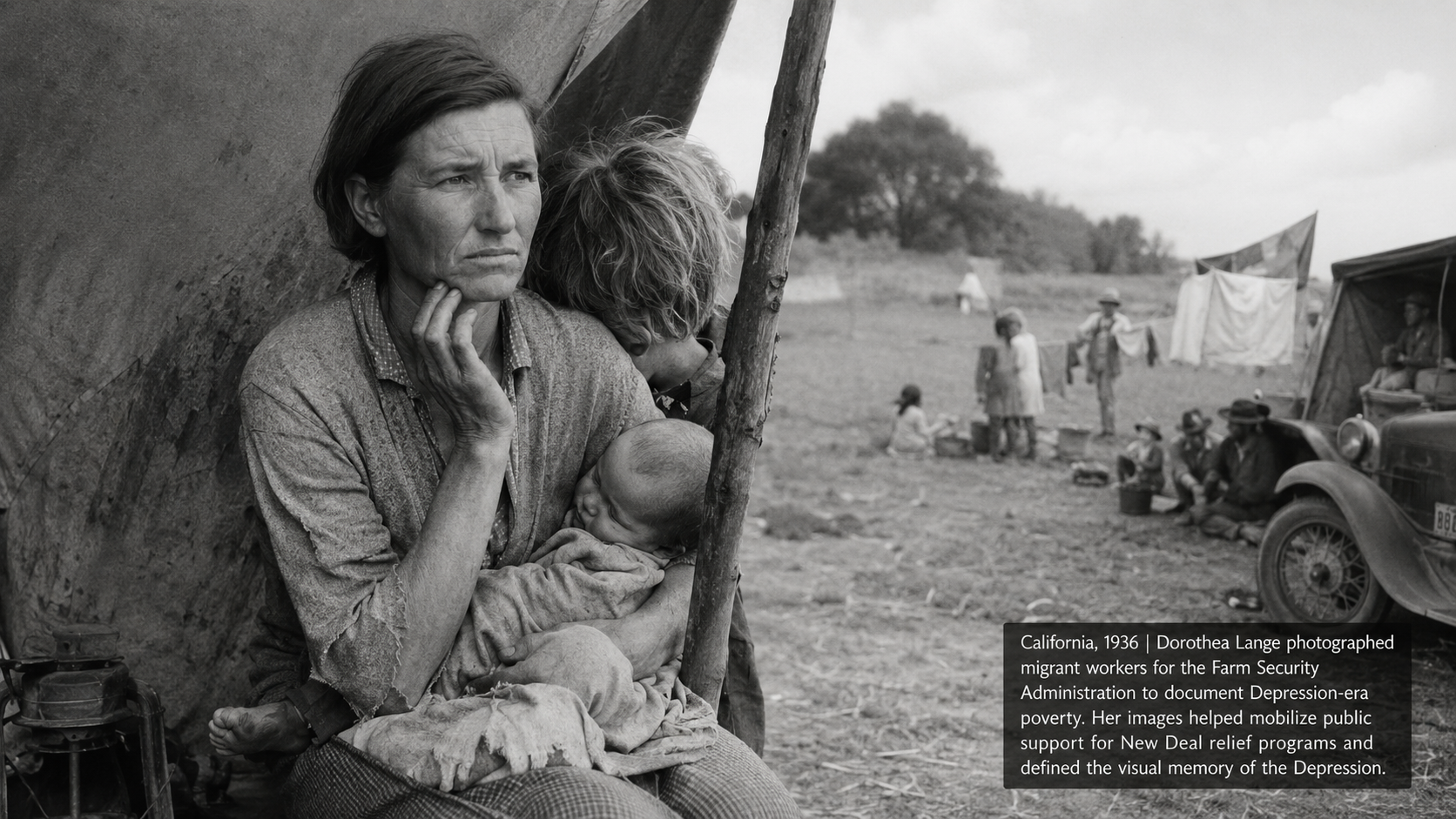
Dorothea Lange's iconic "Migrant Mother" photograph (1936), capturing the desperation of a pea-picker and her children during the Great Depression.
-
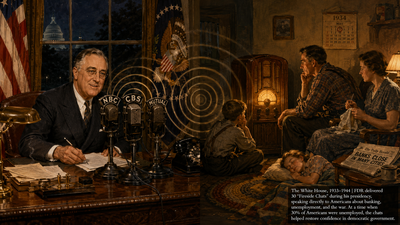
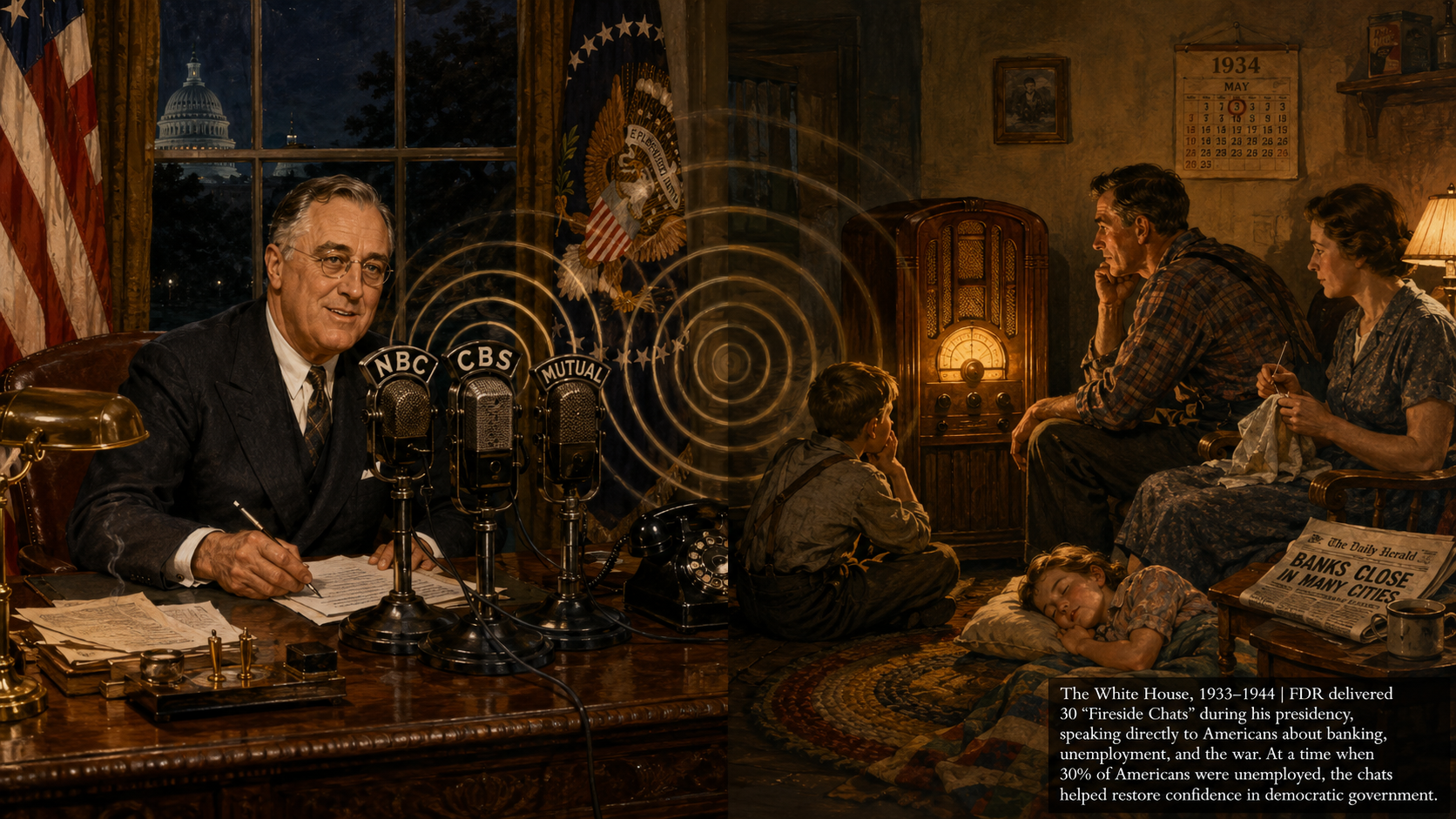
President Franklin D. Roosevelt delivering one of his "fireside chat" radio broadcasts, using the new medium to reassure Americans during the Depression.
-
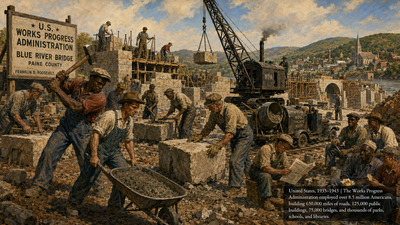
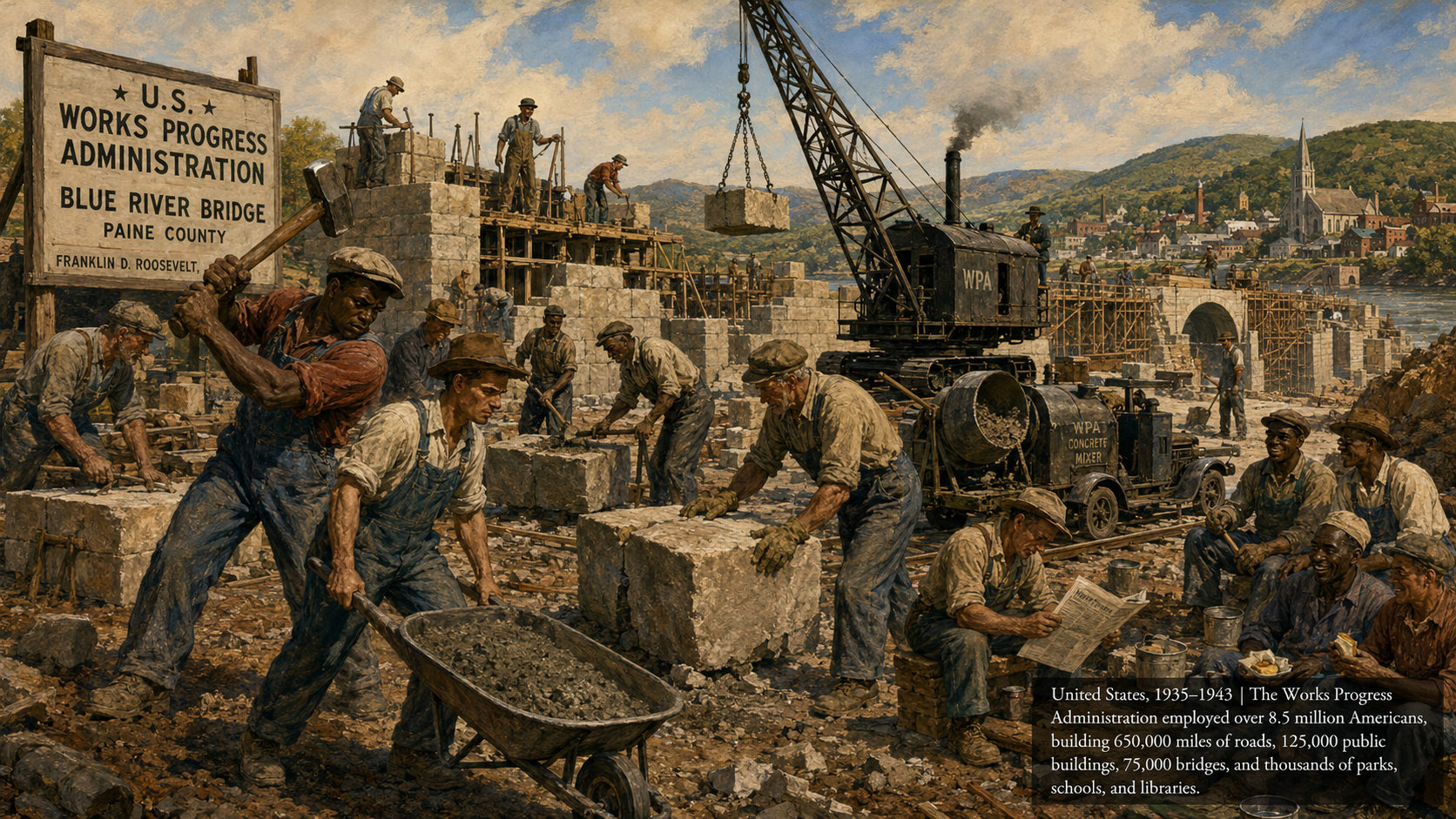
Works Progress Administration (WPA) workers building public infrastructure, one of FDR's New Deal programs that put millions of unemployed Americans to work.
-
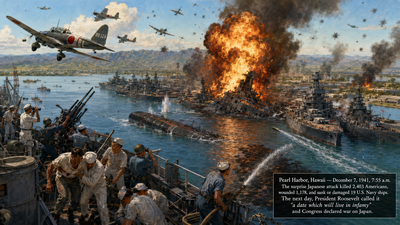
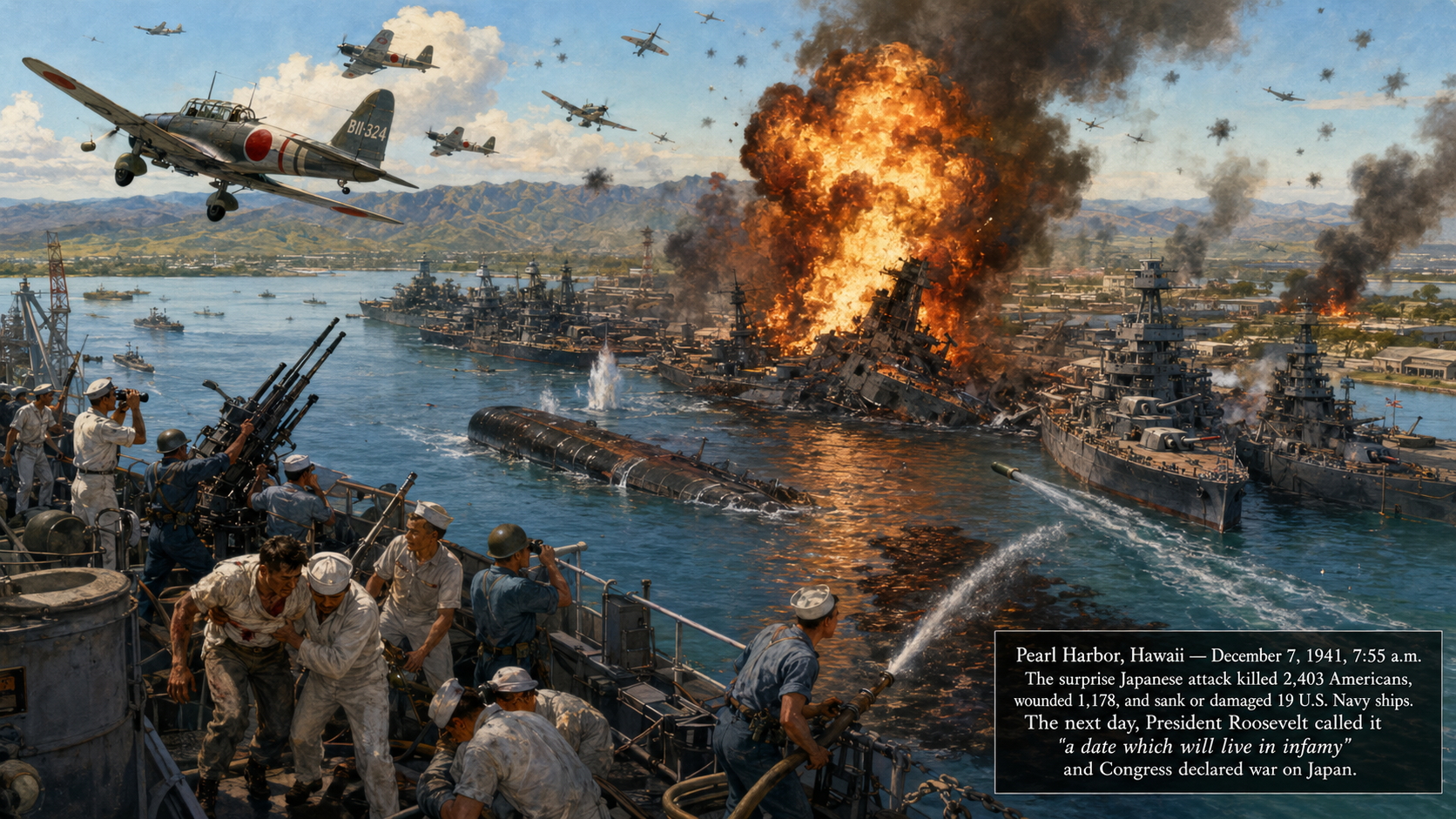
The Japanese surprise attack on the U.S. naval base at Pearl Harbor, Hawaii, on December 7, 1941 — "a date which will live in infamy."
-
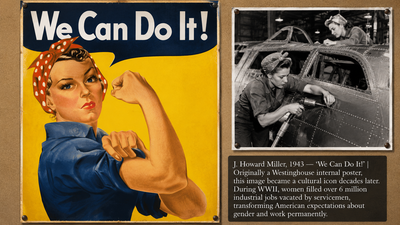
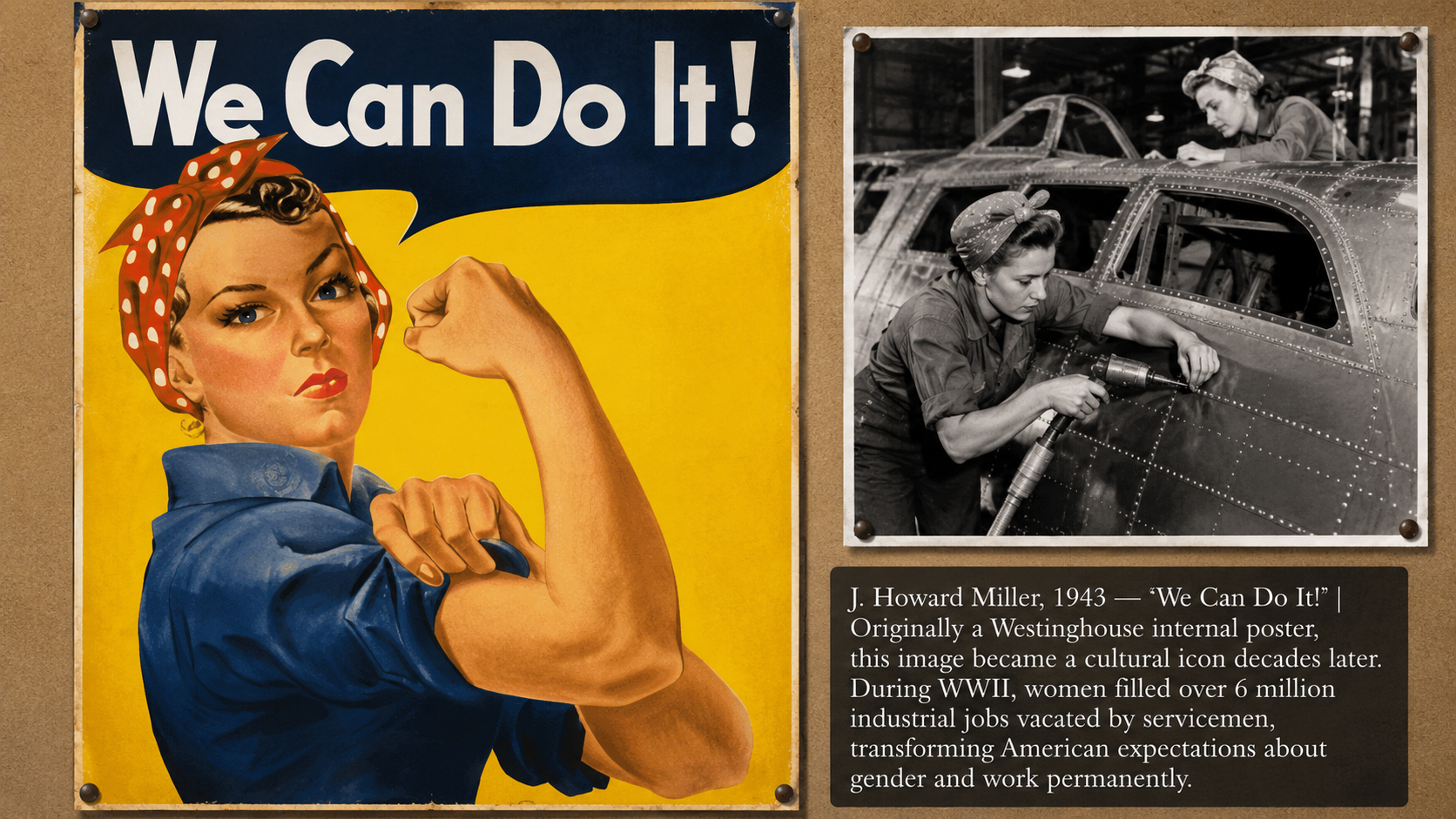
"Rosie the Riveter," the iconic wartime symbol of the millions of American women who entered the industrial workforce while men served overseas.
-
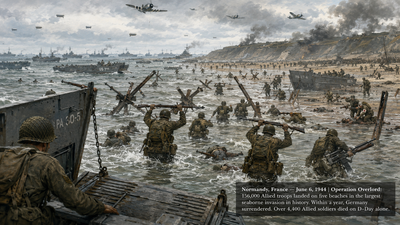
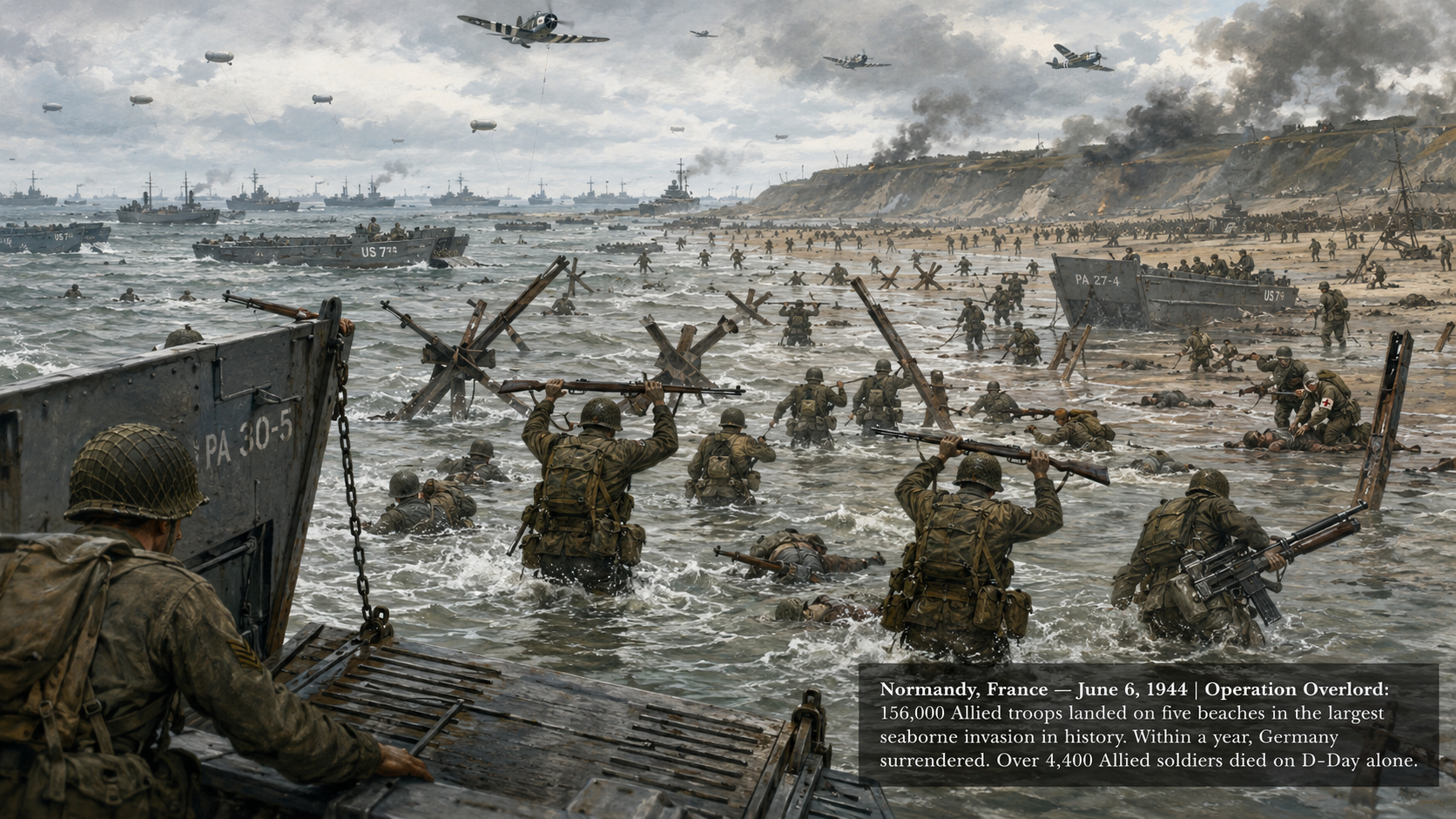
Allied troops landing on the beaches of Normandy, France, on June 6, 1944 — the largest seaborne invasion in history and a turning point in World War II.
-
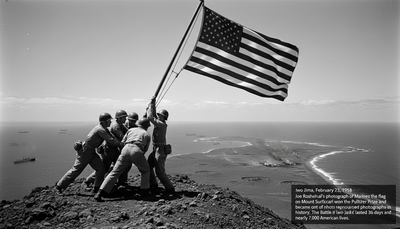
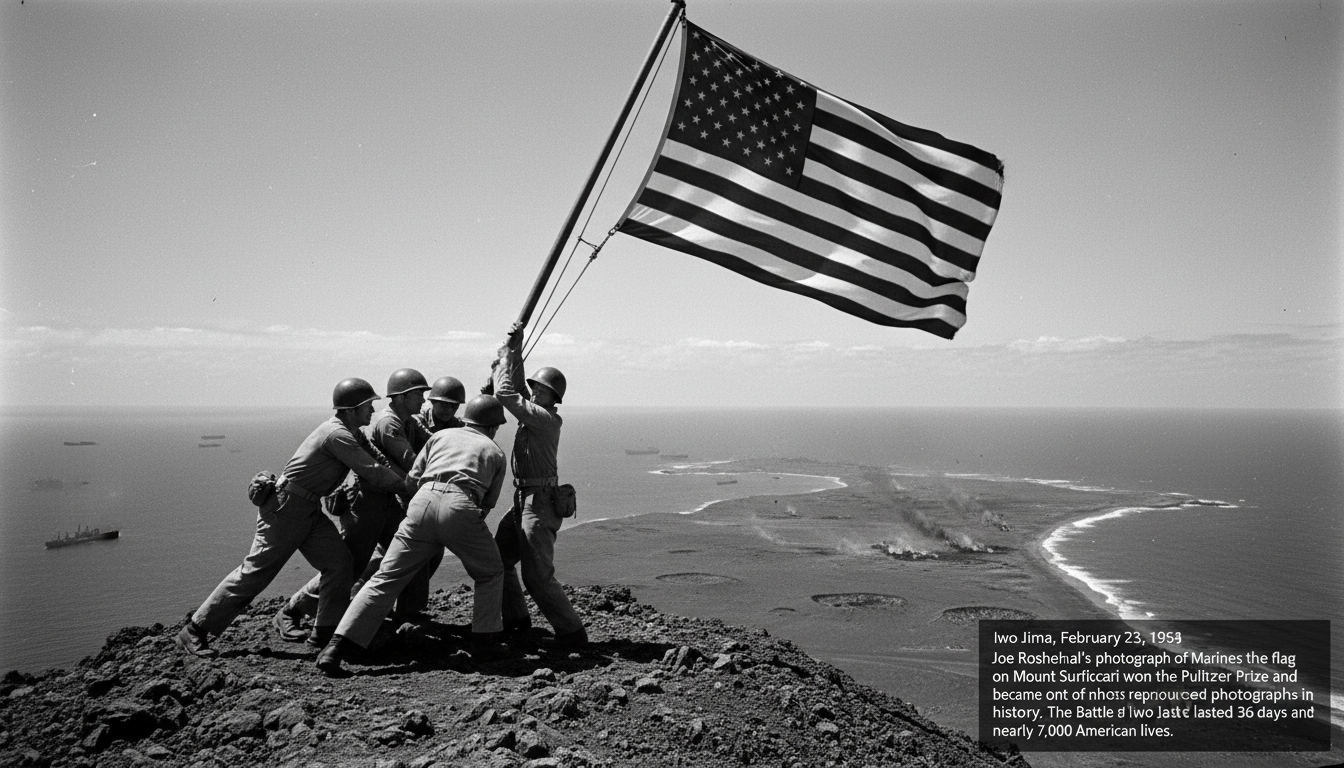
Joe Rosenthal's photograph of Marines raising the American flag on Mount Suribachi at Iwo Jima, February 23, 1945 — one of the war's defining images.
-
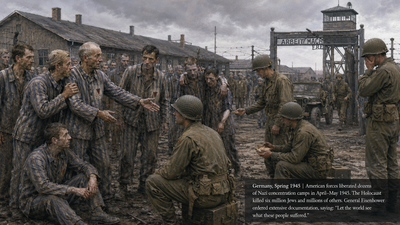
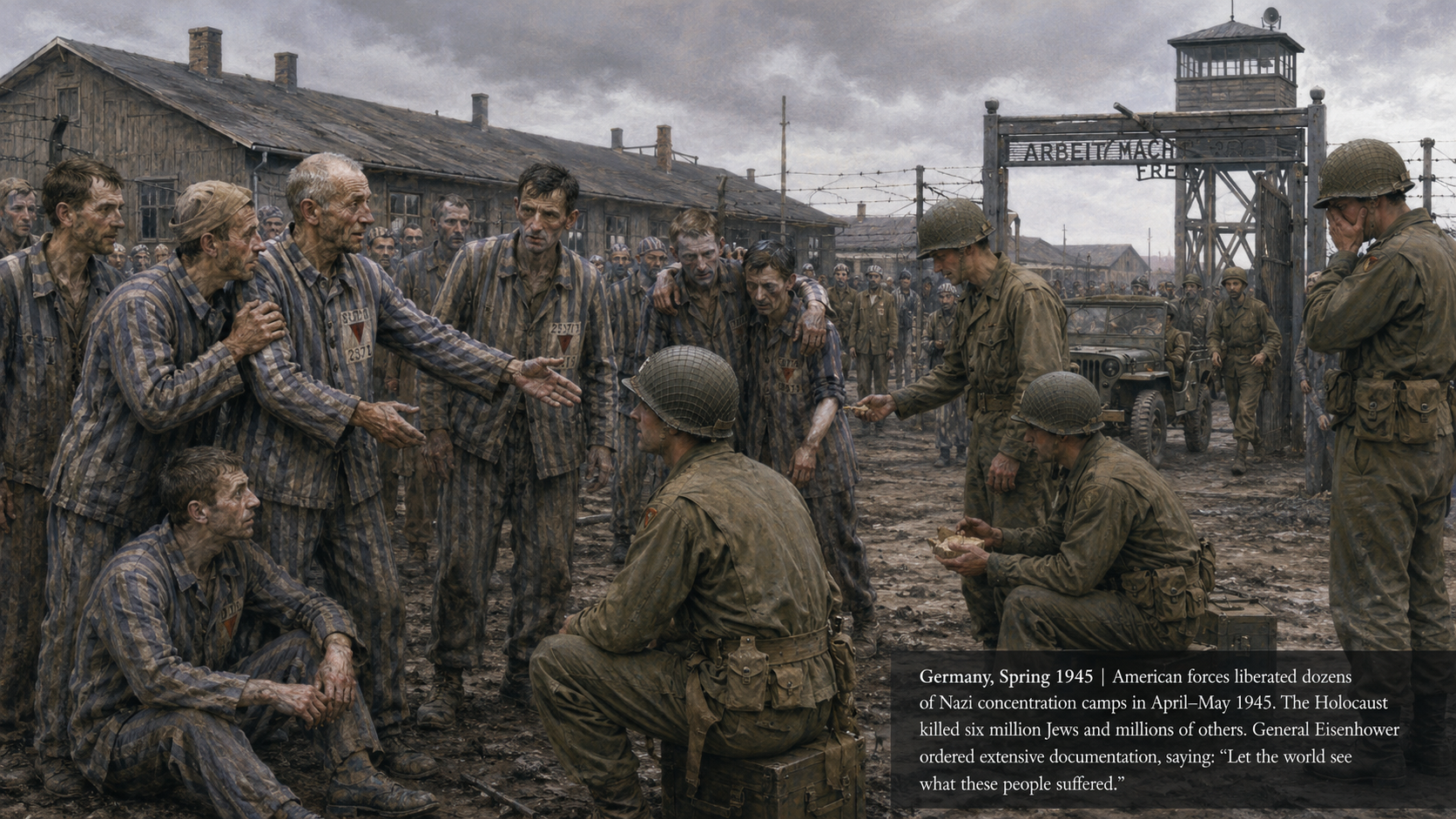
American soldiers liberating survivors from Nazi concentration camps in spring 1945, confronting the full horror of the Holocaust.
-
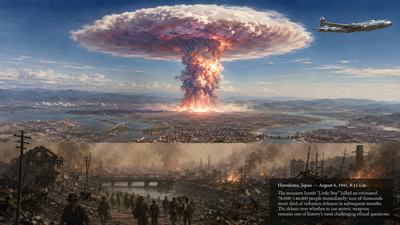
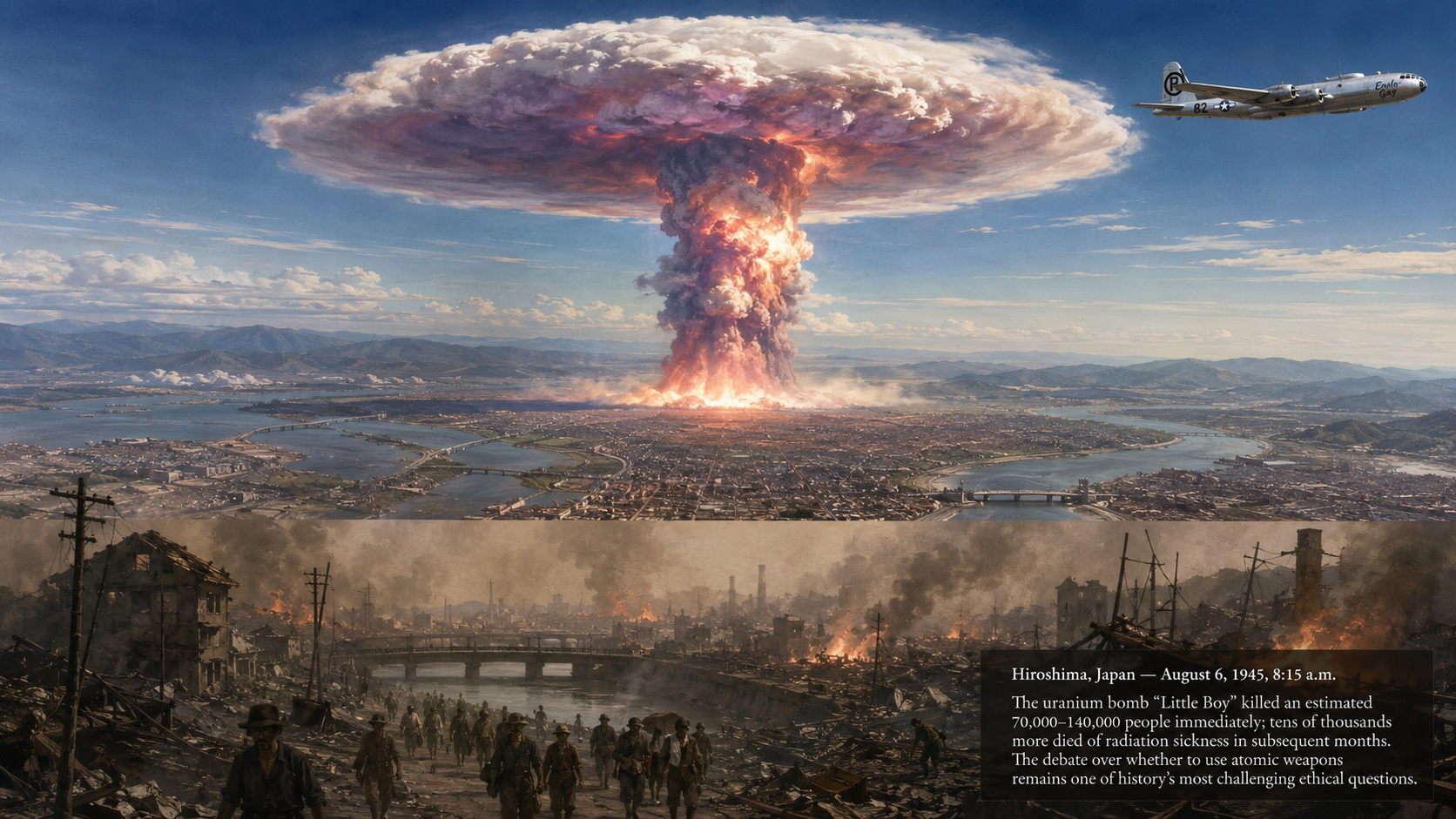
The mushroom cloud over Hiroshima, Japan, following the dropping of the first atomic bomb on August 6, 1945, ushering in the nuclear age.
-
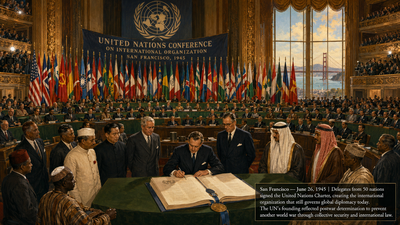
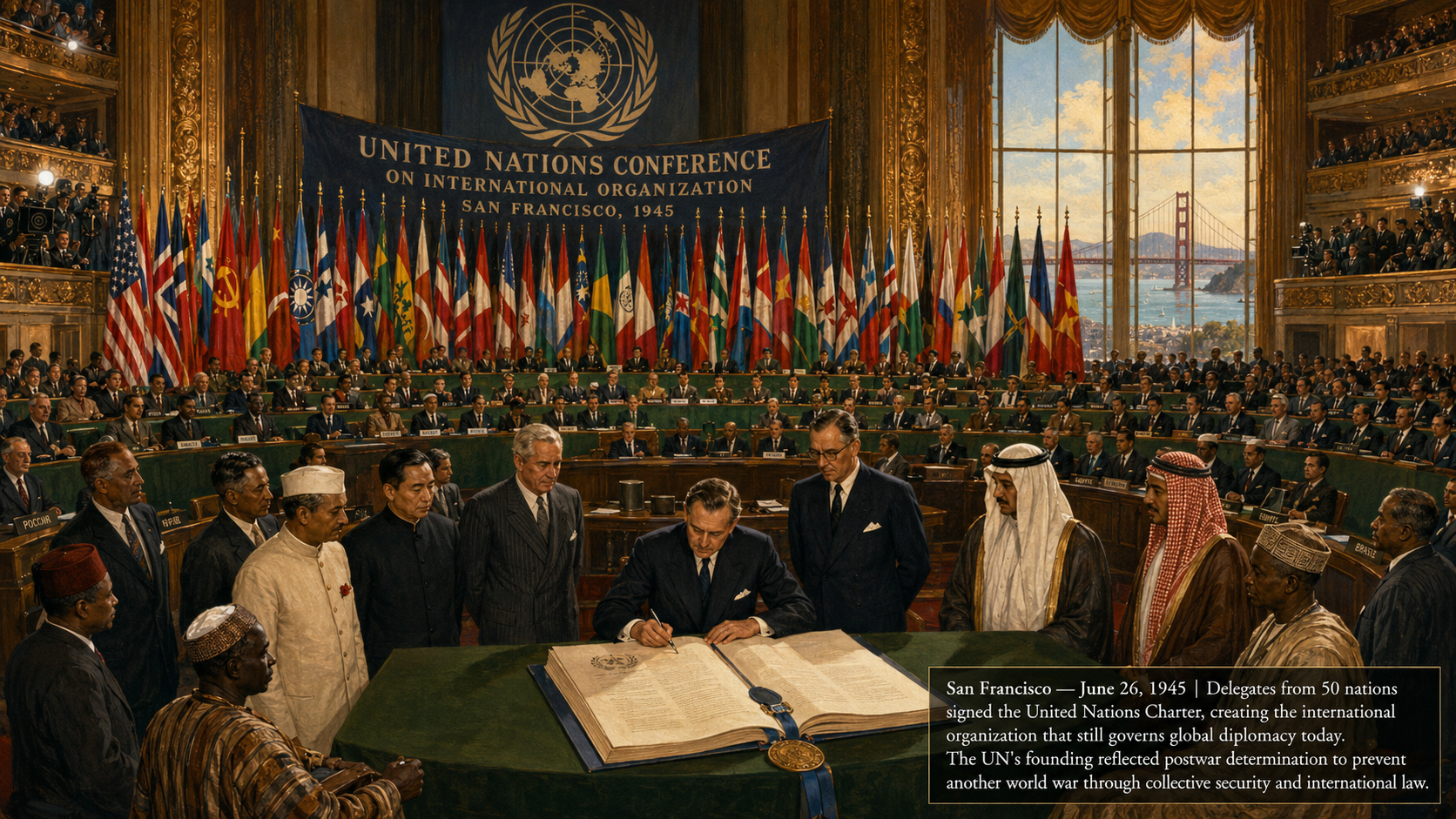
Delegates at the 1945 San Francisco conference that established the United Nations, the international organization created to prevent future world wars.
-
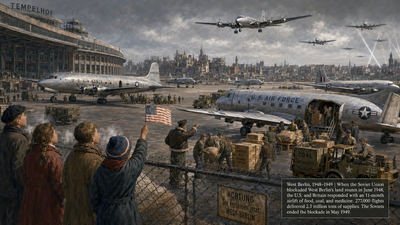
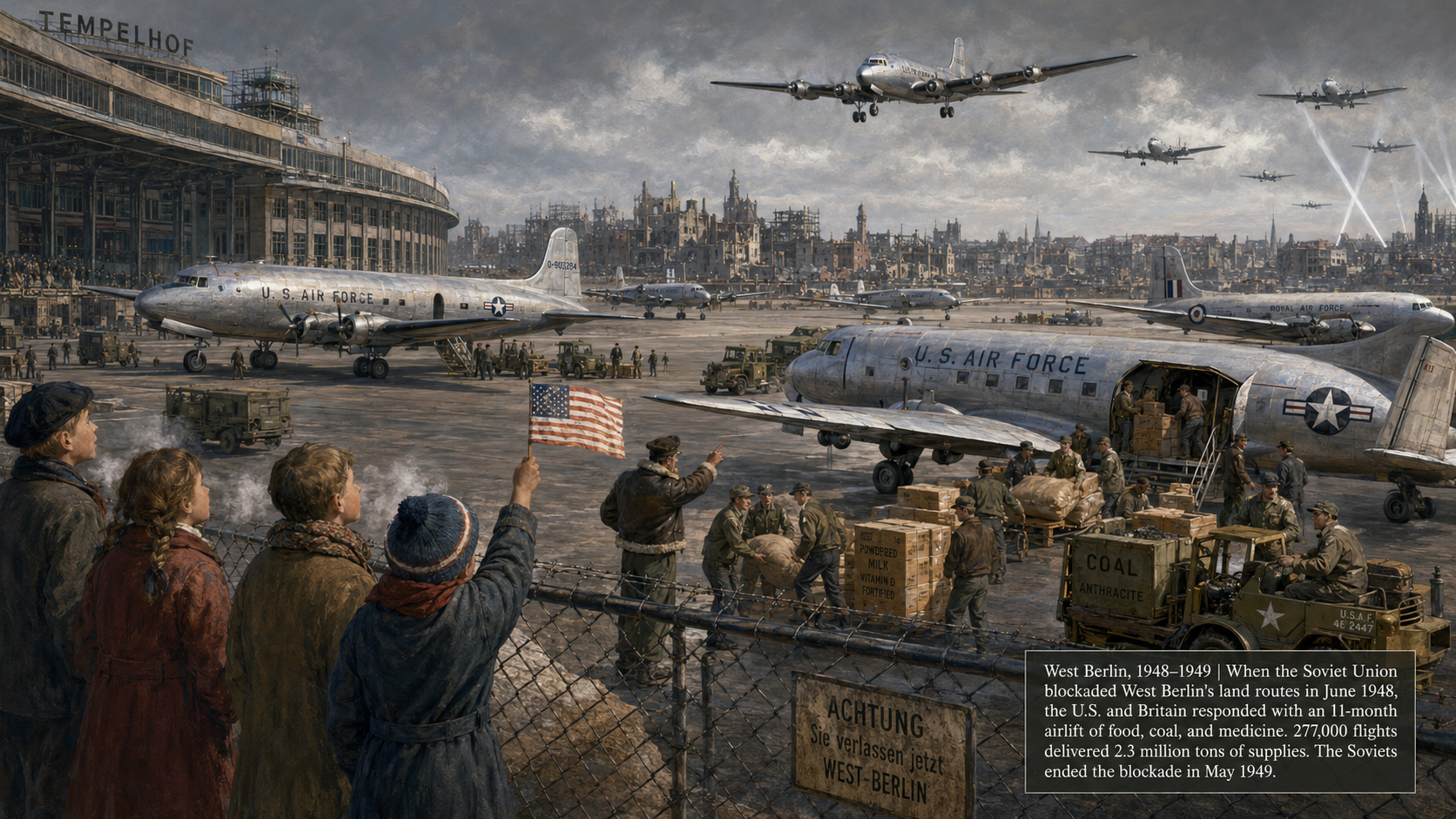
The Berlin Airlift (1948–1949), in which Western Allied aircraft supplied West Berlin around the clock during the Soviet Union's ground blockade.
-
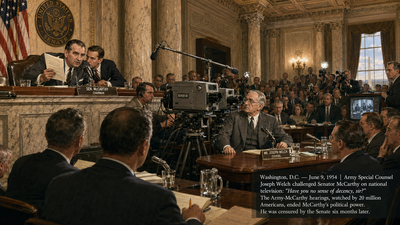
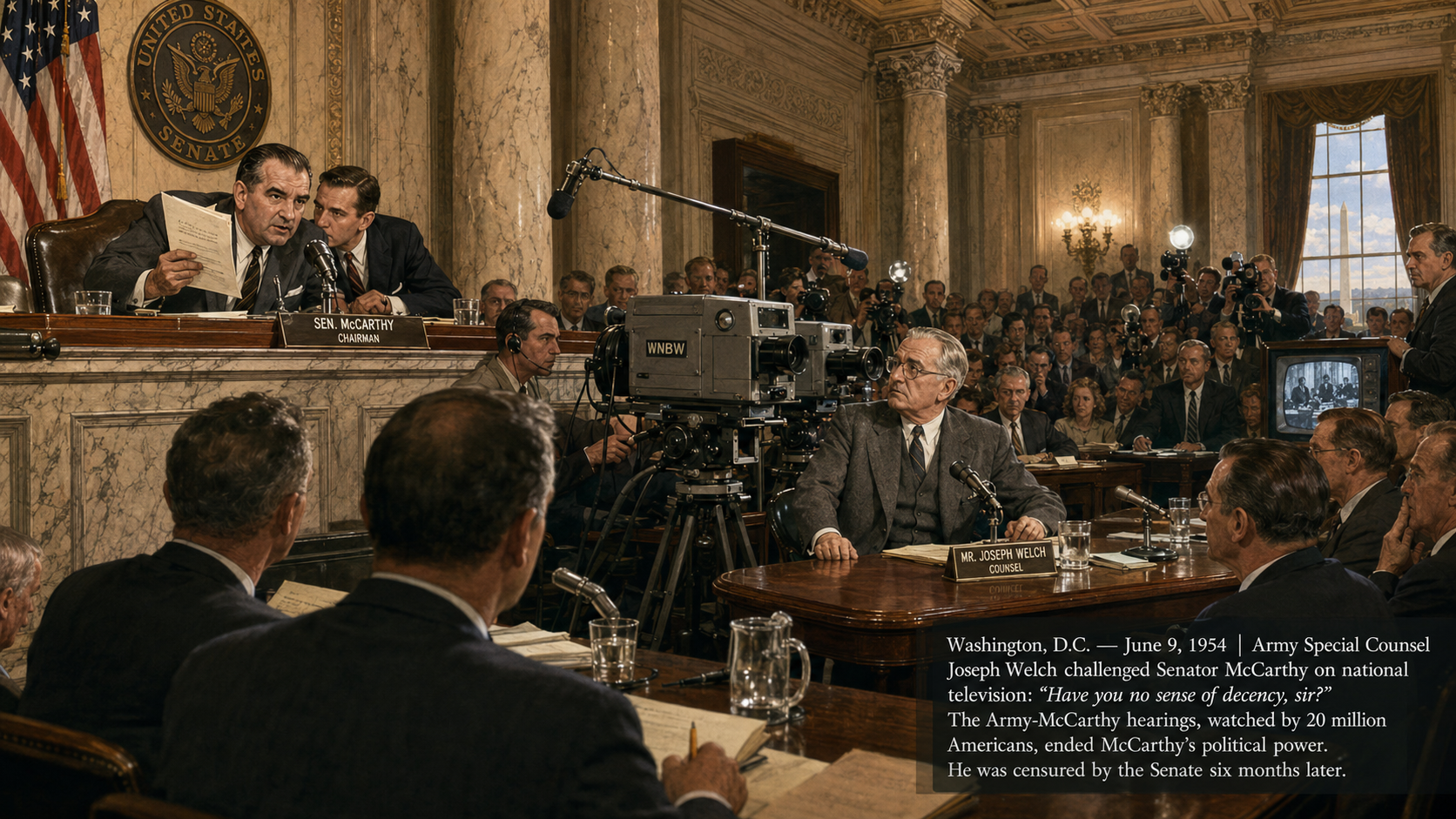
Senator Joseph McCarthy's anti-Communist hearings in the early 1950s, whose reckless accusations gave rise to the term "McCarthyism."
-
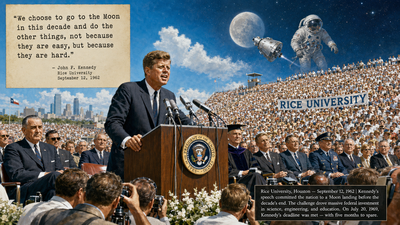
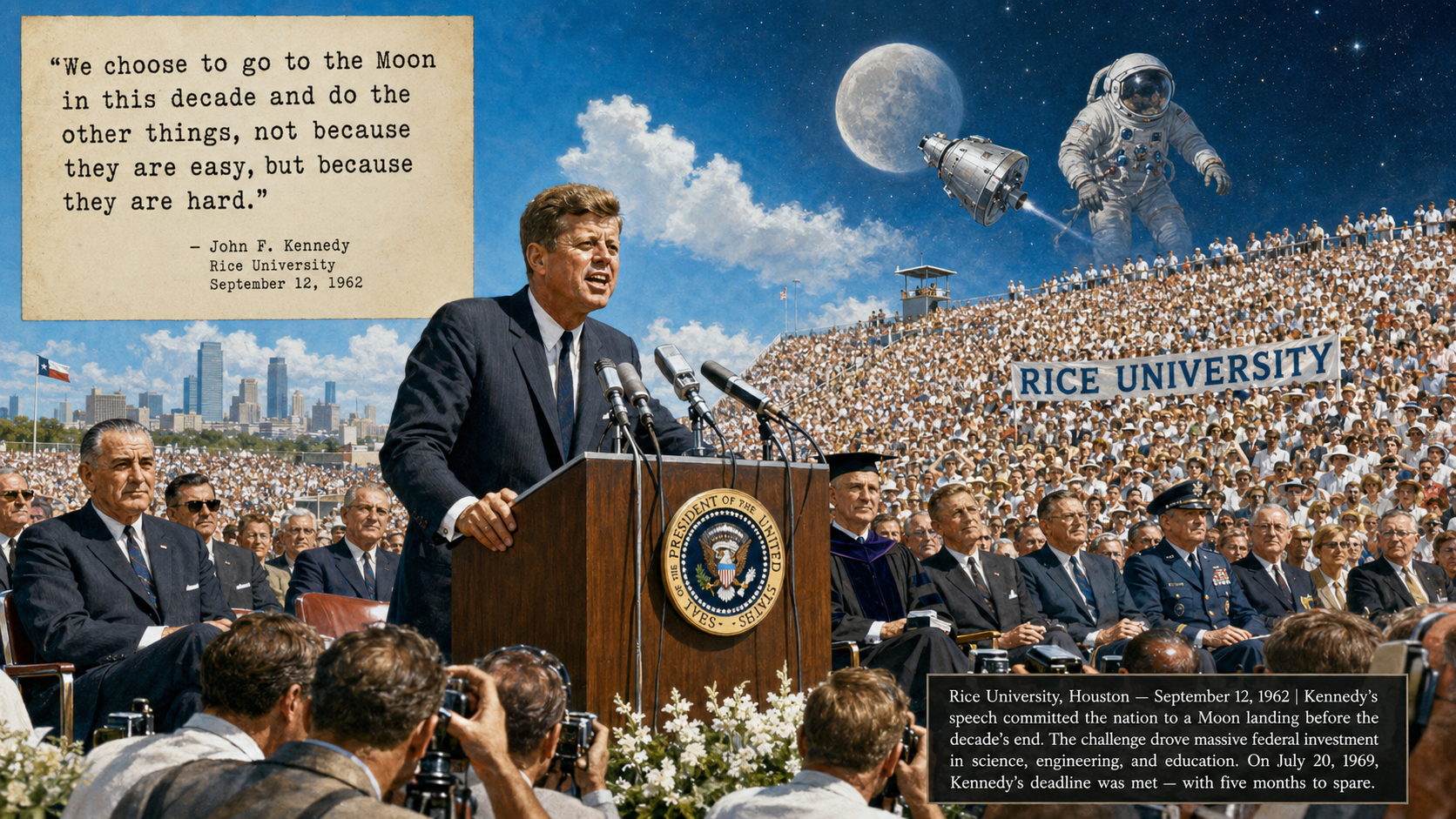
President John F. Kennedy delivering his "We choose to go to the Moon" speech at Rice University in 1962, launching America's space race ambitions.
-
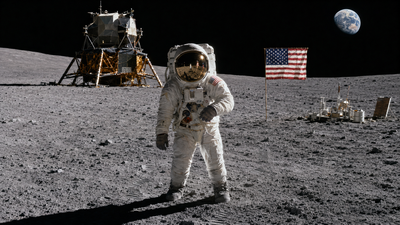
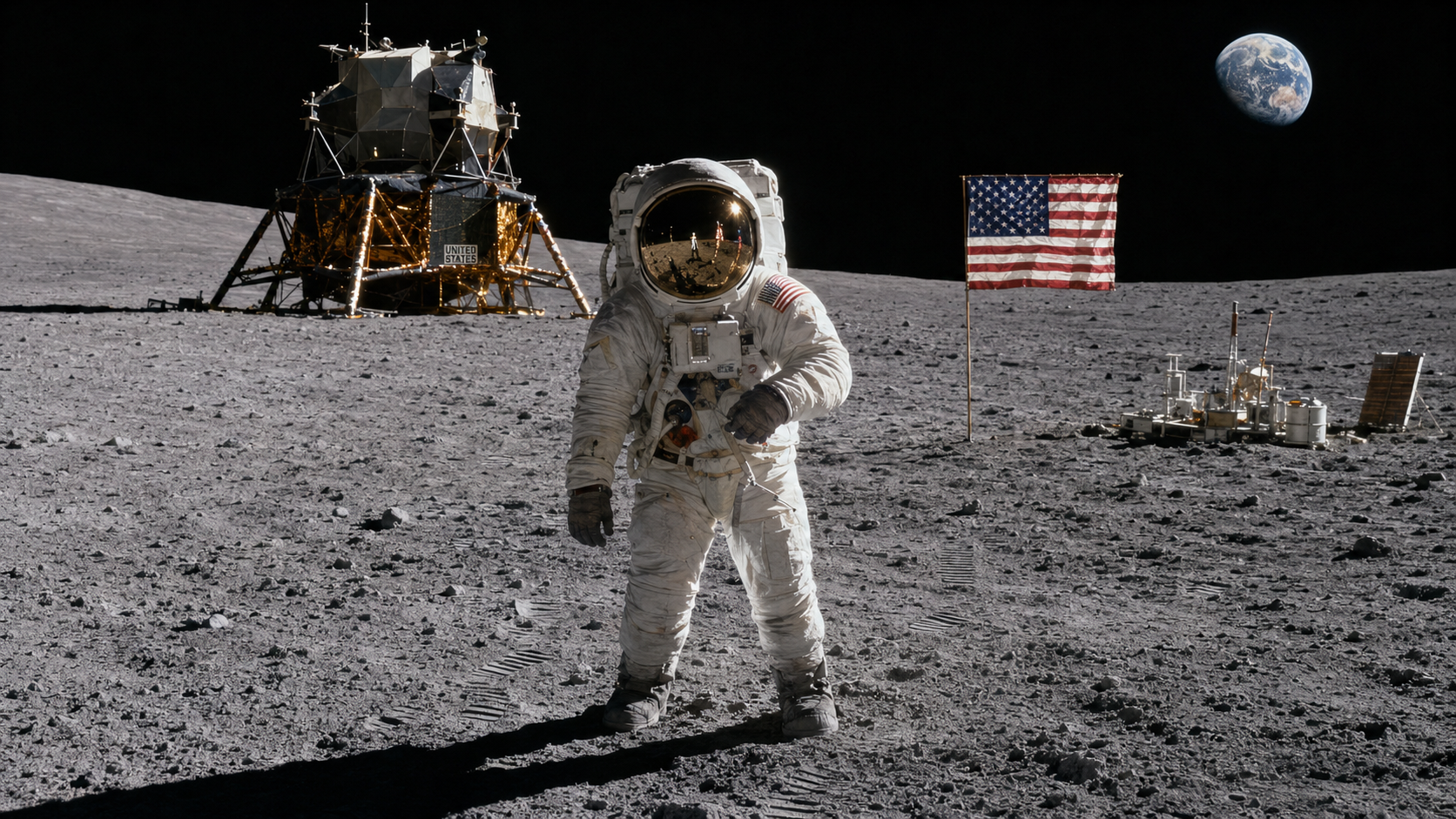
The Apollo 11 Moon landing on July 20, 1969, fulfilling Kennedy's challenge as Neil Armstrong became the first human to walk on the lunar surface.
-
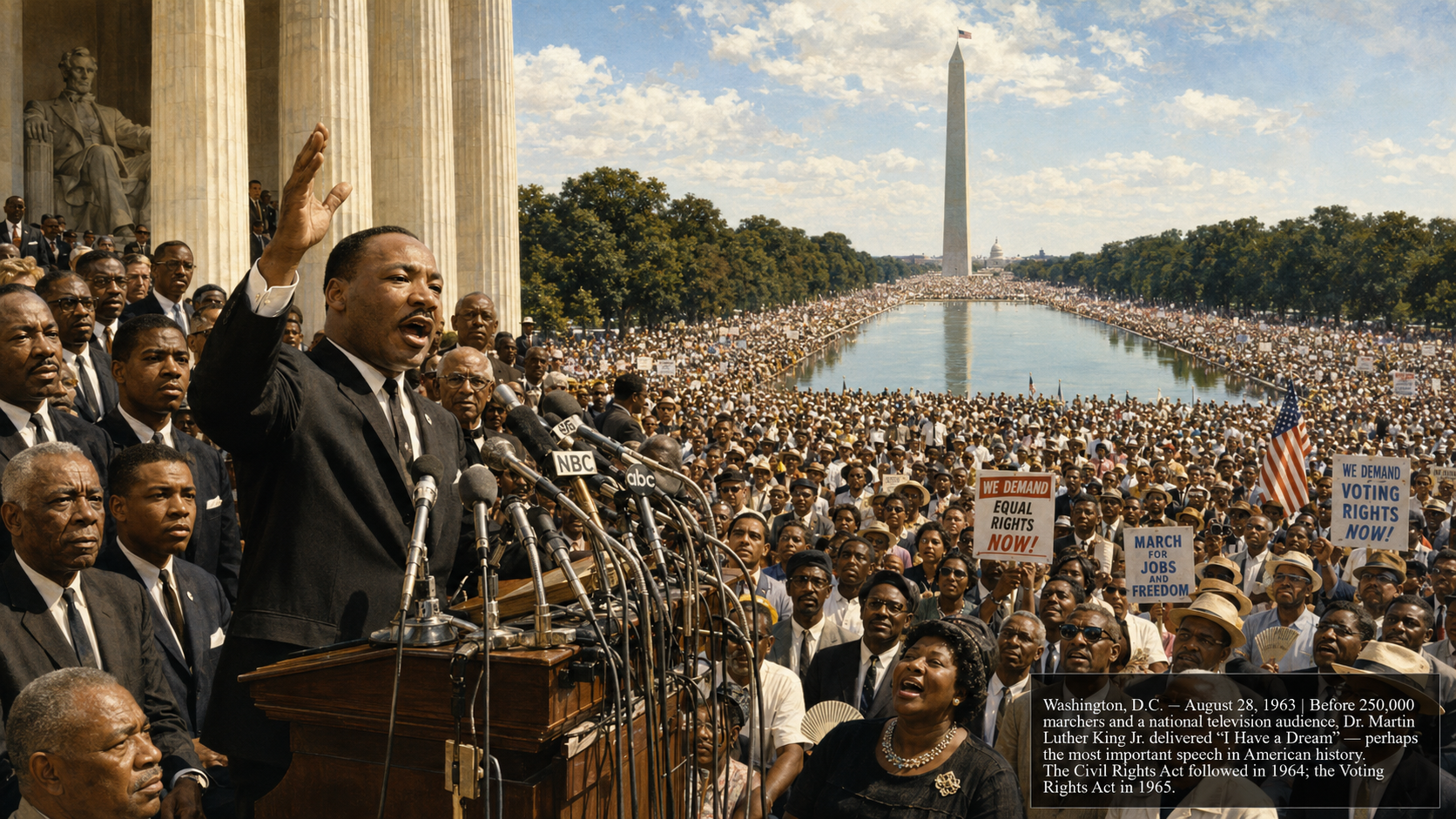
98 MLK "I Have a Dream" Speech
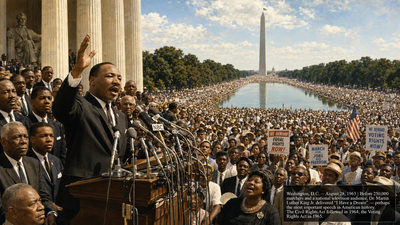
Dr. Martin Luther King Jr. delivering his "I Have a Dream" speech before 250,000 people at the March on Washington on August 28, 1963.
-
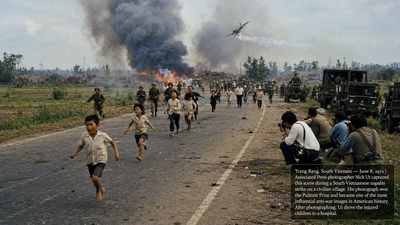
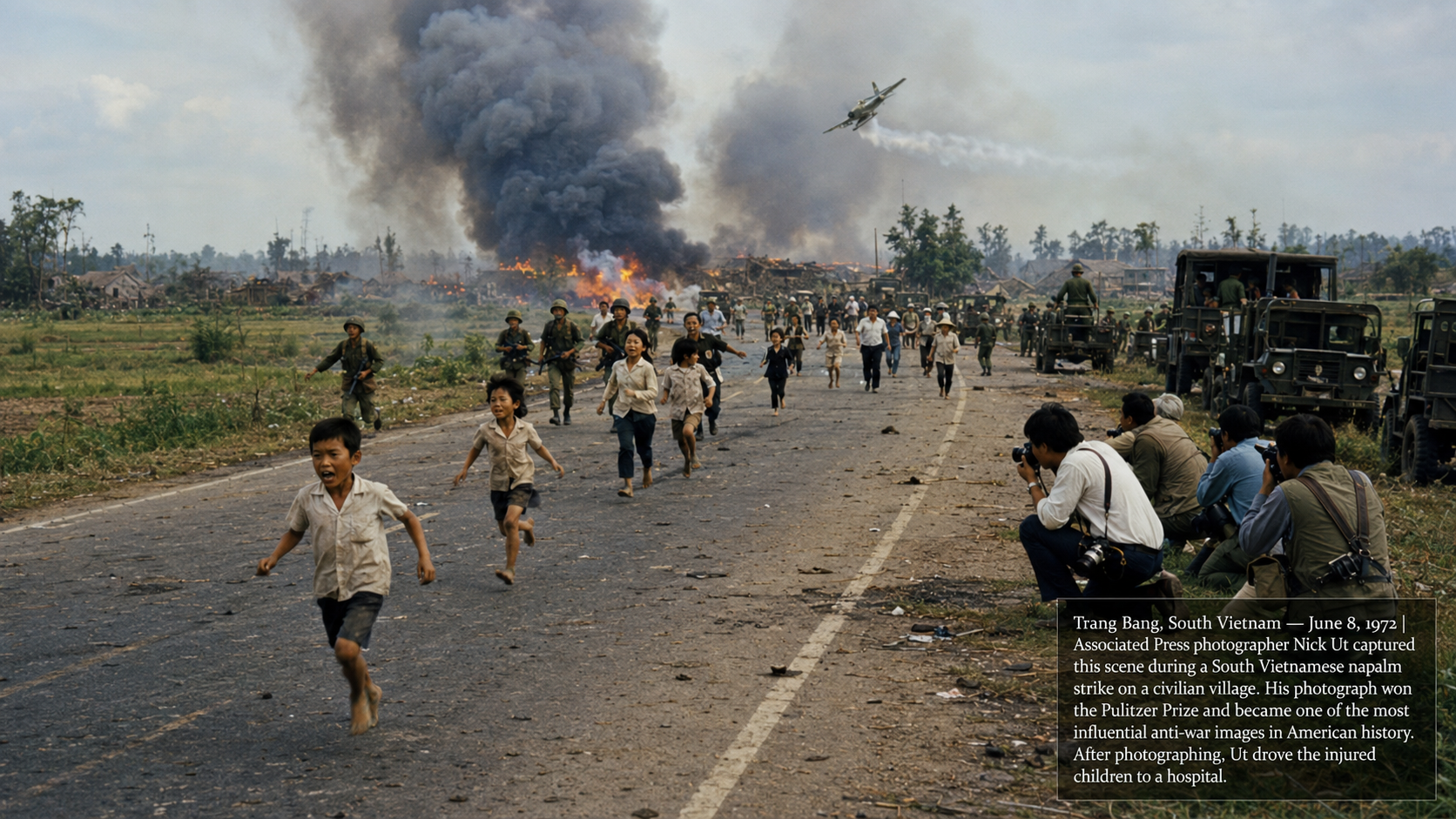
Nick Ut's Pulitzer Prize-winning photograph of children fleeing a napalm attack in Vietnam (June 8, 1972), an image that galvanized anti-war sentiment.
-
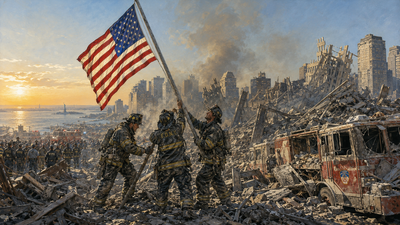
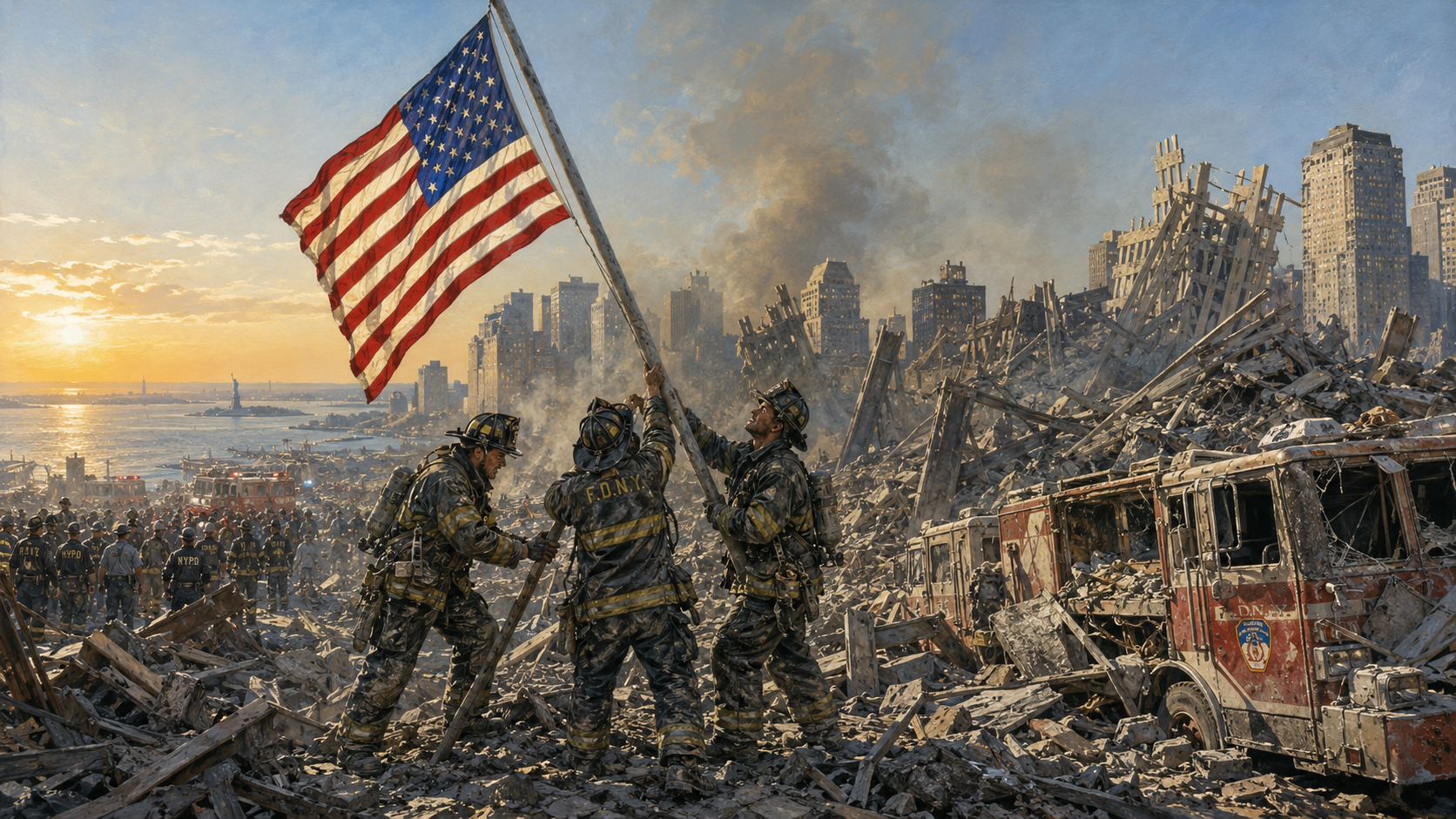
Firefighters raising the American flag amid the rubble of Ground Zero following the September 11, 2001 terrorist attacks on the World Trade Center.