List of MicroSims for U.S. History
Interactive Micro Simulations to help students explore and understand key events, systems, and concepts in United States History.
-
AI in Warfare — From Semi-Autonomous to Fully Autonomous
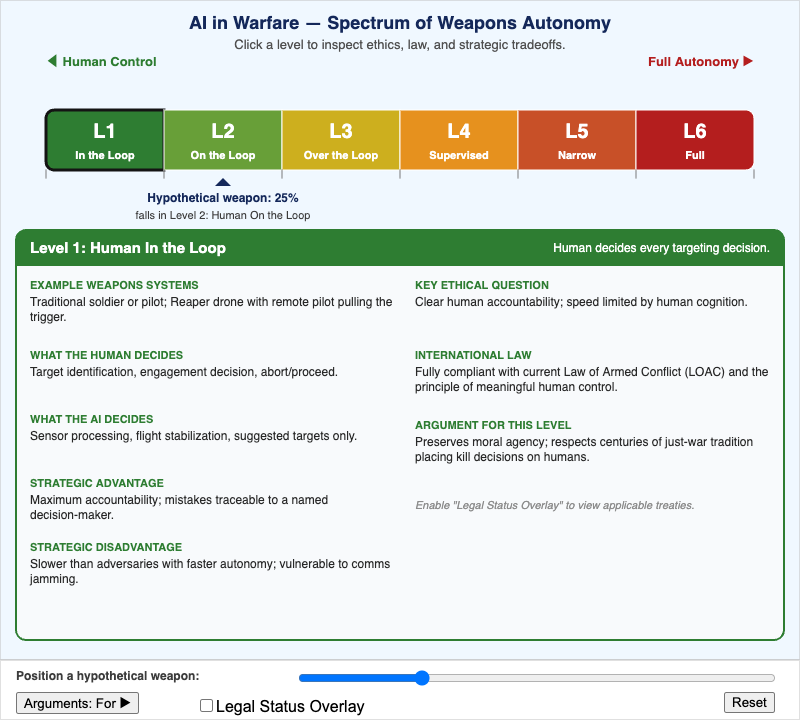
Students assess the ethical and strategic implications of different levels of weapons autonomy, identify key decision points where human judgment matters, and evaluate arguments for and against autonomous targeting authority.
-
AP Thematic Lens — American Identity and Politics and Power
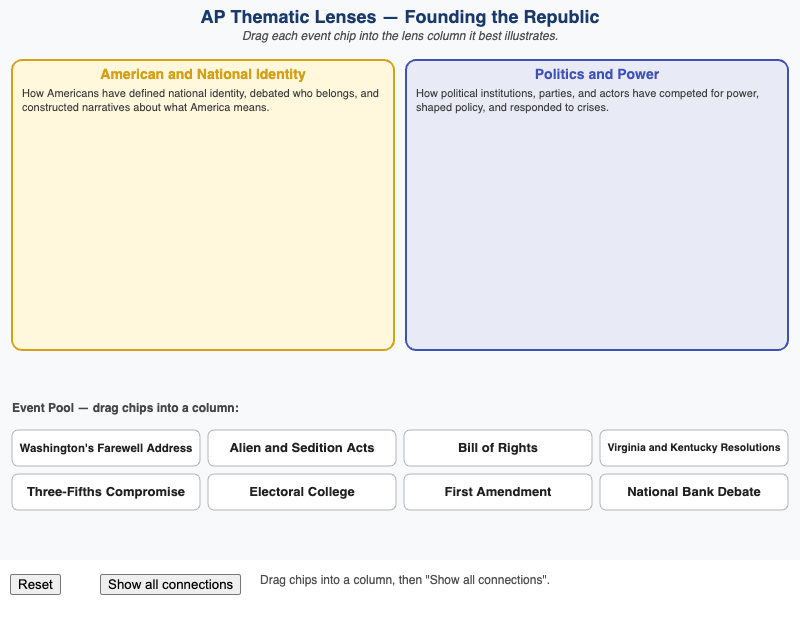
Students classify events from the founding era under the appropriate AP thematic lens and explain why each event illustrates that theme.
-
Arms Race Dynamics — The Security Dilemma Loop
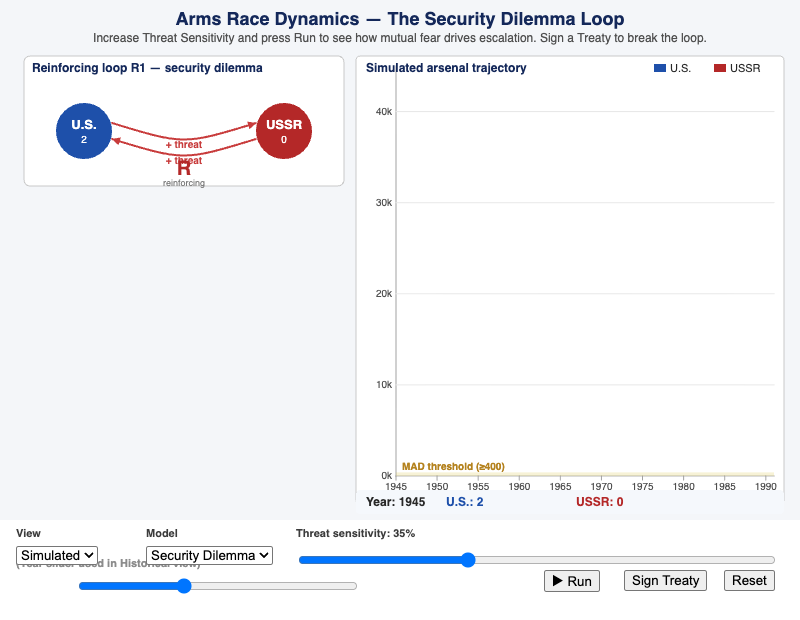
Students model the security dilemma feedback loop that drives arms races, identify reinforcing loops at work, and evaluate what conditions could break the loop.
-
Causal Loop Diagram Builder — Industrial Era
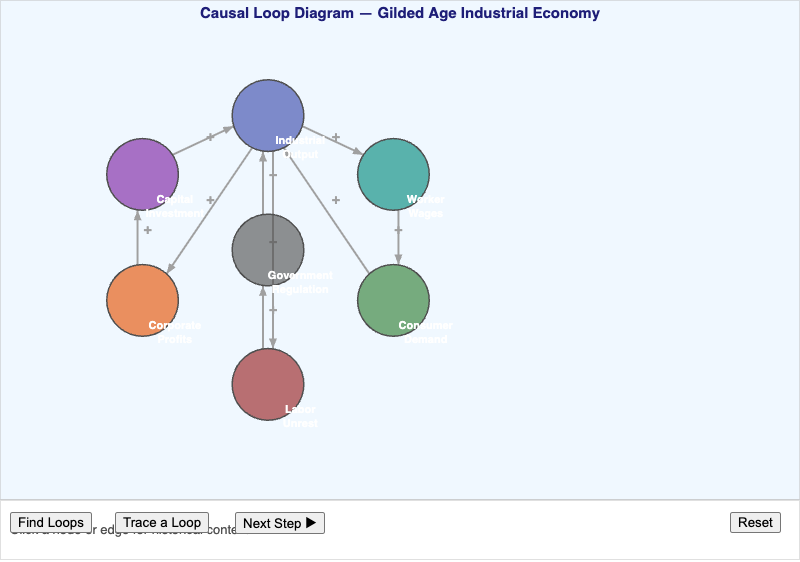
Students examine how interconnected causal relationships in a historical system produce reinforcing or balancing feedback loops, and distinguish between the two loop types using evidence from the diagram.
-
Causal Loop Diagram — Gilded Age (vis-network)
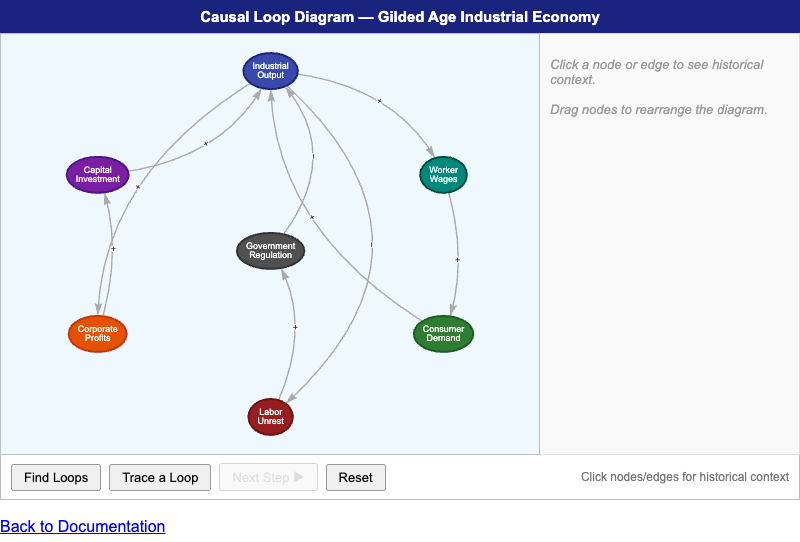
Same 7-node / 3-loop Gilded Age diagram rebuilt with vis-network — drag nodes to rearrange, click for historical context, use Find Loops and Trace mode.
-
Civil Rights Movement Timeline — Strategies and Legislative Outcomes
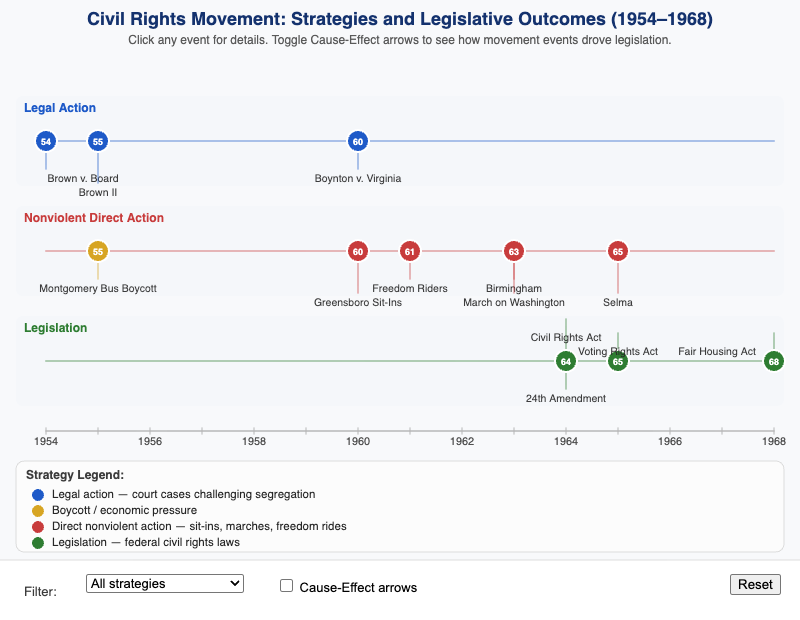
Students trace the relationship between civil rights movement strategies and legislative outcomes, identifying which strategies proved most effective at each stage and why.
-
Civil War Battles and Strategy Map
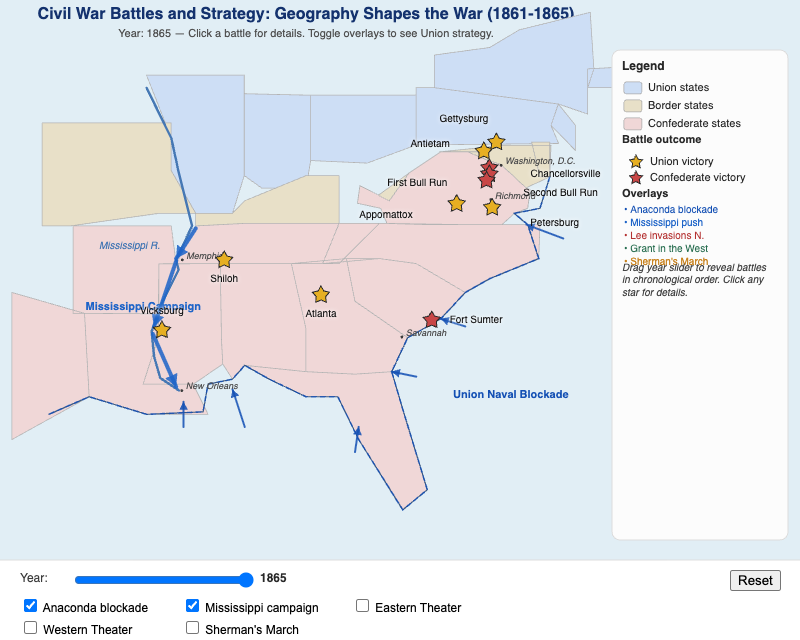
Students examine how geography shaped Civil War military strategy, explaining the Anaconda Plan's logic and the significance of at least two major battles.
-
Students identify confirmation bias, hindsight bias, the availability heuristic, in-group favoritism, and presentism in short historical scenario descriptions, and explain why the bias fits.
-
Colonial Resistance Timeline (1763–1775)
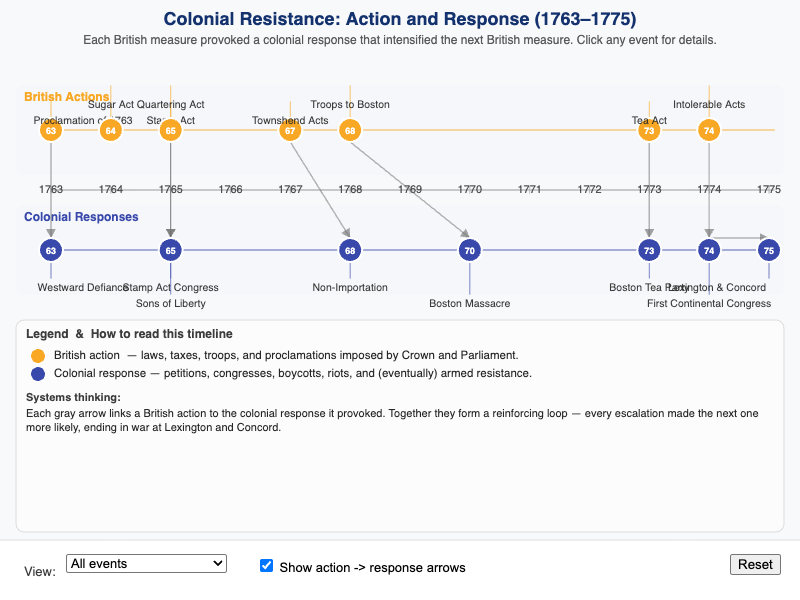
Students examine the escalating cycle of British action and colonial response and identify how each British measure produced colonial resistance that intensified the next British measure.
-
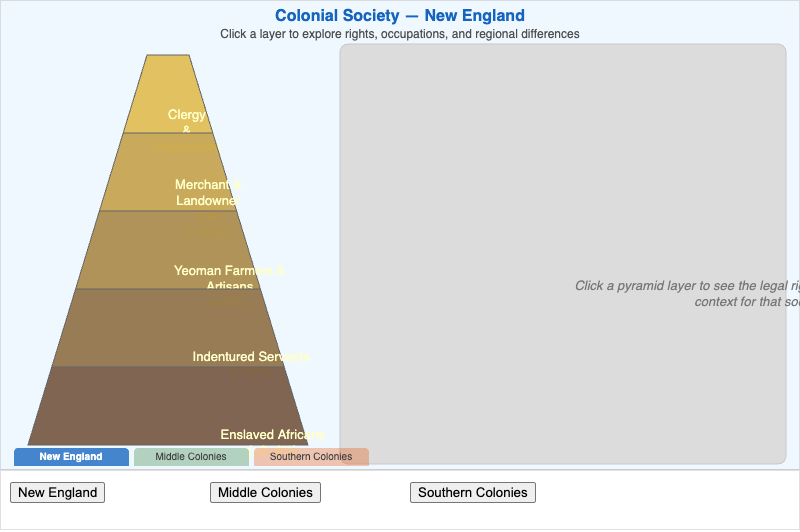
Students describe the social structure of colonial America and explain how it differed between the New England, Middle, and Southern colony regions.
-
Constitutional Structure — Checks and Balances Explorer
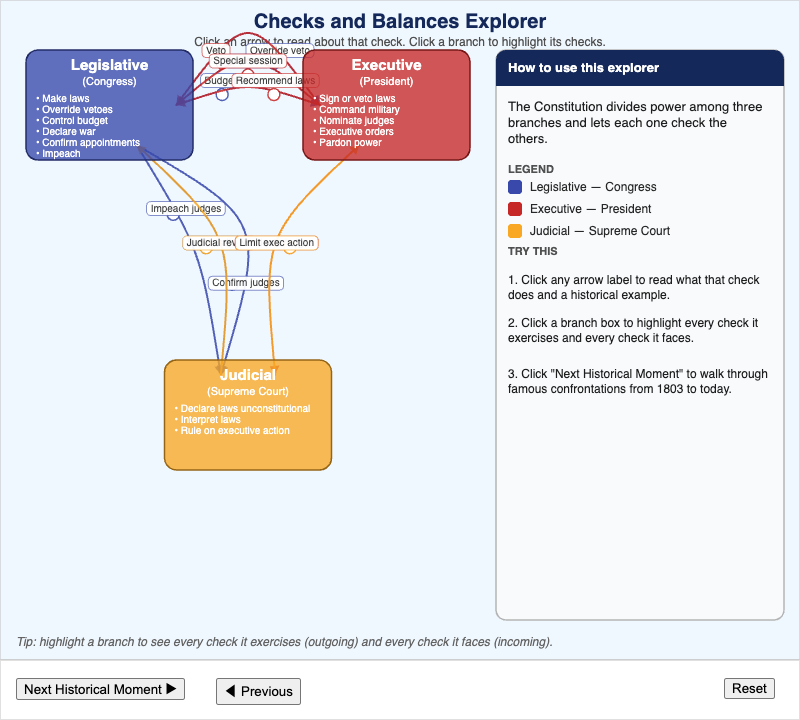
Students explain how checks and balances distribute power among the three branches and give at least two examples of checks being exercised in American history.
-
Depression Causes — Interacting Feedback Loops
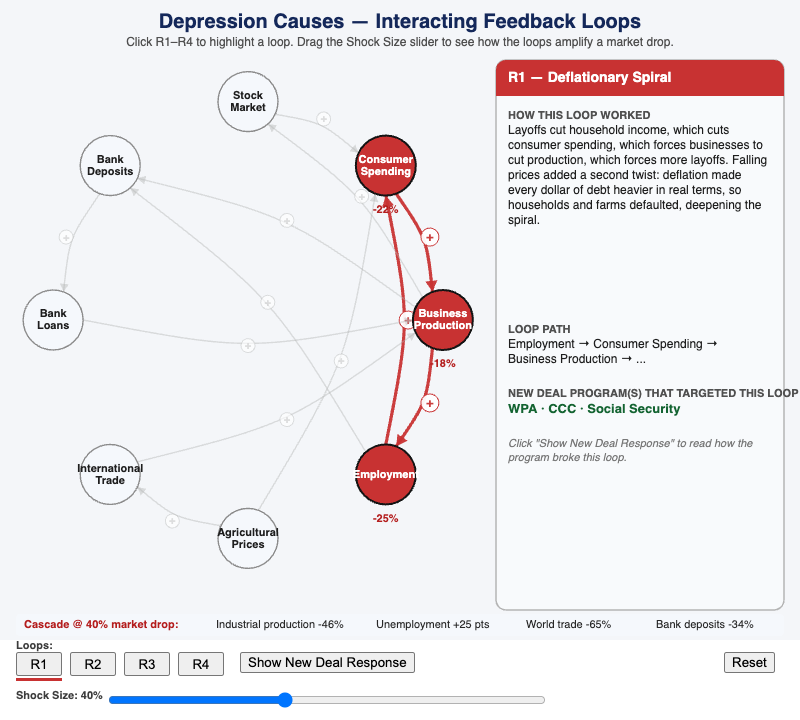
Students diagram the reinforcing feedback loops that amplified the 1929 crash into a decade-long depression, identifying which loops the New Deal attempted to break and how.
-
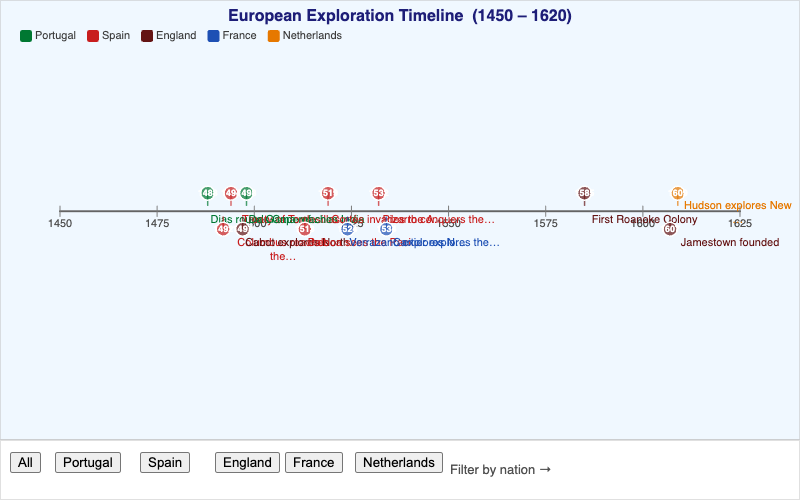
Students recall the sequence of major European exploration events and the national powers behind them.
-
Four Historical Thinking Skills Explorer
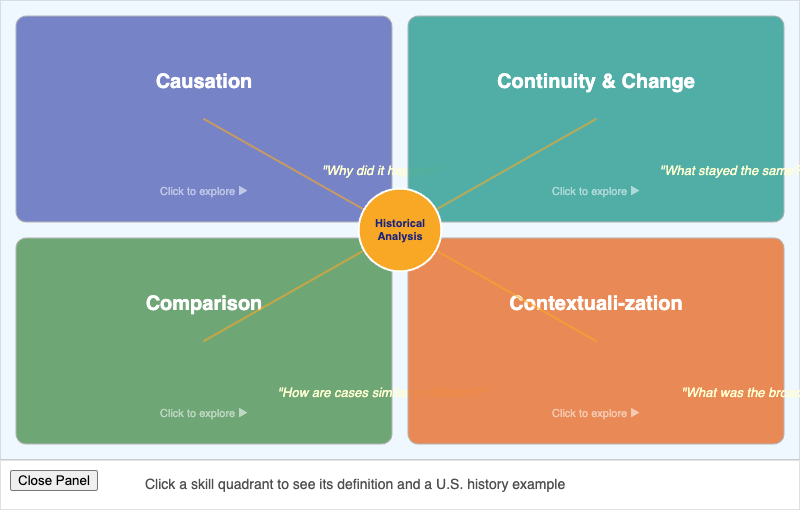
Students explain what each of the four historical thinking skills means and give an example of how each applies to a historical scenario.
-
Four Progressive Era Amendments — Timeline and Context
Students explain the purpose of each Progressive Era amendment and the social movement or political pressure that produced it.
-
Gilded Age Inequality — Wealth Distribution Chart
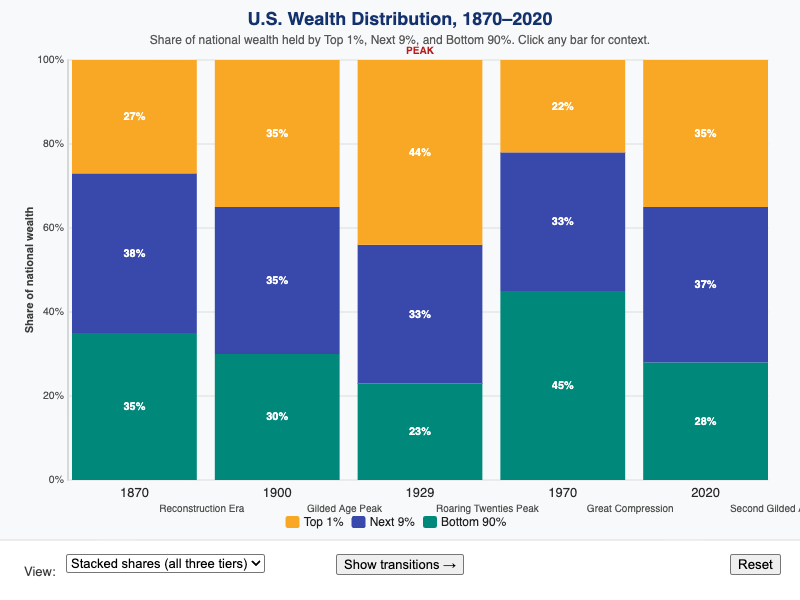
Students compare wealth distribution across historical periods and explain how extreme inequality in the Gilded Age contributed to the rise of labor and reform movements.
-
Judicial Review — How It Works
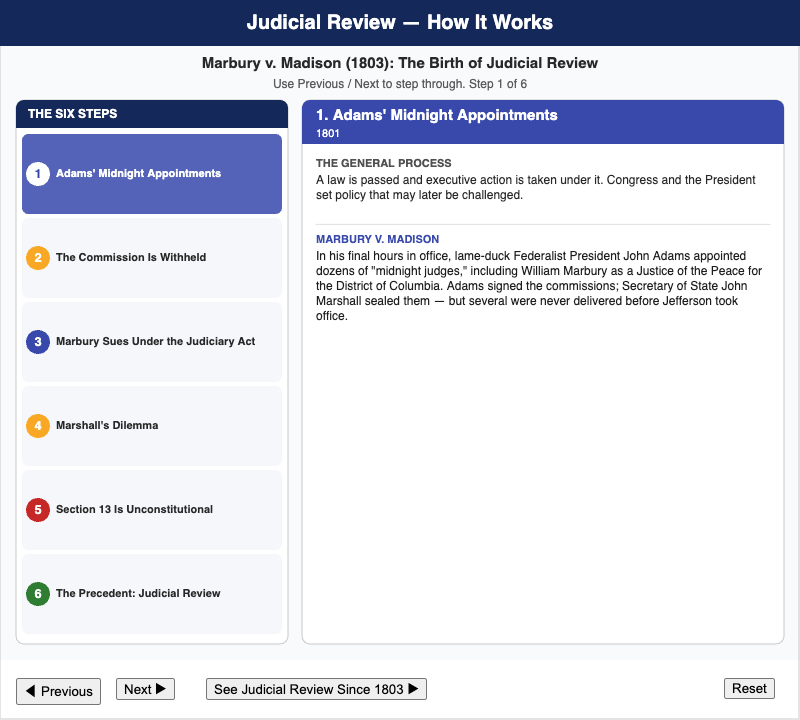
Students explain the process of judicial review using Marbury v. Madison and describe why the power is significant for the balance of power among branches.
-
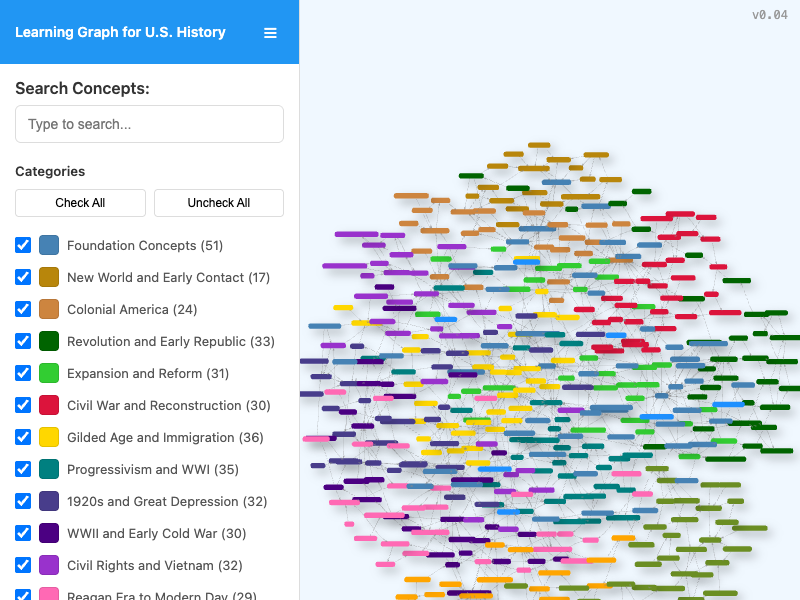
Interactive network visualization of the 200 course concepts and their dependencies. Search, filter by category, and explore connections between ideas across all 21 chapters.
-
Misinformation Detection — Lost Cause Claims
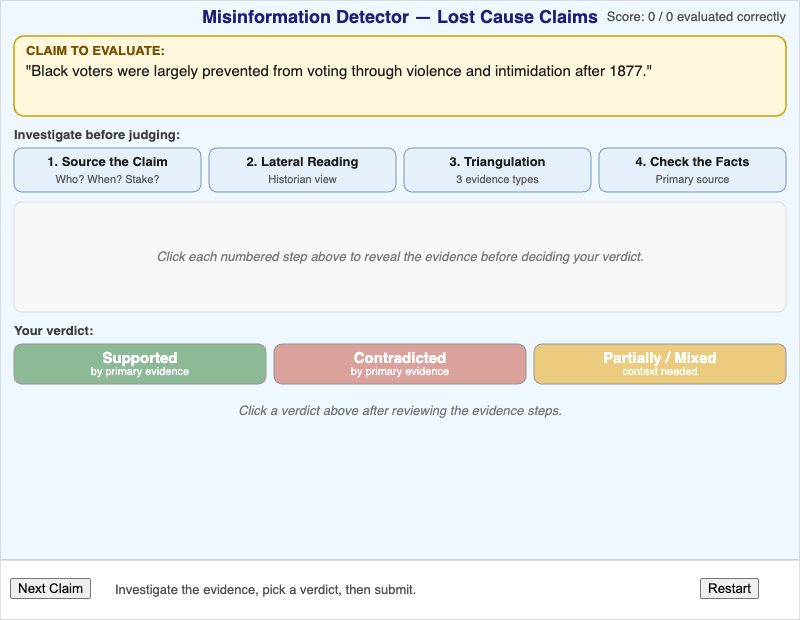
Students assess historical claims using a structured misinformation detection framework, identifying which claims are supported by primary source evidence and which are contradicted by it.
-
New Deal Programs — What They Did and What Survived
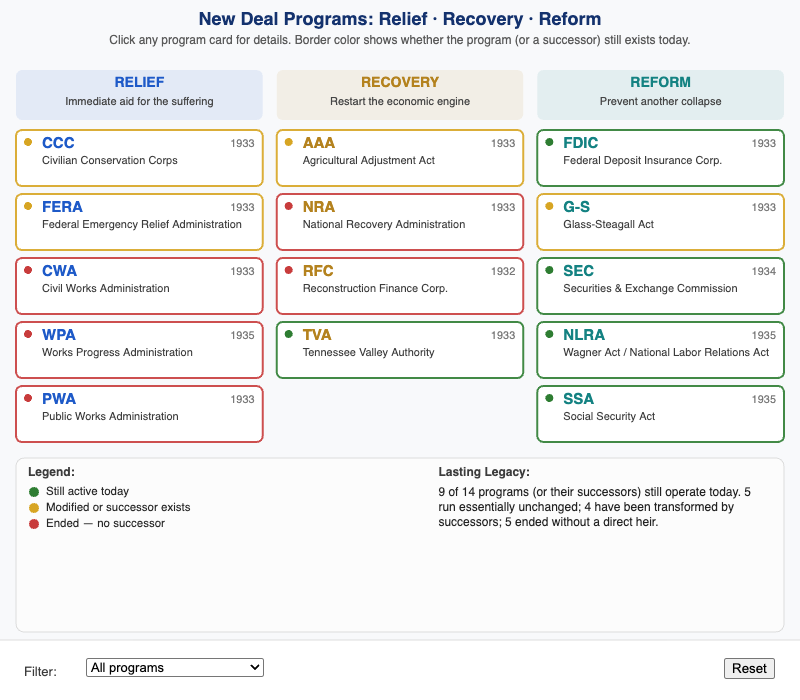
Students categorize New Deal programs by purpose (relief, recovery, reform), identify the specific problem each addressed, and determine which programs still exist today.
-
Political Party Realignment — New Deal to Reagan Coalition
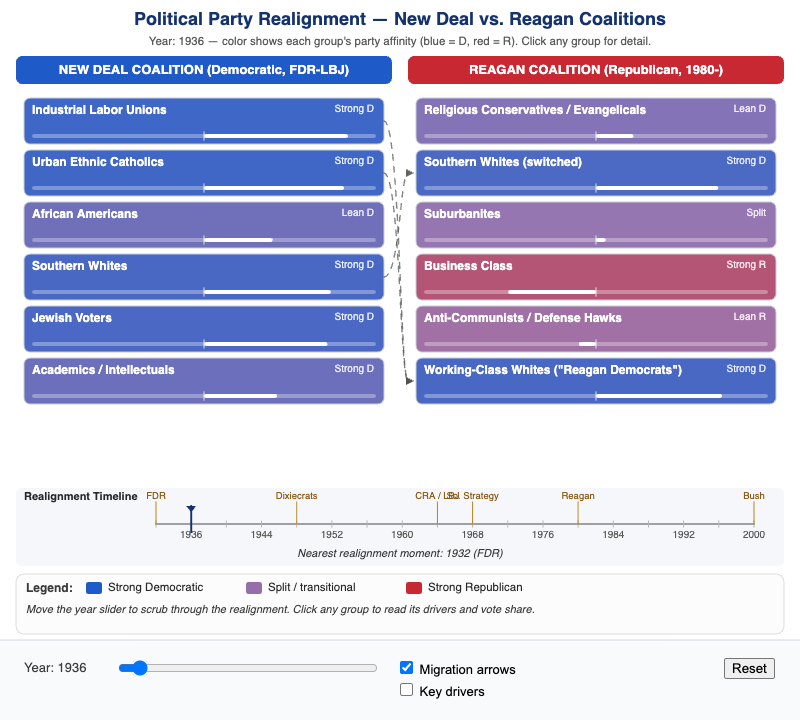
Students map the demographic and geographic components of the New Deal and Reagan coalitions, identify the key groups that switched parties, and analyze what drove the realignment.
-
Political Polarization — A Historical and Contemporary Index
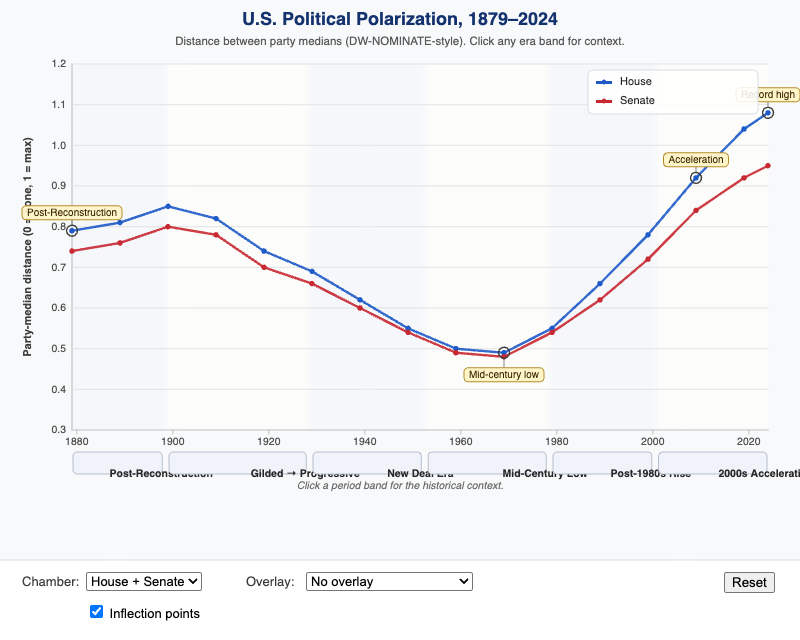
Students interpret data on American political polarization over time, identify periods of greatest change, and evaluate competing explanations for increasing polarization.
-
Populist Policy Platform — Then and Now
Students examine how political demands that seem radical in one era become mainstream in another, and identify the conditions that enabled or blocked adoption of Populist demands.
-
Pre-Columbian Americas Interactive Map
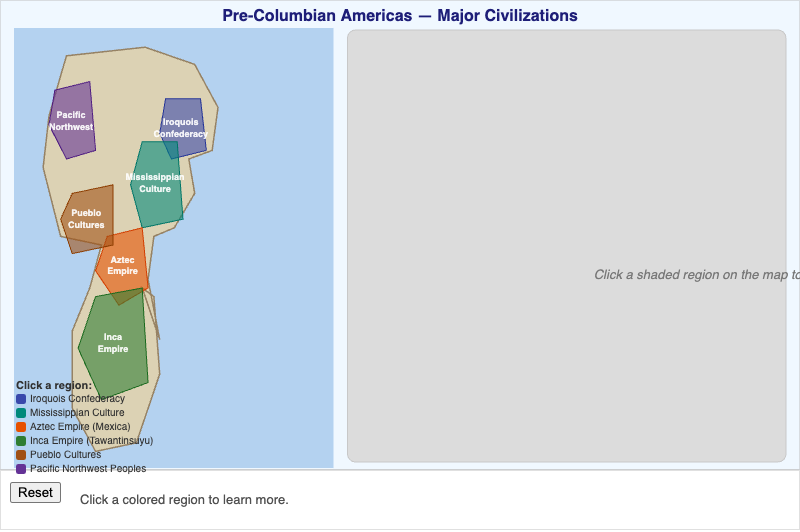
Students identify the geographic locations of the Aztec Empire, Inca Empire, Mississippian Culture, and Iroquois Confederacy and recall one defining characteristic of each.
-
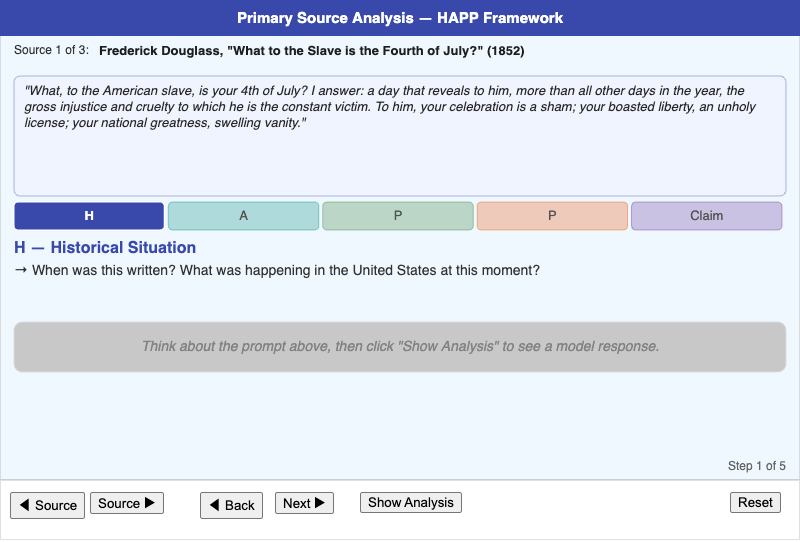
Students use the HAPP framework to analyze a primary source excerpt by identifying historical situation, audience, purpose, and point of view, then construct a sourcing claim.
-
Reform Movement Network — 1830–1860
Students differentiate the goals and methods of antebellum reform movements and identify at least three ways they were interconnected through shared participants, ideas, or organizational networks.
-
Students explain the strategic significance of at least three major Revolutionary War battles and describe how geography influenced the war's outcome.
-
Social Movements of the 1960s–70s — Strategies and Outcomes
Students compare the strategies, constituencies, and outcomes of the major social movements of the 1965–1975 period, identifying similarities and differences across movements.
-
Technology Power Shifts — Historical Comparison
Students evaluate the historical pattern of technology-driven power shifts, identify structural similarities between AI and previous technology transformations, and predict likely political and economic responses.
-
The Columbian Exchange Interactive Web
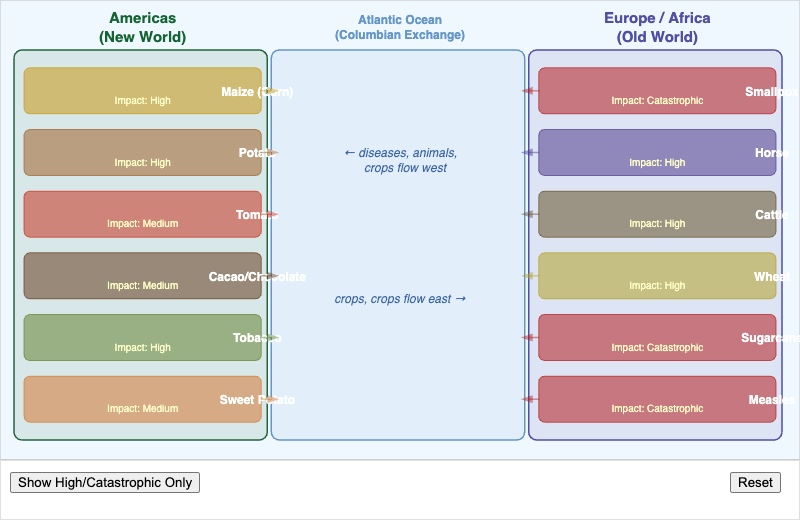
Students explain the bidirectional nature of the Columbian Exchange and identify at least two transfers from each direction that had significant historical consequences.
-
The Transportation Revolution — Connections Map
Students examine how transportation networks shaped economic geography, explaining how the Erie Canal and railroad expansion connected markets and accelerated the Market Revolution.
-
Three Colonial Regions Comparison
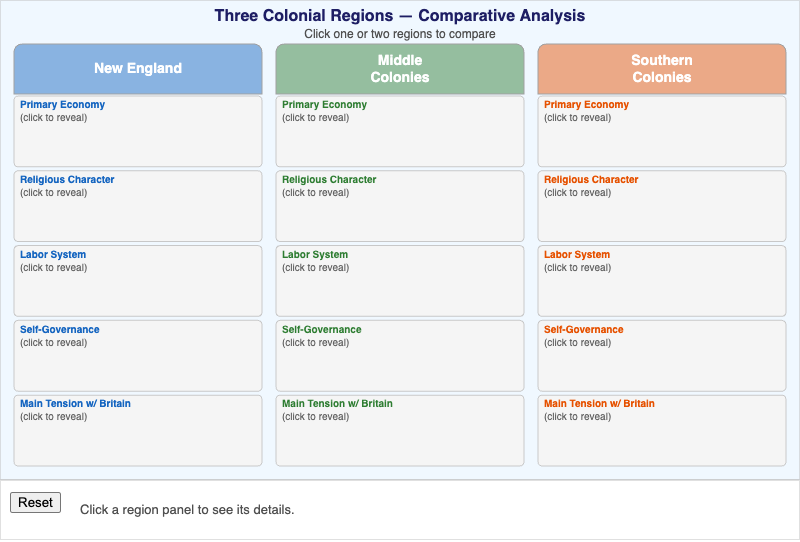
Students compare and contrast the three colonial regions across at least three dimensions, identifying similarities and differences that shaped their political cultures.
-
Treaty of Versailles — Fourteen Points vs. Actual Outcome
Students evaluate the extent to which the Treaty of Versailles fulfilled Wilson's Fourteen Points, and assess what the gap reveals about the constraints on idealistic diplomacy.
-
Vertical vs. Horizontal Integration — Interactive Diagram
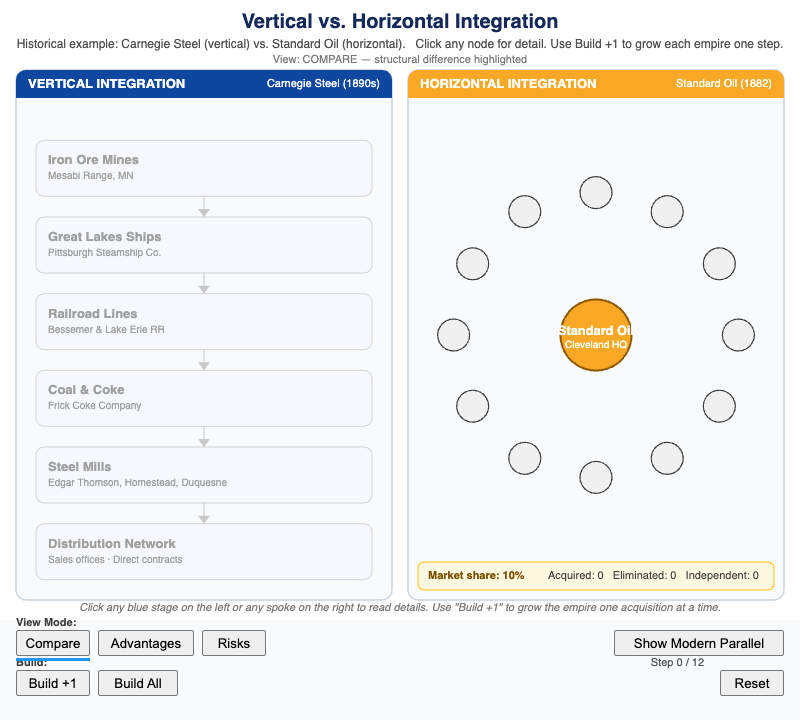
Students explain the difference between vertical and horizontal integration and give a historical example of each strategy.
-
WWI Decision Tree — From Assassination to American Entry
Students trace the causal chain from the assassination of Archduke Franz Ferdinand to U.S. declaration of war, identifying which steps were contingent and which were determined by prior commitments.
-
WWII Timeline — From Blitzkrieg to Surrender
Students sequence key World War II events in both theaters, identify major turning points, and connect home front developments to the military timeline.