Forensic Science
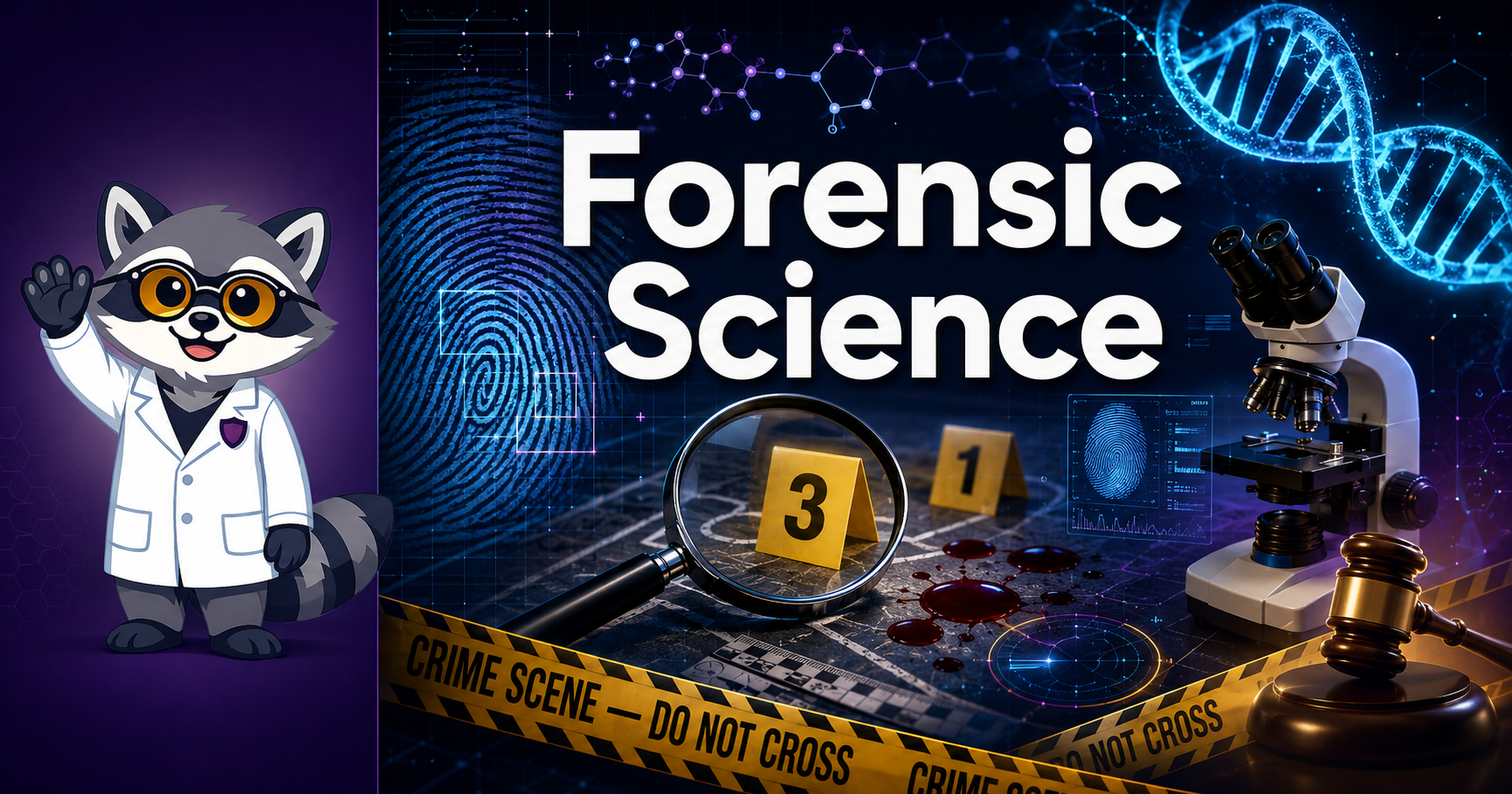
Welcome to Forensic Science, a rigorous, laboratory-intensive intelligent textbook that bridges chemistry, biology, physics, and law through the lens of criminal investigation.
About This Book
Every chapter is organized around authentic casework methodologies used by practicing forensic scientists, crime scene investigators, medical examiners, and digital forensics specialists. Students learn how physical, biological, chemical, and digital evidence is collected, analyzed, and presented in a court of law.
The course spans 19 chapters organized into seven thematic modules:
- Module 1 — Forensic infrastructure and crime scene methodology
- Module 2 — Physical and microscopic trace evidence
- Module 3 — Biological evidence and biochemistry
- Module 4 — Chemical and biomolecular analysis
- Module 5 — Anatomical and ecological analysis
- Module 6 — Digital evidence, facial recognition, cell phone analytics, and social media analysis
- Module 7 - Airplane crash investigation
Who This Book Is For
High school students (grades 9–12) with a background in introductory biology and chemistry. The course is appropriate for college-prep and AP-track students seeking a rigorous application of STEM skills in a real-world investigative context. It is also suitable for dual-enrollment programs at community colleges.
How to Use This Book
Use the navigation sidebar to explore:
- Chapters — Main educational content with labs, case studies, and MicroSims
- Learning Graph — Interactive concept map showing how ideas connect
- MicroSims — Hands-on simulations for key techniques and processes
- Glossary — Definitions for key forensic science terms
- FAQ - Frequently asked questions
Getting Started
Begin with Chapter 1: Foundations & Legal Principles to understand how forensic science operates within the US legal system.