Skip to content

List of MicroSims for Forensic Science

Interactive Micro Simulations to help students explore forensic science concepts hands-on. Each MicroSim focuses on a single idea — drag, click, calculate, and observe to build understanding.
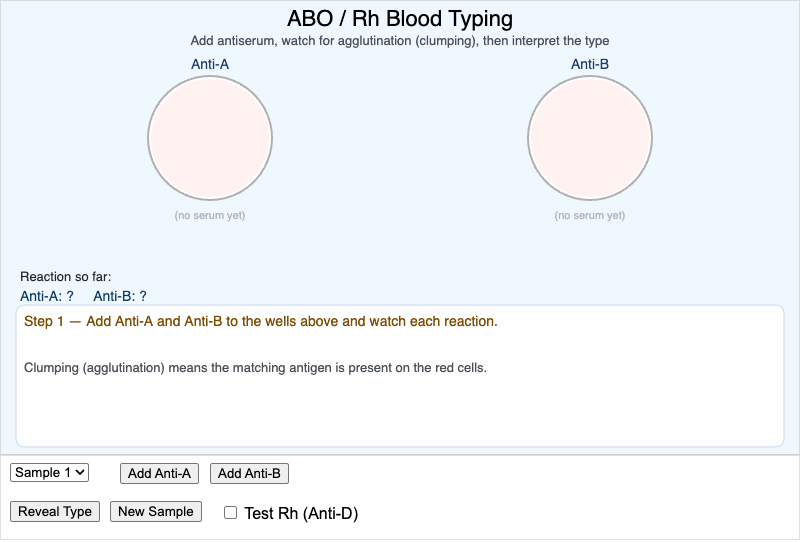
  • ABO Blood Typing Interactive Simulator

    ABO Blood Typing Interactive Simulator

    Interpret agglutination results to determine ABO/Rh blood type (Bloom L2 — Understand).

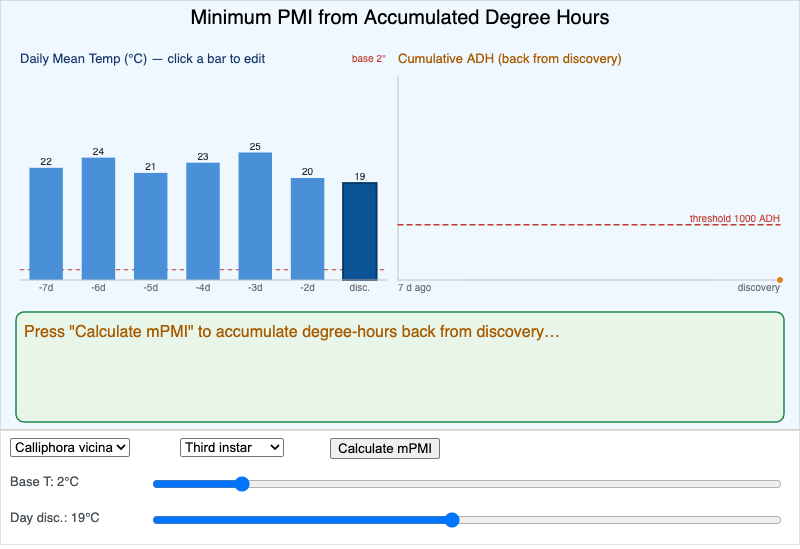
  • ADH minimum-PMI Calculator

    ADH minimum-PMI Calculator

    Calculate a minimum post-mortem interval from accumulated degree-hours and a temperature record (Bloom L3 — Apply).

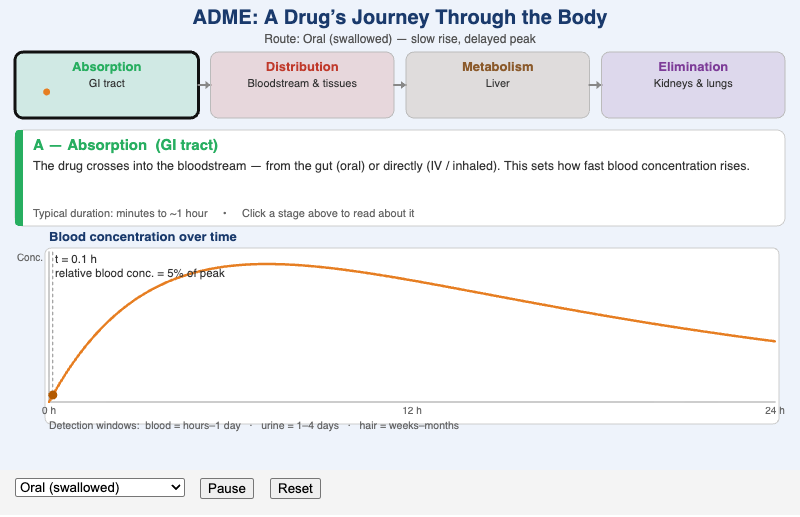
  • ADME Pathway Interactive Flow Diagram

    ADME Pathway Interactive Flow Diagram

    Explain the ADME pharmacokinetic pathway and describe what happens to a drug at each stage (Bloom L2 — Understand).

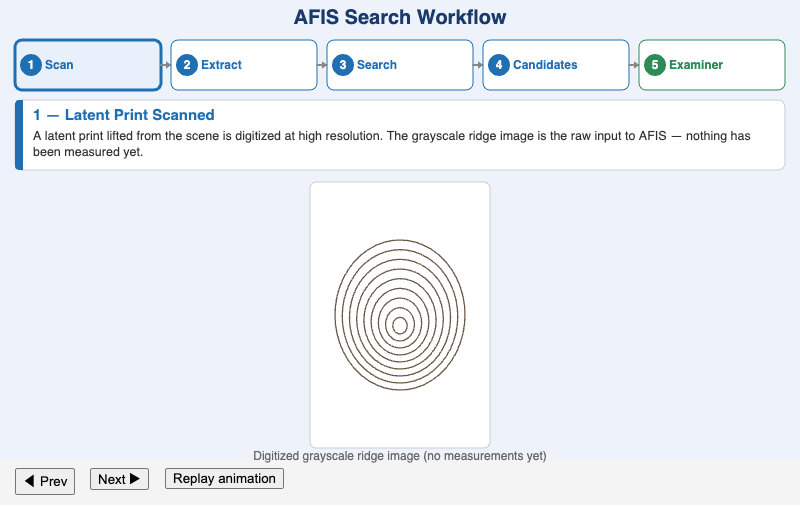
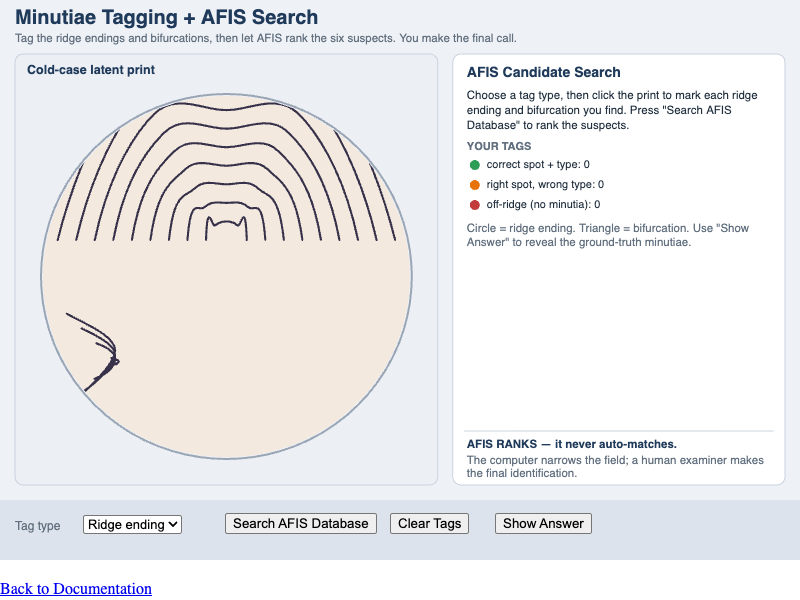
  • AFIS Search Workflow

    AFIS Search Workflow

    Explain how AFIS encodes minutiae and generates a candidate list for human examiner review (Bloom L2 — Understand).

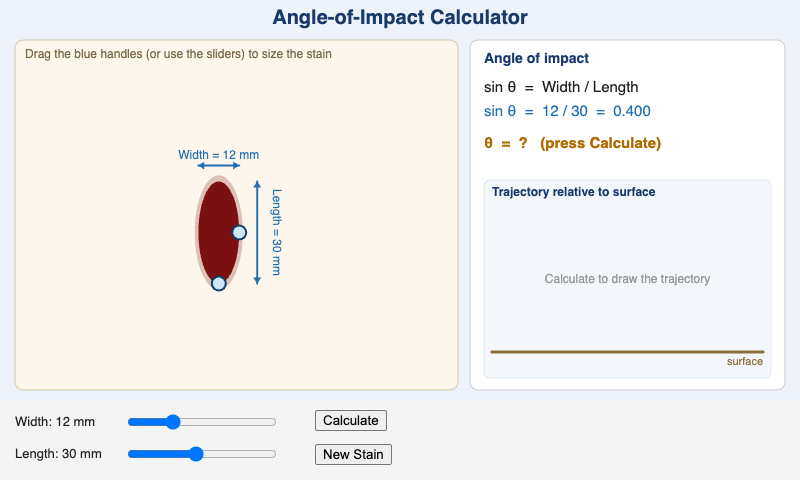
  • Angle-of-Impact Calculator

    Angle-of-Impact Calculator

    Calculate the angle of impact of a bloodstain from its width-to-length ratio (Bloom L3 — Apply).

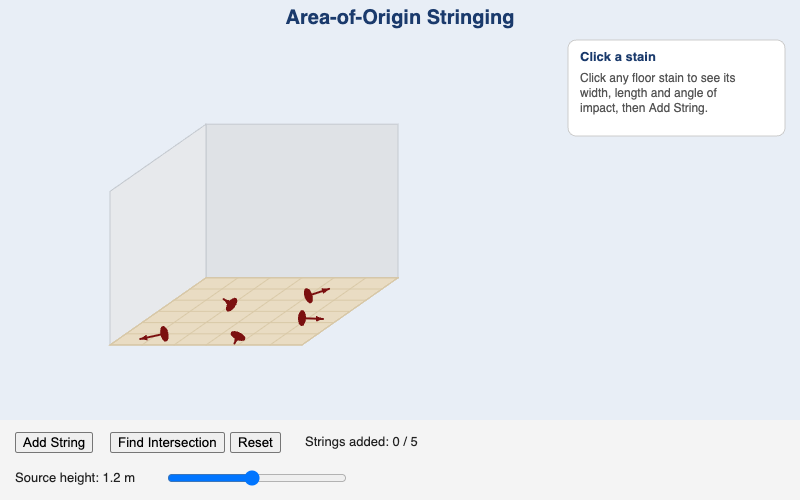
  • Area-of-Origin Stringing

    Area-of-Origin Stringing

    Determine the 3D area of origin of a blood source using stain direction and angle-of-impact data (Bloom L3 — Apply).

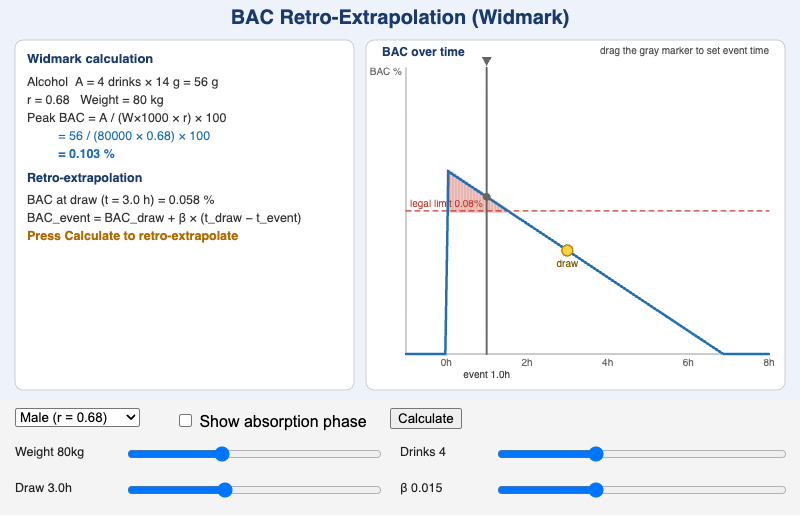
  • BAC Retro-Extrapolation

    BAC Retro-Extrapolation

    Calculate BAC with the Widmark formula and retro-extrapolate it back to an earlier event time (Bloom L3 — Apply).

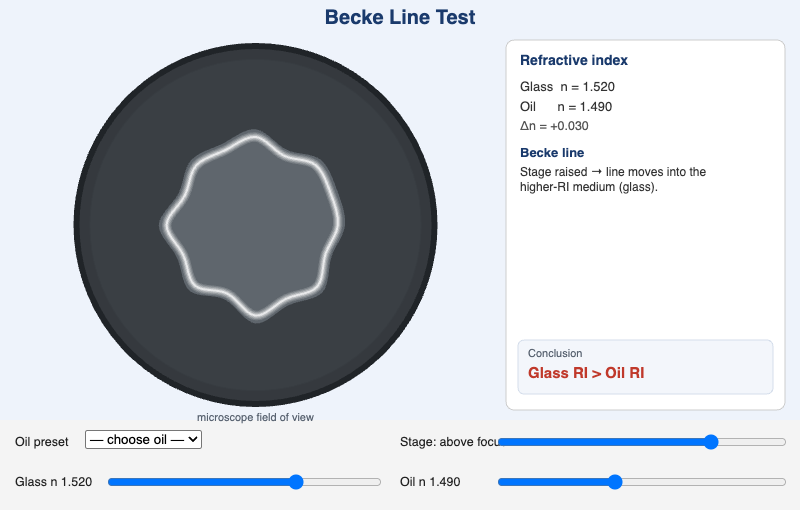
  • Becke Line Test Simulator

    Becke Line Test Simulator

    Interpret which way the bright Becke line moves to decide whether glass or oil has the higher refractive index (Bloom L2 — Understand).

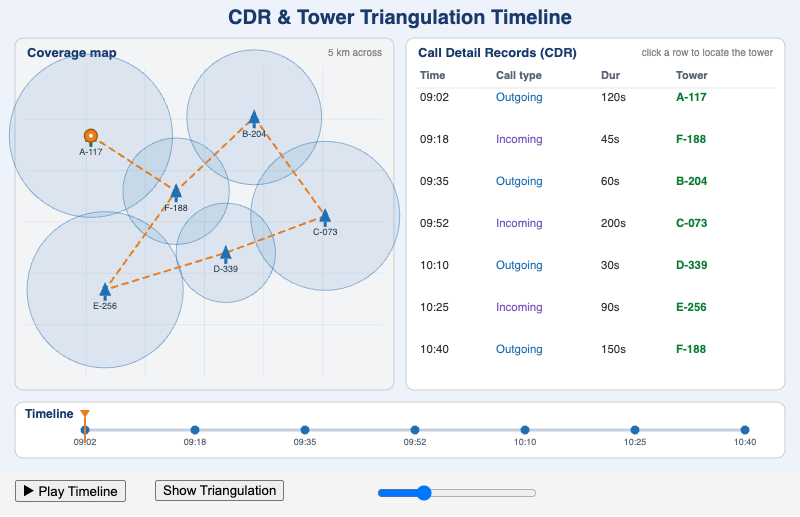
  • CDR & Tower Triangulation Timeline

    CDR & Tower Triangulation Timeline

    Use Call Detail Records and cell-tower data to reconstruct a device's movement and trilaterate its location (Bloom L3 — Apply).

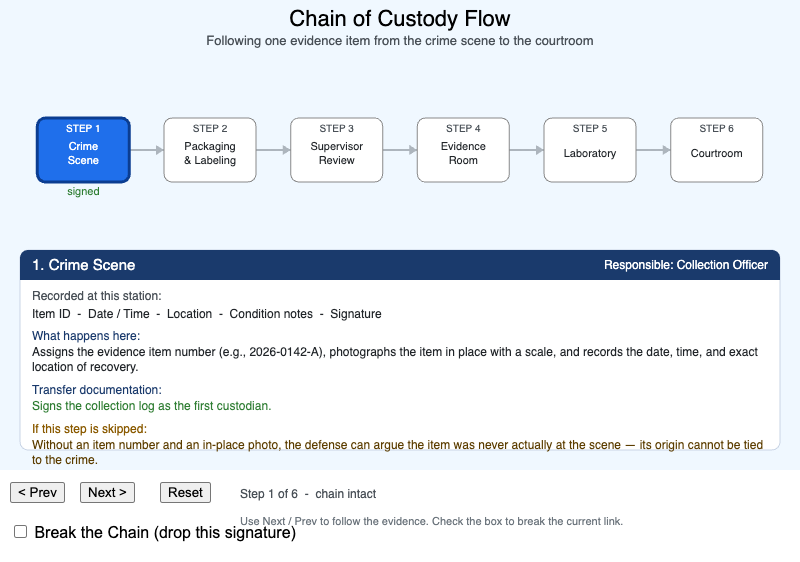
  • Chain of Custody Flow

    Chain of Custody Flow

    Step through each evidence transfer from crime scene to courtroom and explain the documentation required at every handoff (Bloom L2 — Understand).

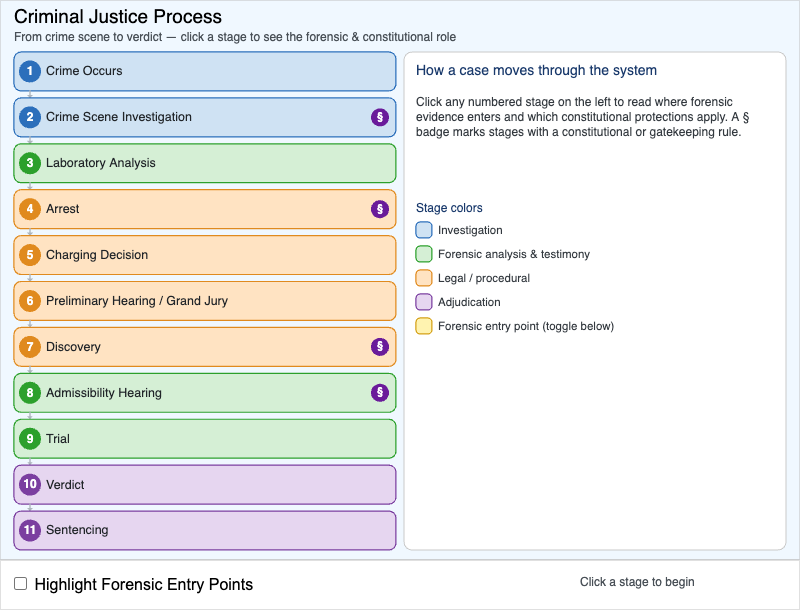
  • Criminal Justice Process — From Crime Scene to Verdict

    Criminal Justice Process — From Crime Scene to Verdict

    Step through the criminal justice process from crime scene to verdict, seeing where forensic evidence and constitutional protections apply at each stage.

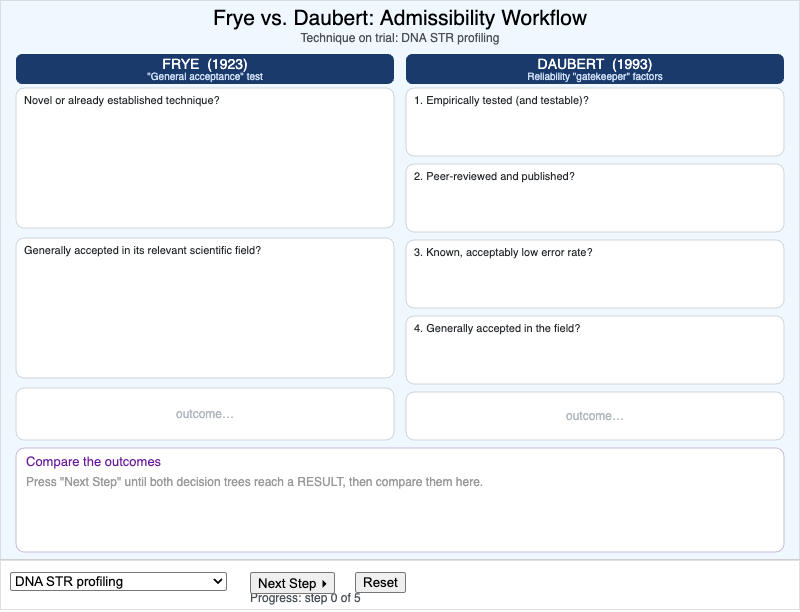
  • Daubert vs. Frye Admissibility Decision Workflow

    Daubert vs. Frye Admissibility Decision Workflow

    Compare how the Frye and Daubert standards evaluate the same scientific evidence and see which evidence is allowed in court (Bloom L4 — Analyze).

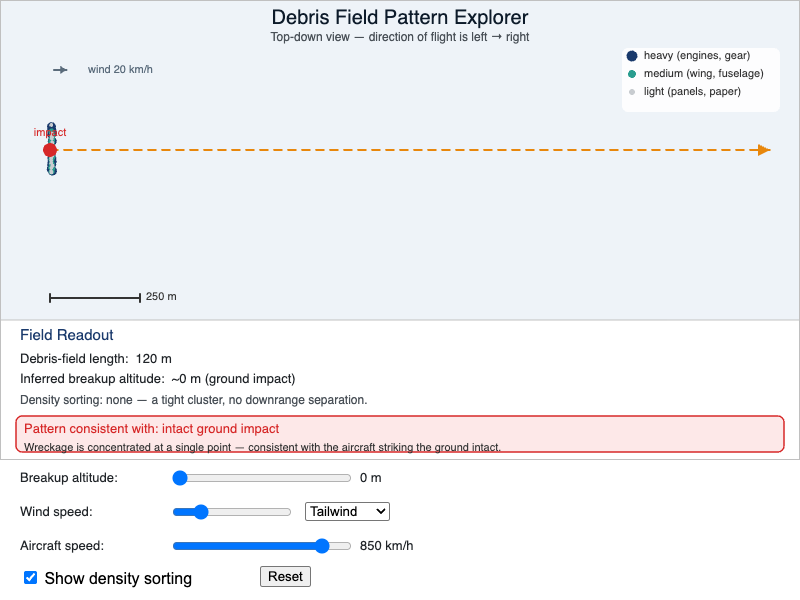
  • Debris Field Pattern Explorer

    Debris Field Pattern Explorer

    Read an aircraft debris field to distinguish an intact ground impact from an in-flight breakup by adjusting breakup altitude, wind, and aircraft speed (Bloom L3 — Apply).

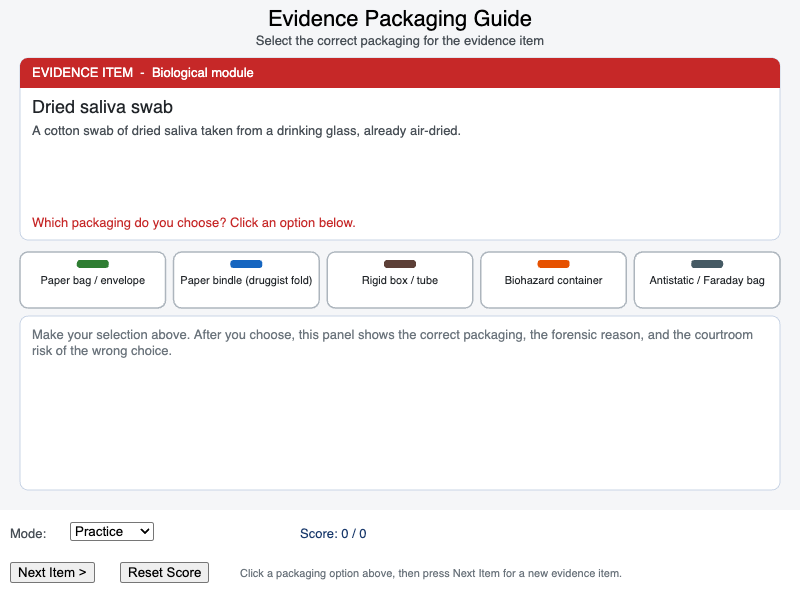
  • Evidence Packaging Guide

    Evidence Packaging Guide

    Select the correct packaging material for a given evidence item and see the forensic reason and courtroom risk of a wrong choice (Bloom L3 — Apply).

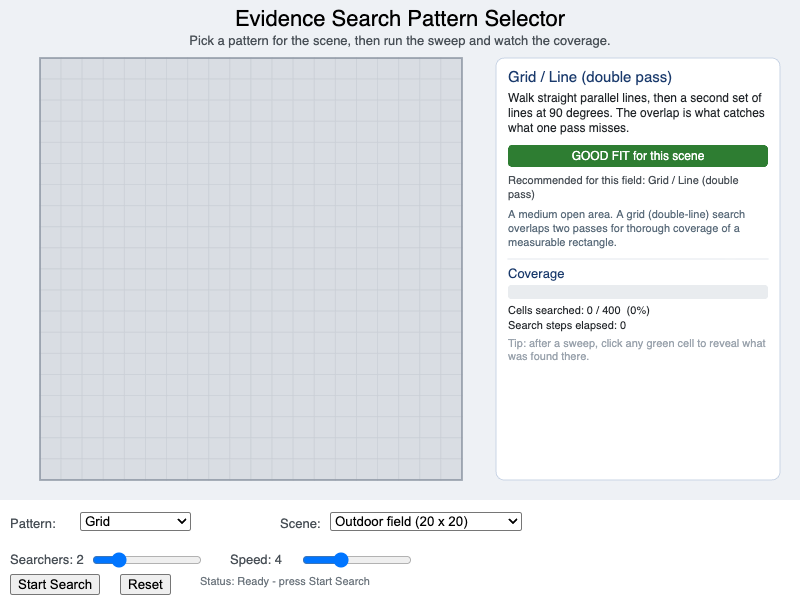
  • Evidence Search Pattern Selector

    Evidence Search Pattern Selector

    Select a search pattern for a given scene, run an animated overhead sweep, and judge coverage, time, and personnel trade-offs against a live fit rating (Bloom L3 — Apply).

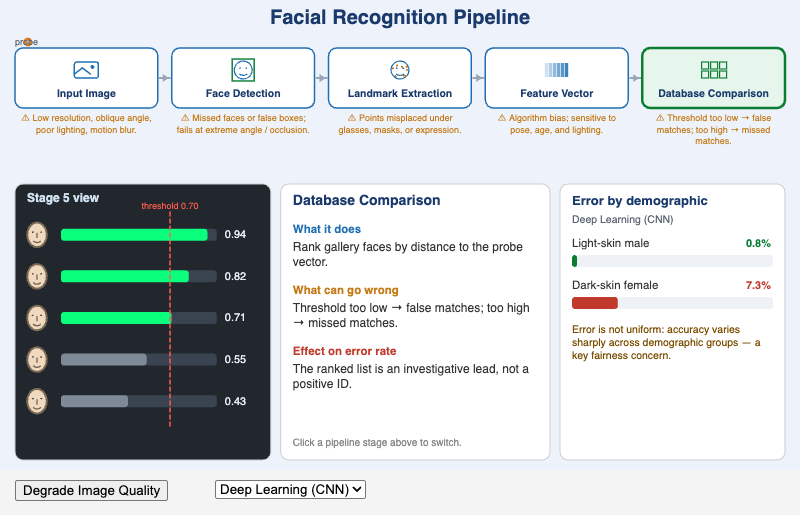
  • Facial Recognition Pipeline

    Facial Recognition Pipeline

    Identify the five stages of an automated facial-recognition pipeline and the source of error at each (Bloom L1 — Remember).

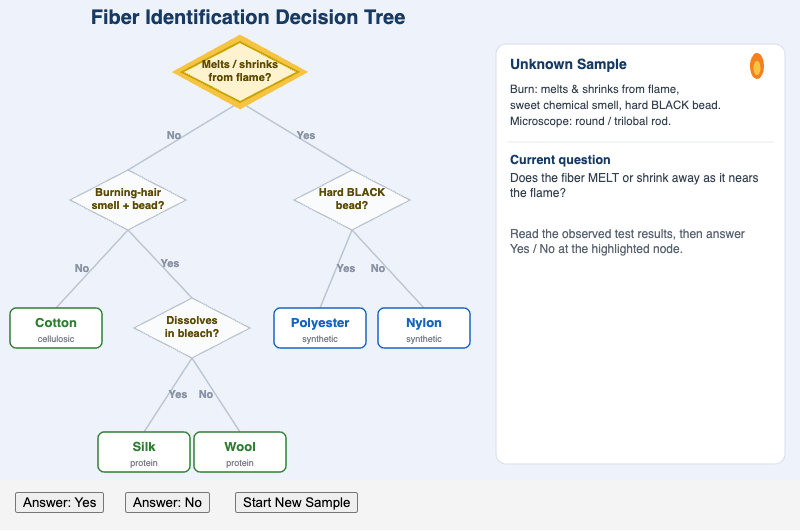
  • Fiber Identification Decision Tree

    Fiber Identification Decision Tree

    Apply a multi-step protocol (burn test, microscopy, solubility) to classify an unknown textile fiber (Bloom L3 — Apply).

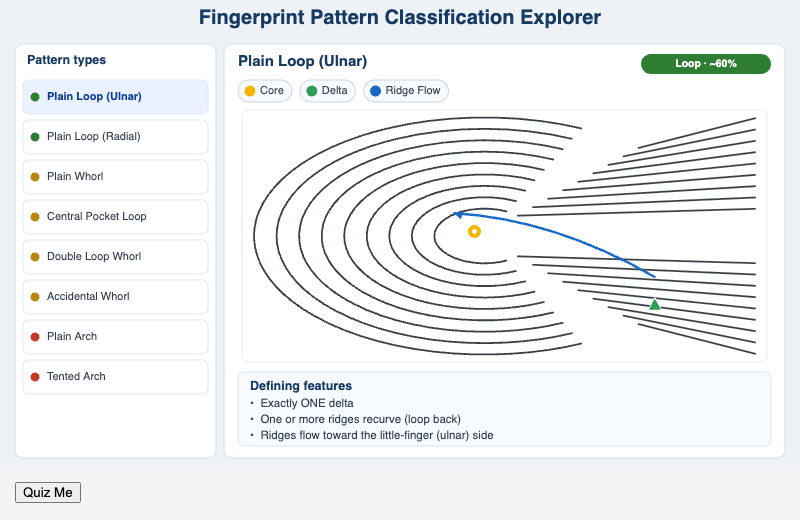
  • Fingerprint Pattern Classification Explorer

    Fingerprint Pattern Classification Explorer

    Identify the three fingerprint pattern families and their eight subtypes by their defining structural features (Bloom L1 — Remember).

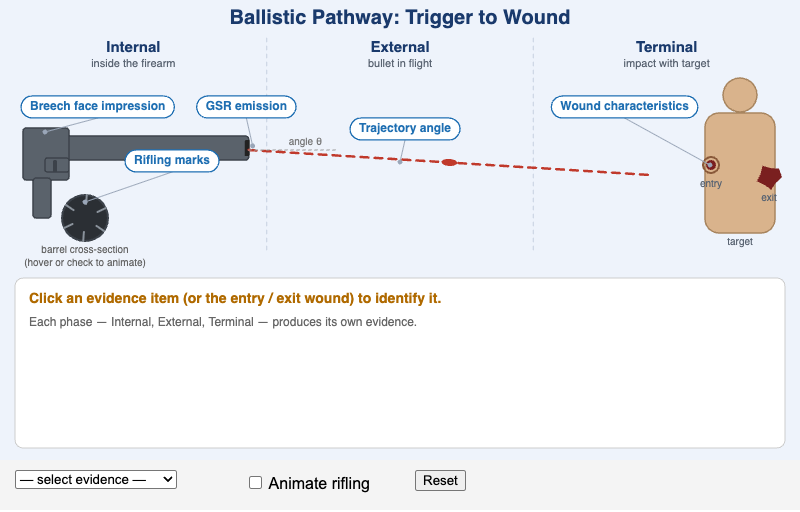
  • Firearms Ballistic Pathway

    Firearms Ballistic Pathway

    Identify the three ballistic phases and the evidence each produces by clicking an annotated trigger-to-wound diagram (Bloom L1 — Remember).

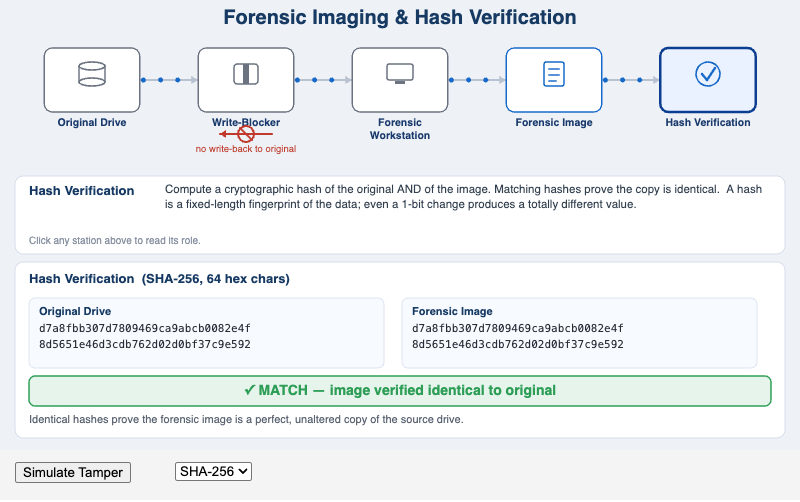
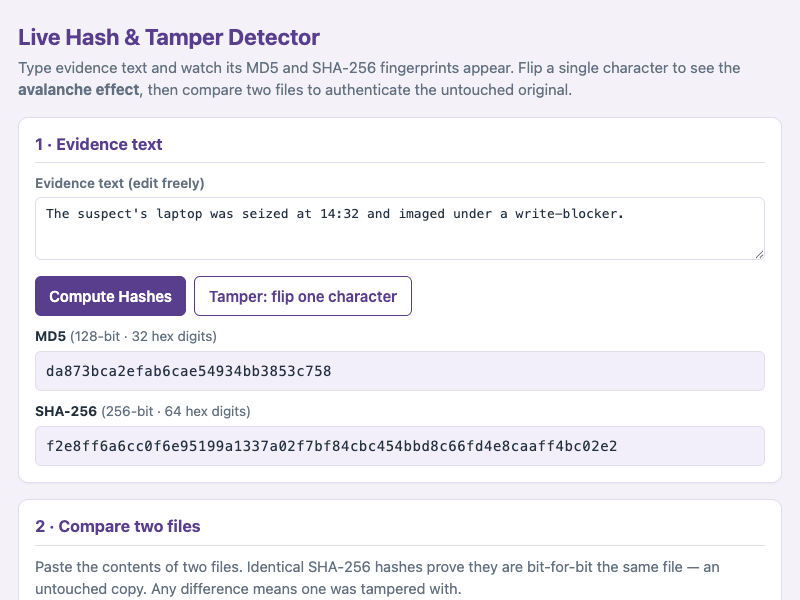
  • Forensic Imaging & Hash Verification Workflow

    Forensic Imaging & Hash Verification Workflow

    Explain the forensic imaging procedure and verify image integrity with hash comparison (Bloom L2 — Understand).

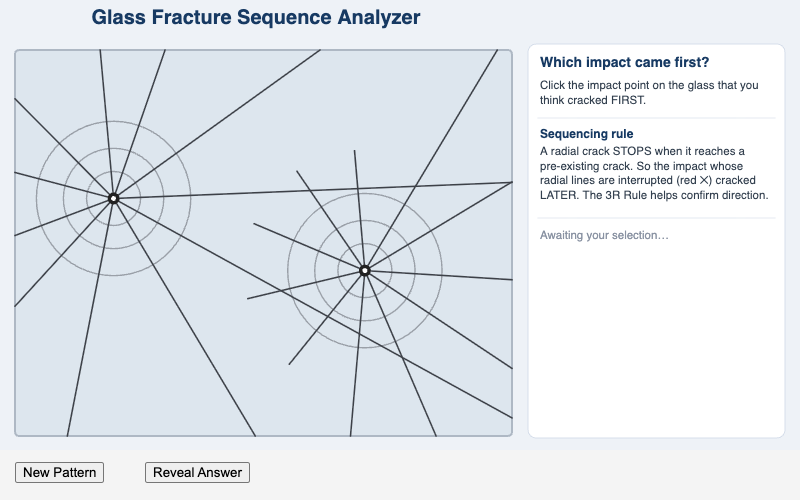
  • Glass Fracture Sequence Analyzer

    Glass Fracture Sequence Analyzer

    Apply the fracture-sequencing rule to determine which of two impacts on a glass pane happened first (Bloom L3 — Apply).

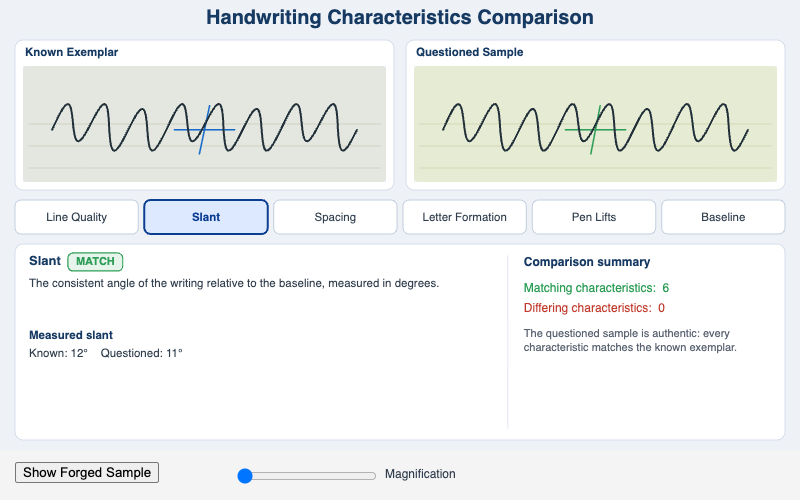
  • Handwriting Characteristics Comparison

    Handwriting Characteristics Comparison

    Identify the key characteristics used to compare a questioned handwriting sample with a known exemplar (Bloom L1 — Remember).

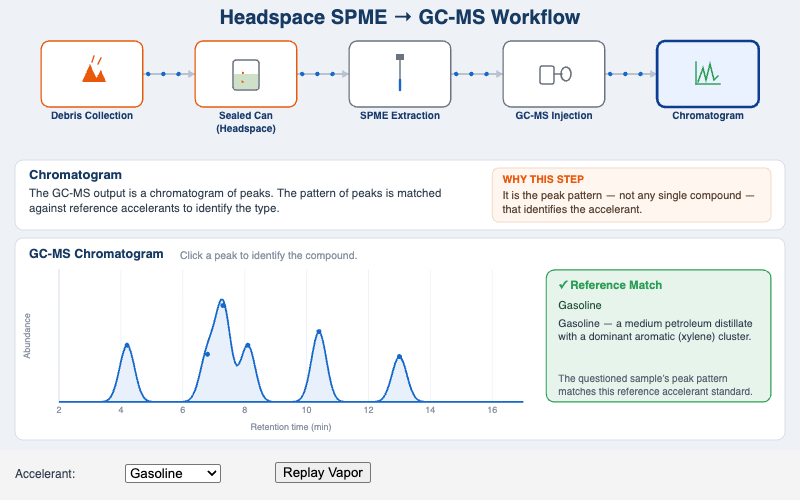
  • Headspace SPME → GC-MS Workflow

    Headspace SPME → GC-MS Workflow

    Explain how headspace SPME recovers volatile accelerant residues from arson debris and connects to GC-MS identification (Bloom L2 — Understand).

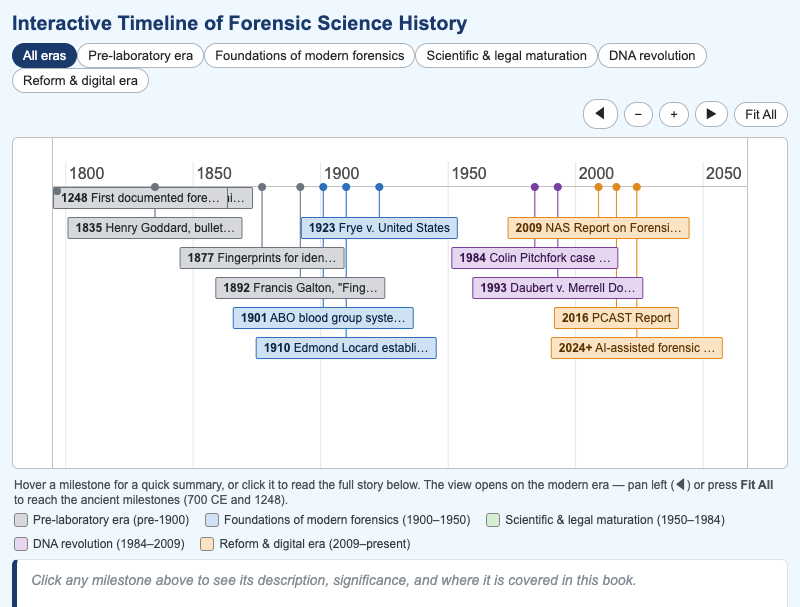
  • Interactive Timeline of Forensic Science History

    Interactive Timeline of Forensic Science History

    Explore an interactive timeline of key milestones in forensic science history, from early fingerprinting to modern DNA analysis (Bloom L1 — Remember).

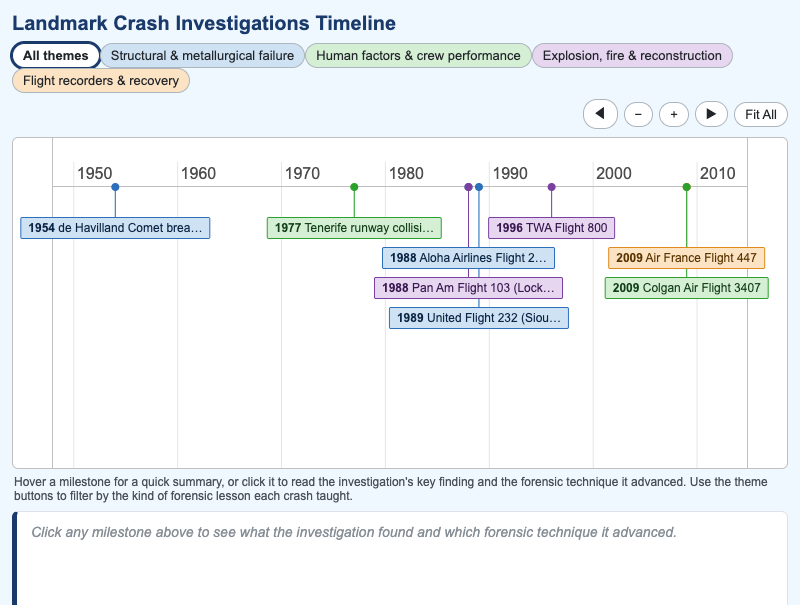
  • Landmark Crash Investigations Timeline

    Landmark Crash Investigations Timeline

    Explore landmark aircraft accident investigations and the forensic advance each produced, on an interactive, filterable timeline (Bloom L1 — Remember).

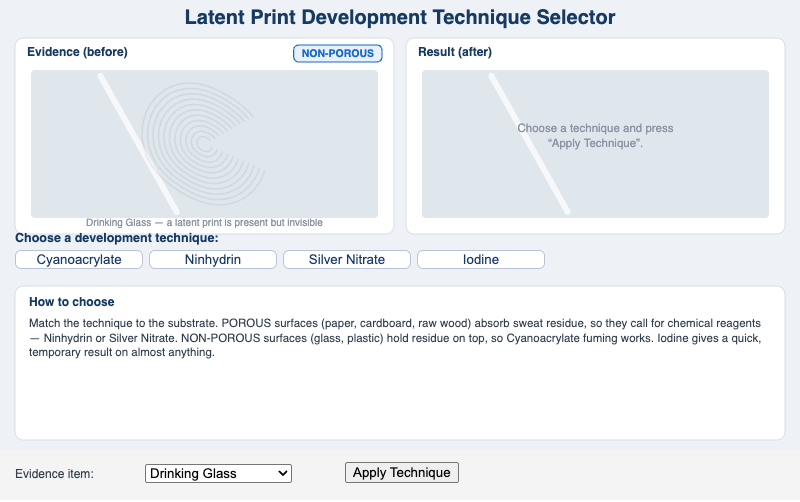
  • Latent Print Development Technique Selector

    Latent Print Development Technique Selector

    Apply substrate-porosity logic to select the correct latent fingerprint development technique (Bloom L3 — Apply).

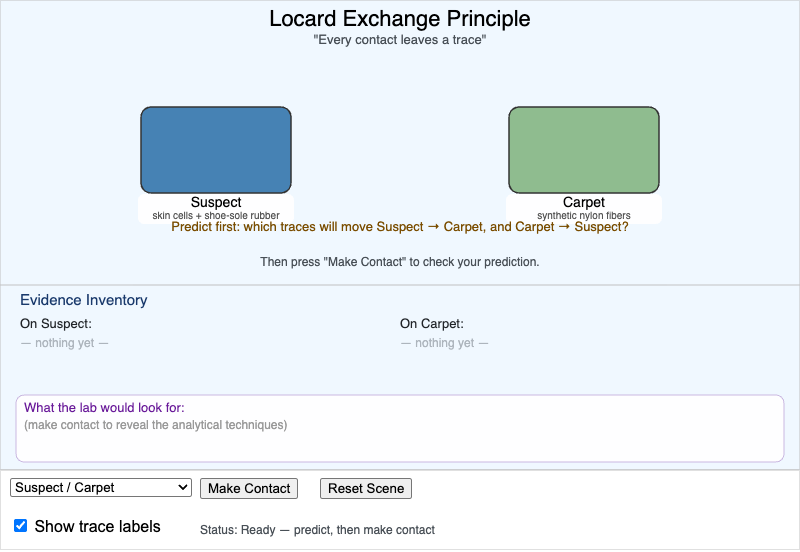
  • Locard Exchange Principle Visualizer

    Locard Exchange Principle Visualizer

    Apply the Locard Exchange Principle to predict and verify what trace evidence is produced and transferred when two objects make physical contact (Bloom L3 — Apply).

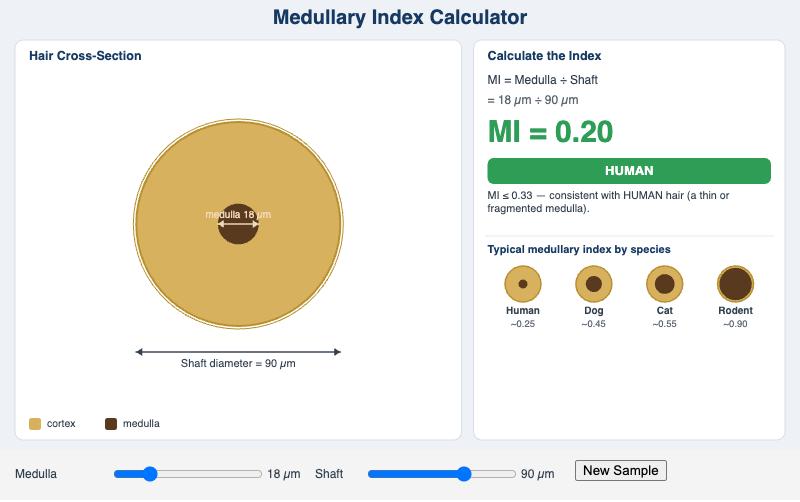
  • Medullary Index Calculator

    Medullary Index Calculator

    Calculate the medullary index (MI = medulla ÷ shaft) of a hair cross-section and classify it as human, ambiguous, or non-human (Bloom L3 — Apply).

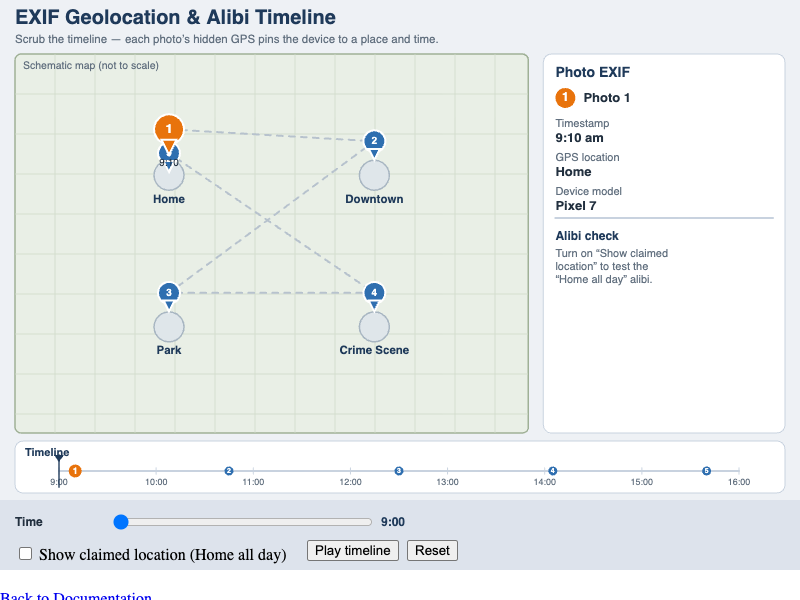
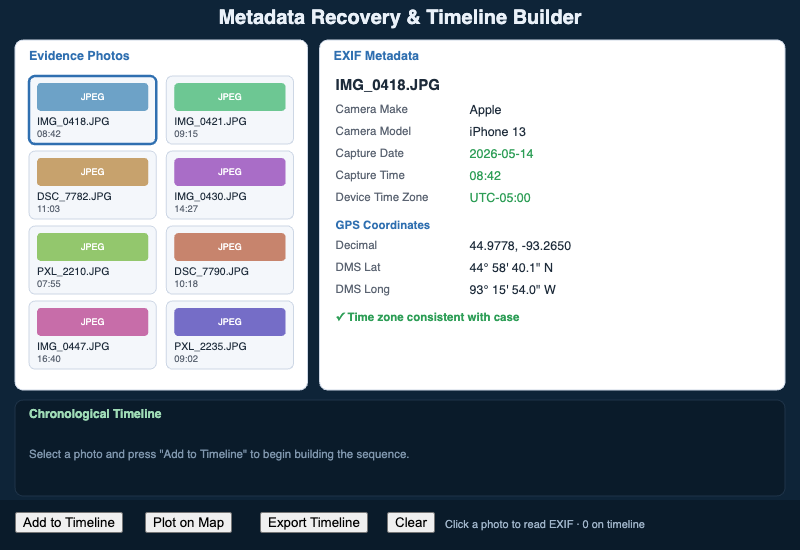
  • Metadata Recovery and Timeline Builder

    Metadata Recovery and Timeline Builder

    Recover EXIF metadata from simulated evidence photos, build a chronological timeline, and detect time-zone anomalies (Bloom L3 — Apply).

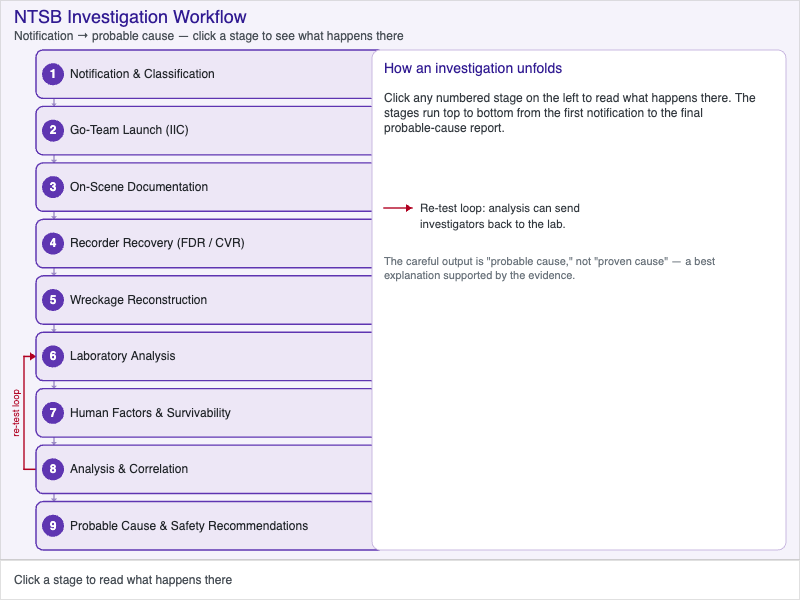
  • NTSB Investigation Workflow

    NTSB Investigation Workflow

    Step through the sequence of an aircraft accident investigation from notification to probable-cause determination on an interactive flowchart (Bloom L2 — Understand).

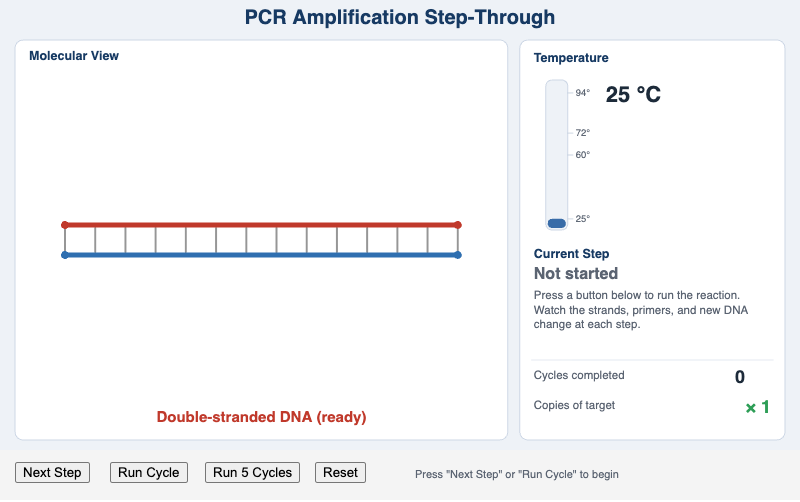
  • PCR Amplification Step-Through Simulator

    PCR Amplification Step-Through Simulator

    Step through the three stages of one PCR cycle — denaturation, annealing, extension — and trace what happens to the DNA at each (Bloom L2 — Understand).

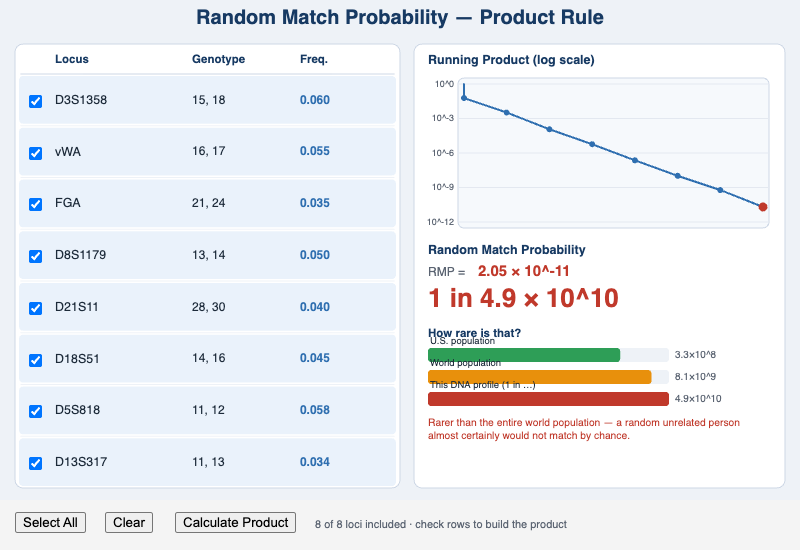
  • Random Match Probability Product Rule Calculator

    Random Match Probability Product Rule Calculator

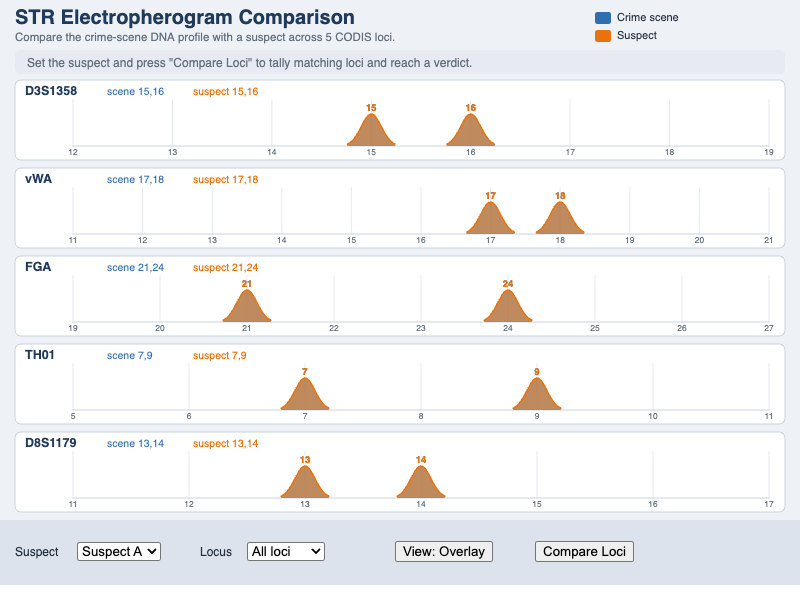
    Apply the product rule across STR loci to calculate a DNA profile's random match probability and compare it to population sizes (Bloom L3 — Apply).

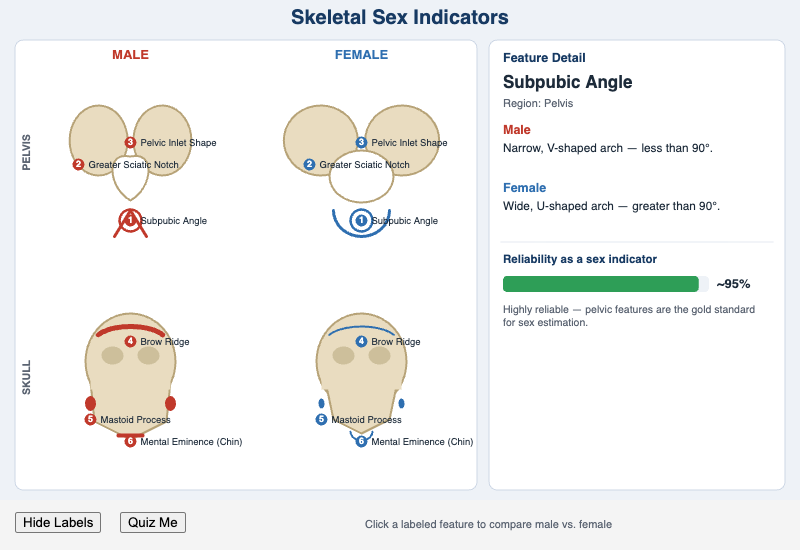
  • Skeletal Sex Indicators Interactive Diagram

    Skeletal Sex Indicators Interactive Diagram

    Compare male and female pelvis and skull features side by side and identify the traits used to estimate biological sex from skeletal remains (Bloom L1 — Remember).

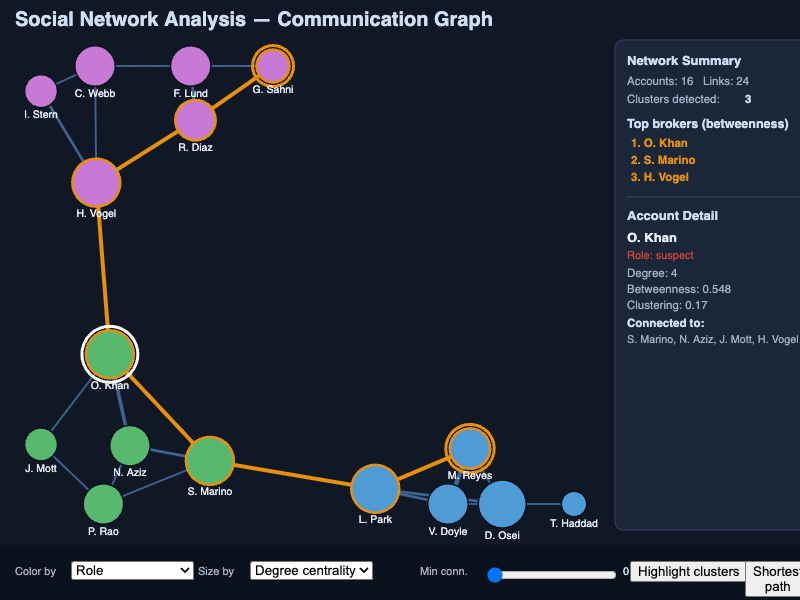
  • Social Network Analysis Graph Explorer

    Social Network Analysis Graph Explorer

    Analyze a simulated communication network to identify hub accounts, broker accounts, and clusters using centrality, filtering, community detection, and shortest-path tracing (Bloom L4 — Analyze).

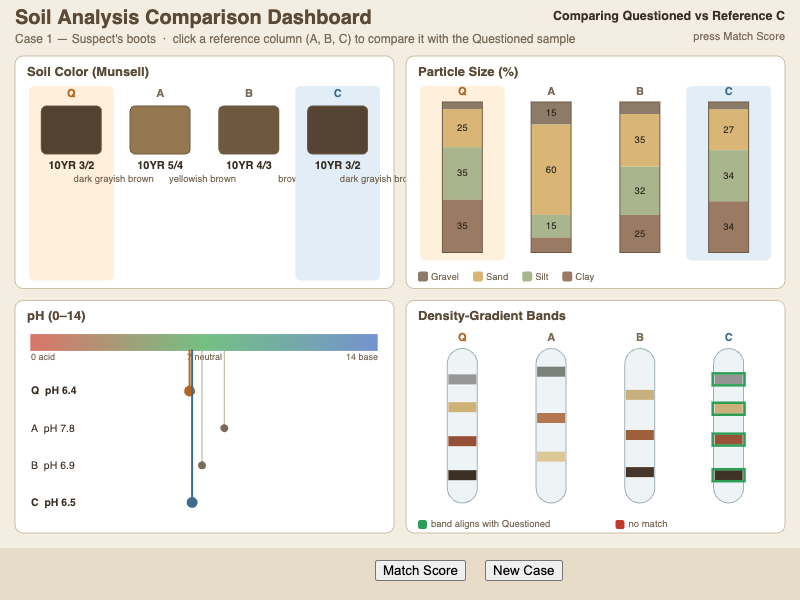
  • Soil Analysis Comparison Dashboard

    Soil Analysis Comparison Dashboard

    Compare a questioned soil sample to three references across Munsell color, particle size, pH, and density-gradient banding at once, then score the match (Bloom L4 — Analyze).

  • TLC Ink Separation Interactive Diagram

    TLC Ink Separation Interactive Diagram

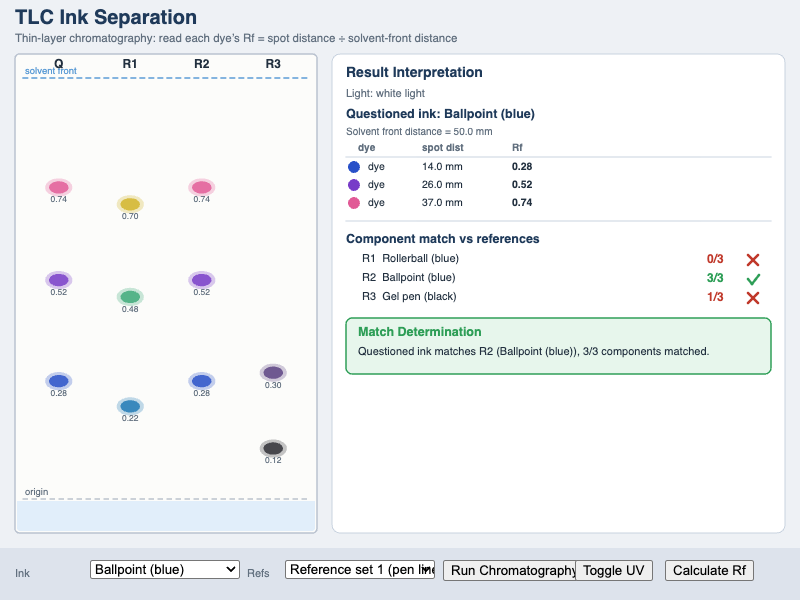
    Run a thin-layer chromatography separation, calculate Rf values, switch to UV light, and compare a questioned ink to reference lanes (Bloom L2 — Understand).

  • Triangulation Measurement Technique

    Triangulation Measurement Technique

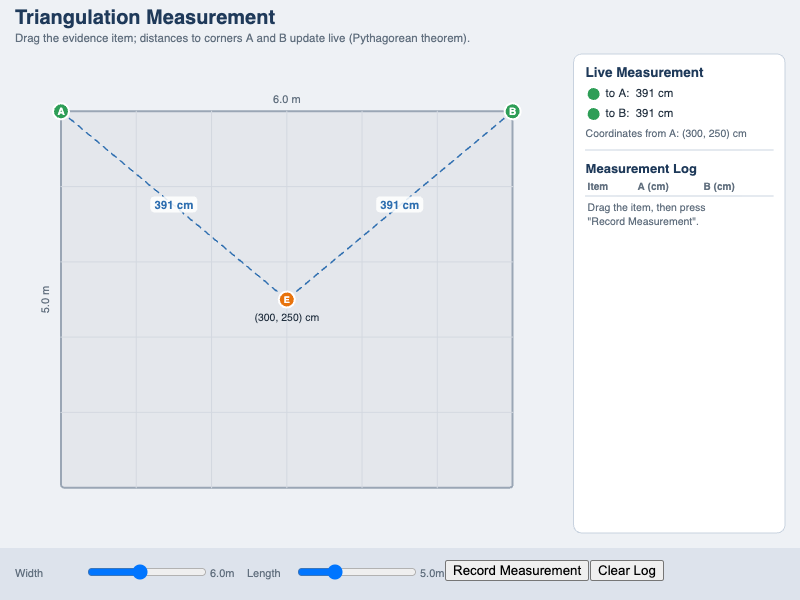
    Drag an evidence item around a scaled room floor plan and read live triangulation distances from two reference corners, then record them to a sketch log (Bloom L3 — Apply).