About This Book
Welcome from Trace
Welcome, Investigator!
 Hi, I'm Trace — and I'm thrilled you're here! This textbook will take you inside the methods that real forensic scientists use every day: collecting evidence at crime scenes, running DNA profiles, reconstructing bloodstain patterns, and tracing digital footprints across mobile devices and social media. Every chapter is built on authentic casework methodologies, so you'll learn the way practitioners actually think — evidence first, conclusions second. It might feel challenging at times, but remember: every clue matters. Follow the evidence!
Why This Intelligent Textbook
Forensic science sits at the intersection of chemistry, biology, physics, law, and digital technology — yet most high school curricula treat it as a single elective built around TV crime-show demonstrations rather than as the rigorous, multi-disciplinary science it actually is. The gap between what students learn in class and what practicing forensic scientists do has real consequences for justice.
In the United States:
- The Bureau of Labor Statistics projects 14% growth in forensic science technician employment from 2022 to 2032 — nearly three times the national average for all occupations — yet rigorous, lab-grade forensic science curriculum is still rare in secondary schools.1
- More than 375 people in the United States have been exonerated of serious crimes they did not commit — including 21 who had been sentenced to death — often because evidence was mishandled, misinterpreted, or analyzed using techniques that lacked validated scientific foundations.2
- A landmark 2016 President's Council of Advisors on Science and Technology (PCAST) report found that several widely used forensic feature-comparison techniques lacked sufficient foundational validity, underscoring the urgent need for scientifically literate practitioners and jurors who can critically evaluate forensic claims.3
- Digital evidence — from smartphones, social media, and cloud services — now plays a role in a growing majority of criminal investigations, yet most forensic science curricula were designed before the smartphone era.4
Worldwide:
- Interpol supports forensic capacity-building across its 195 member countries, recognizing forensic science as essential infrastructure for the rule of law in every nation.5
- The global forensic services market was valued at over $17 billion in 2023 and is projected to nearly double by 2030, driven by expanding DNA databases, digital forensics demand, and crime laboratory modernization worldwide.6
These numbers represent not only career opportunity but civic responsibility. Every student who understands how evidence is collected, validated, and challenged makes our justice system more reliable — whether they go on to become a crime lab analyst, a defense attorney, a digital investigator, or simply an informed juror.
This textbook takes a fundamentally different approach. It is built on a learning graph of 278 interconnected concepts organized so that every idea you encounter builds on the foundations already established. Concepts are introduced in prerequisite order — no jumping ahead, no undefined jargon. Throughout the book you will find interactive MicroSims — browser-based simulations that let you manipulate evidence models, explore data, and discover principles through experimentation rather than memorization. The entire textbook is open source and free — no paywalls, no access codes, no expensive annual editions.
How to Use This Book
This textbook is designed for sequential study — each chapter builds on the previous one, so reading in order is recommended. The book includes:
- 19 Chapters covering forensic infrastructure and legal principles, crime scene investigation, fingerprint and trace evidence analysis, biological evidence, forensic chemistry, skeletal and entomological analysis, firearms and ballistics, document examination, digital and mobile forensics, facial recognition, social media and OSINT, and aviation crash investigation
- Interactive MicroSims embedded in chapters — browser-based simulations you can manipulate to explore evidence dynamics, investigation workflows, and analytical methods
- Quizzes at the end of each chapter to test your understanding
- Annotated References linking to Wikipedia and authoritative sources for every chapter
- Glossary with definitions for every key concept
- FAQ with common questions and answers
- Learning Graph visualizing 278 concept dependencies across all 19 chapters
- Search available from any page using the search bar
The Learning Graph visualizes how concepts connect across chapters. If you want to explore non-linearly or check prerequisites for a specific topic, start there.
About the Author
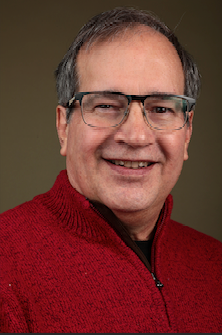
Dan McCreary is a semi-retired AI researcher, solution architect, and educator who has spent more than three decades helping Fortune 100 organizations reason over massive datasets. At Optum he founded the Generative AI Center of Excellence and led the team that built one of the world's largest healthcare knowledge graphs — spanning over 25 billion vertices — to unify member, provider, and patient insights. Dan's deep background in knowledge representation and systems thinking underpins the precise learning graphs and intelligent textbook workflows used throughout this course.
He is the co-author of Making Sense of NoSQL (Manning Publications), the founding chair of the NoSQL Now! conference, and a frequent keynote speaker on semantic search, ontology strategy, and AI hardware. Beyond industry, Dan has mentored students as a STEM volunteer since 2014 and now applies the same rigor to building open educational resources. You can visit the Intelligent Textbooks Case Studies to see over 87 textbooks that Dan has created or co-created with other authors.
Selected Credentials
- B.A. in Physics and Computer Science from Carleton College
- M.S.E.E. from the University of Minnesota
- MBA coursework at the University of St. Thomas
- Patent holder in semantic search and ontology management techniques
- Advocate for large-scale Enterprise Knowledge Graph adoption across healthcare and education
- Long-time promoter of accessible, low-cost AI-powered learning experiences
How to Cite This Book
If you reference this textbook in academic work, curriculum proposals, lesson plans, or other publications, please use one of the following citation formats.
APA (7th edition)
McCreary, D. (2026). Forensic Science. https://dmccreary.github.io/forensic-science/
Chicago (17th edition)
McCreary, Dan. 2026. Forensic Science. https://dmccreary.github.io/forensic-science/.
MLA (9th edition)
McCreary, Dan. Forensic Science. 2026, dmccreary.github.io/forensic-science/.
BibTeX
@book{mccreary2026forensic,
  title     = {Forensic Science},
  author    = {McCreary, Dan},
  year      = {2026},
  url       = {https://dmccreary.github.io/forensic-science/},
  note      = {Interactive intelligent textbook}
}
To cite a specific chapter, append the chapter number and title — for example:
McCreary, D. (2026). Chapter 1: Foundations & Legal Principles. In Forensic Science. https://dmccreary.github.io/forensic-science/chapters/01-intro-forensic-science/
License
This work is released under the Creative Commons Attribution-NonCommercial-ShareAlike 4.0 International License (CC BY-NC-SA 4.0). You are free to share and adapt the material for non-commercial purposes as long as you give appropriate credit and share your adaptations under the same license.
References
-
U.S. Bureau of Labor Statistics. (2024). Occupational Outlook Handbook: Forensic Science Technicians. https://www.bls.gov/ooh/life-physical-and-social-science/forensic-science-technicians.htm ↩
-
The Innocence Project. (2024). Exoneration Statistics. https://innocenceproject.org/exoneration-statistics/ ↩
-
President's Council of Advisors on Science and Technology (PCAST). (2016). Forensic Science in Criminal Courts: Ensuring Scientific Validity of Feature-Comparison Methods. Executive Office of the President. https://obamawhitehouse.archives.gov/sites/default/files/microsites/ostp/PCAST/pcast_forensic_science_report_final.pdf ↩
-
National Institute of Justice. (2023). Digital Evidence and Forensics. U.S. Department of Justice, Office of Justice Programs. https://nij.ojp.gov/topics/articles/digital-evidence-and-forensics ↩
-
Interpol. (2024). Forensic Science. https://www.interpol.int/Crimes/Forensic-science ↩
-
Grand View Research. (2024). Forensic Services Market Size, Share & Trends Analysis Report, 2024–2030. https://www.grandviewresearch.com/industry-analysis/forensic-services-market ↩