About This Book
AI for EE Research: From Researcher to Orchestrator is an interactive intelligent textbook for researchers in electrical engineering and computer design. It is a hands-on guide with practical demonstrations of how AI tools and agents can support everyday research tasks, such as literature searches, data analysis, brainstorming, coding, and manuscript preparation.
Welcome from Volt
Welcome!
 I'm Volt, and I'll be rounding up the key ideas as you work through this
book. Agents can do a great deal of your research legwork, but you stay
accountable for the science. Trust, but verify!
Why This Intelligent Textbook
Most graduate researchers already use AI tools, but few have been taught how to direct them, check their output, and take responsibility for the results. The gap between using a chatbot and orchestrating a team of agents is where research time is won or lost — and where unverified claims creep into papers.
Researchers and AI adoption:
- 84% of researchers surveyed in August 2025 reported using AI tools, up from 57% a year earlier1
- 57% of researchers cite a lack of guidelines and training as a primary barrier to wider AI adoption1
- Organizational AI use among businesses rose from 55% to 78% in a single year, according to the 2025 AI Index2
The field this book serves:
- The U.S. Bureau of Labor Statistics projects 7% employment growth for electrical and electronics engineers from 2024 to 20343
These numbers describe a profession that has adopted the tools faster than it has learned the practices. This book exists to close that gap for researchers in electrical engineering and computer design: how to give agents clear instructions, how to test the skills you build, and how to decide what is true.
This book takes a different approach from a traditional textbook. It is built on a learning graph of 379 interconnected concepts organized into 17 categories, so concepts are introduced after their prerequisites. It is organized around one idea — the researcher as an orchestrator of roughly 20 planning agents and 10 execution agents — and two building blocks that make agents reliable: plain Markdown project files and reusable agent skills. More than 40 interactive MicroSims let you manipulate models and decisions rather than only read about them. The entire textbook is open source and free — no paywalls and no access codes.
Audience
This book is written for graduate students (MS and PhD) in electrical engineering, computer engineering, and computer design, plus postdocs and faculty who want practical AI skills for everyday research.
Prerequisites:
- Graduate standing (or equivalent research experience) in electrical engineering, computer engineering, or a related field
- Working knowledge of at least one programming language, preferably Python
- Basic comfort with a command line, a text editor, and Git
- Experience writing a technical paper or report
- No prior machine learning, prompt engineering, or agent experience required
How to Use This Book
This textbook is designed for self-paced study. Each chapter builds on previous material, so reading in order is recommended. The book includes:
- 20 Chapters covering research workflows, how language models work, prompting and context engineering, Markdown project files, agent skills, agents and subagents, orchestrating agent teams, literature search, data analysis, simulation, brainstorming, manuscript preparation, verification, responsible use, always-on personal agents, and capstone case studies
- Interactive MicroSims embedded in chapters — browser-based simulations and decision exercises you can manipulate to build intuition
- Quizzes at the end of each chapter to test understanding
- Glossary with definitions for every key concept
- Learning Graph visualizing 379 concepts and their dependencies
- Search available from any page using the search bar
The Learning Graph shows how concepts connect across chapters. If you want to explore non-linearly or check prerequisites for a specific topic, start there.
About the Author
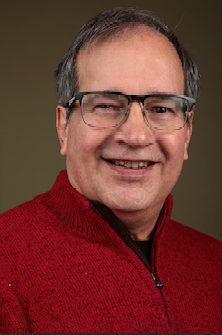
Dan McCreary is a semi-retired AI researcher, solution architect, and educator who has spent more than three decades helping Fortune 100 organizations reason over massive datasets. At Optum he founded the Generative AI Center of Excellence and led the team that built one of the world's largest healthcare knowledge graphs — spanning over 25 billion vertices — to unify member, provider, and patient insights. Dan has been working on intelligent agents since 2008, beginning with the semantic web architecture for advocate agents described in the primary reference for this book. His background in knowledge representation and systems thinking underpins the precise learning graphs and intelligent textbook workflows used throughout this course.
He is the co-author of Making Sense of NoSQL (Manning Publications), the founding chair of the NoSQL Now! conference, and a frequent keynote speaker on semantic search, ontology strategy, and AI hardware. Beyond industry, Dan has mentored students as a STEM volunteer since 2014 and now applies the same rigor to building open educational resources. You can visit the Intelligent Textbooks Case Studies to see over 87 textbooks that Dan has created or co-created with other authors.
Selected Credentials
- B.A. in Physics and Computer Science from Carleton College
- M.S.E.E. from the University of Minnesota
- MBA coursework at the University of St. Thomas
- Patent holder in semantic search and ontology management techniques
- Advocate for large-scale Enterprise Knowledge Graph adoption across healthcare and education
- Long-time promoter of accessible, low-cost AI-powered learning experiences
How to Cite This Book
If you reference this textbook in academic work, curriculum proposals, lesson plans, or other publications, please use one of the following citation formats.
APA (7th edition)
McCreary, D. (2026). AI for EE Research: From Researcher to Orchestrator. https://dmccreary.github.io/ai-for-ee-research/
Chicago (17th edition)
McCreary, Dan. 2026. AI for EE Research: From Researcher to Orchestrator. https://dmccreary.github.io/ai-for-ee-research/.
MLA (9th edition)
McCreary, Dan. AI for EE Research: From Researcher to Orchestrator. 2026, dmccreary.github.io/ai-for-ee-research/.
BibTeX
@book{mccreary2026aiforeeresearch,
  title     = {AI for EE Research: From Researcher to Orchestrator},
  author    = {McCreary, Dan},
  year      = {2026},
  url       = {https://dmccreary.github.io/ai-for-ee-research/},
  note      = {Interactive intelligent textbook}
}
To cite a specific chapter, append the chapter number and title — for example:
McCreary, D. (2026). Chapter 1: Research Workflows and the Researcher as Orchestrator. In AI for EE Research: From Researcher to Orchestrator. https://dmccreary.github.io/ai-for-ee-research/chapters/01-research-workflows-orchestrator/
License
This work is released under the Creative Commons Attribution-NonCommercial-ShareAlike 4.0 International License (CC BY-NC-SA 4.0). You are free to share and adapt the material for non-commercial purposes as long as you give appropriate credit and share your adaptations under the same license.
References
-
Wiley. (2025, October 7). AI adoption jumps to 84% among researchers as expectations undergo significant reality check (ExplanAItions 2025 survey of 2,430 researchers). newsroom.wiley.com ↩↩
-
Stanford Institute for Human-Centered AI. (2025). Artificial Intelligence Index Report 2025. hai.stanford.edu/ai-index/2025-ai-index-report ↩
-
U.S. Bureau of Labor Statistics. Occupational Outlook Handbook: Electrical and Electronics Engineers. bls.gov ↩