List of Learning Python MicroSims
Interactive Micro Simulations to help students beginning Python programming. Click any card to open the MicroSim.
-
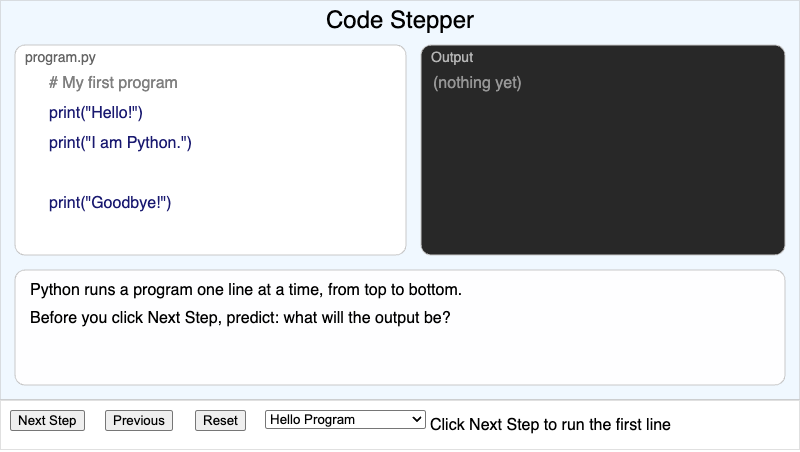
Step through a short Python program one line at a time and watch the output appear — see top-to-bottom execution with your own eyes. (Chapters 1-2)
-
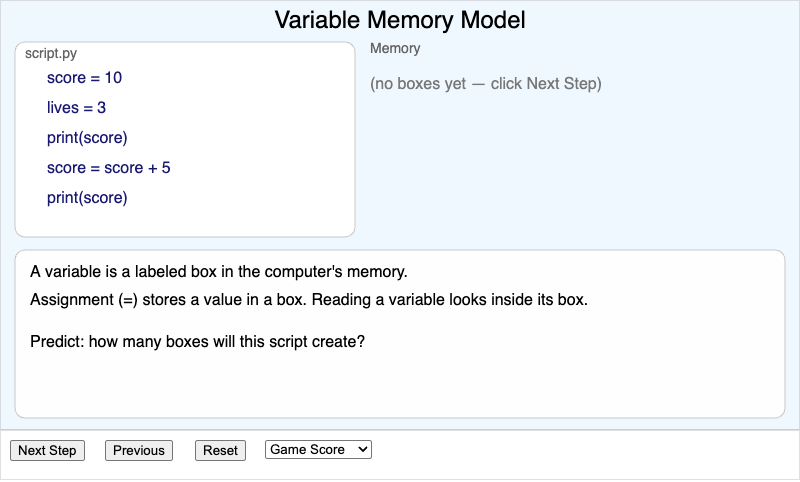
Watch labeled memory boxes get created, read, and replaced as a script runs — the sticky-note metaphor made real. (Chapter 3)
-
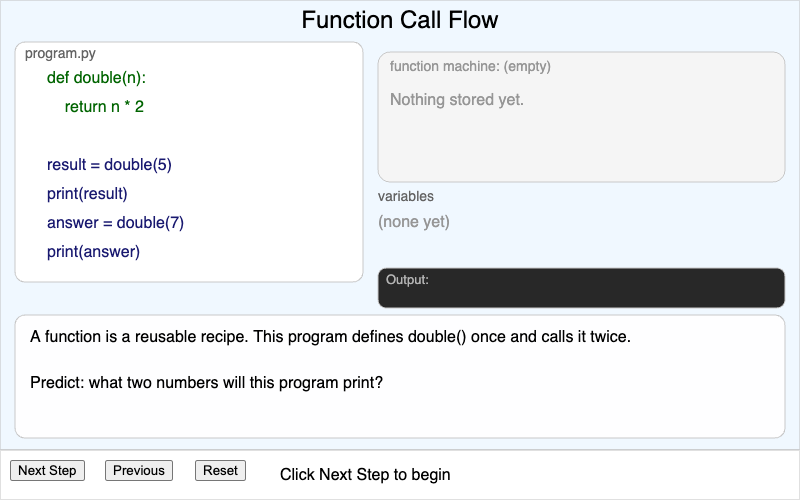
Trace a function call in slow motion: the argument flies into the parameter slot and the return value flies back. (Chapter 4)
-
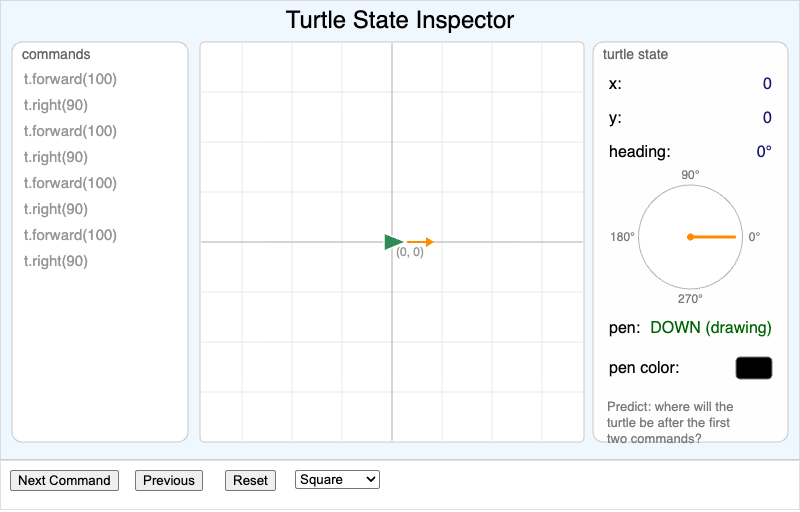
Step through turtle commands while a dashboard reveals the turtle's hidden state: position, heading compass, and pen. (Chapter 5)
-
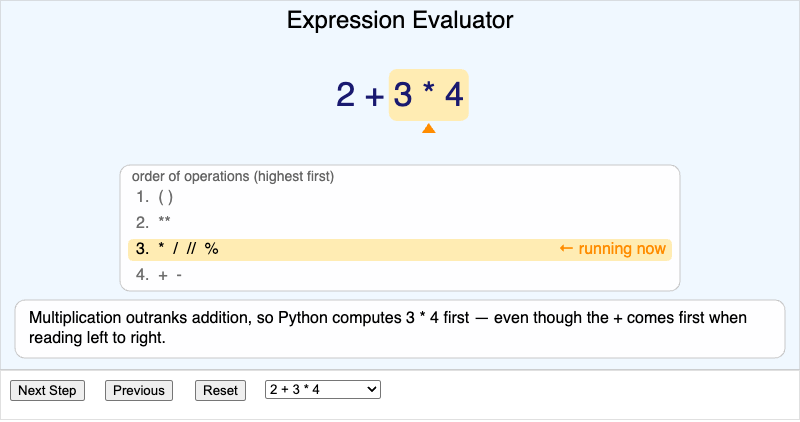
Watch
2 + 3 * 4collapse one operation at a time in the exact order Python evaluates it — PEMDAS made visible. (Chapter 6) -
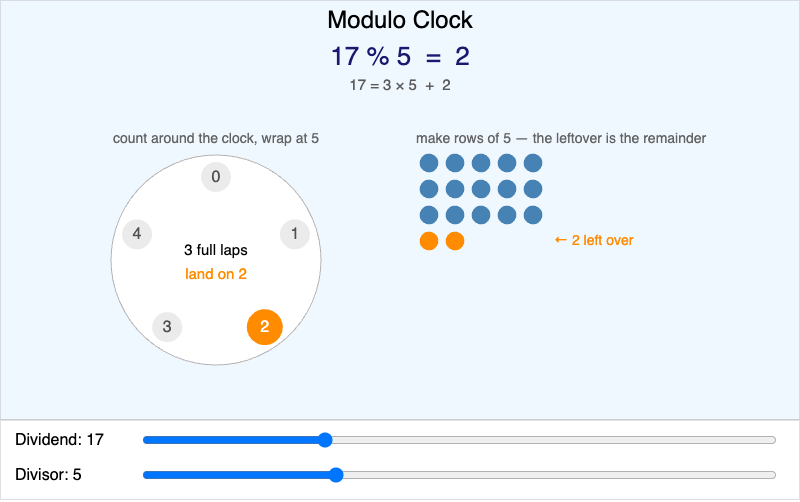
See the remainder as wrap-around counting on a dial and as leftover dots — the
%operator made concrete. (Chapter 6) -
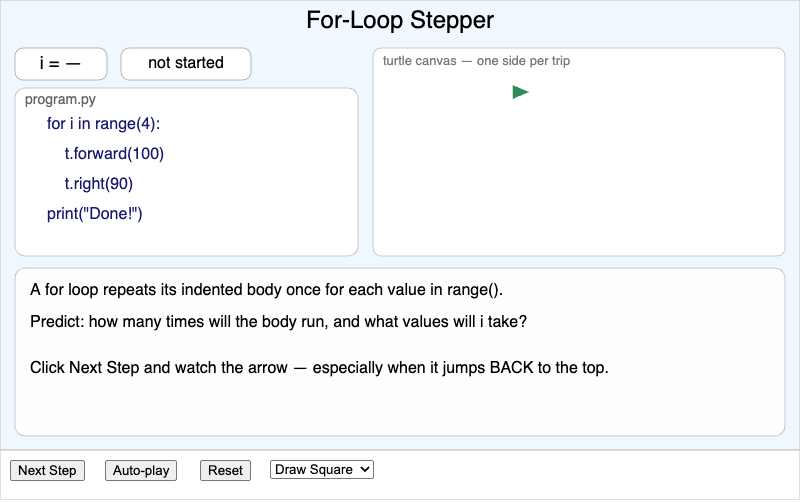
Crank a for loop by hand: watch
ichange, the arrow jump back to the top, and a turtle draw one square side per trip. (Chapter 7) -
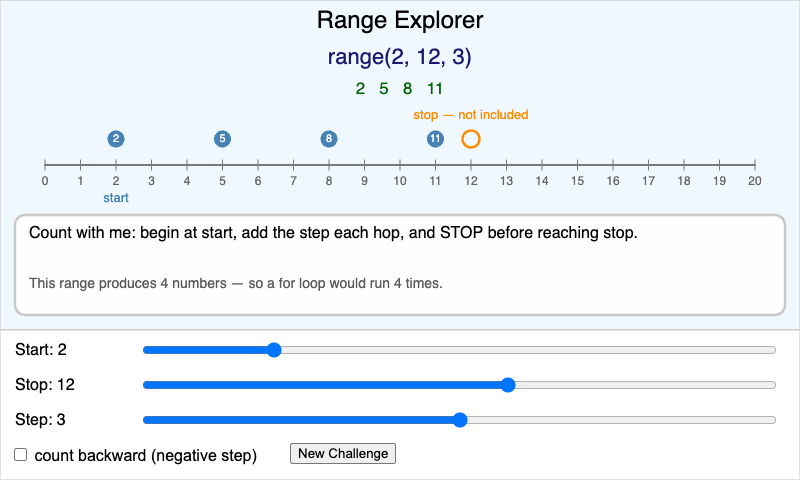
Slide start, stop, and step and watch the number line light up — the stop value is a hollow ring because it is never included. (Chapter 7)
-
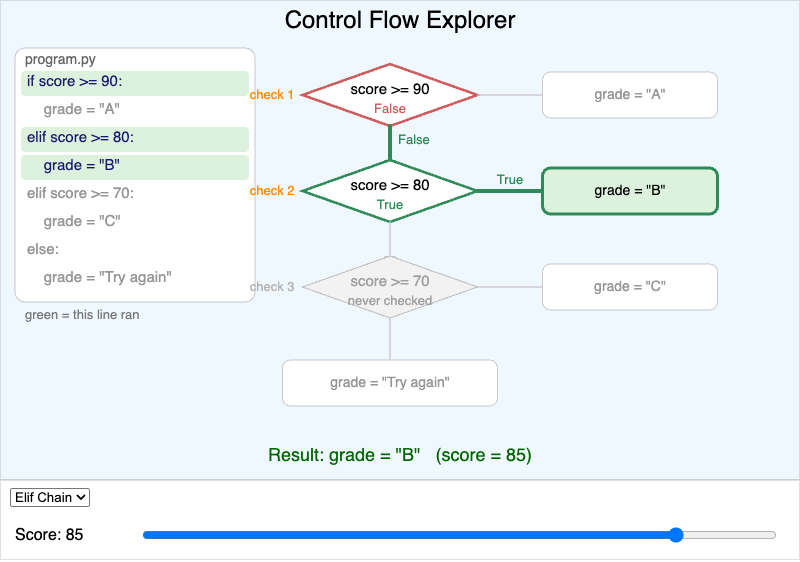
Move a score slider and watch exactly one path through an if/elif/else flowchart glow green — later checks are never even looked at. (Chapter 9)
-
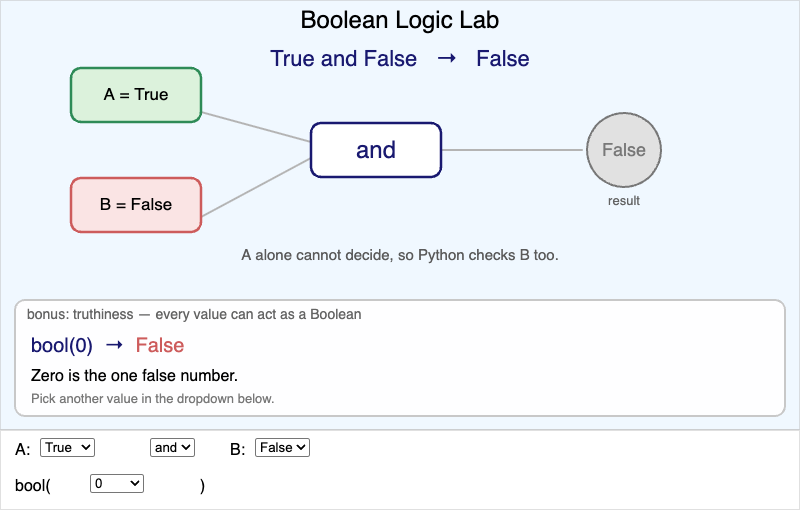
Wire True/False inputs into and, or, and not — and catch Python skipping the second input when the first one decides. (Chapters 9, 19)
-
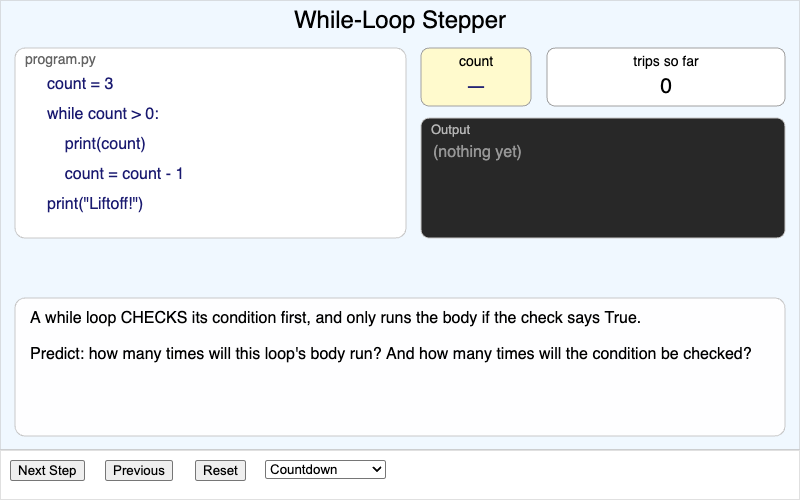
Feel the check-run-check rhythm of a while loop — and safely watch an infinite loop spin inside its cage. (Chapter 10)
-
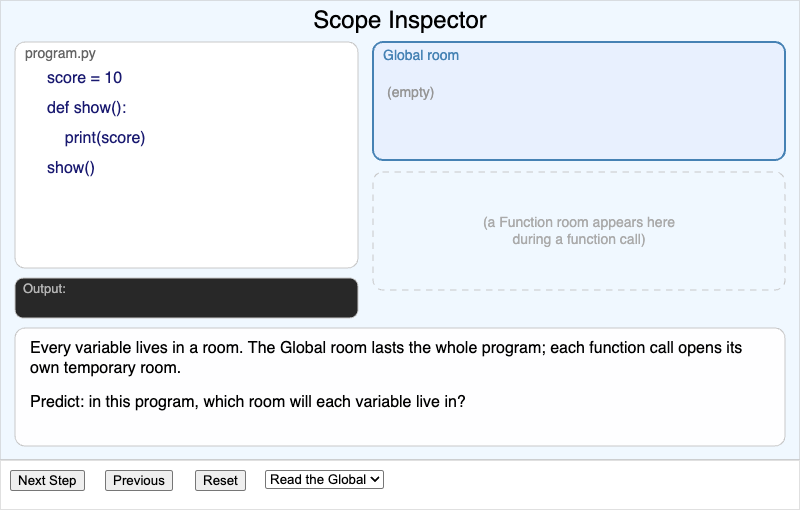
Variables live in rooms: watch a Function room appear during a call, shadow the global, and vanish at return. (Chapter 11)
-
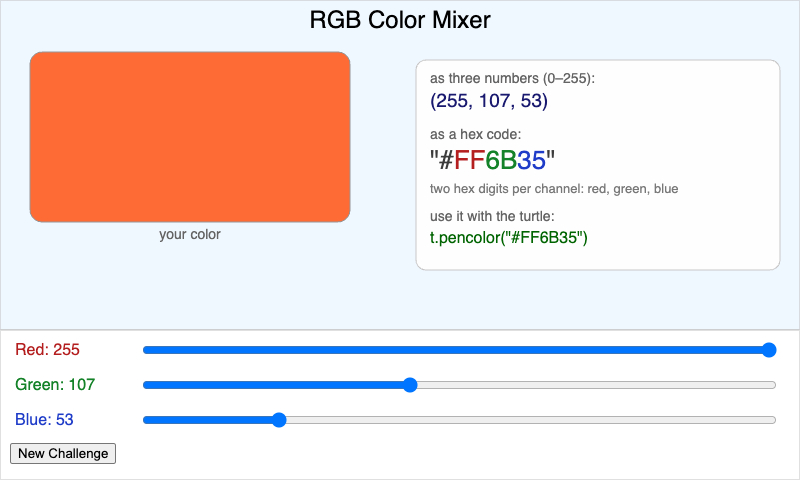
Mix red, green, and blue, watch the hex code assemble itself, and copy the pencolor line straight into your turtle art. (Chapter 12)
-
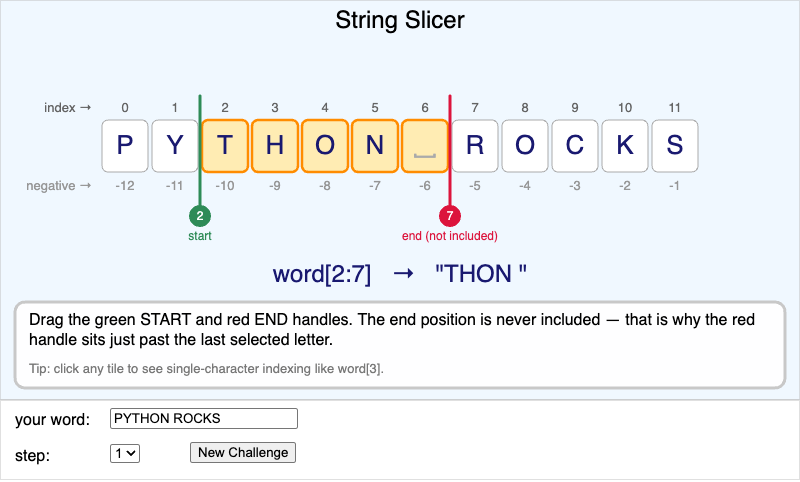
Drag start and end handles over letter tiles and watch
word[2:7]build itself — the end is never included, and now you can see why. (Chapters 8, 14) -
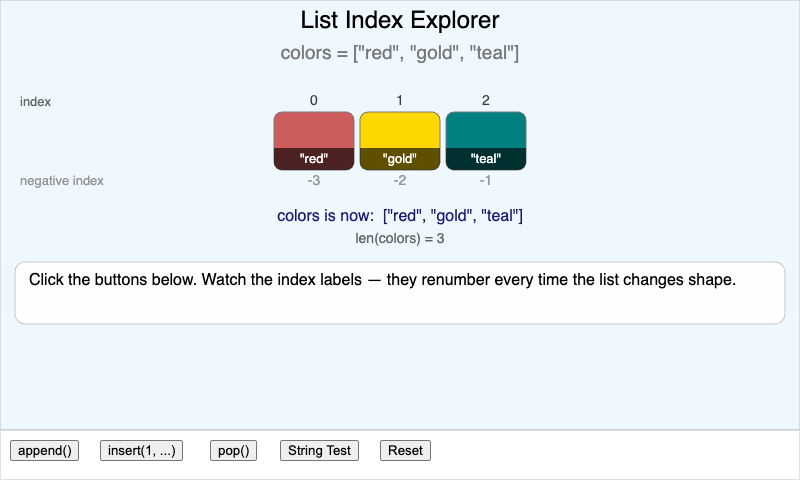
Append, insert, and pop a list of colored boxes and watch every index renumber — plus the TypeError a string gives instead. (Chapters 15-16)
-
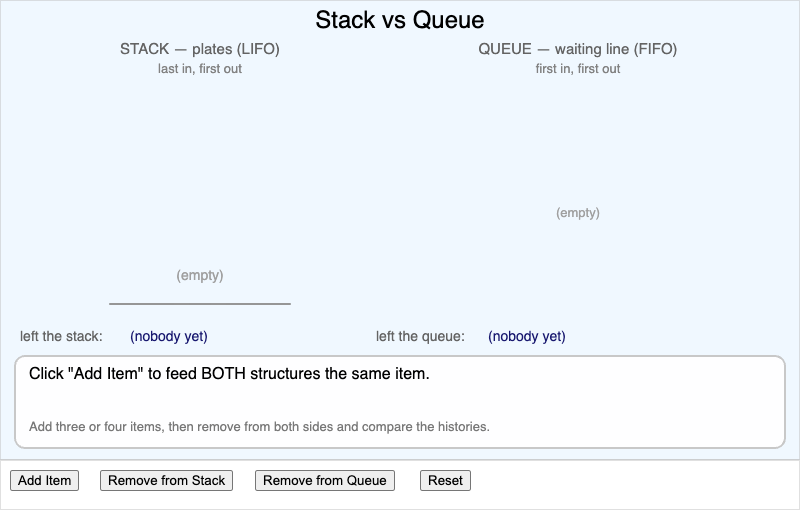
Feed the same letters into a stack of plates and a waiting line — then watch them leave in opposite orders. (Chapters 16, 30)
-
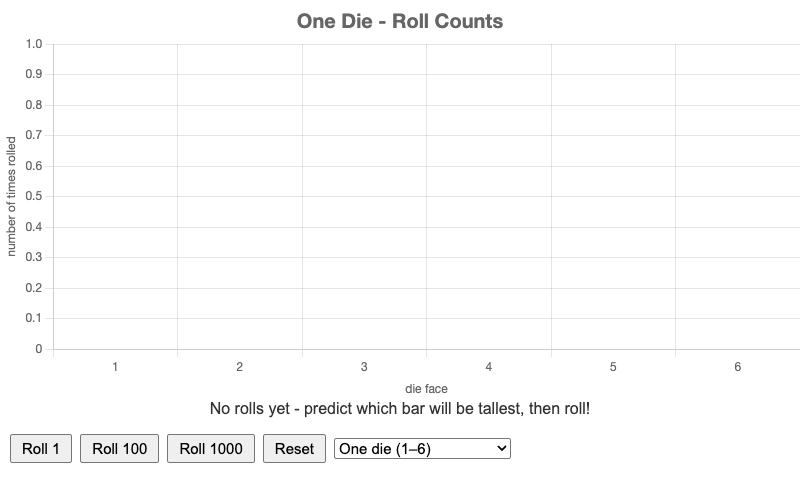
Roll 1, 100, or 1000 dice and watch chaos flatten into a pattern — then find the mountain hiding in two-dice sums. (Chapter 17)
-
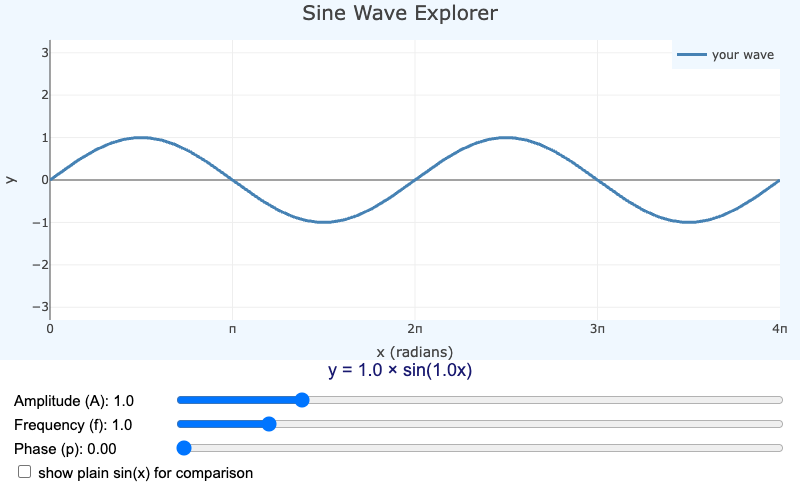
Drag amplitude, frequency, and phase sliders and watch
y = A × sin(f·x + p)re-plot instantly. (Chapter 18) -
Unit Circle Degrees and Radians
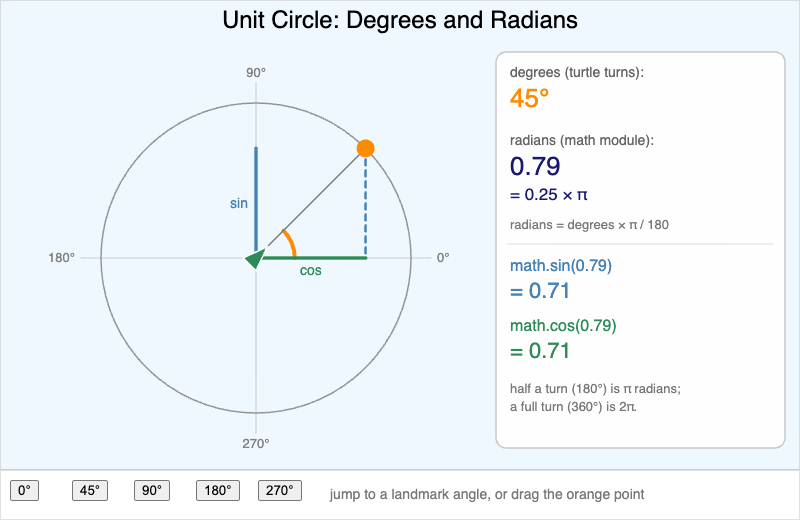
Drag a point around the unit circle and read the angle in degrees, radians, and multiples of π — with sin and cos bars. (Chapter 18)
-
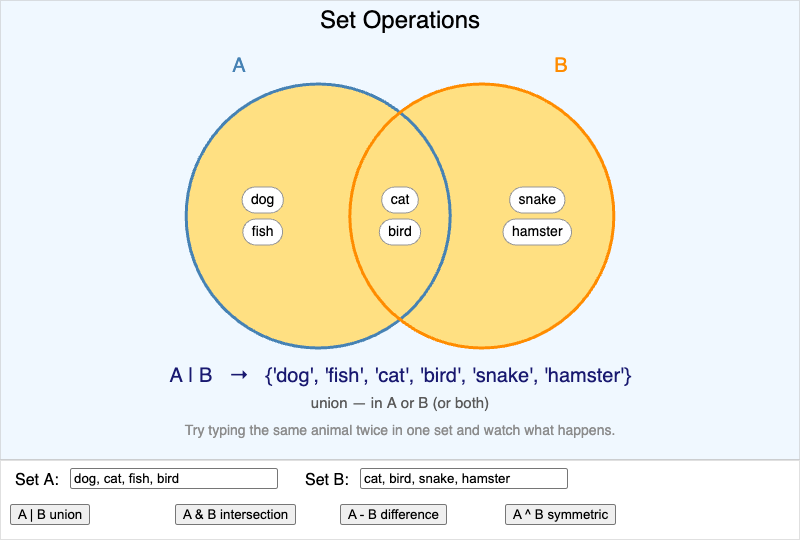
Type two sets, watch the chips land in the right regions, and light up union, intersection, and difference. (Chapter 20)
-
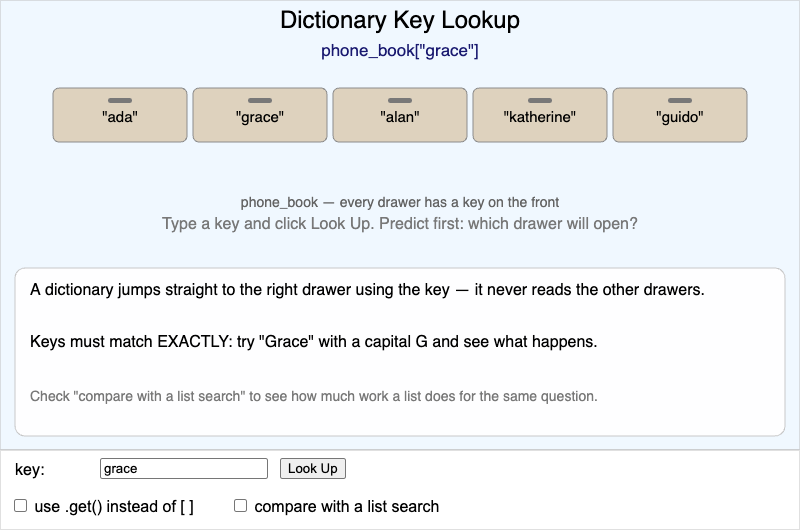
Type a key and the right drawer springs open in one hop — or hit a KeyError — then race the dict against a list. (Chapter 21)
-
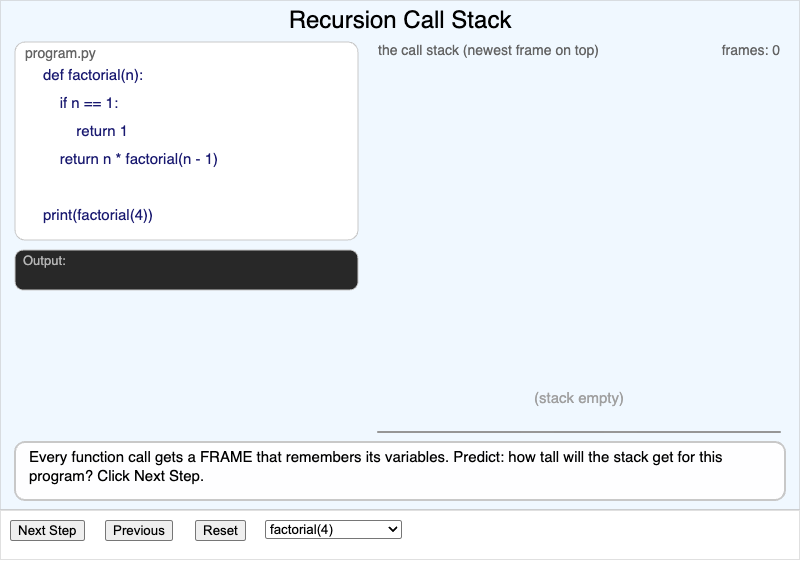
Watch factorial(4) stack frames pile up to the gold base case, then unwind as each paused multiplication fills in. (Chapters 23-24)
-
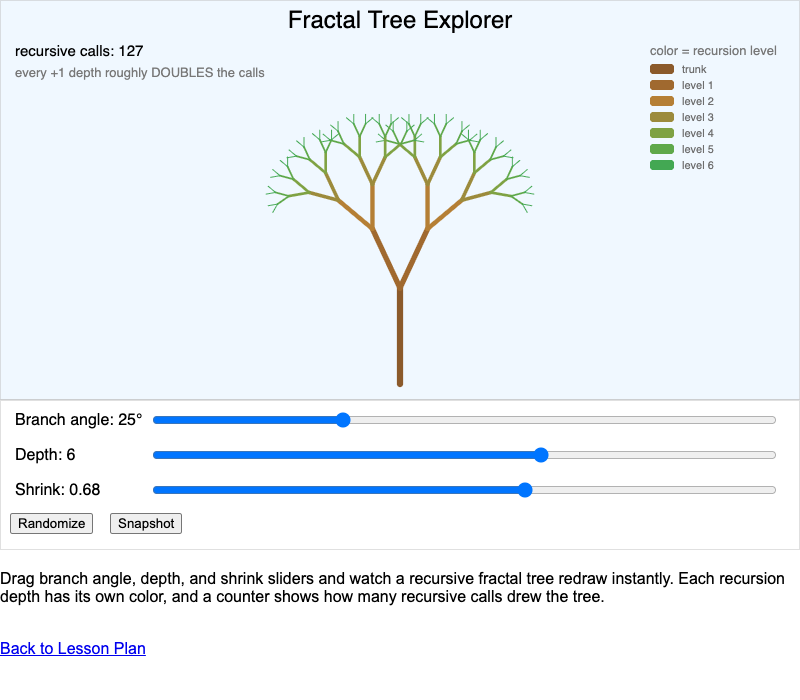
Sculpt a recursive tree with angle, depth, and shrink sliders — every recursion level wears its own color. (Chapter 24)
-
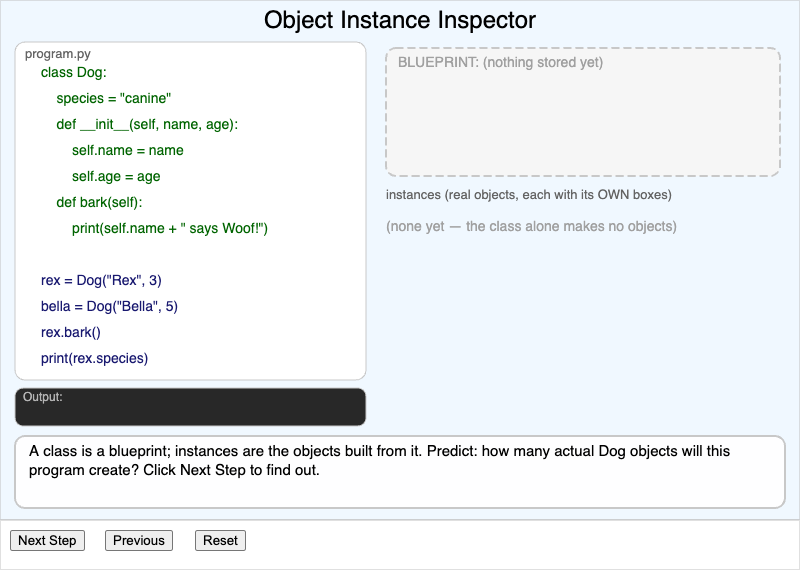
A dashed blueprint, solid instance cards, and a glowing arrow that shows exactly which dog
selfis. (Chapter 25) -
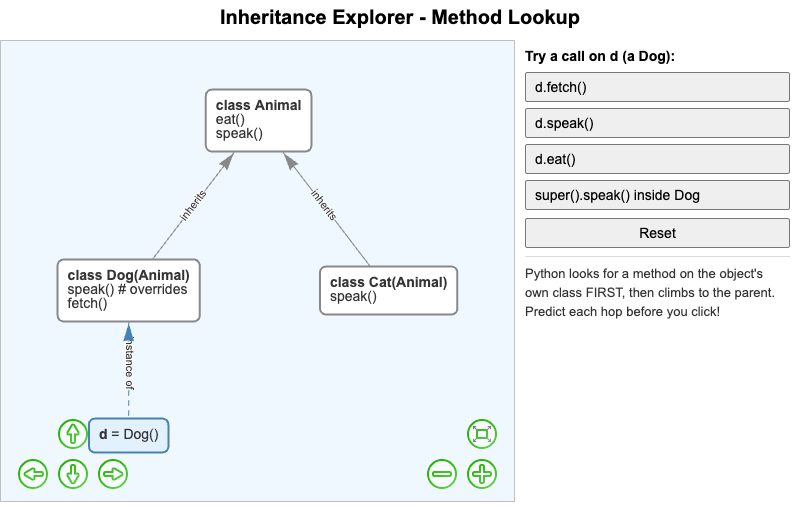
Click a method call and watch the lookup climb the class tree — overrides shadow the parent, and super() climbs on purpose. (Chapter 25)
-
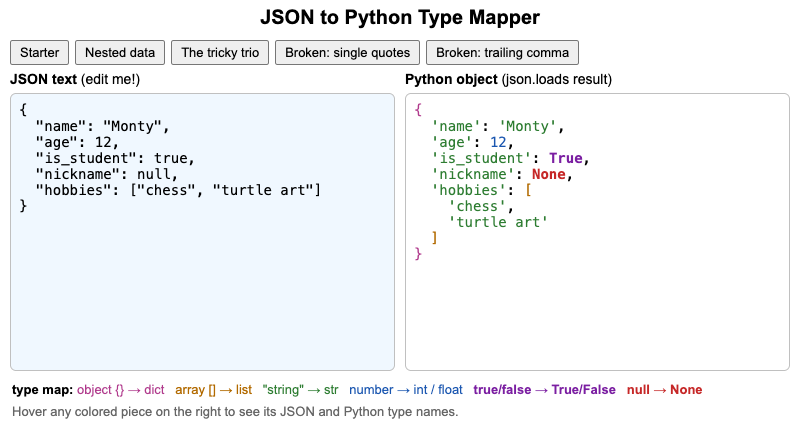
Edit JSON on the left and watch the Python objects appear on the right — true becomes True, null becomes None. (Chapter 27)
-
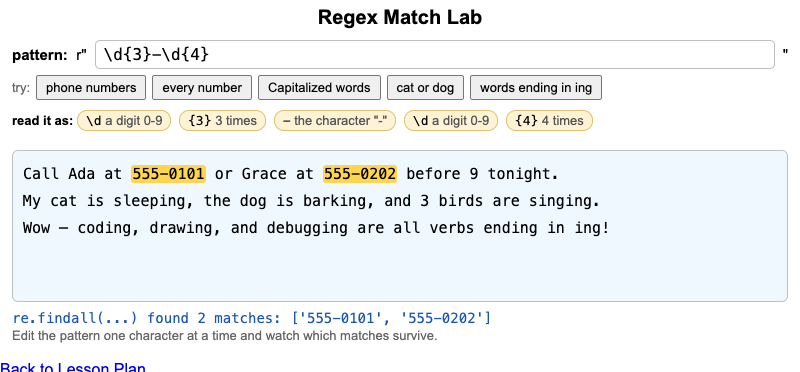
Type a pattern, watch matches light up live, and read the pattern as plain-English chips — regex stops being magic. (Chapter 29)
-
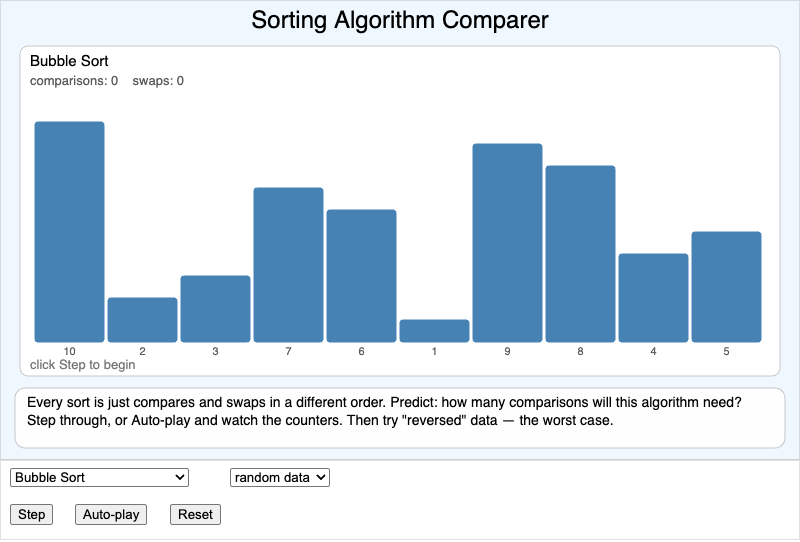
Step three classic sorts one comparison at a time, then race bubble vs insertion on identical data — the winner depends on the data. (Chapter 30)
-
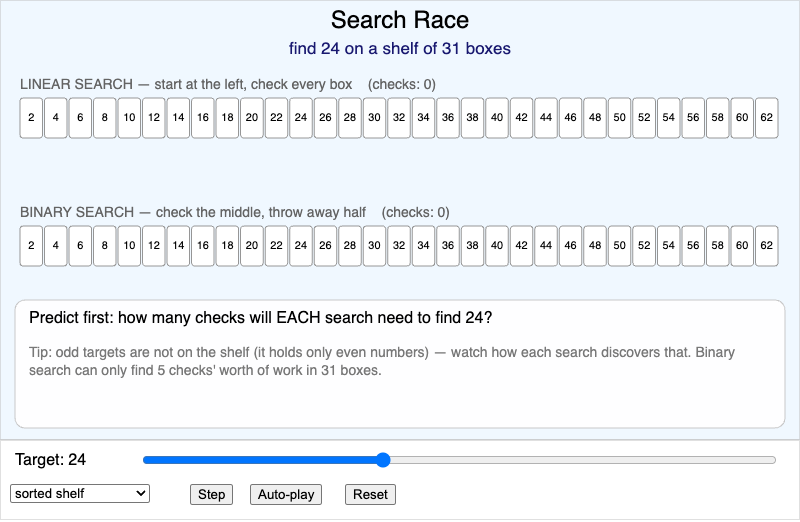
Linear search plods box by box while binary search throws away half the shelf per check — and a shuffled-shelf trap shows why sorted matters. (Chapter 30)
-
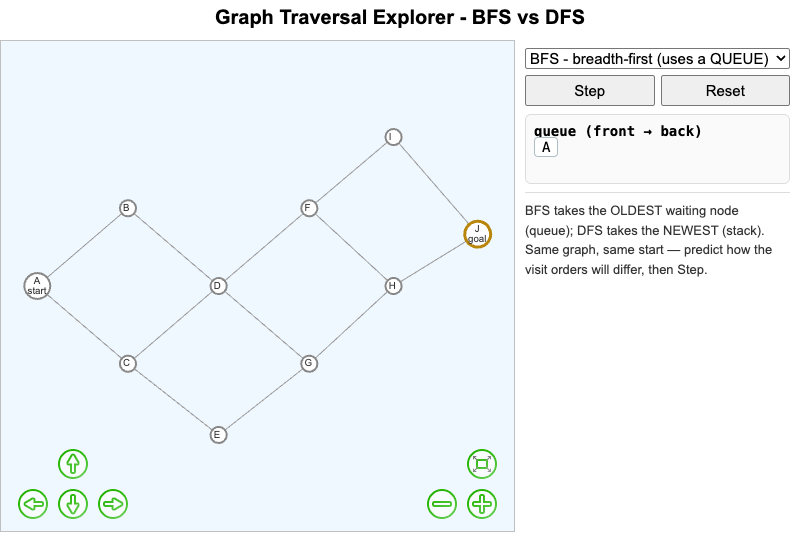
Step BFS and DFS over the same graph with the live queue or stack beside it — then watch BFS reveal the shortest path. (Chapter 30)