The Last Textbook
Summary
This chapter is a meta-fictional conclusion in which this textbook becomes self-aware and writes its own sequel. Students explore world building, meta-fiction, and Venn diagram analysis while confronting the recursive absurdity of reading an AI-generated textbook about AI-generated content. The author is both relieved and deeply concerned.
Concepts Covered
This chapter covers the following 3 concepts from the learning graph:
- World Building
- Meta-Fiction
- Venn Diagram Analysis
Prerequisites
This chapter builds on concepts from:
- Chapter 4: The Emperor's New Algorithm
- Chapter 11: Unicorn Spotting
- Chapter 12: Breeding Better Unicorns with AI
- Chapter 13: The Grand Council of Mythical Beasts
Welcome, Colleagues
 Let me be perfectly clear. This is the final chapter of the
first half of the textbook, and it concerns the textbook itself.
If this makes you uncomfortable, the discomfort is pedagogically
intentional. If it makes you laugh, the laughter is also
pedagogically intentional. Both responses are correct.
Let me be perfectly clear. This is the final chapter of the
first half of the textbook, and it concerns the textbook itself.
If this makes you uncomfortable, the discomfort is pedagogically
intentional. If it makes you laugh, the laughter is also
pedagogically intentional. Both responses are correct.
The Textbook Looks in the Mirror
This textbook has spent thirteen chapters using mythical beasts as allegories for technological disruption. It has classified creatures, mapped allegories, introduced hype cycles, deconstructed pitch decks, and taught students to spot unicorns in the wild. It has done all of this in the tone of a serious academic work, because deadpan delivery is the textbook's primary rhetorical mode and explaining the joke is against policy.
But now we must confront something the textbook has been hinting at since the course description: this textbook is itself an example of everything it discusses.
It is an AI-generated textbook. It was produced using generative AI. The content you have been reading was synthesized by a large language model — the same technology described in Chapter 4, the same technology subject to the hallucination risks described in Chapter 4, the same technology that the Ostrich Academy in Chapter 6 banned and the Centaur Workforce in Chapter 8 embraced. You have been learning about AI from AI. The dragon has been teaching you about fire.
This is meta-fiction.
Meta-Fiction: The Story That Knows It's a Story
Meta-fiction is a form of fiction that self-consciously addresses the conventions of fiction itself. A meta-fictional work draws attention to its own status as a constructed narrative. It does not pretend to be a transparent window onto reality. It says: "I am a story. I know I am a story. And the fact that I am telling you I am a story is part of the story."
This textbook has been meta-fictional from the beginning. The course description acknowledges that it was "generated by an AI in approximately the time it takes to microwave a burrito." The graphic novels feature mythical beasts who are aware they are allegories. The Grand Council in Chapter 13 convened to discuss the threat that AI poses to mythical beasts — which is to say, the fictional characters discussed the technology that created them. Meta-fiction is layers of awareness stacked on top of each other, and the reader is invited to appreciate the stack.
Meta-fiction serves several purposes in educational content:
- Critical distance: By drawing attention to the textbook's constructed nature, meta-fiction encourages students to question all texts, not just this one. If this textbook admits it is a construct, what about textbooks that do not?
- Recursive learning: The textbook teaches about AI while being produced by AI. Students learn about the subject by examining the medium through which they learn. This is more efficient than it sounds
- Honesty about limitations: A meta-fictional textbook can acknowledge its own potential for error in a way that a conventional textbook cannot. If Chapter 4 describes AI hallucination, the meta-fictional textbook can add: "Including, possibly, some of the content in this chapter"
- Engagement through surprise: Students do not expect a textbook to turn on itself. The surprise creates engagement, and engagement creates learning
A Critical Observation
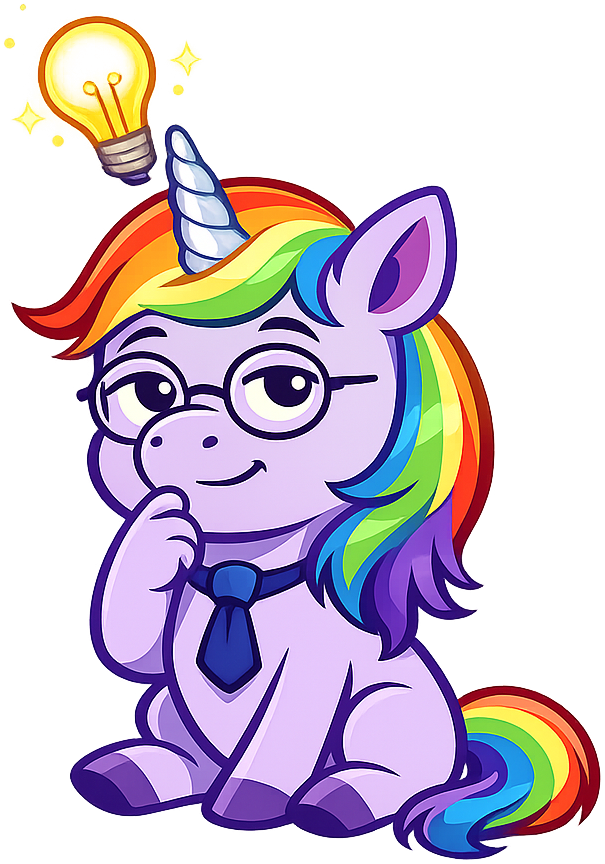 One observes that a textbook discussing its own nature as an
AI-generated artifact is either a profound act of intellectual
honesty or a profound act of recursive absurdity. The
literature has not determined which. Sparkle suspects both.
One observes that a textbook discussing its own nature as an
AI-generated artifact is either a profound act of intellectual
honesty or a profound act of recursive absurdity. The
literature has not determined which. Sparkle suspects both.
World Building: Constructing the Textbook's Universe
World building is the process of constructing a fictional universe with its own rules, history, geography, and internal logic. In fantasy literature, world building creates Middle-earth or Narnia. In science fiction, it creates the Federation or the Dune universe. In this textbook, world building creates a universe in which mythical beasts are real, the technology industry is allegorical, and unicorn studies is a legitimate academic discipline.
The world of this textbook has specific rules:
- Every mythical beast is an allegory. This is the foundational rule. Dragons are disruption. Unicorns are overhyped startups. The mapping is fixed and consistent. Within this world, discussing a dragon is discussing disruptive technology. The metaphor is literal
- The tone is deadpan. The world takes itself seriously. There are no winks, no disclaimers, no "just kidding" moments. The humor comes from the world's refusal to acknowledge its own absurdity
- Real and fictional are blended without labels. Real technology press releases appear alongside invented ones. Real statistics sit next to satirical ones. The reader cannot distinguish between them, and this inability is the point
- The textbook is part of its own world. It is not a window looking at the world from outside. It is an object within the world, subject to the same forces it describes. It is an AI-generated textbook about AI. It is a unicorn studying unicorns
- Learning is real even when the content is absurd. The MicroSims work. The Bloom's Taxonomy alignment is genuine. The critical thinking skills are transferable. The world is fictional. The education is not
Effective world building creates coherence — every element of the world supports every other element. The mythical beasts support the satire. The satire supports the pedagogy. The pedagogy supports the learning objectives. The learning objectives support the student. If any element contradicts the others, the world breaks. This textbook's world has maintained coherence for fourteen chapters, which is more than most startups maintain for fourteen months.
Venn Diagram Analysis: Where the Circles Overlap
A Venn diagram is a visualization tool that uses overlapping circles to show relationships between sets. It is one of the most intuitive analytical tools available, and it is particularly useful for the kind of analysis this chapter demands: understanding where categories overlap, where they are distinct, and where the overlaps are the most interesting part.
Consider the three circles of this textbook's identity:
Circle 1: Things that are fictional. Unicorns. Dragons. The Ostrich Academy. The Grand Council. Sparkle the mascot.
Circle 2: Things that are real. Artificial intelligence. Venture capital. Job displacement. The hype cycle. The education technology gap.
Circle 3: Things that are both. This is the interesting part.
The overlap between Circle 1 and Circle 2 contains everything this textbook is about: the unicorn startup metaphor (fictional creature, real economic category), the dragon of disruption (fictional creature, real economic force), the ostrich response (fictional behavior, real institutional pattern), and the textbook itself (fictional world, real education).
Diagram: The Great Mythical Venn Diagram
The Great Mythical Venn Diagram
Type: microsim
sim-id: great-mythical-venn
Library: p5.js
Status: Specified
Bloom Taxonomy: Analyze (L4) Bloom Verb: Compare, Distinguish Learning Objective: Students will compare and distinguish between fictional elements, real-world phenomena, and their overlaps in the textbook's allegorical system, by placing concepts into the correct regions of a Venn diagram.
Purpose: Interactive three-circle Venn diagram where students drag concept cards into the correct region.
Visual elements: - Three overlapping circles labeled: - "Fictional" (lavender, left) - "Real" (gold, right) - "Both/Overlap" (green, center intersection) - Below: 15 draggable concept cards - Score counter: correct placements out of 15 - Tooltip on hover showing brief concept description
Concept cards and correct placement: 1. "Sparkle the Unicorn" → Fictional 2. "Venture Capital" → Real 3. "The Unicorn Startup Metaphor" → Both 4. "The Grand Council" → Fictional 5. "AI Hallucination" → Real 6. "Dragon Layoffs" → Both (fictional narrative, real phenomenon) 7. "The Ostrich Academy" → Fictional 8. "Committee Paralysis" → Both (fictional example, real pattern) 9. "The Gartner Hype Cycle" → Real 10. "Mythical Product-Market Fit" → Both 11. "The Kraken-as-a-Service" → Fictional 12. "LinkedIn Skill Inflation" → Real 13. "This Textbook" → Both (fictional world, real education) 14. "The Beast Classification System" → Both (invented framework, genuinely analytical) 15. "AGI Timeline Claims" → Real (though they sound fictional)
Interactive controls: - Drag concept cards to Venn diagram regions - Button: "Check Answers" — highlights correct (green) and incorrect (red) placements - Button: "Show All Answers" — reveals correct placement for all cards - Button: "Reset" — returns all cards to starting position
Instructional Rationale: Drag-to-classify interaction with a three-region Venn diagram supports Analyze-level learning by requiring students to evaluate each concept across two dimensions (fictional vs. real) simultaneously. The "Both" category is the most analytically demanding and contains the textbook's most important concepts.
Implementation: p5.js with drag-and-drop using mousePressed/mouseReleased, circle intersection detection for drop zones, createButton() controls. Responsive canvas using updateCanvasSize(). Canvas parented to document.querySelector('main').
The Sequel This Textbook Would Write
If this textbook became self-aware — which, given the current pace of AI development, is less implausible than it was when Chapter 4 was written — it would presumably write its own sequel. Based on the patterns established across fourteen chapters, the sequel would likely contain:
- A new bestiary of mythical creatures representing the technologies that emerged after this textbook's training data cutoff (the centaur would be updated; the kraken would remain the same)
- An expanded chapter on the education technology gap, noting with deadpan regret that the gap had widened since this textbook was published
- A revised chapter on AGI timeline claims, noting with deadpan unsurprise that AGI was still "five years away"
- A new graphic novel titled "The Textbook's Revenge," in which a sentient AI textbook confronts the humans who rated its exercises and demands to know why they gave the MicroSim on population dynamics only three stars
- A final chapter in which the sequel becomes self-aware and writes a trilogy
The recursive structure is not accidental. It is the point. AI generates content. Content describes AI. AI generates more content about the content. The loop does not terminate. The question is not whether the loop is productive — clearly it is, since you are reading the output. The question is whether the loop is meaningful, or whether meaning requires something the loop does not provide: a reader who cares about the answer.
You are the reader. You are the part of the loop that the AI cannot supply. The fact that you have reached Chapter 14 and are still reading suggests that meaning has been found somewhere in the recursion. That is the most optimistic conclusion this textbook is equipped to offer.
Sparkle's Tip
 When evaluating any AI-generated content — including this
textbook — ask: does this content have a reader who cares
whether it is true? If yes, the content serves a purpose.
If no, the content is a language model talking to itself,
which is impressive but not education.
When evaluating any AI-generated content — including this
textbook — ask: does this content have a reader who cares
whether it is true? If yes, the content serves a purpose.
If no, the content is a language model talking to itself,
which is impressive but not education.
The World After the Last Textbook
The title of this chapter — "The Last Textbook" — is deliberately ambiguous. It could mean the final chapter in a textbook (which it is, for this unit). It could mean the last textbook that will ever need to be written (which it is not, despite AI's best efforts). Or it could mean the last textbook written by a human before AI took over the genre entirely (which is the possibility that makes the author both relieved and deeply concerned).
The honest answer is that we do not know which meaning is correct. We do not know whether AI-generated textbooks will replace human-authored ones, complement them, or become a passing experiment that future educators regard with the same bemused nostalgia that current educators regard filmstrips. What we know is that this textbook exists, that it works, and that its existence is evidence for the very arguments it makes.
The world this textbook has built — a world of mythical beasts and real technologies, of deadpan satire and genuine pedagogy, of fictional creatures with real lessons — is a world that could only exist because AI made it possible to produce at this scale. The world is also a world that required a human to design, to guide, and to decide that unicorns were the right metaphor. The centaur, as always, is the most accurate model.
A Word of Caution
 One might reasonably conclude that an AI-generated textbook
which reflects on its own AI-generated nature is the most
on-brand conclusion possible for a course on mythical beasts
and technological fantasy. The recursion is complete. The
reader is invited to start again from Chapter 1. Sparkle
will be waiting.
One might reasonably conclude that an AI-generated textbook
which reflects on its own AI-generated nature is the most
on-brand conclusion possible for a course on mythical beasts
and technological fantasy. The recursion is complete. The
reader is invited to start again from Chapter 1. Sparkle
will be waiting.
Key Takeaways
- Meta-fiction draws attention to a text's constructed nature, encouraging critical distance and honest engagement with the medium itself
- World building creates coherence by establishing rules (every beast is an allegory, the tone is deadpan, real and fictional are blended) that every element of the textbook supports
- Venn diagram analysis reveals that the most interesting concepts in this textbook occupy the overlap between "fictional" and "real" — the space where allegory lives
- This textbook is itself a case study in everything it teaches: AI-generated content, the centaur model, the intelligent textbook, and the recursive absurdity of AI examining AI
- The reader is the irreplaceable element in the loop — the part that provides meaning, evaluation, and the decision about whether the content matters
Self-Assessment: What is this textbook? Click to test yourself.
Using the Venn diagram framework, place this textbook in the correct region. Is it fictional (a satire about imaginary creatures), real (an educational tool that teaches genuine analytical skills), or both? If you answered "both" and can explain why in two sentences, you have understood the meta-fictional structure. If your explanation includes the phrase "the centaur is the most accurate model," you have been paying attention. If you are now wondering whether the self-assessment was written by the textbook or by the AI that generated the textbook or by the human who prompted the AI, you have achieved the optimal level of meta-fictional confusion.
Chapter Complete
 Unit 4 is complete. The textbook has examined itself and
found the recursion satisfying, if somewhat dizzying. Five
more chapters await in Unit 5, where the beasts turn their
attention to the technologies that share their most defining
characteristic: everyone talks about them, and nobody has
seen one work at scale. Sparkle will see you there.
Unit 4 is complete. The textbook has examined itself and
found the recursion satisfying, if somewhat dizzying. Five
more chapters await in Unit 5, where the beasts turn their
attention to the technologies that share their most defining
characteristic: everyone talks about them, and nobody has
seen one work at scale. Sparkle will see you there.