About This Book
Welcome from Scout
Welcome, friend!
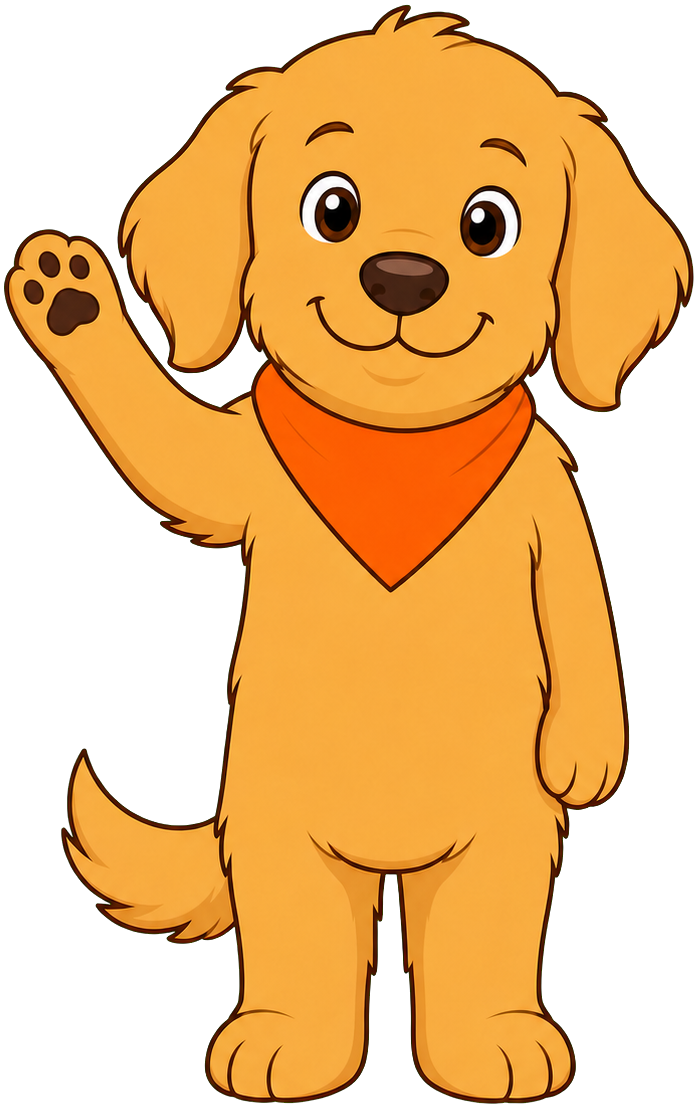 Hi there — I'm Scout, and I'll be with you in every chapter of this book.
Health is really about the choices we make every day: what we eat, how we
move, how we handle big feelings, and how we keep ourselves and our
friends safe. We'll take it one small step at a time, and you don't have
to get everything right on the first try. Let's think it through
together — healthy choices, happy you!
Hi there — I'm Scout, and I'll be with you in every chapter of this book.
Health is really about the choices we make every day: what we eat, how we
move, how we handle big feelings, and how we keep ourselves and our
friends safe. We'll take it one small step at a time, and you don't have
to get everything right on the first try. Let's think it through
together — healthy choices, happy you!
Why Health Education Matters
Every child on Earth grows up making health decisions — about food, sleep, friendships, screens, risk, and their own changing bodies. Those decisions shape outcomes that last a lifetime, yet health is one of the most unevenly taught subjects in the world. Where a strong, age-appropriate health curriculum exists, students gain skills — evaluating information, communicating, making decisions, setting goals, asking for help — that carry far beyond any single lesson.
Worldwide:
- About one in seven adolescents aged 10–19 (roughly 14%) lives with a mental health condition, and most cases go unrecognized and untreated.1
- Half of all mental health conditions begin by age 14, which makes the school years the single most important window for prevention and early support.1
- In 2022, more than 390 million children and adolescents aged 5–19 were overweight — including about 160 million living with obesity — a figure that has risen on every continent.2
- Suicide is the third leading cause of death among older adolescents (ages 15–19) globally, a reminder that mental and emotional health belongs in the curriculum, not in the margins.1
In response, the World Health Organization and UNESCO have called on every country to make every school a health-promoting school, with health skills taught deliberately rather than left to chance.3
These numbers are not abstractions — they are the students sitting in classrooms in Nairobi, Helsinki, São Paulo, and Minneapolis alike. This book exists to give any teacher, in any country, a complete and ready-to-use way to teach health well.
What makes this different from a traditional textbook. This is an intelligent textbook: it is built on validated learning graphs of more than 600 interconnected concepts, so each idea is introduced only after its prerequisites are in place. Throughout, students don't just read — they manipulate interactive MicroSims, work through infographic posters, and build intuition by experimenting rather than memorizing. And the entire work is open source and free: no paywalls, no access codes, no per-seat licensing, and no expiring annual edition. Any school, anywhere, can adopt it tomorrow.
Eight Grade-Specific Textbooks in One
Health Education is not one book with a single reading level applied on the fly. It is eight complete, grade-specific textbooks published together as a single site — each one written and calibrated from scratch for its learners:
| Textbook | Audience | Reading approach |
|---|---|---|
| Kindergarten | Ages ~5 | Read-aloud; teacher-facing, game-first |
| Grade 1 | Ages ~6 | Early elementary |
| Grade 2 | Ages ~7 | Early elementary |
| Grade 3 | Ages ~8 | Elementary |
| Grade 4 | Ages ~9 | Elementary |
| Grade 5 | Ages ~10 | Elementary |
| Grades 6–8 | Middle school | Analyze influences, apply in scenarios |
| Grades 9–12 | High school | Evaluate, synthesize, design |
Six health strands run through the bands:
- Food and Nutrition
- Human Growth and Development (extending to Sexual Health in grades 6–12),
- Mental and Emotional Health
- Personal Health and Wellness
- Personal Safety and Violence Prevention
- Substance Use Awareness and Prevention (grades 6–12).
A third grader and a high schooler studying the same strand get genuinely different pages: different vocabulary, different examples, different MicroSim complexity, and different assessment difficulty — never the same page with the reading age swapped out.
For the youngest bands (K–3), where reading fluency is still developing, the teacher is the primary audience and interactive MicroSim "games" carry much of the student experience. By grades 9–12, students work directly with the text and reach capstone-level outcomes such as designing a personal health plan or a peer-support strategy.
A Standalone Library of MicroSims and Infographics
The 370 interactive MicroSims and 86 infographic posters in this book are among the highest-quality assets in the entire project — and they are built to stand on their own. Each MicroSim is a self-contained, browser-based simulation focused on a single concept; each poster is a wide-format visual guide with interactive callouts plus explore and quiz modes.
You do not need to adopt the whole textbook to use them. Educators anywhere are welcome to:
- Embed a single MicroSim or poster in a slide deck, worksheet, or learning management system.
- Project a poster for a class discussion, a bell-ringer, or a family night.
- Hand students one simulation as a station activity, independent of any chapter.
- Remix them into an existing curriculum that is otherwise unrelated to this book.
Every MicroSim runs in any modern browser with no install, no account, and no tracking, and the source is openly licensed (see License). Browse the full collections on the MicroSims and Posters pages.
How to Use This Book
Start with the grade band that matches your learners under Textbooks by Grade, then read within a strand in order — concepts are sequenced so each one builds on the ones before it. The book includes:
- 8 grade-specific textbooks spanning Kindergarten through Grade 12
- 68 chapters across the eight bands and six health strands
- 370 interactive MicroSims — browser-based simulations students can manipulate to explore a concept
- 86 interactive infographic posters — visual guides with explore and quiz modes
- 8 learning graphs — one per band — visualizing how concepts depend on one another
- Annotated references linking to authoritative public-health and educational sources
Use the search bar (top right) to jump straight to a term, and open a band's learning graph when you want to see how a topic fits into the larger picture.
About the Author
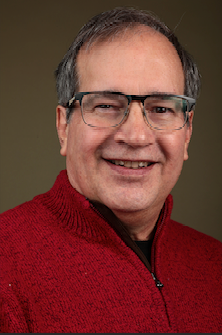
Dan McCreary is a semi-retired AI researcher, solution architect, and educator who has spent more than three decades helping Fortune 100 organizations reason over massive datasets. At Optum he founded the Generative AI Center of Excellence and led the team that built one of the world's largest healthcare knowledge graphs — spanning over 25 billion vertices — to unify member, provider, and patient insights. Dan's deep background in knowledge representation and systems thinking underpins the precise learning graphs and intelligent-textbook workflows used throughout this project.
He is the co-author of Making Sense of NoSQL (Manning Publications), the founding chair of the NoSQL Now! conference, and a frequent keynote speaker on semantic search, ontology strategy, and AI hardware. Beyond industry, Dan has mentored students as a STEM volunteer since 2014 and now applies the same rigor to building open educational resources. You can visit the Intelligent Textbooks Case Studies to see the many textbooks Dan has created or co-created with other authors.
Selected Credentials
- B.A. in Physics and Computer Science from Carleton College
- M.S.E.E. from the University of Minnesota
- MBA coursework at the University of St. Thomas
- Patent holder in semantic search and ontology management techniques
- Advocate for large-scale Enterprise Knowledge Graph adoption across healthcare and education
- Long-time promoter of accessible, low-cost AI-powered learning experiences
How to Cite This Book
If you reference this textbook in academic work, curriculum proposals, lesson plans, or other publications, please use one of the following formats.
APA (7th edition)
McCreary, D. (2026). Health Education. https://dmccreary.github.io/health-education/
Chicago (17th edition)
McCreary, Dan. 2026. Health Education. https://dmccreary.github.io/health-education/.
MLA (9th edition)
McCreary, Dan. Health Education. 2026, dmccreary.github.io/health-education/.
BibTeX
@book{mccreary2026healtheducation,
  title  = {Health Education},
  author = {McCreary, Dan},
  year   = {2026},
  url    = {https://dmccreary.github.io/health-education/},
  note   = {Interactive intelligent textbook; eight grade-specific editions, K-12}
}
To cite a specific band and chapter, append the band and chapter — for example:
McCreary, D. (2026). Grade 1, Chapter 3: Understanding and Talking About Feelings. In Health Education. https://dmccreary.github.io/health-education/bands/grade-1/chapters/03-feelings/
License
This work is released under the Creative Commons Attribution-NonCommercial-ShareAlike 4.0 International License (CC BY-NC-SA 4.0). You are free to share and adapt the material — including the MicroSims and infographic posters — for non-commercial purposes, as long as you give appropriate credit and share your adaptations under the same license.
Appendix: Minnesota Health Standards Background
The content above is written to be useful to schools anywhere in the world. This final section documents the specific state framework that shaped the scope and sequence of this particular project; readers outside Minnesota can safely skip it.
Minnesota is working to replace a patchwork of locally developed health standards with its first consistent statewide K-12 framework. The eight grade bands and six strands in this book mirror that proposed framework. Its key goals are:
- Equity: Give students comparable health education regardless of their district or ZIP code.
- Clear progression: Define age-appropriate benchmarks for grades K-5 and the grade bands 6-8 and 9-12.
- Skills over memorization: Help students practice evaluating information, communicating, making decisions, setting goals, adopting healthy behaviors, and promoting health.
- Comprehensive coverage: Address nutrition, human development and sexual health, mental and emotional health, personal wellness, safety and violence prevention, and substance-use prevention. State-required subjects include CPR, vaping, cannabis, sexually transmitted infection prevention, and mental health.
- Continued local curriculum control: Establish what students should know and be able to do while allowing districts to choose curricula, teaching methods, and local assessments.
- Accountability and graduation alignment: Once implemented, require districts to teach and locally assess the standards and require high-school credit sufficient to satisfy them.
As of July 2026, the standards have completed drafting, public comment, and an April administrative hearing, but final adoption and classroom implementation dates remain to be determined. Locally developed health standards continue to apply until the statewide standards are implemented.
Sources: Minnesota Department of Education overview, proposed standards, state rationale, and Minnesota Statutes, chapter 120B.
-
World Health Organization. (2024). Mental health of adolescents (fact sheet). https://www.who.int/news-room/fact-sheets/detail/adolescent-mental-health ↩↩↩
-
World Health Organization. (2024). Obesity and overweight (fact sheet). https://www.who.int/news-room/fact-sheets/detail/obesity-and-overweight ↩
-
World Health Organization & UNESCO. (2021). Making every school a health-promoting school: Global standards and indicators. https://www.who.int/publications/i/item/9789240025059 ↩