Colonial America (1607–1754)
Summary
This chapter examines the establishment and development of the thirteen British colonies, focusing on regional economic systems, colonial governance, social hierarchies, and the deepening institution of slavery. The chapter also covers religious and cultural life — from the Puritan experiment to the Great Awakening — and the tensions within colonial society that would eventually propel revolution.
Concepts Covered
This chapter covers the following 25 concepts from the learning graph:
- New England Colonies
- Middle Colonies
- Southern Colonies
- Puritan Migration
- Massachusetts Bay Colony
- Roger Williams and Rhode Island
- Anne Hutchinson
- Headright System
- Indentured Servitude
- Slavery in the Colonies
- Triangular Trade
- Mercantilism
- Navigation Acts
- Bacon's Rebellion
- Salem Witch Trials
- Town Meetings
- House of Burgesses
- Great Awakening
- Jonathan Edwards
- Colonial Social Structure
- Plantation Economy
- Middle Passage
- Colonial Education
- Albany Plan of Union
- Colonial Governance
Prerequisites
This chapter builds on concepts from: - Chapter 2: Pre-Columbian Americas and European Contact
Building a new world — or several of them
 Welcome to Chapter 3! One of the most important things to understand about colonial America is that there was no single "colonial experience." The Puritan farmer in Massachusetts, the tobacco planter in Virginia, and the Quaker merchant in Philadelphia lived in different economies, different social structures, and different relationships with the British Crown. Keeping those differences in view is one of the key skills this chapter will build. Let's investigate the evidence!
Three Colonial Worlds
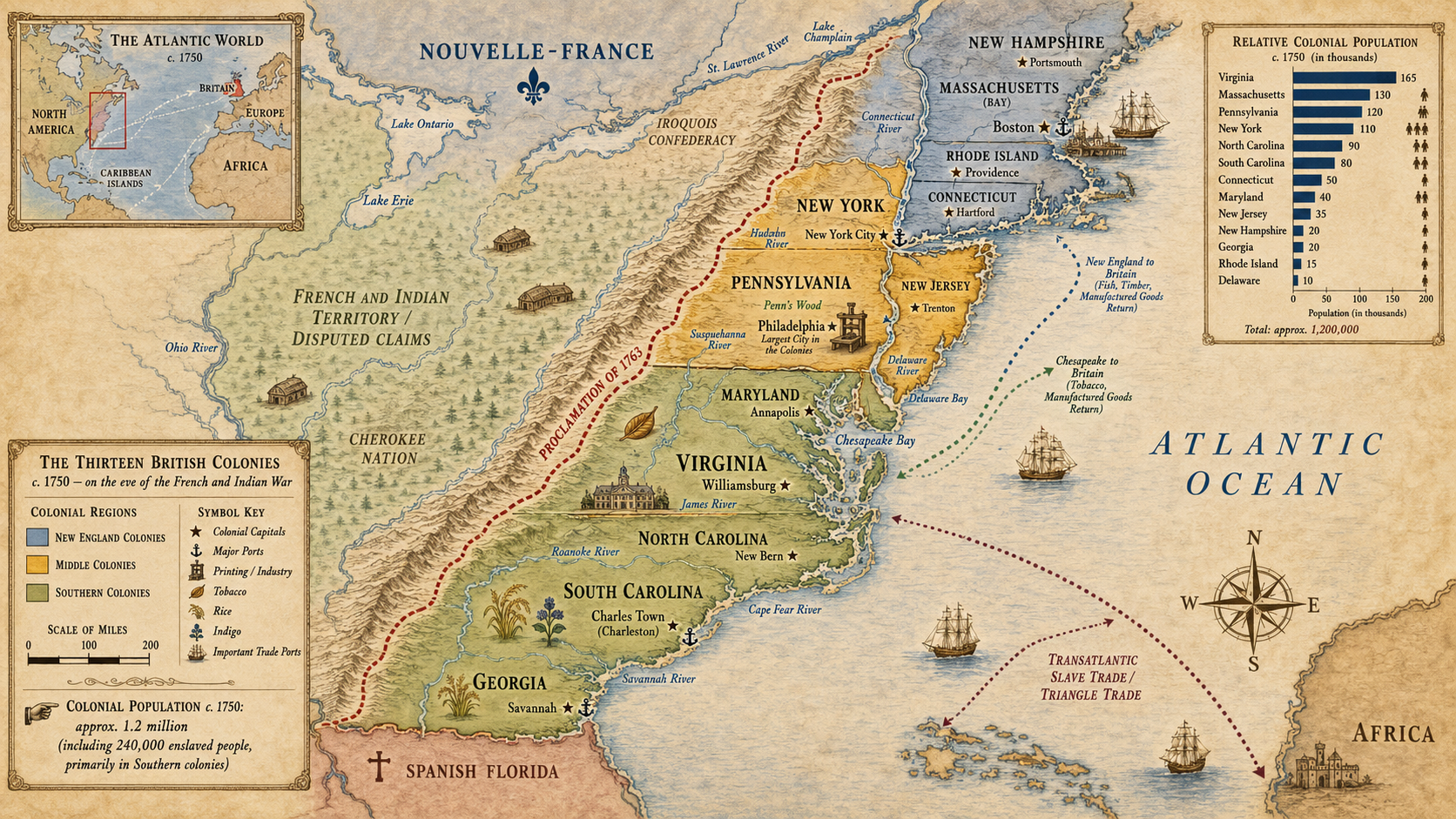
The thirteen British colonies that existed by the mid-18th century are often grouped by region, because region shaped economy, social structure, and ultimately political culture. These groupings are analytic tools — real people moved between regions, and each colony had internal diversity — but they capture genuine patterns.
New England Colonies
The New England Colonies — Massachusetts, Connecticut, Rhode Island, and New Hampshire — were shaped above all by their founders' religious mission and by their environment. The rocky, thin-soiled terrain of New England did not support plantation agriculture. Colonists turned instead to family farming, fishing, shipbuilding, and commerce.
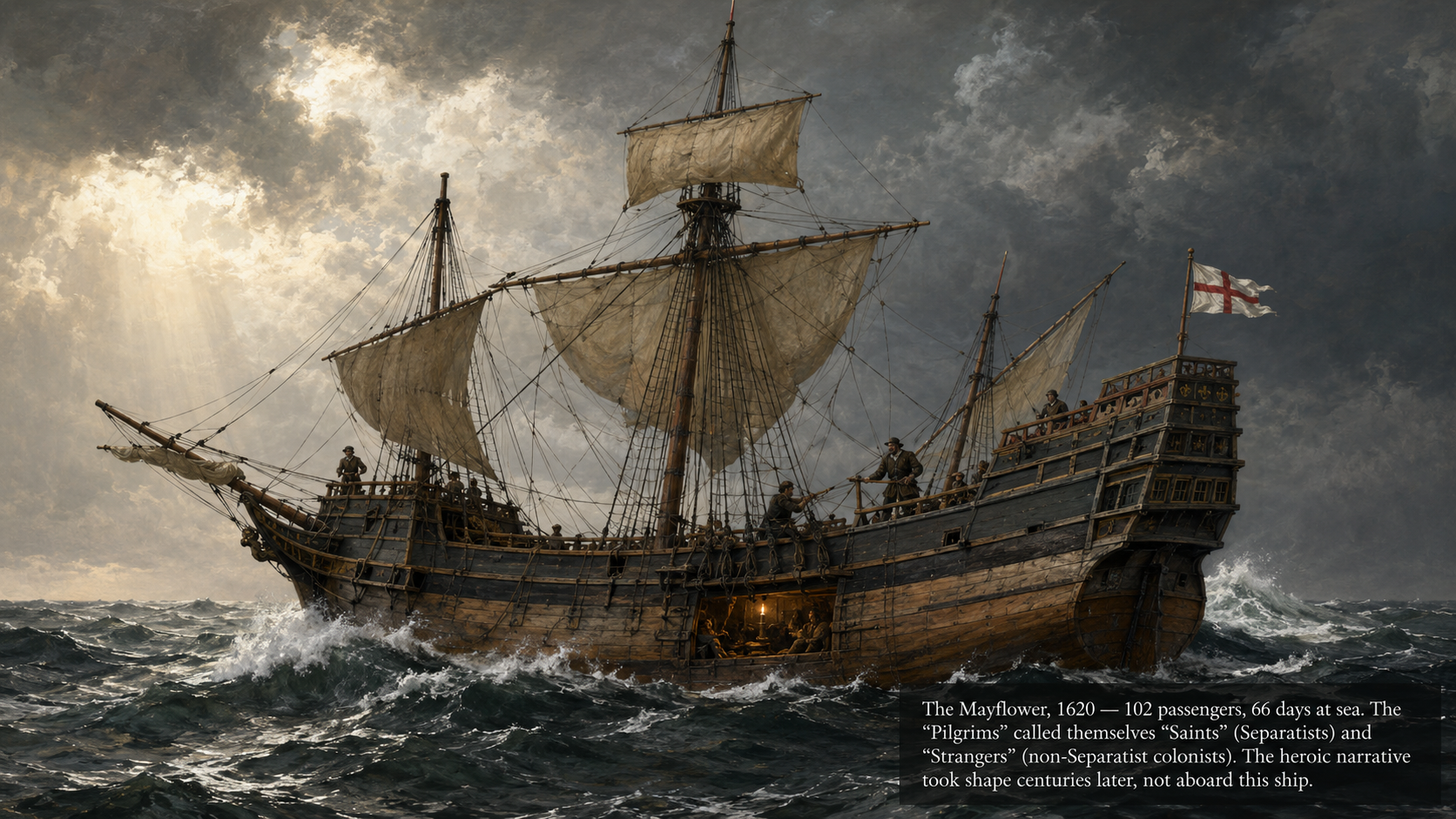
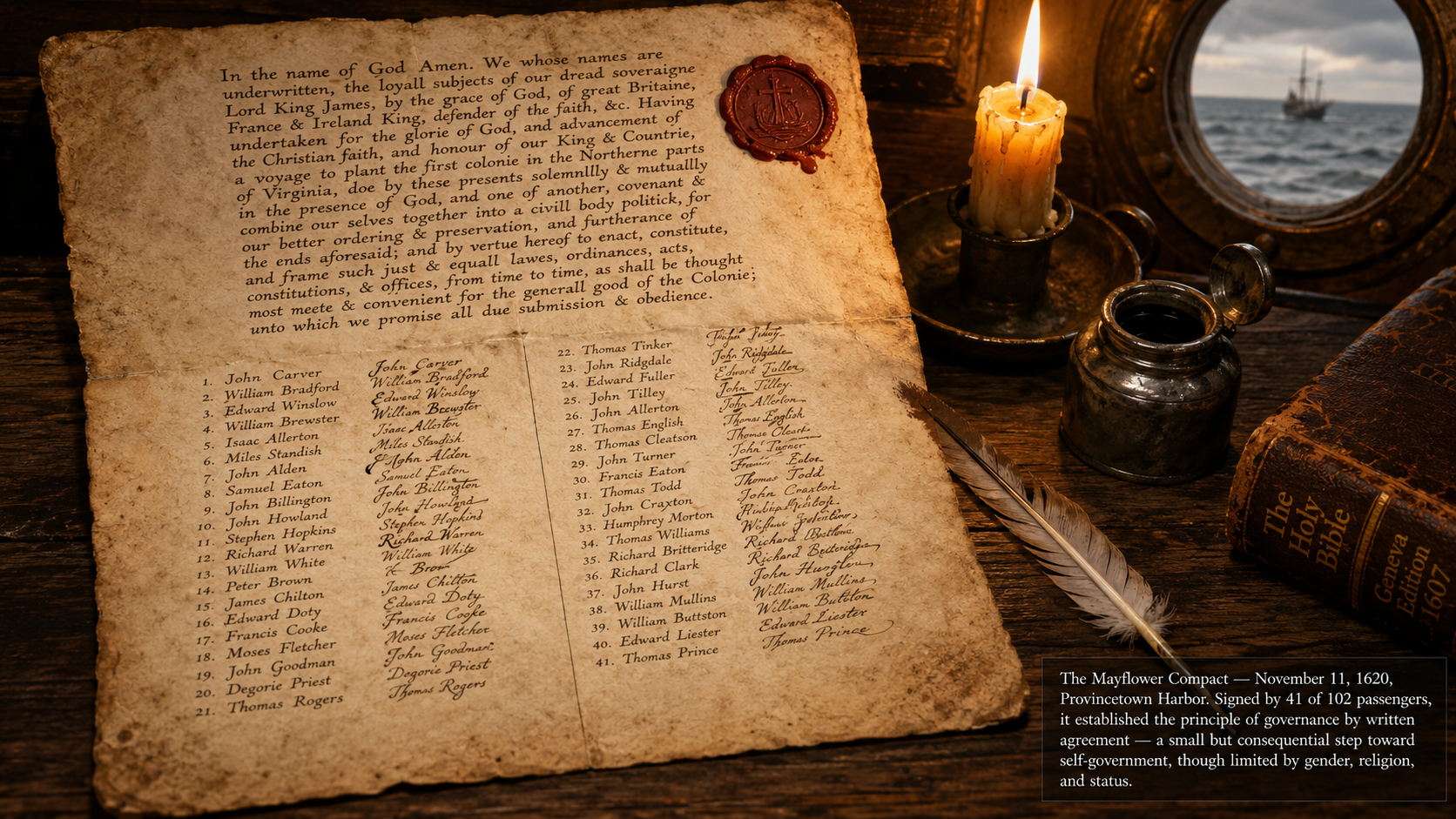
The Puritan settlers who founded Massachusetts believed they were building a godly community — what their leader John Winthrop called "a city upon a hill" — that would serve as a model for reformed Christianity. This theological ambition shaped colonial institutions in distinctive ways. Towns were organized around the meetinghouse; governance was conducted through town meetings, direct assemblies of male church members that gave New England a tradition of participatory local government.
Colonial education was also driven by religious need: the Puritan Migration of the 1630s brought a highly literate population, and colonial education in New England was among the most extensive in the Atlantic world. Harvard College was founded in 1636, primarily to train ministers.
The Massachusetts Bay Colony, chartered in 1629, became the dominant New England settlement. But its religious uniformity was contested from within. Roger Williams was a minister who argued that the colonial government had no authority over matters of conscience and that the colonists had no right to the land without purchasing it from Indigenous peoples. Banished from Massachusetts in 1636, he founded Rhode Island as a colony with genuine religious toleration — a radical experiment for the time.
Anne Hutchinson was another challenger to Massachusetts orthodoxy. She held prayer meetings in her home and argued that personal religious experience — not obedience to the ministry — was the path to salvation. Her theological positions, combined with the fact that she was a woman operating as a religious authority, threatened both the church and the social order. She was tried, convicted of heresy, and banished in 1637. Her case illustrates a pattern that will recur throughout this course: authority challenged in the name of individual conscience, and the powerful responding with expulsion rather than accommodation.
Middle Colonies
The Middle Colonies — New York, Pennsylvania, New Jersey, and Delaware — were the most ethnically and religiously diverse of the colonial regions. New York, originally New Amsterdam, retained its Dutch commercial character after the English takeover in 1664. Pennsylvania, founded in 1681 by the Quaker William Penn, was explicitly designed as a "holy experiment" in religious toleration and peaceful relations with Indigenous peoples.
The Middle Colonies developed mixed economies — grain farming for export, substantial artisan production, and growing commercial centers in Philadelphia and New York. Their diversity made them politically complex; building consensus across ethnic and religious communities required negotiation and compromise, experiences that would prove relevant when the Revolution came.
Southern Colonies
The Southern Colonies — Virginia, Maryland, Georgia, the Carolinas — developed around plantation agriculture producing tobacco, rice, and indigo for export to Britain. This export economy required large amounts of unskilled labor, and it was in the South that the institution of slavery took its most systematic and brutal form.
Virginia's plantation economy emerged from the tobacco boom of the early 17th century. Tobacco was enormously profitable — and enormously labor-intensive. The colony initially relied on indentured servitude: contracts under which workers (usually poor English men) would labor for four to seven years in exchange for passage to the colonies, housing, and land at the end of their term. The headright system gave land grants to masters who paid for servants' passage — 50 acres per servant — creating economic incentives for importing labor.
Indentured servitude was exploitative but time-limited. Servants who survived their terms became free colonists, and by the 1660s, Virginia faced a growing class of landless, discontented former servants. This created a political crisis that would prove decisive.
Diagram: Three Colonial Regions Comparison
Three Colonial Regions Comparison — Interactive Chart
Type: infographic
sim-id: colonial-regions-comparison
Library: p5.js
Status: Specified
Purpose: Allow students to compare the three colonial regions across five dimensions — economy, religious character, labor system, governance, and relationship with Britain — by clicking each region to reveal its profile.
Bloom Level: Analyze (L4) Bloom Verb: Compare
Learning Objective: Students compare and contrast the three colonial regions across at least three dimensions, identifying similarities and differences that shaped their political cultures.
Canvas layout: - Responsive width; height approximately 520px - Three large clickable panels side by side, labeled "New England," "Middle Colonies," and "Southern Colonies" - Each panel has a color-coded header and a region silhouette icon - Clicking a panel expands a detail card below showing five dimension rows
Dimensions displayed for each region: 1. Primary economy (with icon) 2. Religious character 3. Primary labor system 4. Form of self-governance 5. Main tension with Britain
When two panels are selected simultaneously, a "Compare" mode highlights differences in red and similarities in green across the five dimensions.
Color scheme: - New England: cool blue (#1565c0 tint) - Middle Colonies: green (#2e7d32 tint) - Southern Colonies: warm amber (#e65100 tint)
Interactivity: - Click one region: expands detail card for that region - Click a second region: activates Compare mode with color-coded differences/similarities - "Reset" button clears selections
Responsive behavior: Below 650px canvas width, panels stack vertically; Compare mode still works.
Implementation: p5.js
Part 1: Labor, Race, and the Foundations of Slavery
Bacon's Rebellion and the Turn to Slavery
Bacon's Rebellion (1676) was a turning point in Virginia's history and in the development of American slavery. Nathaniel Bacon, a wealthy planter, organized an armed force of discontented frontier settlers — including both poor white colonists and enslaved and indentured Black workers — and attacked both Indigenous peoples on the frontier and, ultimately, the colonial government itself. Bacon burned Jamestown before dying of disease; the rebellion collapsed without him.
The rebellion alarmed Virginia's planter elite for two reasons. First, it demonstrated that poor white colonists and enslaved Black workers could make common cause against the wealthy — a frightening possibility for a society built on inequality. Second, it showed the danger of a large population of landless, discontented former indentured servants who had no stake in the social order.
The planters' response was to accelerate the shift to enslaved African labor. Enslaved people could be held permanently — and their children could be enslaved by birth — which eliminated the problem of a growing class of freed servants. Racial slavery also offered a solution to the dangerous alliance that Bacon's Rebellion had demonstrated: if poor white colonists could be convinced that their racial identity gave them a stake in the existing social order, they would be less likely to ally with enslaved Black workers. This was not a coincidence — it was a deliberate strategy, and it shaped American racial politics for centuries.
Slavery in the Colonies
Slavery in the colonies developed gradually but accelerated rapidly after 1670. By 1710, enslaved Africans had replaced indentured servants as the primary labor force in Virginia and Maryland. By 1750, nearly 250,000 enslaved people lived in the thirteen colonies, with the large majority in the South.
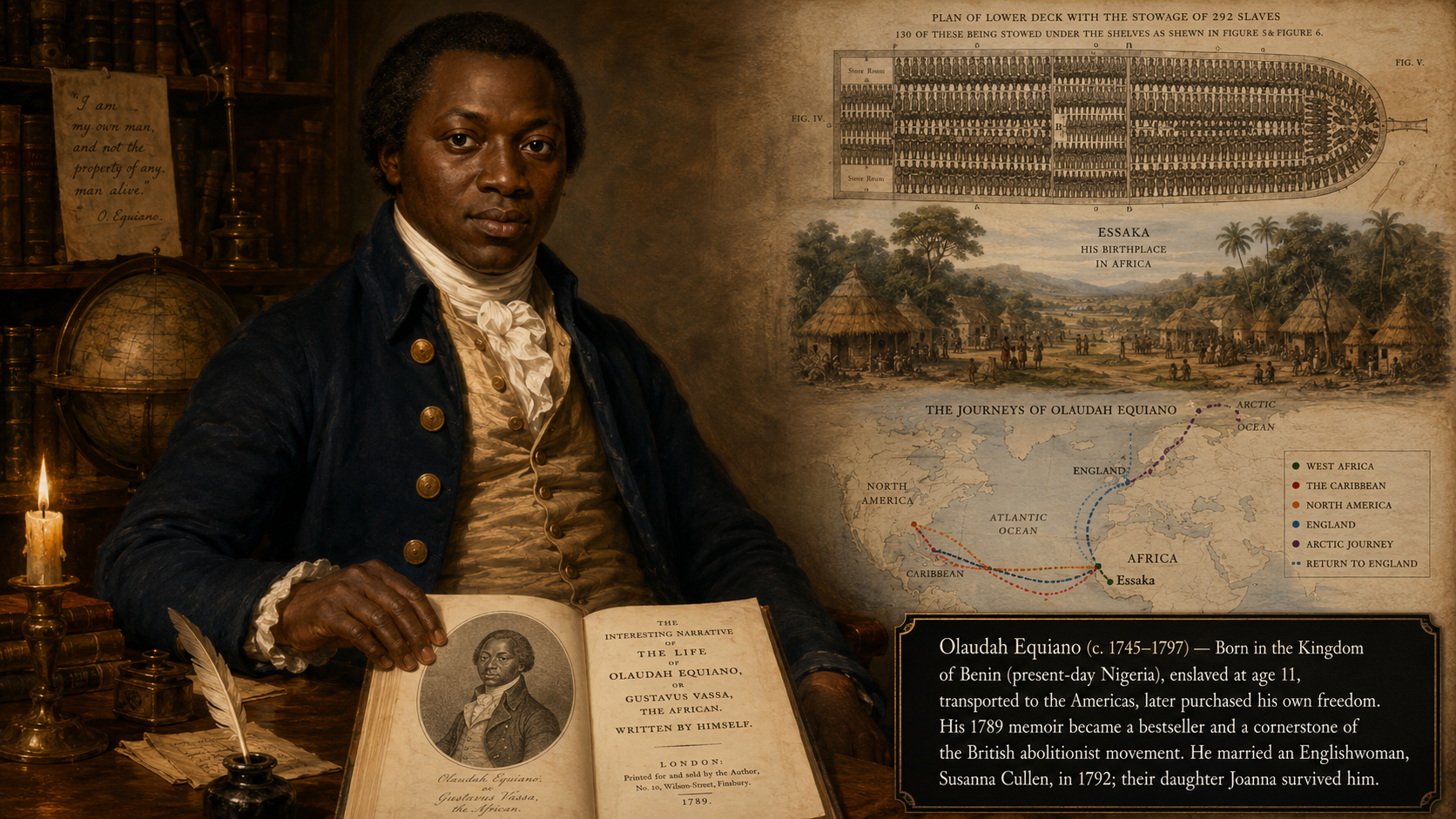
The Middle Passage was the central horror of the Atlantic slave trade: the ocean crossing from West Africa to the Americas, during which enslaved people were packed into the holds of ships in conditions deliberately designed to maximize the number of bodies that could be transported. Mortality on Middle Passage voyages ranged from 10 to 20 percent under typical conditions, and higher during disease outbreaks. Historians estimate that roughly 12 million people were transported across the Atlantic in the slave trade; approximately 1.5 million died during the crossing.
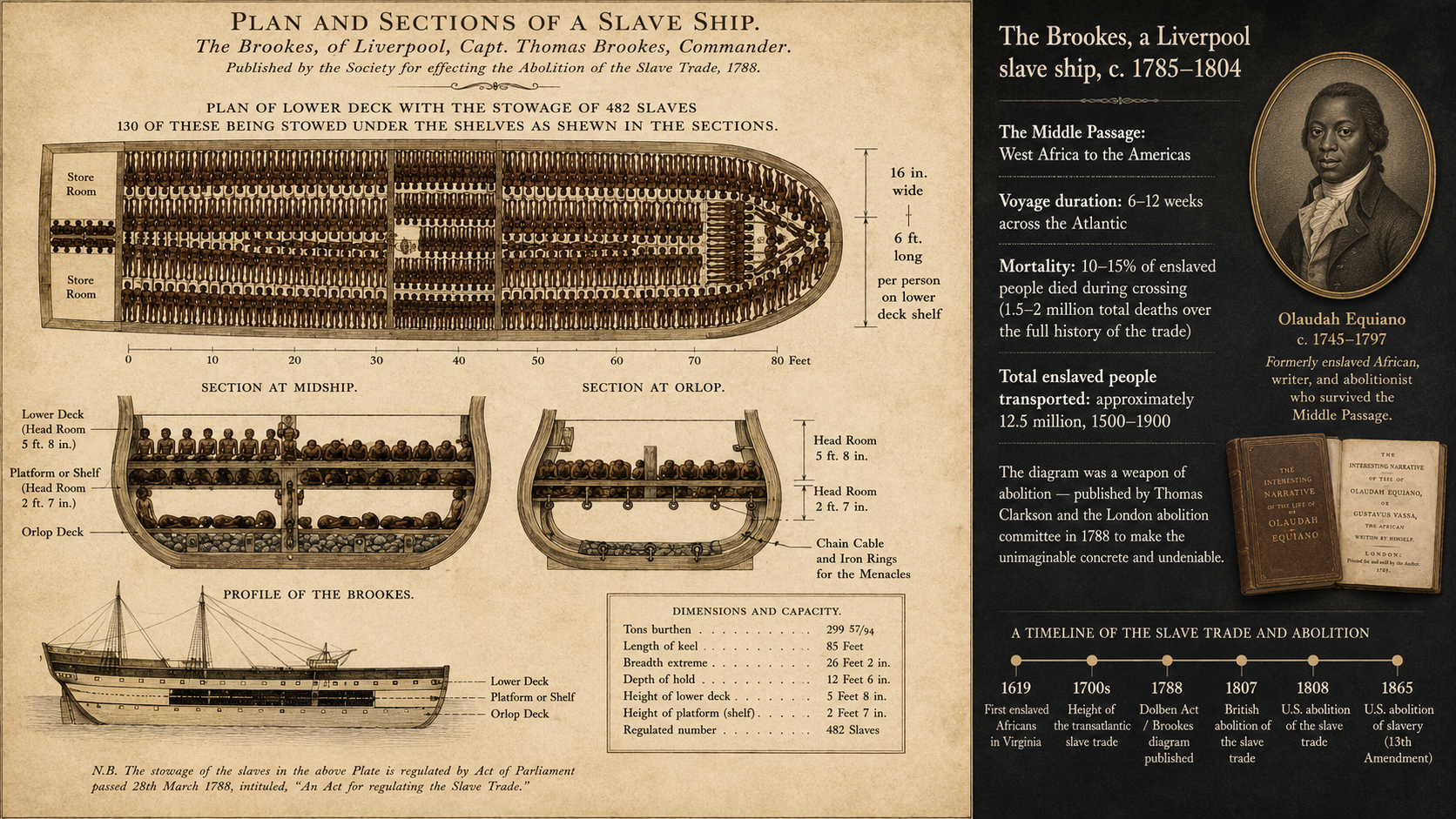
The Triangular Trade describes the three-legged commercial circuit that connected Europe, West Africa, and the Americas. European manufactured goods went to West Africa, where they were exchanged for enslaved people. Enslaved people were transported to the Americas (the Middle Passage). American raw materials — sugar, tobacco, cotton, rice — were shipped back to Europe. The circuit enriched European merchants, American planters, and African elites who participated in the trade, while producing catastrophic suffering for the millions enslaved.
Causation and the shift to slavery
 Historians debate whether Virginia planters shifted to enslaved labor primarily for economic reasons (enslaved people were more profitable than indentured servants in the long run), political reasons (racial slavery reduced the threat of cross-racial alliances), or because of availability (the Royal African Company made enslaved Africans more readily available after 1672). Most historians argue that all three factors operated simultaneously. What kind of evidence would you look for to weigh these explanations against each other?
Mercantilism and the Navigation Acts
The British colonial system was organized around the economic theory of mercantilism — the idea that a nation's wealth depended on accumulating gold and silver by maximizing exports and minimizing imports. Under this framework, colonies existed to serve the mother country: they provided raw materials that Britain would manufacture into goods, and they provided markets for those goods. Colonies were not supposed to develop competing industries.
The Navigation Acts (1651 and after) put mercantilism into law. American colonists were required to ship most goods in British ships, to sell certain commodities only to Britain, and to buy European manufactured goods through British intermediaries. These regulations benefited British merchants and the Crown, but they imposed real costs on colonial economies — costs that colonists resented but mostly accepted as long as Britain was not enforcing them too aggressively.
The Navigation Acts are an early example of a tension that will define the pre-revolutionary decades: the difference between Britain's theoretical authority over the colonies and the practical autonomy colonists had developed during a century of "salutary neglect" — the Crown's informal policy of not enforcing trade regulations too rigorously.
Part 2: Colonial Governance and Political Culture
The House of Burgesses and Colonial Self-Government
Colonial governance in British America evolved a distinctive hybrid: royal governors appointed by the Crown governed each colony, but each colony also had an elected assembly that controlled taxation and local legislation. The House of Burgesses in Virginia (established 1619) was the first representative legislative body in British America — and it established a precedent that colonists would defend fiercely when the Revolution came.
The existence of elected assemblies alongside royal governors created a structural tension in every colony. When governors and assemblies disagreed, who had authority? The assemblies steadily expanded their power over the 17th and 18th centuries by controlling the "power of the purse" — the ability to levy taxes and fund the governor's salary. A governor who couldn't pay his staff had limited ability to govern.
Town meetings in New England extended this tradition of self-governance to the local level. Any male church member could speak and vote on local matters — roads, taxes, militia training, school funding. This was direct democracy in a form that most Europeans of the period could not have imagined, and it created a political culture in which ordinary people expected to have a voice in decisions that affected them.
| Colony | Founded | Governance type | Key feature |
|---|---|---|---|
| Virginia | 1607 | Royal colony | House of Burgesses (1619) |
| Massachusetts | 1629/1692 | Royal colony | Puritan theocracy → charter government |
| Rhode Island | 1636 | Charter colony | Religious toleration |
| Pennsylvania | 1681 | Proprietary colony | Quaker religious tolerance, Frame of Government |
| Georgia | 1733 | Royal colony | Founded as buffer against Spanish Florida |
The Albany Plan of Union
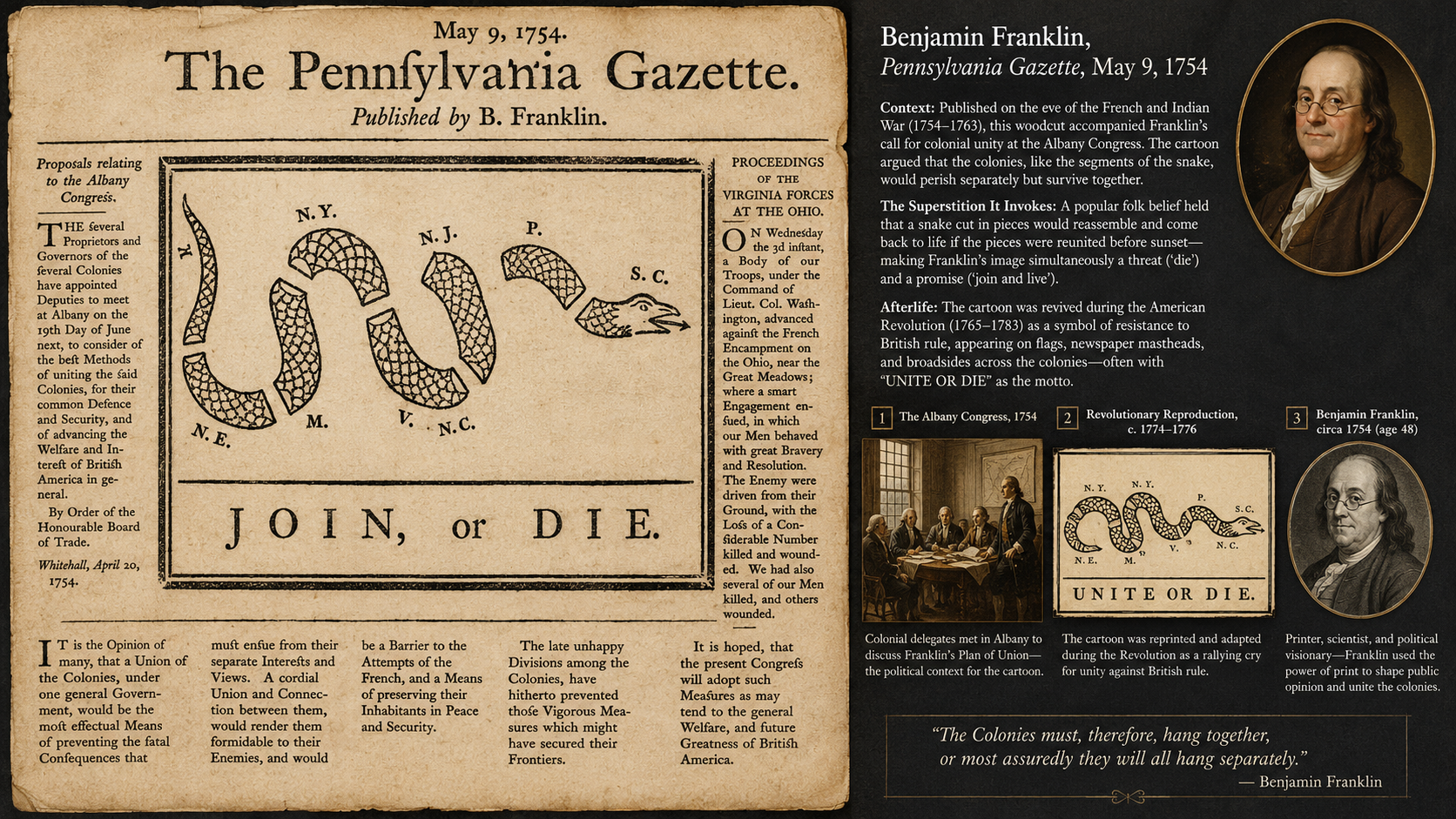
As tensions with France and Indigenous nations mounted in the early 1750s, representatives from seven colonies met in Albany, New York, in 1754. Benjamin Franklin proposed the Albany Plan of Union — a plan to create a colonial council with the power to tax and raise armies for common defense. Every colonial legislature rejected it as giving up too much local power; Britain rejected it as giving the colonies too much autonomy.
The Albany Plan failed, but it is historically significant as the first formal proposal for colonial unity. Franklin's "Join or Die" cartoon — a snake divided into sections labeled with colonial names — became the first great political cartoon in American history.
The idea that the colonies might cooperate politically, once planted, would take root a generation later.
Part 3: Religion and Culture in Colonial America
Puritan Religious Life and Its Discontents
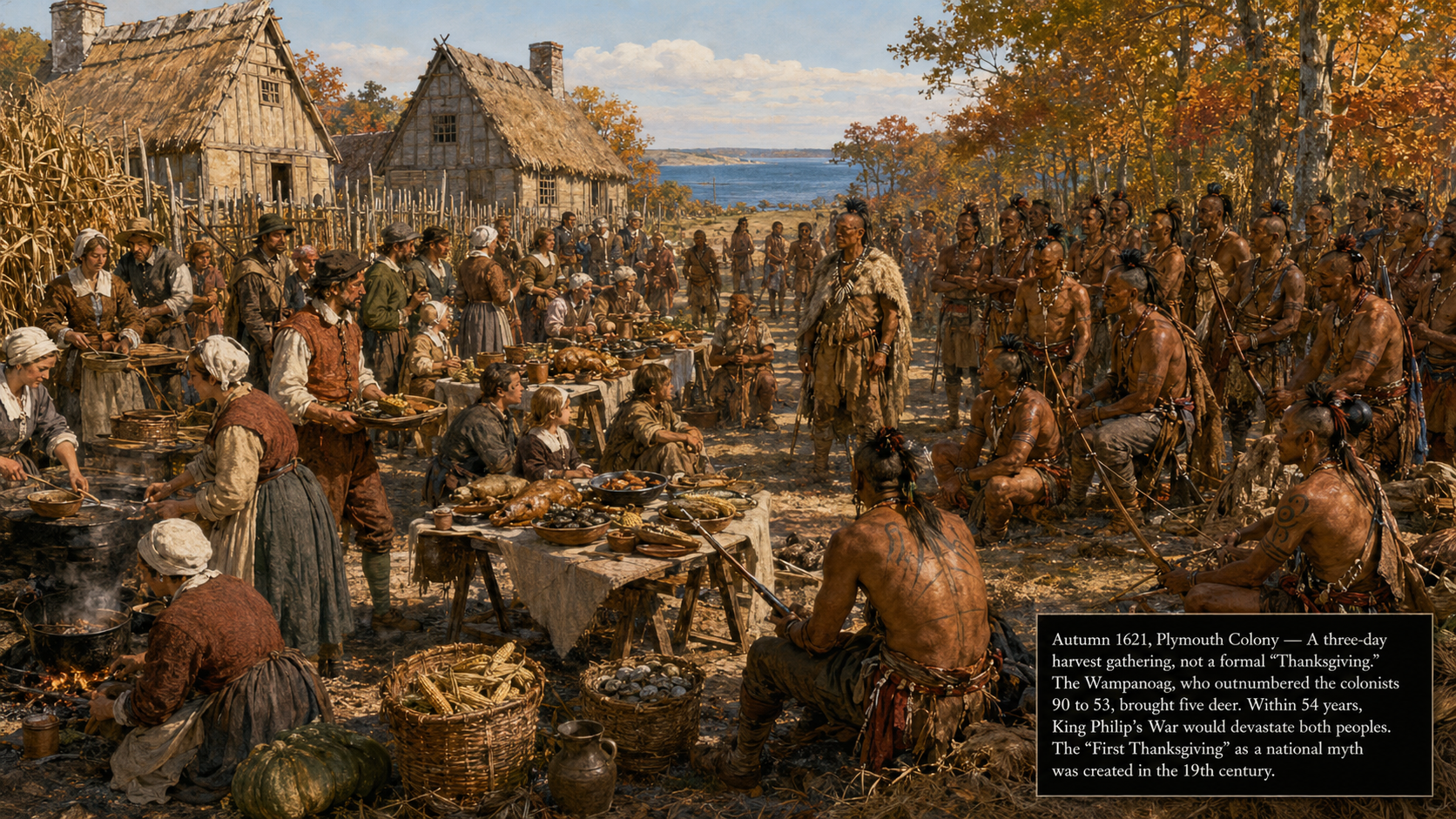
New England Puritanism was not simply a set of beliefs — it was a total social program. The Massachusetts Bay Colony operated on the assumption that civil and ecclesiastical authority reinforced each other: godly ministers advised godly magistrates; godly laws enforced godly behavior. Church membership was required for full political participation.
This system produced both remarkable cohesion and remarkable intolerance. The expulsions of Roger Williams and Anne Hutchinson were not aberrations — they were the system working as designed. Dissent was a theological and social threat. The Salem Witch Trials of 1692 represent an extreme form of this dynamic: a community under multiple pressures (epidemic disease, conflict with neighboring Indigenous nations, economic uncertainty, a disputed charter) turned its anxiety into accusations of supernatural conspiracy. Nineteen people were executed before the trials ended.
Historians have proposed many explanations for Salem — accusations driven by property disputes, mass hysteria, ergotism from contaminated grain, or genuine belief in witchcraft. What the historical record shows clearly is that the accusation process followed social fault lines: accusers were often young women with little social power; the accused were often socially marginal or in conflict with their accusers' families.
The Great Awakening
The Great Awakening was a wave of religious revivals that swept through the colonies in the 1730s and 1740s. Itinerant preachers — most famously Jonathan Edwards in New England and George Whitefield throughout the colonies — drew enormous crowds with emotional sermons emphasizing personal conversion, individual relationship with God, and the inadequacy of formal church structures.
The Awakening had profound social and political consequences that went beyond its immediate religious effects:
- It challenged the authority of established ministers and churches, suggesting that religious legitimacy came from personal experience rather than institutional position
- It created a culture of voluntary religious association — people chose their congregations — that transferred readily to voluntary political association
- It spread ideas of equality before God that sat uneasily with colonial social hierarchies
- It gave ordinary people — women, the enslaved, the poor — a public role as participants in religious revival that their social position otherwise denied them
The Great Awakening did not cause the American Revolution, but it created cultural conditions — habits of questioning authority, emphasizing individual experience, valuing voluntary association — that made revolutionary ideas thinkable.
The Great Awakening as a systems change
 Think of the Great Awakening as a shift in a balancing loop. Colonial society had a powerful reinforcing loop: established ministers held authority → they shaped community norms → community norms reinforced ministerial authority. The Awakening introduced a competing idea — personal religious experience is the true authority — that disrupted this loop. Once the principle that individuals could evaluate religious authority was established, it was not a large step to apply it to political authority.
Diagram: Colonial Society Structure MicroSim
Colonial Social Structure — Interactive Hierarchy Diagram
Type: infographic
sim-id: colonial-society-structure
Library: p5.js
Status: Specified
Purpose: Allow students to explore the layered social hierarchy of colonial America — from the planter elite to enslaved workers — across the three regional contexts, with clickable layers that reveal the rights, constraints, and typical life experiences at each level.
Bloom Level: Understand (L2) Bloom Verb: Describe
Learning Objective: Students describe the social structure of colonial America and explain how it differed between the New England, Middle, and Southern colony regions.
Canvas layout: - Responsive width; height approximately 500px - Three columns (one per region) each showing a vertical pyramid divided into 4–5 social layers - Region selector buttons at top allow switching between New England, Middle, and Southern views - Right panel (35%) updates when a social layer is clicked
Social layers (vary slightly by region): - Top: Planter/merchant elite - Upper-middle: Small landowners / skilled artisans / clergy - Lower-middle: Tenant farmers / free workers / indentured servants - Bottom: Enslaved Africans / bound laborers
Each layer, when clicked, displays in the right panel: - Layer name - Approximate percentage of colonial population - Legal rights and constraints - Typical occupations - How this layer differed across the three regions
Interactivity: - Clicking a pyramid layer fills the right panel with the layer's profile - Region toggle buttons (New England / Middle / Southern) redraw the pyramid proportions — the enslaved layer is much larger in the Southern pyramid - Hover tooltip shows layer name - A "Key Events" button at the bottom links selected layers to events in the chapter (e.g., clicking Enslaved layer suggests "See: Middle Passage, Bacon's Rebellion")
Color scheme: - Pyramid layers: from gold (elite) at top to dark brown (enslaved) at bottom - Selected layer: highlighted with white border - Region buttons: color-coded by region (blue/green/amber as in previous sim)
Responsive behavior: Below 600px, columns stack; only one region shown at a time.
Implementation: p5.js
Part 4: Cognitive Bias in Colonial History
Colonial American history is particularly susceptible to two cognitive biases that students of this period should actively resist.
Confirmation bias operates powerfully when students come to colonial history with strong prior views about the Founders or about slavery. Students who admire the Founders may notice evidence of their idealism and overlook evidence of their complicity in slavery and dispossession. Students who are skeptical of the Founders may notice hypocrisy and overlook genuine political innovation. Applying corroboration — checking multiple types of evidence — is the corrective.
Presentism appears when students judge colonial attitudes toward slavery, women's roles, or religious dissent by 21st-century standards without asking why those attitudes were held and what would have been required to change them. Anne Hutchinson was expelled for theological positions that would be unremarkable in most contemporary Protestant denominations. Judging her accusers by present-day standards misses the question: what was the social structure that made her views threatening?
Bias in historical sources is particularly acute in this period. The documents that survive from colonial America are overwhelmingly from literate, propertied men. The voices of enslaved people, women, the poor, and Indigenous peoples are present only indirectly — in court records where they were defendants, in colonial laws that describe their constraints, in masters' accounts of their behavior. Historians working in this period must actively seek out these indirect sources and read them critically.
Summary
Colonial America was not one world but three overlapping ones, shaped by different geographies, different labor systems, and different religious traditions. New England built its identity around Puritan religion, participatory town governance, and commercial enterprise. The Middle Colonies developed a pluralistic, commercial culture. The Southern Colonies built plantation economies on the exploitation of enslaved African labor — a system that intensified dramatically after Bacon's Rebellion demonstrated the political dangers of relying on white indentured servants.
Colonial governance created habits of self-rule — through elected assemblies, town meetings, and control of taxation — that colonists would defend when the British Crown attempted to reassert control. The Great Awakening spread habits of challenging authority and valuing individual experience. The failed Albany Plan showed that colonial unity was possible to imagine even if not yet to achieve. All of these threads lead directly to the American Revolution, which is the subject of Chapter 4.
Knowledge Check 1 — Click to reveal
Question: Historians argue that Bacon's Rebellion accelerated the shift to enslaved African labor in Virginia. Apply the concepts of causation and unintended consequences to explain this connection.
Answer: Bacon's Rebellion was an immediate cause of Virginia's labor shift because it demonstrated two dangers of relying on white indentured servants: they could organize violently (an immediate unintended consequence of the headright system creating a large class of landless ex-servants), and they could make common cause with enslaved workers across racial lines. The planters' response — shifting to permanent, hereditary racial slavery — was an attempt to resolve this political problem. An unintended consequence of that solution was the creation of rigid racial categories that would define American society for centuries beyond anything the planters envisioned.
Knowledge Check 2 — Click to reveal
Question: The Great Awakening is sometimes described as a cause of the American Revolution. Evaluate this claim using the concepts of continuity and change and systems thinking.
Answer: The Great Awakening is better described as an underlying cause that created cultural conditions rather than an immediate trigger. It produced continuity with older Protestant traditions of individual conscience and change by extending those traditions to challenge institutional authority broadly — including ministerial, social, and eventually political authority. In systems thinking terms, the Awakening disrupted a reinforcing loop (established authority validates itself) by introducing a competing principle (individual experience as a valid source of authority). This cultural shift made it easier for colonists to argue that Parliament had no authority over them — but the Awakening preceded the Revolution by thirty years and cannot by itself explain the Revolution's timing.
Chapter 3 Complete!
 You've just navigated 150 years of colonial development across three distinct regional cultures. You've seen how labor systems, religious ideals, and governance structures interact — and how events like Bacon's Rebellion can reshape an entire society's direction. In Chapter 4, we follow these tensions to their breaking point: the American Revolution.