title: The Gilded Age: Industrialization and Labor (1865–1890) description: The transcontinental railroad, industrial monopolies, Robber Baron capitalism, organized labor's first battles, new immigration, and the transformation of American cities. generated_by: claude skill chapter-content-generator date: 2026-05-09 14:58:00 version: 0.08
The Gilded Age: Industrialization and Labor (1865–1890)
Summary
This chapter examines the transformation of the American economy through the transcontinental railroad, the rise of industrial monopolies, Robber Baron capitalism, and the organized labor movement's first major battles (Homestead, Pullman). New waves of immigration and rapid urbanization reshaped American cities, introducing the AP theme of Migration and Settlement as a through-line in American history.
Concepts Covered
This chapter covers the following 24 concepts from the learning graph:
- Transcontinental Railroad
- Railroad Expansion
- Rise of Big Business
- Robber Barons
- Andrew Carnegie
- John D. Rockefeller
- J.P. Morgan
- Social Darwinism
- Horizontal Integration
- Vertical Integration
- Trusts and Monopolies
- Sherman Antitrust Act
- Labor Movement Origins
- Knights of Labor
- American Federation of Labor
- Samuel Gompers
- Homestead Strike
- Pullman Strike
- New Immigration Wave
- Ellis Island
- Urbanization
- Tenement Housing
- Political Machines
- Migration and Settlement
Prerequisites
This chapter builds on concepts from: - Chapter 9: Reconstruction and Its Aftermath
The age of steel, smoke, and struggle
 Welcome to Chapter 10! Mark Twain called this era the "Gilded Age" — gilded meaning shiny on the outside, something different underneath. The United States became the world's largest industrial economy between 1865 and 1900, producing unprecedented wealth. It also produced some of the most extreme inequality in American history and a labor movement forged in blood at Homestead and Pullman. Let's investigate the evidence!
The Railroad Revolution
No single technology did more to transform the United States in the Gilded Age than the railroad. To understand everything else in this chapter — industrial consolidation, immigration patterns, urbanization, the labor movement — you have to start with the rails.
The Transcontinental Railroad (1869)
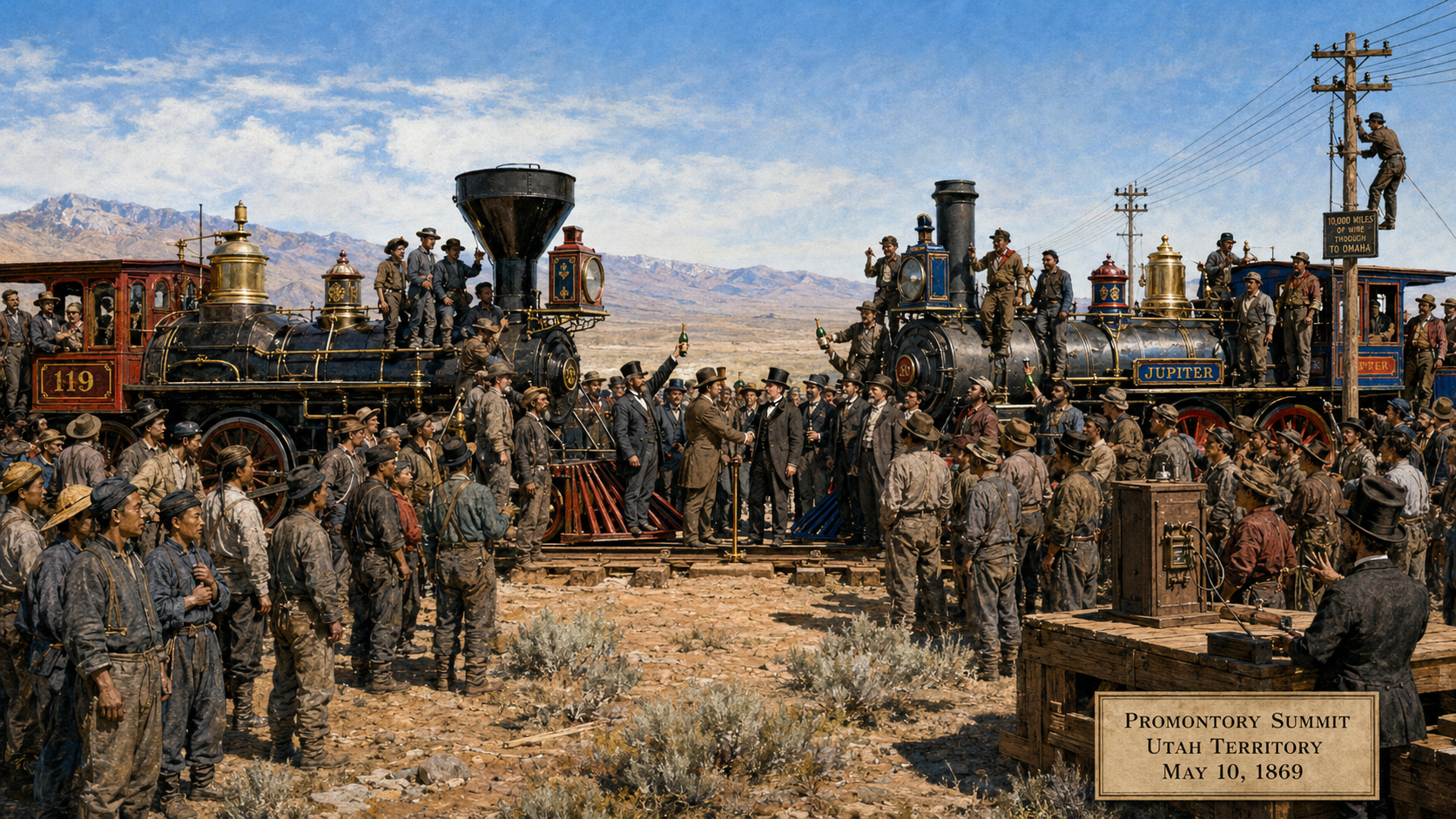
The Transcontinental Railroad was completed on May 10, 1869, when the Union Pacific (building west from Omaha) and the Central Pacific (building east from Sacramento) met at Promontory Summit, Utah. The driving of the "golden spike" was celebrated as the fulfillment of national destiny — the physical binding of the continent.
The railroad's construction required approximately 20,000 workers, the majority of them Chinese immigrants on the Central Pacific side and Irish immigrants and Civil War veterans on the Union Pacific side. These workers built the most technically demanding railroad in the world — blasting through the Sierra Nevada with primitive explosives, surviving brutal winters, working for wages that would be worth roughly \(25–\)30 per day in today's terms — and were systematically excluded from the celebratory mythology of the project's completion.
Railroad expansion after 1869 was explosive. The United States built more railroad track in the 1870s and 1880s than existed in all of Europe. By 1900, the U.S. had roughly 200,000 miles of track — a network that made national markets possible and transformed every sector of the economy. The railroads were the internet of the 19th century: the infrastructure on which everything else ran.
Part 1: Industrial Capitalism and Its Titans
The Rise of Big Business
Three structural factors drove the rise of big business in the post-Civil War era. First, railroads created genuinely national markets for the first time, making large-scale production economically rational. Second, new technologies — steel production (the Bessemer process), petroleum refining, electrical power — created industries where scale produced enormous cost advantages. Third, access to capital through investment banks and stock markets allowed firms to grow far larger than any single owner's wealth could support.
Two business strategies drove industrial consolidation.
Horizontal integration means acquiring competitors — buying or eliminating firms in the same industry to reduce competition and gain pricing power. Rockefeller's Standard Oil is the classic example: at its peak, it controlled 90 percent of American oil refining capacity, achieved partly through aggressive acquisition of rivals and partly through secret rebate arrangements with railroads.
Vertical integration means controlling all stages of production — from raw materials to manufacturing to distribution. Andrew Carnegie's steel empire is the model: Carnegie Steel owned iron ore mines in Minnesota, coal fields in Pennsylvania, a fleet of Great Lakes ore carriers, and railroad lines connecting them all. By controlling every input to steel production, Carnegie could undercut competitors' prices while still making enormous profits.
Trusts and monopolies were the organizational forms that implemented these strategies. A "trust" was a legal arrangement in which competing firms transferred their stock to a board of trustees, which then coordinated production and pricing across what had been competing companies. Standard Oil Trust (1882) was the template for dozens of similar arrangements across American industry.
The Robber Barons
The term Robber Barons — applied to industrial titans like Carnegie, Rockefeller, and J.P. Morgan — captures the dual nature of their historical legacy: they built enormous wealth through practices that were often exploitative, legally questionable, and achieved at great cost to workers and competitors; and they also built the industrial infrastructure of the modern American economy.
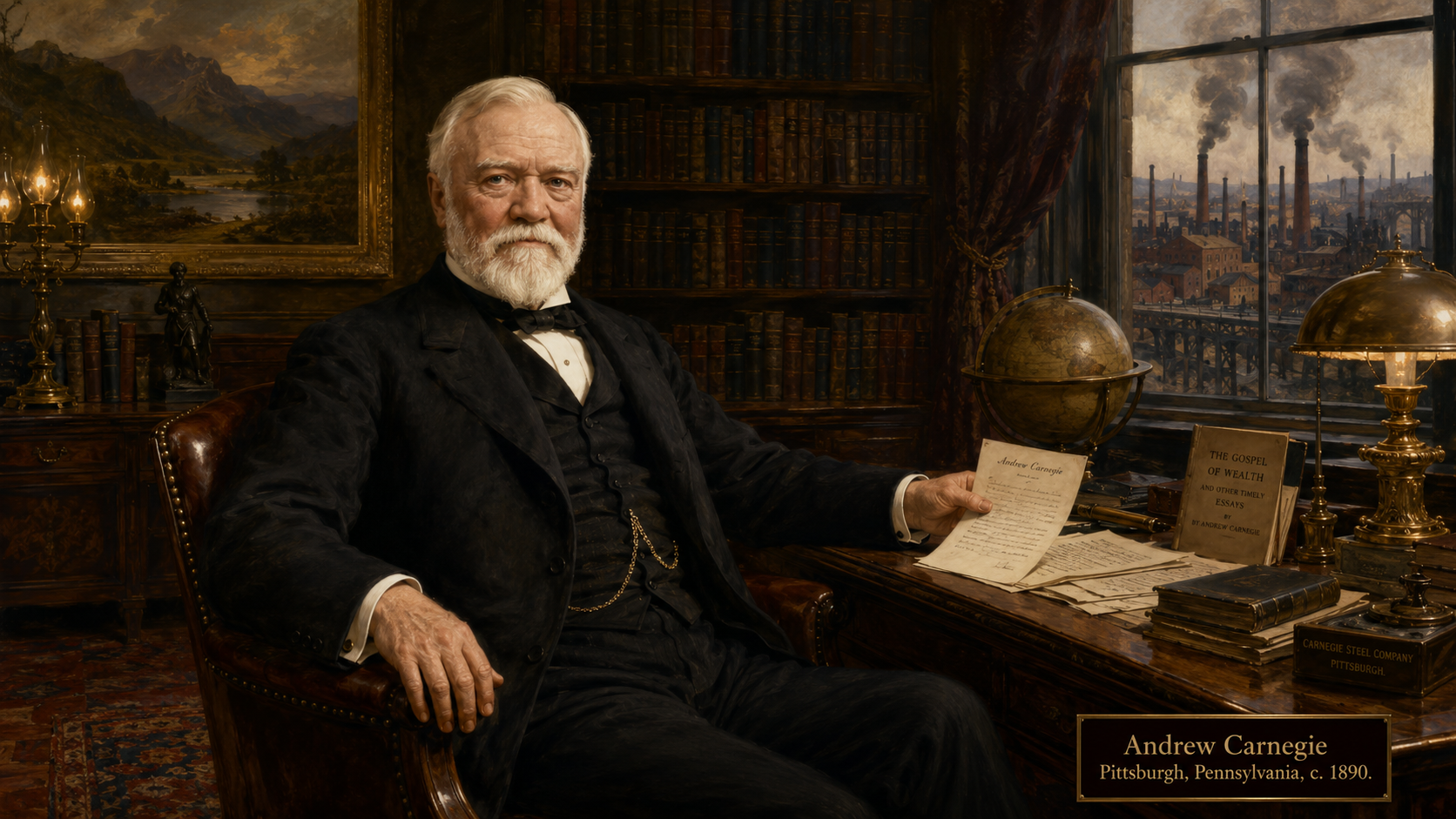
Andrew Carnegie built Carnegie Steel into the world's largest steel company through relentless cost-cutting (including violent suppression of labor organizing), technological innovation, and vertical integration. He sold the company to J.P. Morgan in 1901 for $480 million (roughly $17 billion today) and spent his remaining decades giving most of his fortune away — funding 2,500 public libraries, Carnegie Hall, and the Carnegie Endowment for International Peace.
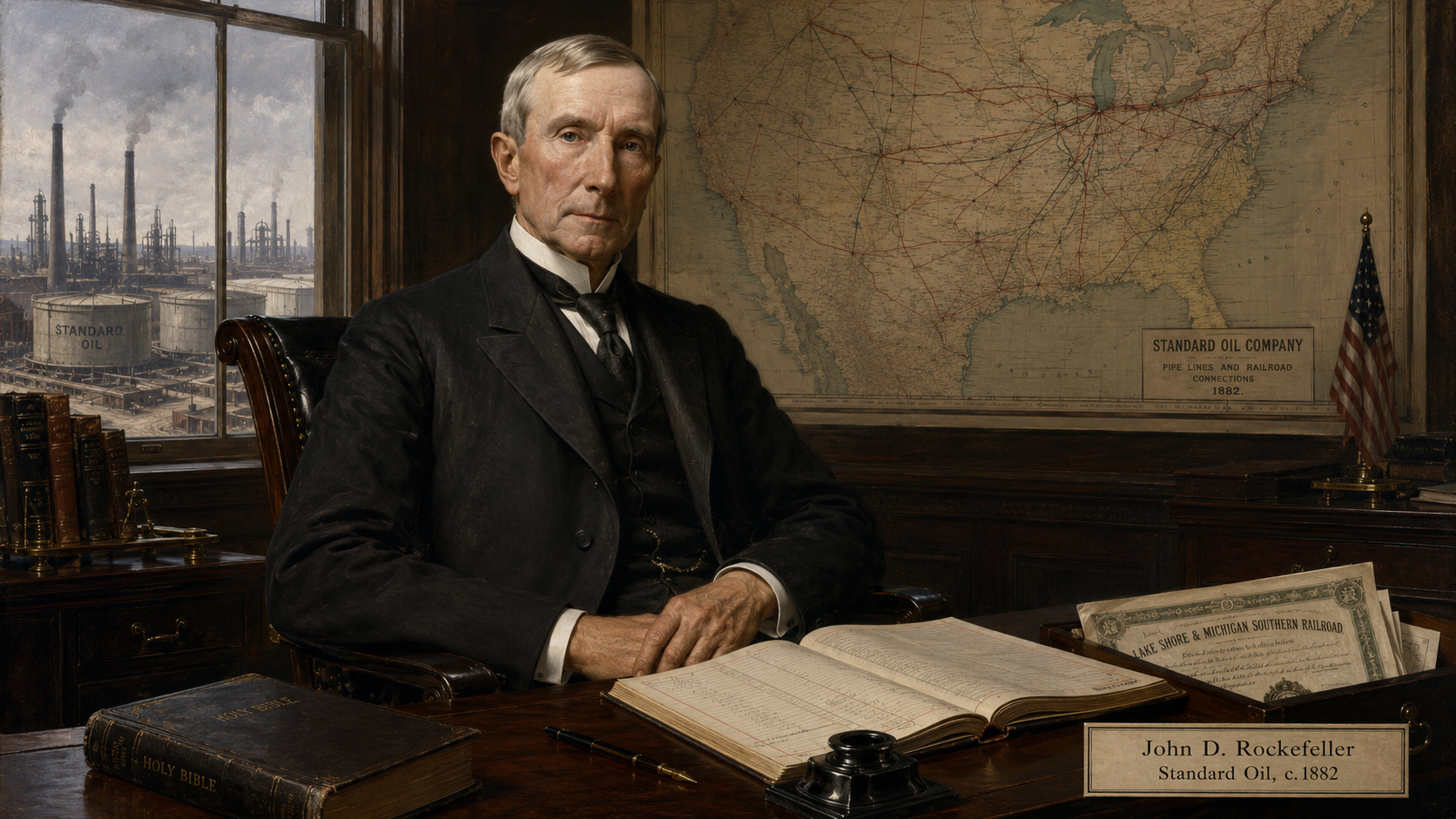
John D. Rockefeller built Standard Oil through a combination of genuine operational efficiency and ruthless anti-competitive practices — secret railroad rebates, industrial espionage, predatory pricing to drive competitors out of business. His personal philanthropy eventually rivaled Carnegie's, including the founding of the University of Chicago and Rockefeller University.
J.P. Morgan was the financier who structured the largest industrial combinations of the era, including U.S. Steel (buying Carnegie's company and combining it with other producers into the first billion-dollar corporation in history) and General Electric.
Social Darwinism
Social Darwinism was the ideological framework that justified extreme economic inequality in the Gilded Age. Drawing (incorrectly) on Charles Darwin's theory of natural selection, Social Darwinists like Herbert Spencer and William Graham Sumner argued that economic competition was a natural struggle in which the "fittest" rose and the weak fell — and that poverty was the natural result of personal inadequacy rather than structural conditions.
Social Darwinism was not neutral science but motivated reasoning: it provided wealthy industrialists with a justification for their wealth that made it appear to be the natural order rather than a product of specific business practices, political choices, and favorable market conditions. It was also used to justify opposition to any government regulation or assistance to the poor, on the grounds that such intervention "artificially" kept the unfit alive.
This is a clear example of cognitive bias — specifically, in-group favoritism combined with confirmation bias — operating at a theoretical level. Social Darwinism selected evidence (some successful people are hard-working and capable) and interpreted it through a framework that confirmed a predetermined conclusion (the wealthy deserve their wealth; the poor deserve their poverty).
What makes someone a 'robber baron' vs. a 'captain of industry'?
 Contemporary observers called the same individuals both "robber barons" (critics who emphasized monopoly, exploitation, and anti-competitive practices) and "captains of industry" (admirers who emphasized organizational achievement, technological innovation, and eventual philanthropy). Apply sourcing: who used each term, for what audience? Apply comparison: how do you evaluate the same person's positive and negative contributions? This is the kind of historical nuance that resists simple moral verdicts — and that makes history genuinely interesting.
Diagram: Vertical vs. Horizontal Integration — Interactive Diagram
Business Integration Strategies — Interactive Comparison
Type: infographic
sim-id: integration-strategies
Library: p5.js
Status: Specified
Purpose: Help students understand and distinguish between vertical and horizontal integration through interactive diagrams that use Carnegie Steel and Standard Oil as concrete examples.
Bloom Level: Understand (L2) Bloom Verb: Explain
Learning Objective: Students explain the difference between vertical and horizontal integration and give a historical example of each strategy.
Canvas layout: - Responsive width; height approximately 480px - Two panels side by side: left = Vertical Integration (Carnegie Steel), right = Horizontal Integration (Standard Oil) - Each panel shows a diagram of the business structure with clickable stages/nodes
Left panel — Vertical Integration (Carnegie Steel): - Chain of nodes from top to bottom: Iron Ore Mines → Great Lakes Ships → Railroad Lines → Coal Fields → Steel Mills → Distribution Network - Arrows pointing downward showing the production flow - Each node labeled with the business unit and approximate percentage of total cost it represented
Right panel — Horizontal Integration (Standard Oil): - Web of nodes: Standard Oil center → multiple refineries radiating outward, some shown in gold (acquired) and some in red (eliminated competitors) - Percentage of market share shown increasing as more nodes are acquired
Interactivity: - Clicking any node in either panel shows: what this stage/unit does, why controlling it gave competitive advantage, and one historical detail from Carnegie or Rockefeller - A "Compare" button at bottom highlights the key difference: vertical controls the supply chain (independence from suppliers/distributors); horizontal controls market share (pricing power) - "Advantages" and "Risks" buttons toggle annotation text on each diagram
Color scheme: - Vertical integration chain: shades of blue (deeper = closer to finished product) - Horizontal integration web: gold = Standard Oil controlled; gray = independent competitor; red = eliminated - Background: white
Responsive behavior: Below 650px canvas width, panels stack vertically.
Implementation: p5.js
The Sherman Antitrust Act (1890)
The Sherman Antitrust Act (1890) was Congress's first attempt to constrain industrial monopoly. It prohibited "every contract, combination in the form of trust or otherwise, or conspiracy, in restraint of trade" and declared monopolization of any industry illegal.
As noted in Chapter 1, the Act's effects illustrate the systems thinking concept of unintended consequences. Rather than breaking up existing monopolies, the Sherman Act initially drove mergers: by combining competitors into a single corporation (rather than coordinating them through a trust arrangement), firms achieved the same market dominance in a legally cleaner form. The Act was also used more aggressively against labor unions than against industrial corporations in its early years — an irony that outraged the labor movement.
The Act became more effective after the Progressive Era, when the Supreme Court allowed the government to break up Standard Oil (1911) and American Tobacco (1911). But its fundamental limitation — that it prohibited specific arrangements without addressing the underlying economic dynamics producing consolidation — meant it could slow but not reverse the concentration of industrial power.
Part 2: Labor, Immigration, and the Cities
The Labor Movement
The labor movement origins of the Gilded Age grew directly from the conditions created by industrial capitalism: long hours (often 12–16 hours per day, six or seven days a week), dangerous workplaces, child labor, wages that fell below subsistence levels during economic downturns, and complete legal powerlessness of individual workers against enormous corporations.
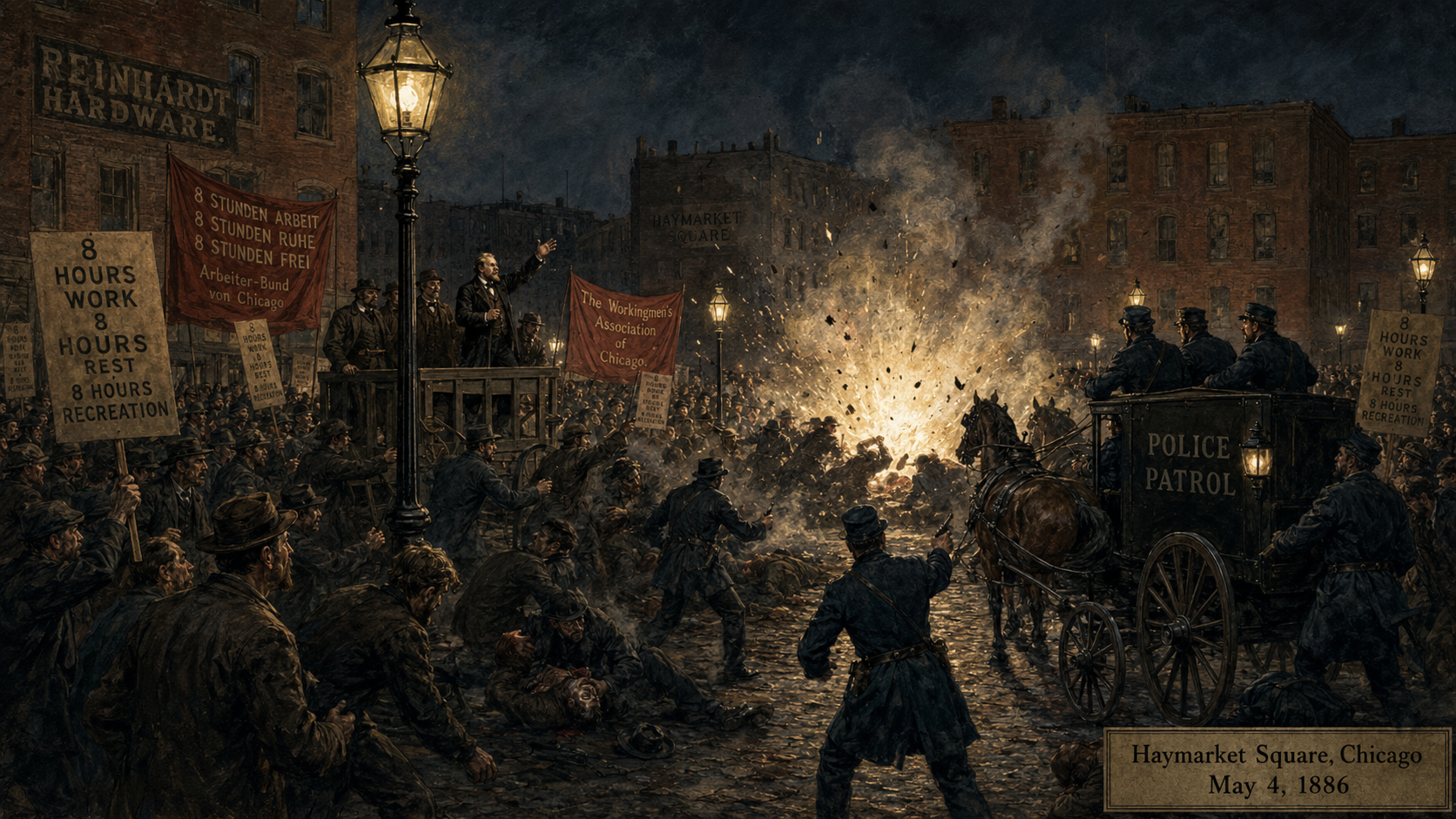
The Knights of Labor (founded 1869, peak membership 700,000 in 1886) was the first major national labor organization, remarkable for its inclusivity: it organized across racial, ethnic, and gender lines, including Black workers and women in an era when most labor organizations excluded them. It pursued both workplace organizing and political reform — an eight-hour workday, abolition of child labor, cooperatives as an alternative to wage labor. The Knights' decline after the Haymarket Affair (1886, when a bomb thrown at a Chicago labor rally killed police officers and was blamed on anarchists) demonstrated the vulnerability of labor organizations to association with radicalism.
The American Federation of Labor (AFL), founded in 1886 under Samuel Gompers, took a more pragmatic approach: organizing only skilled workers into craft unions, pursuing specific material gains (higher wages, shorter hours, safer conditions) through collective bargaining, and avoiding broader political radicalism. The AFL's narrower scope made it more organizationally stable — it survived where the Knights collapsed — but also made it structurally exclusive, largely limiting membership to white male skilled workers.
Homestead and Pullman: Turning Points in Labor History
The Homestead Strike (1892) and the Pullman Strike (1894) were the two most significant labor conflicts of the Gilded Age, and both ended in defeats that set back the labor movement for a generation.
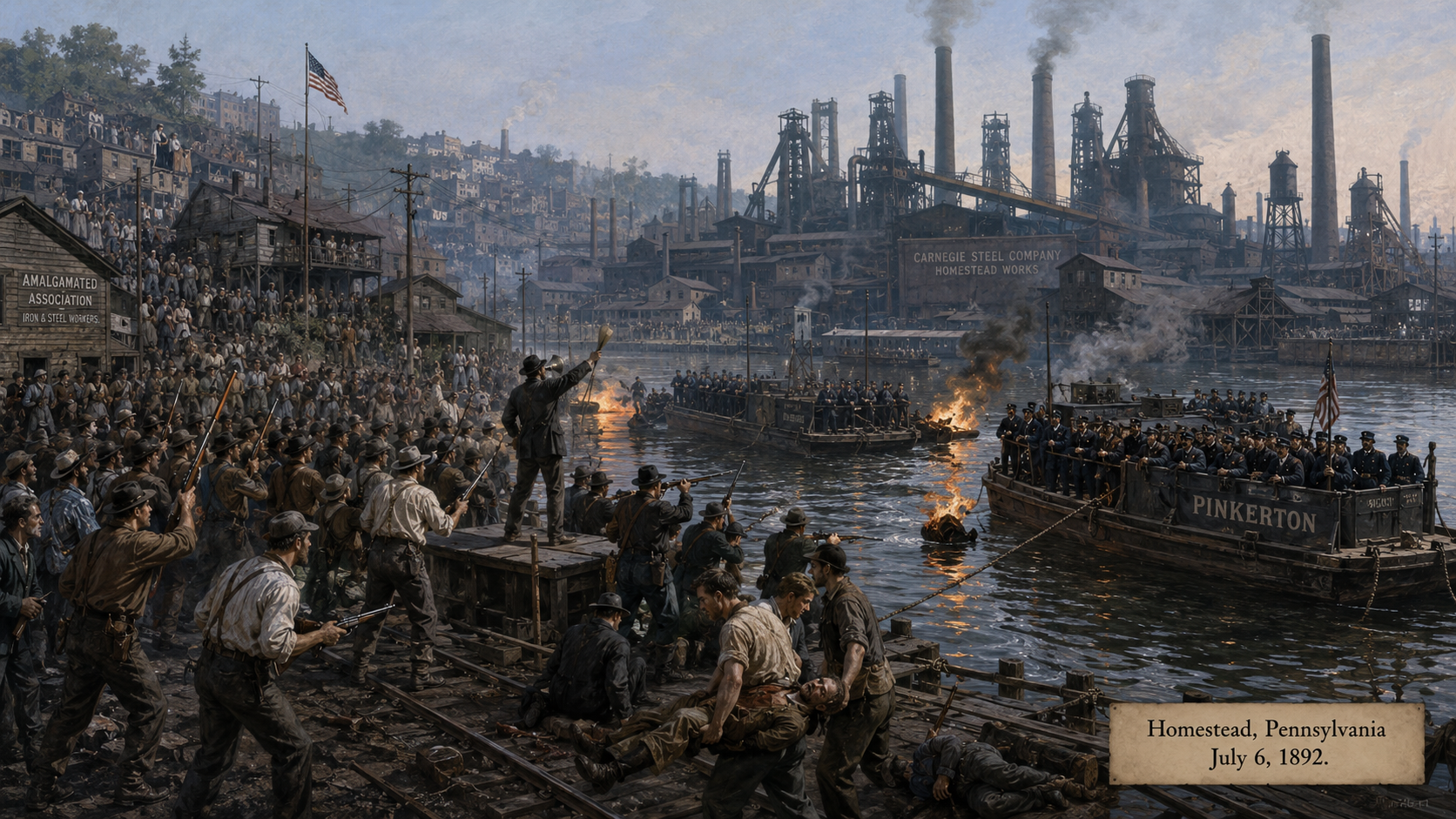
At the Homestead Strike, Carnegie Steel workers at Homestead, Pennsylvania, struck when management cut wages and refused to recognize the union contract. Carnegie's deputy Henry Clay Frick locked out the workers and hired 300 Pinkerton agents (private security) to escort strikebreakers. Armed conflict between strikers and Pinkertons on the Monongahela River killed ten people. Pennsylvania's governor sent 8,500 National Guard troops, breaking the strike. The steel union was destroyed; it did not recover until the 1930s.
The Pullman Strike began when Pullman Palace Car Company (which made luxury railroad sleeping cars) cut wages by 25 percent without reducing rents in the company town it owned. Workers struck; the American Railway Union, led by Eugene Debs, called a nationwide boycott of trains pulling Pullman cars. The boycott paralyzed rail traffic nationwide. President Grover Cleveland obtained a federal injunction against the strike, citing interference with U.S. mail delivery, and sent federal troops to enforce it. The strike was broken; Debs was imprisoned for six months. His imprisonment radicalized him — he became a socialist and five-time presidential candidate.
Both strikes demonstrated a structural weakness of the American labor movement: the courts consistently sided with employers, and the federal and state governments were willing to use troops to suppress strikes. This pattern would not change fundamentally until the New Deal legislation of the 1930s.
The New Immigration Wave
New immigration wave describes the shift in immigration patterns that began in the 1880s. Earlier waves had come primarily from northern and western Europe — England, Germany, Scandinavia, Ireland. The "new immigration" brought millions from southern and eastern Europe — Italy, Poland, Russia, Hungary, Greece, and the Austro-Hungarian Empire — as well as significant numbers from China and Japan (before the Chinese Exclusion Act of 1882 and the Gentleman's Agreement of 1907 severely restricted Asian immigration).
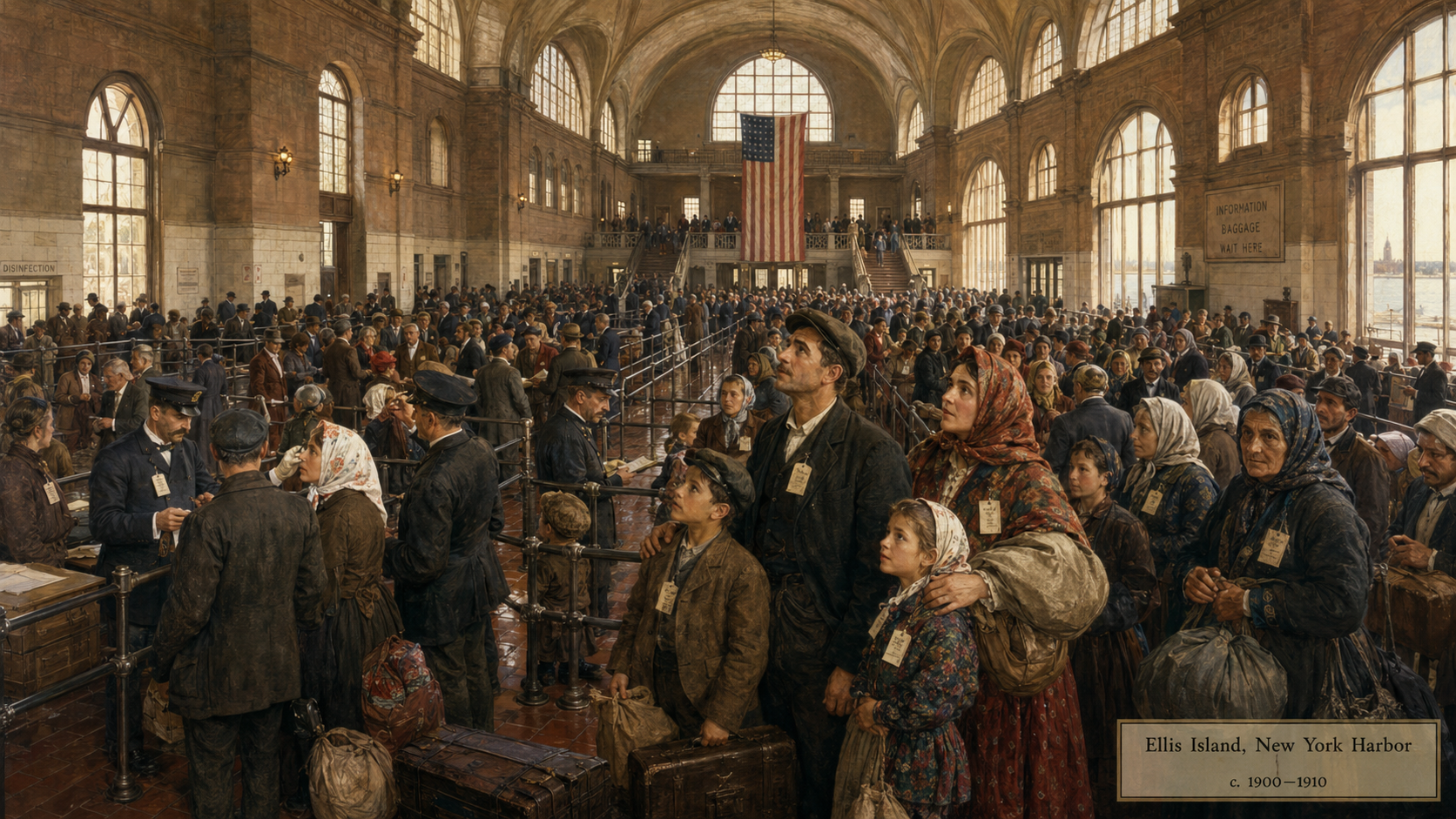
Ellis Island (opened 1892) processed 12 million immigrants between 1892 and 1954, becoming the iconic gateway to America. Immigrants were medically examined, questioned, and registered — a process that took hours for most but resulted in deportation for roughly 2 percent deemed medically or otherwise unfit.
The new immigrants brought different languages, different religions (Catholicism, Judaism, Eastern Orthodoxy rather than Protestantism), and different cultural practices that triggered nativist reactions. They also built the labor force that staffed the steel mills, mines, garment factories, and meatpacking plants of industrial America — often doing the most dangerous and lowest-paid work.
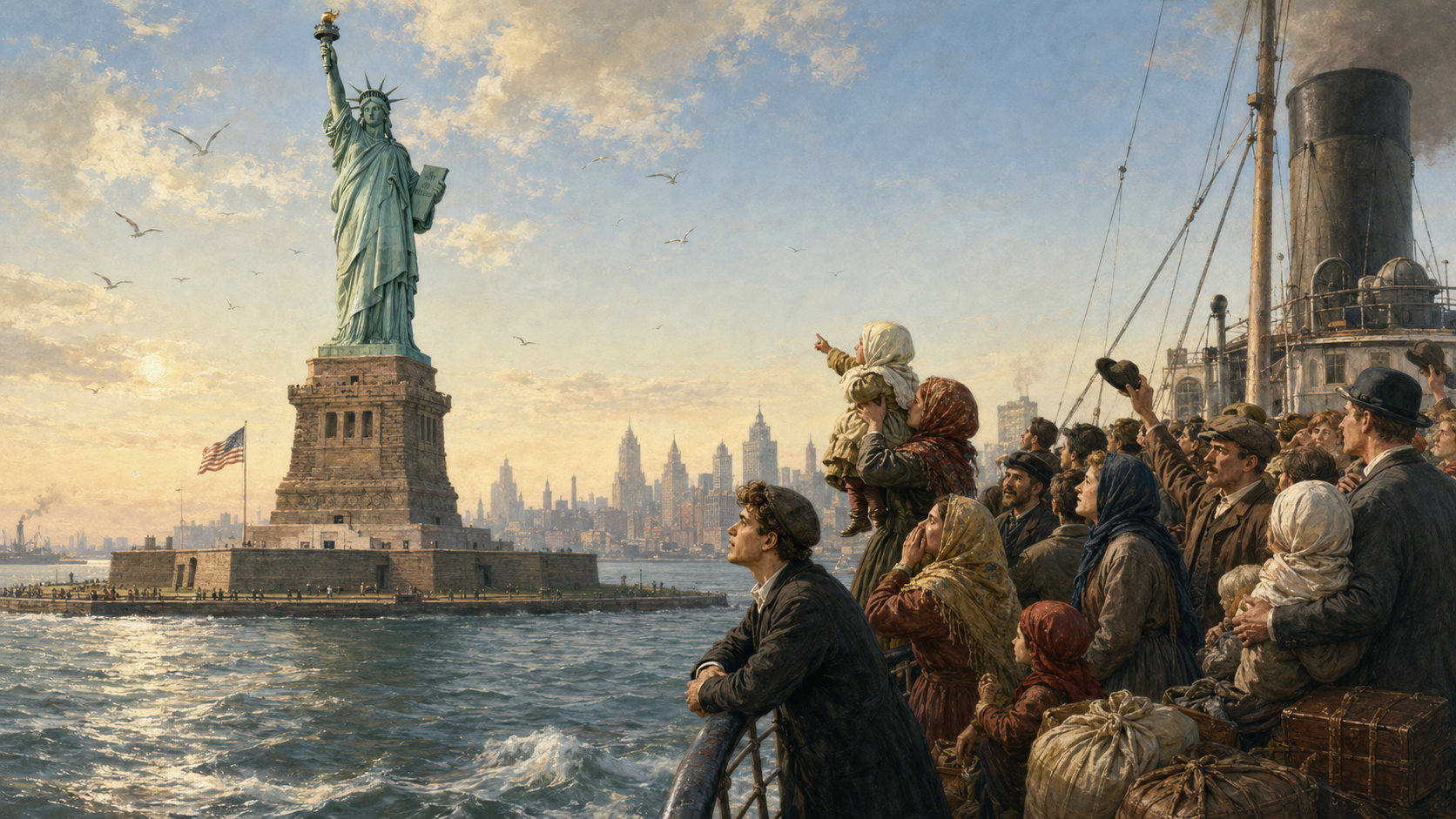
The Migration and Settlement AP theme asks how migration patterns have continuously reshaped American society. The Gilded Age immigration wave reshaped the ethnic and religious composition of American cities, created political organizations (ethnic political machines), and produced cultural fusions (in food, music, language, religion) that define American society today.
Immigration and the availability heuristic
 When studying immigration history, watch for the availability heuristic: the immigrants who appear most prominently in historical narratives — those who wrote memoirs, became successful, or were the subjects of sympathetic journalism — are not representative of the typical immigrant experience. The typical immigrant was a poor, often semi-literate manual worker who worked dangerous jobs, lived in overcrowded tenements, and left few written records. Seeking out these less "available" stories is essential for accurate historical understanding.
Urbanization, Tenement Housing, and Political Machines
Urbanization accelerated dramatically in the Gilded Age. New York City grew from roughly 1 million people in 1860 to 3.5 million by 1900; Chicago grew from 109,000 to 1.7 million. Industrial cities like Pittsburgh, Cleveland, and Detroit exploded. By 1900, roughly 40 percent of Americans lived in cities — up from 20 percent in 1860.
Rapid urbanization without adequate planning produced tenement housing — overcrowded, poorly ventilated, poorly lit multi-family buildings that housed the urban poor in conditions that shocked reformers. Jacob Riis's documentary photography and muckraking journalism (How the Other Half Lives, 1890) brought the reality of tenement conditions to a middle-class readership that had no direct experience of them.
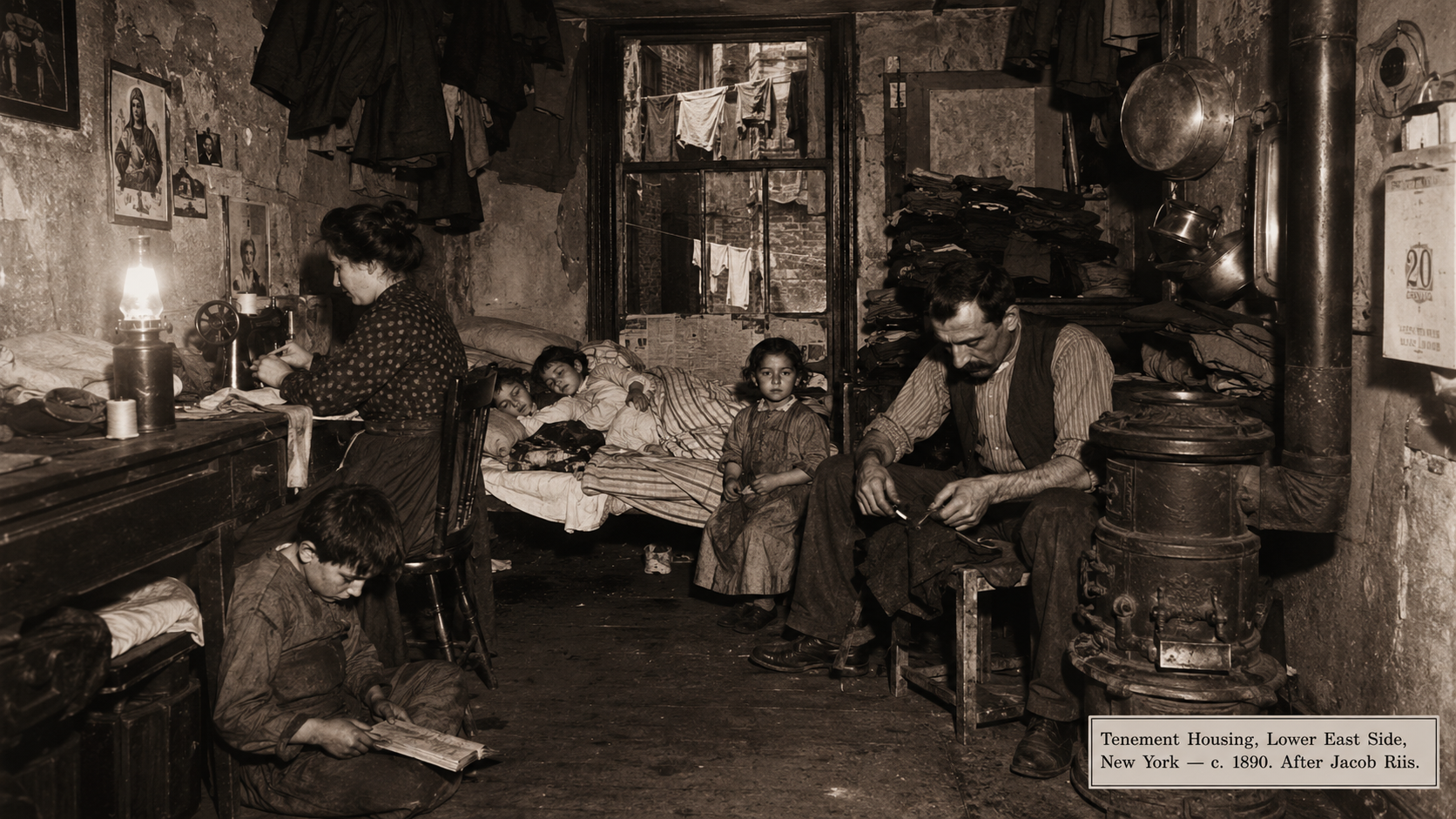
Political machines were the organizational response to the needs of urban immigrant communities. Machines like Tammany Hall in New York provided immigrants with jobs, legal assistance, housing help, and social services in exchange for votes.
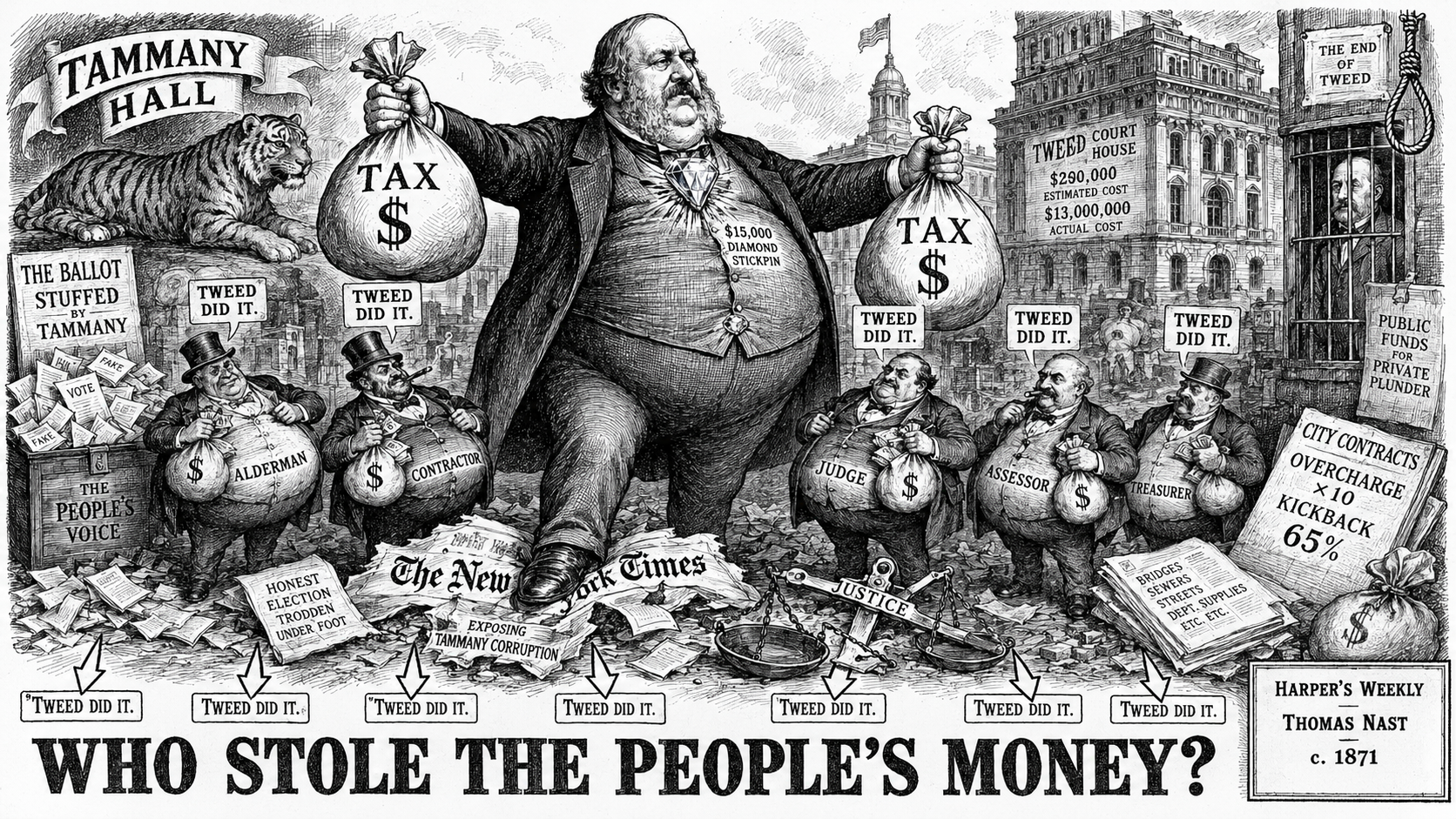 Critics (typically middle-class reformers) condemned machines as corrupt — they were — but machines also served genuine social functions in cities without welfare states, and their "corruption" often involved providing services that the government otherwise refused to deliver.
The relationship between political machines, immigrants, and urban communities is a case study in the systems thinking concept of unintended consequences: the failure of formal government to serve immigrant communities produced political machines as a workaround, which then produced corruption that reformers targeted, which led to Progressive Era municipal reform — covered in Chapter 12.
Diagram: Gilded Age Inequality — Wealth Distribution Chart
Gilded Age Wealth Distribution — Interactive Chart
Type: chart
sim-id: gilded-age-inequality
Library: p5.js
Status: Specified
Purpose: Allow students to visualize wealth distribution in the Gilded Age, compare it to other historical periods, and connect it to the social conflicts of the era.
Bloom Level: Analyze (L4) Bloom Verb: Compare
Learning Objective: Students compare wealth distribution across historical periods and explain how extreme inequality in the Gilded Age contributed to the rise of labor and reform movements.
Canvas layout: - Responsive width; height approximately 480px - Main chart area: bar chart showing percentage of national wealth held by top 1%, next 9%, and bottom 90%, across five time periods - Time periods: 1870, 1900, 1929 (peak inequality), 1970 (post-New Deal low), 2020 (current) - Each bar is divided into three segments with distinct colors
Data (approximate historical estimates): - 1870: Top 1% = 27%, Next 9% = 38%, Bottom 90% = 35% - 1900: Top 1% = 35%, Next 9% = 35%, Bottom 90% = 30% - 1929: Top 1% = 44%, Next 9% = 33%, Bottom 90% = 23% - 1970: Top 1% = 22%, Next 9% = 33%, Bottom 90% = 45% - 2020: Top 1% = 35%, Next 9% = 37%, Bottom 90% = 28%
Interactivity: - Hovering any bar segment shows: exact percentage, year, which economic/political events coincided - Clicking a year opens a detail panel: key events (e.g., "1900: Robber Baron era; Sherman Antitrust Act just passed; labor unions weak"), income tax status, major policy context - A "What happened between X and Y?" button highlights the years and shows a 2-sentence explanation of what policy changes drove the shift (e.g., "Between 1929 and 1970: New Deal labor laws, progressive income tax, GI Bill expanded the middle class")
Color scheme: - Top 1%: dark gold (#f9a825) - Next 9%: indigo (#3949ab) - Bottom 90%: teal (#00897b) - Hover highlight: brightened color with tooltip border
Responsive behavior: Chart scales with canvas width; legend moves to bottom on narrow canvas.
Implementation: p5.js; bar chart with hover-triggered tooltips
Summary
The Gilded Age transformed the United States from an agricultural society into the world's largest industrial economy in a single generation. The transcontinental railroad and railroad expansion made national markets possible; industrial strategies of vertical and horizontal integration concentrated production into trusts and monopolies; Robber Baron capitalism produced both extraordinary wealth and extreme inequality justified by Social Darwinism.
The labor movement responded to industrial exploitation with the Knights of Labor's inclusive organizing and the AFL's pragmatic craft unionism, but faced devastating defeats at Homestead and Pullman that demonstrated the alignment of government and courts with capital against labor. The new immigration wave reshaped American cities, creating dense immigrant communities that navigated through political machines and tenement housing while building the industrial labor force.
The AP theme of Migration and Settlement runs through this entire chapter: the movement of millions of people — from Europe, from American farms to cities, within the expanding economy — continuously reshaped who Americans were and what they needed from their government.
Knowledge Check 1 — Click to reveal
Question: Social Darwinism argued that the wealthy deserved their wealth because they were the "fittest." Apply critical thinking skills: what logical error does this argument make, and what evidence would challenge it?
Answer: Social Darwinism commits several logical errors. First, it conflates different meanings of "fit" — fitness in evolutionary biology means reproductive success, not economic success; there is no biological mechanism connecting wealth to natural selection. Second, it commits a correlation/causation error: even if wealthy people are often capable and hard-working, it does not follow that capability and hard work alone explain wealth, or that poverty reflects personal failure rather than structural factors. Evidence that challenges Social Darwinism includes: the role of inherited wealth (many Gilded Age fortunes were inherited or built on family connections); the role of government subsidies (railroad land grants, tariff protection) in building "self-made" fortunes; and the fact that millions of equally capable and hard-working people remained poor because of structural conditions rather than personal inadequacy.
Knowledge Check 2 — Click to reveal
Question: The AFL organized only skilled workers, largely excluding unskilled immigrant workers and Black workers. Apply the concept of unintended consequences to this organizational choice.
Answer: The AFL's exclusivity produced several unintended consequences. First, by excluding the most economically vulnerable workers, it left the fastest-growing segment of the industrial workforce (unskilled factory workers) unorganized — weakening the overall labor movement's bargaining power. Second, employers could and did use the excluded workers as strikebreakers, undermining AFL strikes — ironically turning the excluded workers against the organized workers. Third, by institutionalizing racial and ethnic exclusion, the AFL contributed to a segmented labor market that depressed wages for all workers, including AFL members who faced competition from a large pool of non-union labor. The unintended consequence of the AFL's pragmatic exclusivity was a weaker labor movement than a more inclusive approach might have produced.
Chapter 10 Complete!
 You've just worked through the Gilded Age's extraordinary contradictions: the most rapid industrial growth in human history alongside the most extreme inequality, the most ambitious concentration of private power alongside the first stirrings of the organized resistance that would eventually counterbalance it. In Chapter 11, we follow those contradictions into the countryside — where farmers faced their own version of the industrial system's power — and onto the frontier, where America's last chapter of westward expansion played out.