Manifest Destiny and Antebellum Reform (1828–1848)
Summary
This chapter covers westward expansion through Manifest Destiny, the Mexican-American War, and the Texas Revolution alongside the reform movements that defined antebellum America — abolitionism, women's rights at Seneca Falls, transcendentalism, and the Industrial and Market Revolutions. The AP theme of Geography and the Environment is introduced here as a lens for understanding how geography shaped expansion and conflict.
Concepts Covered
This chapter covers the following 16 concepts from the learning graph:
- Manifest Destiny
- Texas Revolution
- Mexican-American War
- Seneca Falls Convention
- Abolitionism
- Frederick Douglass
- William Lloyd Garrison
- Underground Railroad
- Temperance Movement
- Women's Rights Movement
- Transcendentalism
- Industrial Revolution in America
- Market Revolution
- Transportation Revolution
- Erie Canal
- Geography and the Environment
Prerequisites
This chapter builds on concepts from: - Chapter 6: The Jeffersonian Era
Expansion and conscience collide
 Welcome to Chapter 7! The antebellum decades were simultaneously the era of Manifest Destiny — the belief that America was destined to stretch from sea to sea — and the era when the abolitionists and women's rights advocates began demanding that the country live up to the ideals it claimed to hold. These two impulses were not separate stories. They crashed into each other at every turn. Let's investigate the evidence!
The Transformation of the American Economy
Before examining westward expansion and reform movements, we need to understand the economic transformation that made both possible — and made their conflicts sharper.
The Industrial Revolution in America
The Industrial Revolution in America arrived later than in Britain but accelerated rapidly after 1820. The key development was the spread of water-powered textile mills, beginning in Lowell, Massachusetts, where the Boston Associates built a planned industrial city around a system of canals and mills. By 1840, American manufacturing was growing faster than any economy in the world.
The American Industrial Revolution differed from Britain's in one important way: the labor supply. Without a large, dispossessed rural population to fill factories, American manufacturers initially recruited young women from New England farm families (the "Lowell mill girls") and, later, waves of Irish and German immigrants. The factory system transformed both the meaning of work — from skilled craftsmanship to mechanized, repetitive tasks — and the physical landscape of the Northeast.
The Market Revolution and Transportation Revolution
The Market Revolution describes the broader transformation of the American economy from local, subsistence-oriented production to integrated, national market production. Americans who had previously grown food primarily for their own families increasingly specialized in cash crops or manufactured goods, sold their output through markets, and bought what they needed with money. This shift created enormous new wealth — and enormous new inequalities.
Connecting markets across a large country required infrastructure, and the Transportation Revolution provided it. Canal construction boomed in the 1820s and 1830s; the Erie Canal (completed 1825) connected the Great Lakes to the Hudson River and New York City, dramatically reducing the cost of transporting grain from the Midwest to eastern markets. Railroads, beginning in the 1830s and accelerating after 1840, eventually made canals obsolete while further knitting the national economy together.
Geography and the Environment shaped every aspect of this economic transformation. The Northeast had swift rivers for mill power and harbors for trade; the Midwest had rich glacial soils and the navigable river systems (the Ohio and Mississippi) that made commercial agriculture possible; the South had the climate for cotton and the labor of enslaved people to grow it. Geography did not determine economic choices, but it powerfully constrained and channeled them.
Diagram: The Transportation Revolution — Connections Map
Transportation Revolution — Interactive Connections Map (1800–1860)
Type: map
sim-id: transportation-revolution-map
Library: p5.js
Status: Specified
Purpose: Allow students to visualize how canals, roads, and early railroads progressively connected the American economy between 1800 and 1860, and understand how transportation infrastructure shaped economic growth and regional integration.
Bloom Level: Analyze (L4) Bloom Verb: Examine
Learning Objective: Students examine how transportation networks shaped economic geography, explaining how the Erie Canal and railroad expansion connected markets and accelerated the Market Revolution.
Canvas layout: - Responsive width; height approximately 500px - Simplified map of the eastern United States and Midwest showing major waterways - Time slider at the bottom: 1800 → 1820 → 1840 → 1860 - As the slider advances, new transport routes appear on the map in different colors
Transport layers: - 1800: Major navigable rivers only (blue lines) — Ohio, Mississippi, Hudson - 1820: National Road (tan line) and early turnpikes - 1825: Erie Canal added (distinct canal-blue dashed line) with tooltip showing cost/time reduction - 1840: Early railroad lines in the Northeast (red lines) - 1860: Full railroad network east of the Mississippi (extensive red network)
Clickable elements: - Each transport route, when clicked, shows: route name, completion date, what it connected, and estimated cost/time reduction for shipping goods
Key annotation: Erie Canal connection from Buffalo to Albany to NYC — clicking it shows the cost calculation: shipping a ton of flour from Buffalo to NYC dropped from $100 (1817) to $10 (1830).
Color scheme: - Rivers: dark blue - Canals: light blue dashed - Roads/turnpikes: tan - Railroads: red - Major cities: gold dots
Responsive behavior: Map scales with canvas; slider remains functional on touch screens.
Implementation: p5.js; map as simplified polygon shapes; time-slider controls layer visibility.
Part 1: Manifest Destiny and Continental Expansion
Manifest Destiny
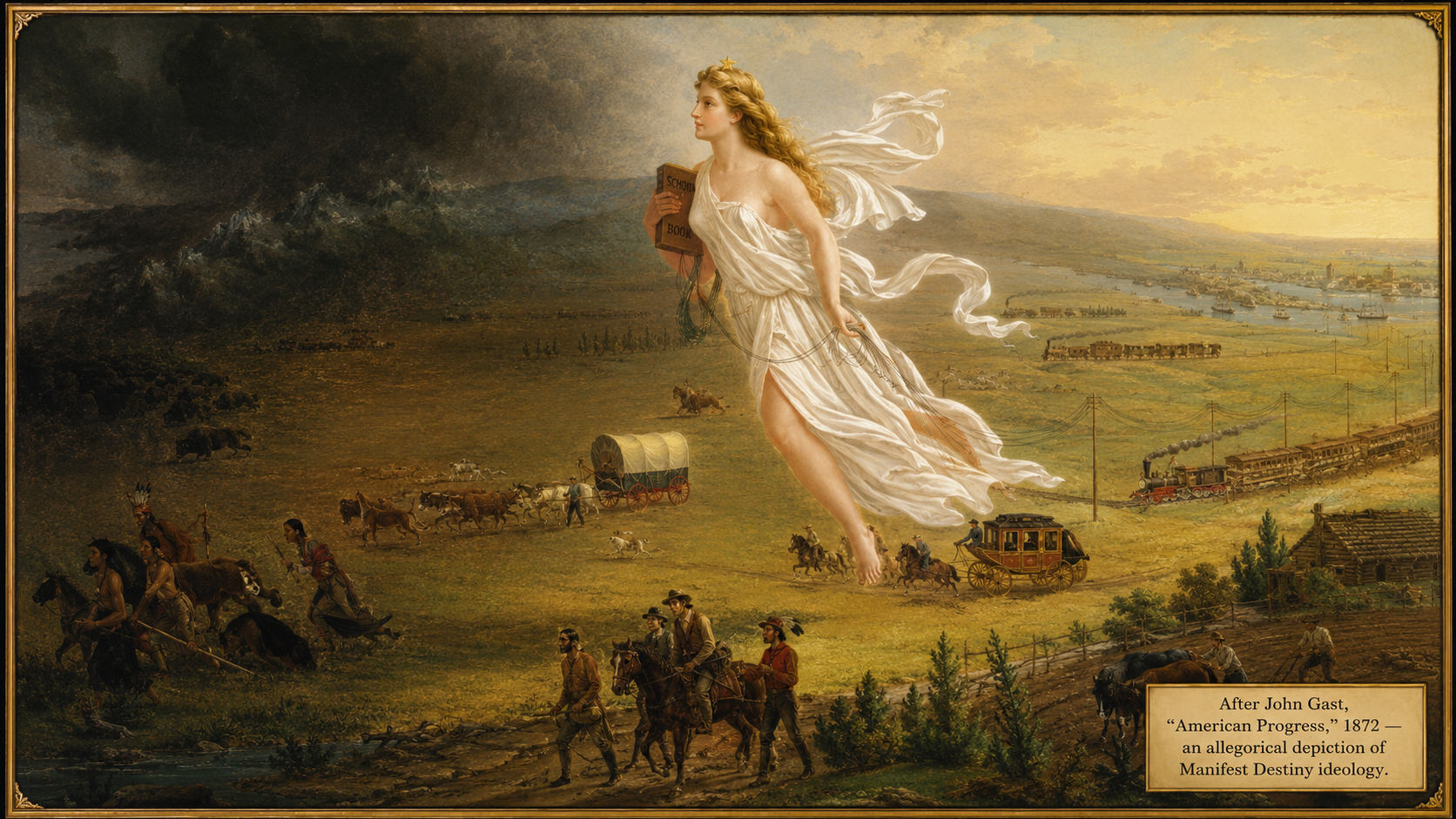
Manifest Destiny was the widely held belief in antebellum America that the United States was divinely ordained to expand across the North American continent — that American expansion was not merely desirable but inevitable, part of God's plan. The phrase was coined by journalist John O'Sullivan in 1845, but the idea had been implicit in American expansionism since Jefferson.
Manifest Destiny was not a neutral geographic description — it was an ideological justification for dispossession. Framing expansion as destiny or divine will obscured the choices involved, the violence required, and the costs paid by Indigenous peoples, Mexicans, and others in the path of expansion. It is a classic example of confirmation bias operating at a national scale: Americans who wanted western land found in Manifest Destiny a belief system that confirmed their desires while suppressing inconvenient moral questions.
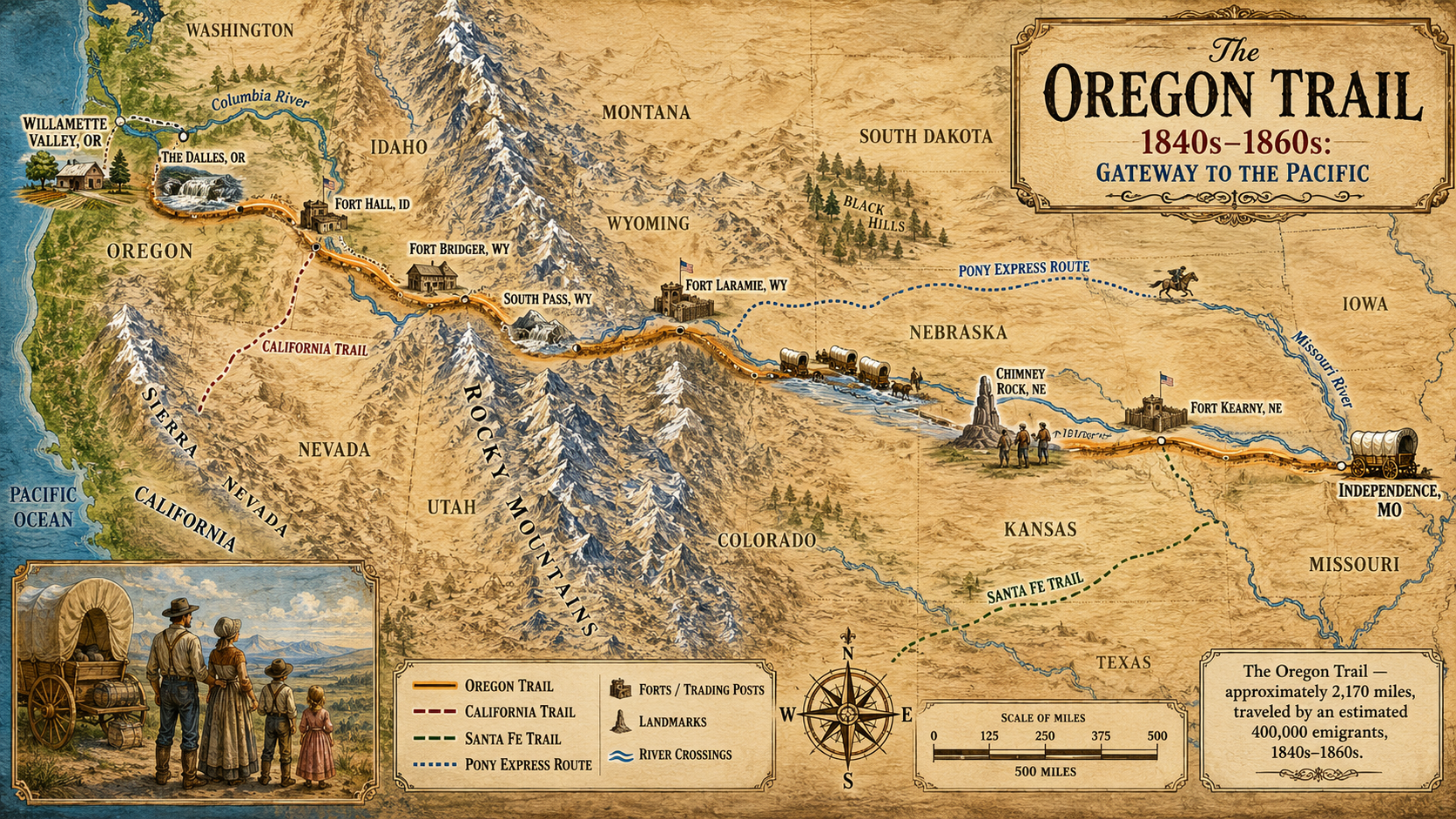
The Geography and the Environment lens helps analyze Manifest Destiny concretely: what specific geographic features attracted American settlers, why routes like the Oregon Trail developed where they did, and how environmental factors (climate, soil, water) shaped where American settlement succeeded and where it struggled.
The Texas Revolution (1835–1836)
The Texas Revolution grew from a collision between American settlers and the Mexican government. Mexico had encouraged American settlement of its sparsely populated Texas territory in the 1820s, but the American settlers (including many slaveholders) quickly outnumbered the Mexican population and began chafing under Mexican law — which, importantly, had abolished slavery in 1829.
After the Mexican government moved to restrict further American immigration and enforce its laws, American settlers revolted. The Texas Revolution's most famous episode was the Battle of the Alamo (1836), where approximately 180 Texas defenders (including Davy Crockett and Jim Bowie) were killed by a Mexican army under General Santa Anna.
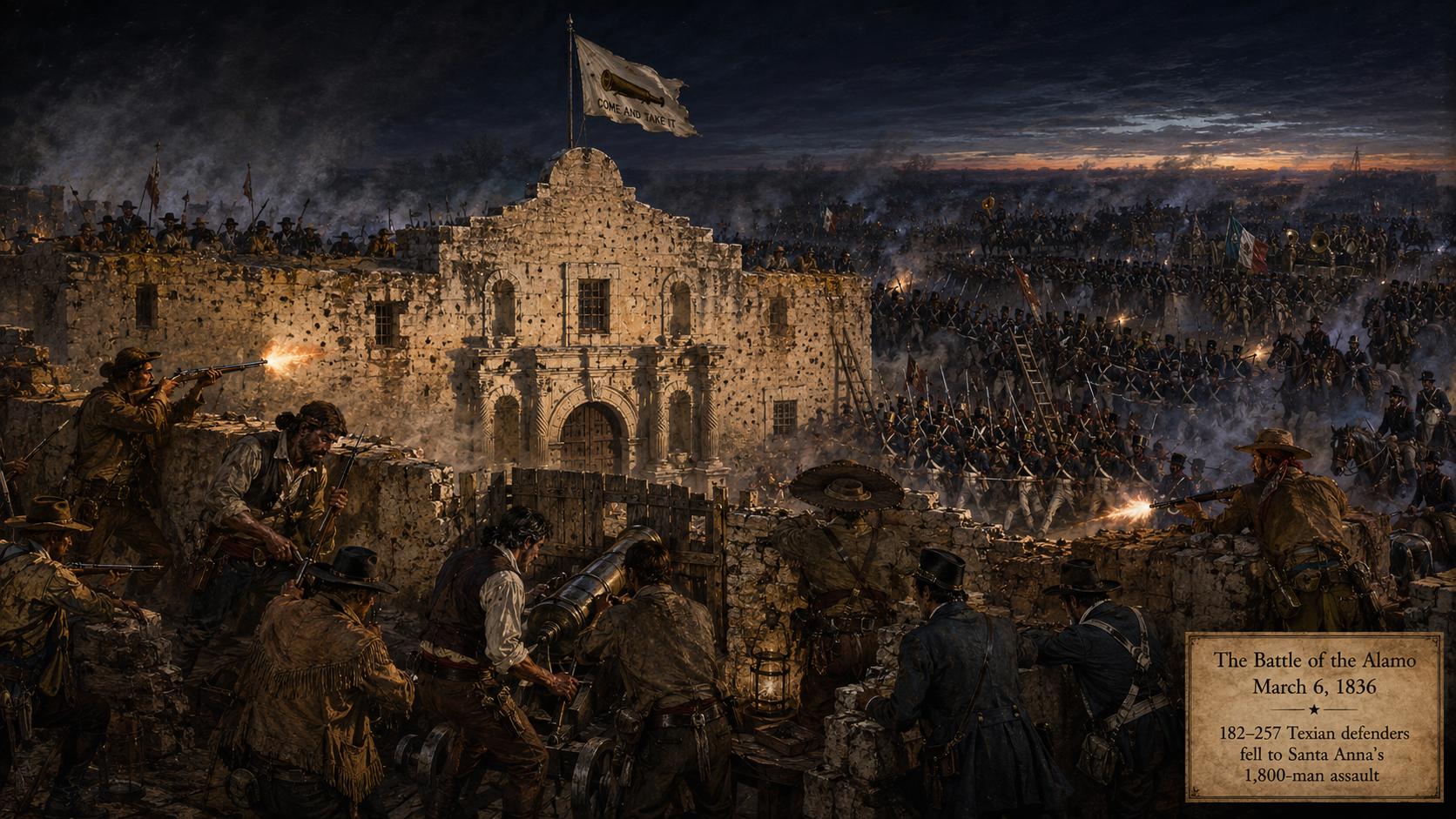 The phrase "Remember the Alamo!" became the rallying cry for Sam Houston's force that subsequently defeated Santa Anna at the Battle of San Jacinto.
The Republic of Texas declared independence but the United States declined immediate annexation (partly to avoid war with Mexico, partly because adding another slave state was politically explosive). Texas remained an independent republic until 1845.
The Mexican-American War (1846–1848)
The Mexican-American War began after the United States annexed Texas and disputed the Texas-Mexico border. President James K. Polk, a strong advocate of Manifest Destiny, sent troops to the disputed border region. When Mexican forces attacked an American patrol, Polk told Congress that "American blood has been shed on American soil" — a claim that Abraham Lincoln (then a freshman congressman) challenged as false, demanding to know the exact "spot" where the blood was shed.
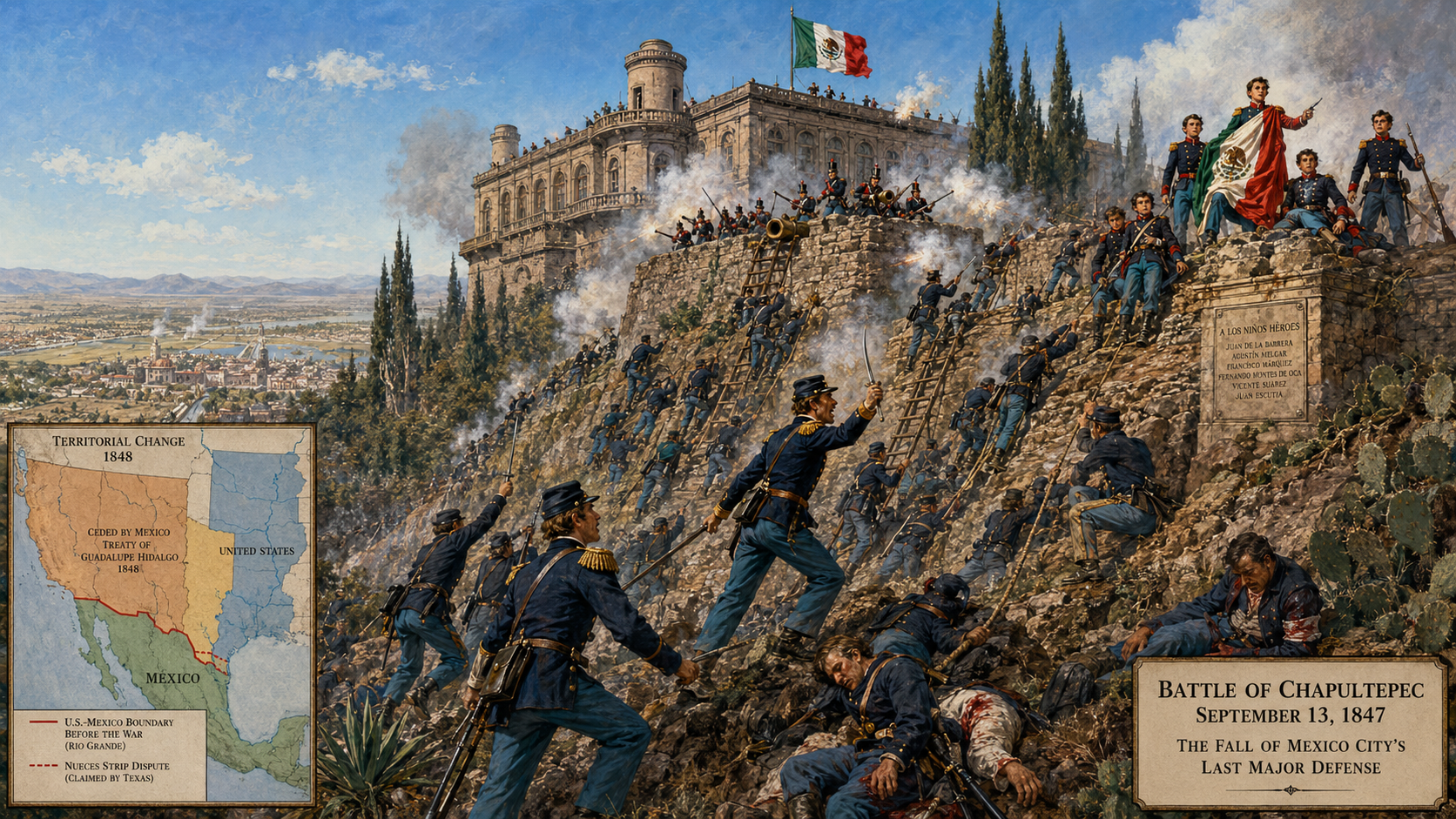
The war was a military success and a moral controversy. The U.S. won decisively, occupying Mexico City in 1847. The Treaty of Guadalupe Hidalgo (1848) transferred approximately 525,000 square miles — what is now California, Nevada, Utah, Arizona, New Mexico, and parts of Colorado and Wyoming — to the United States in exchange for $15 million and the assumption of claims American citizens held against Mexico.
The Wilmot Proviso — a congressional proposal to ban slavery from all territory acquired from Mexico — failed to pass the Senate but inflamed the slavery debate. The new territory created by the Mexican-American War reopened every political wound that the Missouri Compromise of 1820 had temporarily closed.
Was Manifest Destiny inevitable?
 The word "destiny" implies inevitability — as if American continental expansion had to happen the way it did. Apply continuity and change thinking: what was continuous about American expansionism (land hunger, racial hierarchy, economic ambition), and what was genuinely contingent — things that could have gone differently? If Mexico had not been weakened by internal conflict in the 1840s, would the U.S. have been able to take half its territory? Calling something "destiny" is often a way of avoiding the question of choice.
Part 2: The Antebellum Reform Movements
The same decades that produced Manifest Destiny also produced the most sustained moral reform effort in American history up to that point. Reform movements grew from several converging sources: the religious revival energy of the Second Great Awakening, the Enlightenment idea that human beings could improve their conditions through reason and action, and the Market Revolution's creation of a literate middle class with time and resources for organized activity.
Abolitionism
Abolitionism — the movement to immediately end slavery — was the most politically explosive reform movement of the antebellum period. Most northern opinion before the 1830s favored gradual emancipation or colonization (returning freed Black Americans to Africa). The abolitionist movement, emerging in the early 1830s, demanded immediate, unconditional emancipation on moral grounds.
William Lloyd Garrison was the most prominent white abolitionist. His newspaper The Liberator, begun in 1831, called slavery a sin and slaveholders criminals. He burned copies of the Constitution at public meetings, calling it a "covenant with death and an agreement with hell" for its protection of slavery.
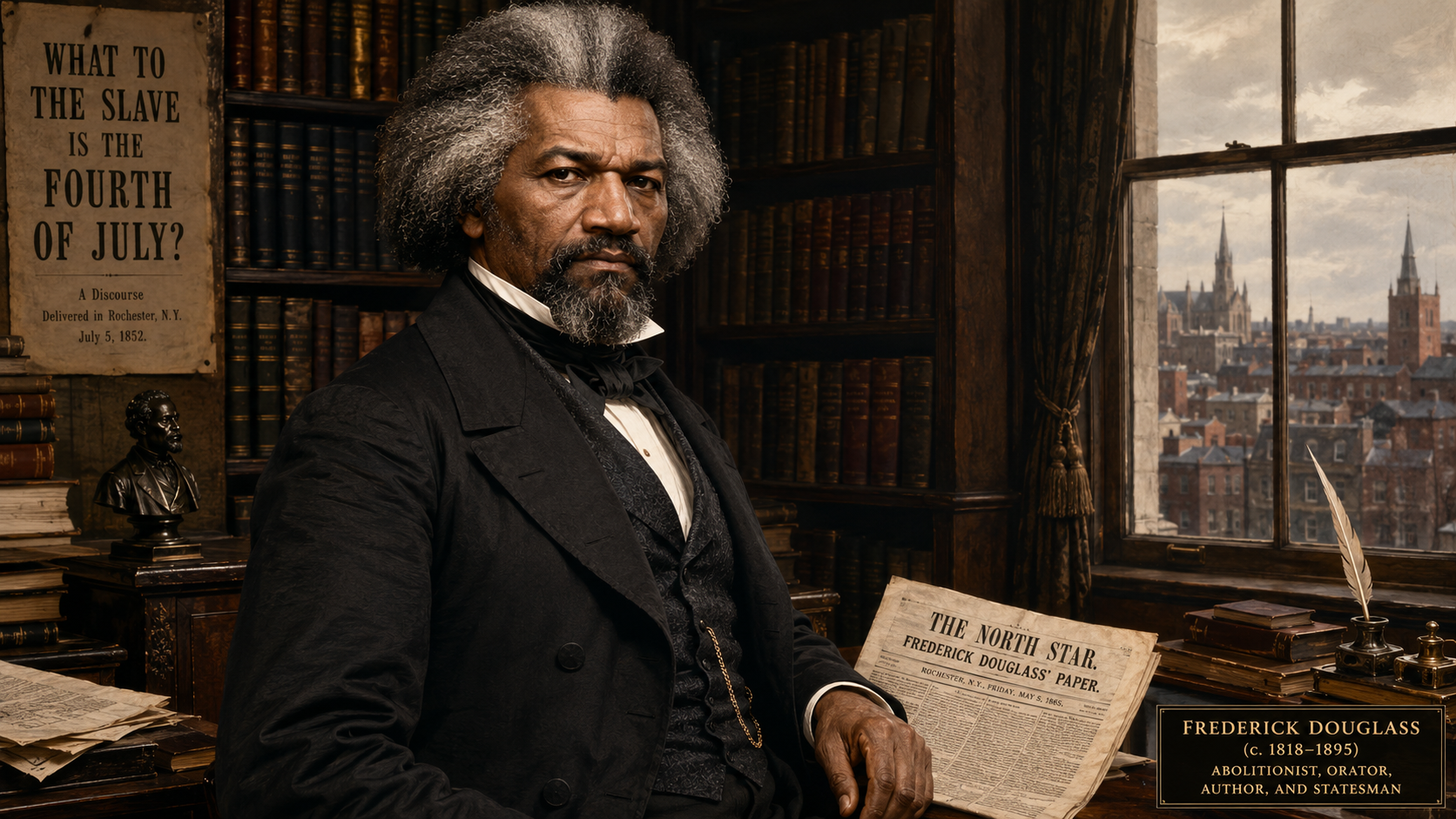
Frederick Douglass was the most important Black abolitionist — and arguably the most important American writer and orator of the 19th century. Born enslaved in Maryland, Douglass escaped to freedom in 1838 and became a powerful anti-slavery speaker, drawing on his own experience to make the abstract horror of slavery concrete and immediate. His autobiography Narrative of the Life of Frederick Douglass (1845) was one of the most widely read books of the era.
Douglass and Garrison eventually split over strategy and constitutional interpretation. Garrison believed the Constitution was irredeemably pro-slavery; Douglass came to believe it could be interpreted as an anti-slavery document if the principles of the Declaration of Independence were taken seriously. This debate — whether to work within the existing system or declare it irredeemably corrupted — recurs in American reform movements throughout the 19th and 20th centuries.
The Underground Railroad
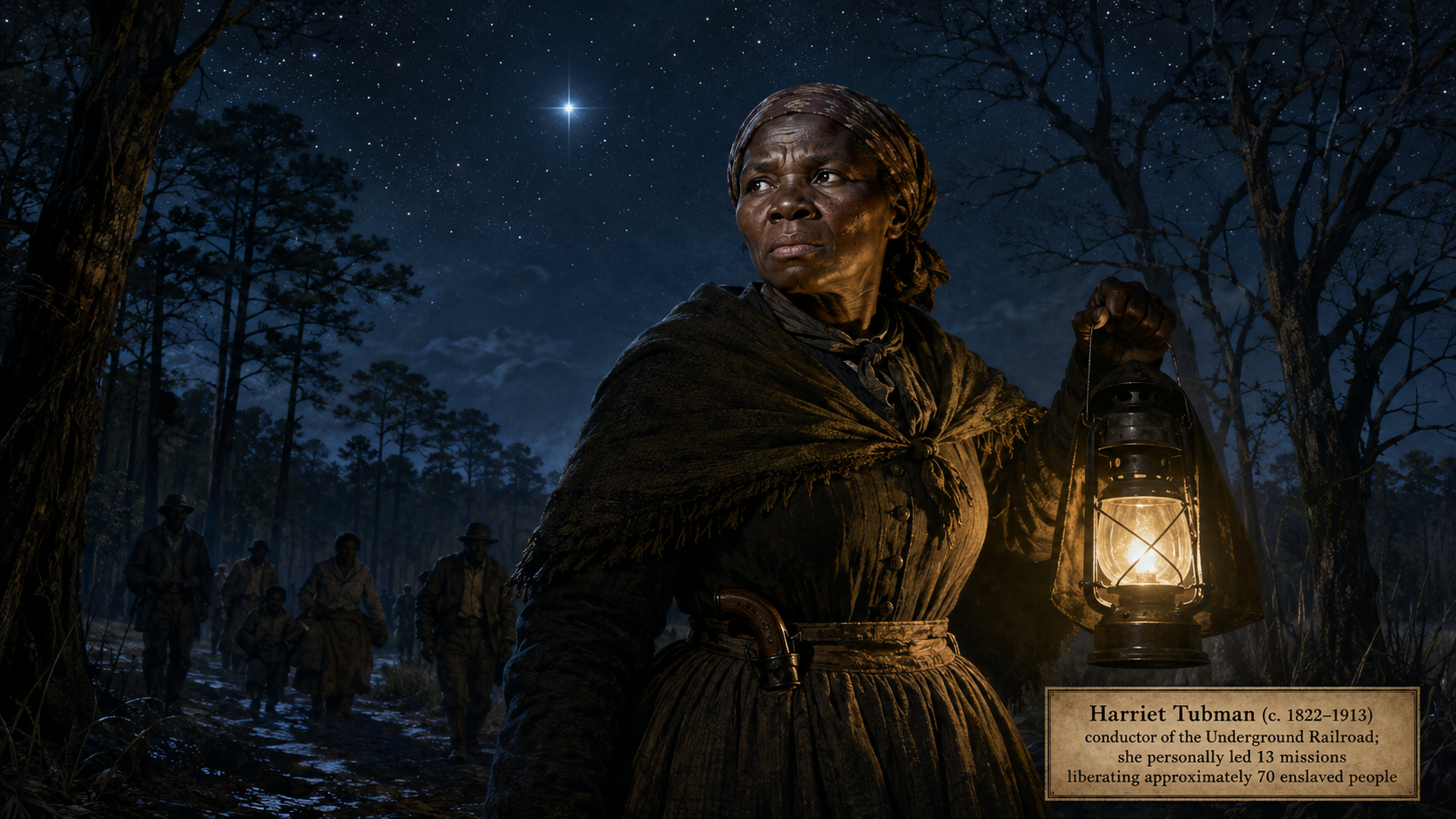
The Underground Railroad was not a literal railroad but a network of safe houses, guides, and supporters that helped enslaved people escape from the South to the North and into Canada. It operated from roughly the 1780s through the Civil War. Its most famous conductor was Harriet Tubman, who made thirteen missions into the South after her own escape and freed approximately 70 enslaved people.
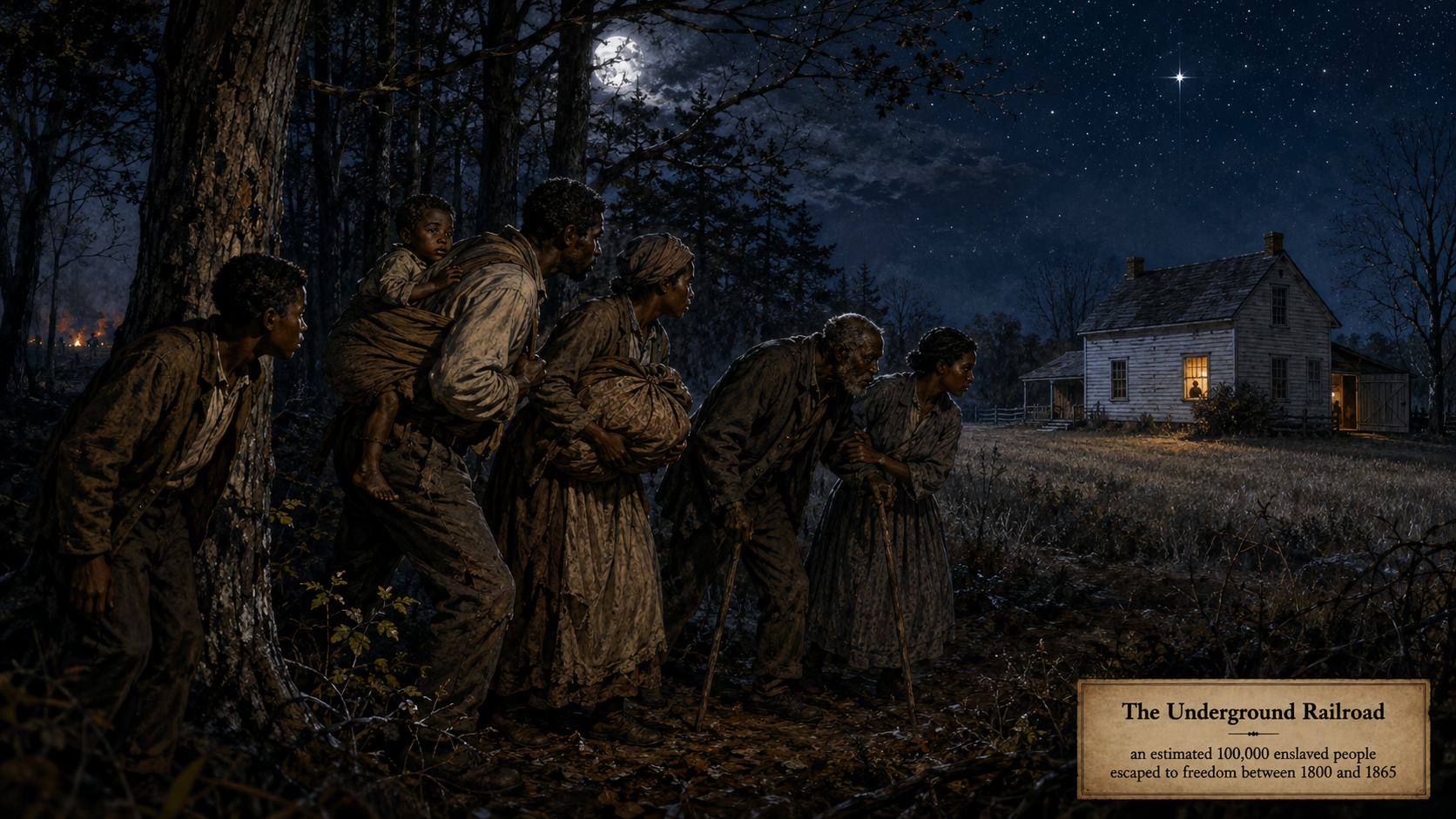
The Underground Railroad is sometimes mythologized into a more organized and extensive system than the historical evidence supports. It was real — thousands of enslaved people did escape along its routes — but most escapes were individual acts of extraordinary courage rather than organized operations. The Railroad's historical significance is partly in what it actually did, and partly in the political effect it had: the Fugitive Slave Act of 1850, which required northern citizens to assist in capturing escaped enslaved people, forced many northern whites who had tried to ignore slavery to take a direct role in its enforcement.
Transcendentalism
Transcendentalism was a philosophical and literary movement centered in Concord, Massachusetts, led by Ralph Waldo Emerson and Henry David Thoreau. Transcendentalists believed in the primacy of individual conscience over social convention, the spiritual dimension of nature, and the capacity of human beings to access truth through intuition rather than reason alone.
Thoreau's Walden (1854) described two years of deliberate simplicity at Walden Pond as a critique of the materialism and conformity of American society. His essay "Civil Disobedience" argued that individuals have a moral obligation to refuse to cooperate with unjust laws — a concept that directly influenced Gandhi and Martin Luther King Jr. in the 20th century.
Transcendentalism contributed to the reform culture of antebellum America by providing a philosophical foundation for individual moral action: if your conscience tells you something is wrong, you are obligated to act on that conviction regardless of what society says.
Women's Rights and the Seneca Falls Convention
The women's rights movement grew directly from women's participation in abolitionism. Women who worked for anti-slavery organizations discovered that they were expected to defer to men in mixed-gender settings and were denied speaking roles at international abolition conferences. The contradiction between fighting for others' freedom while lacking their own mobilized a generation of women reformers.
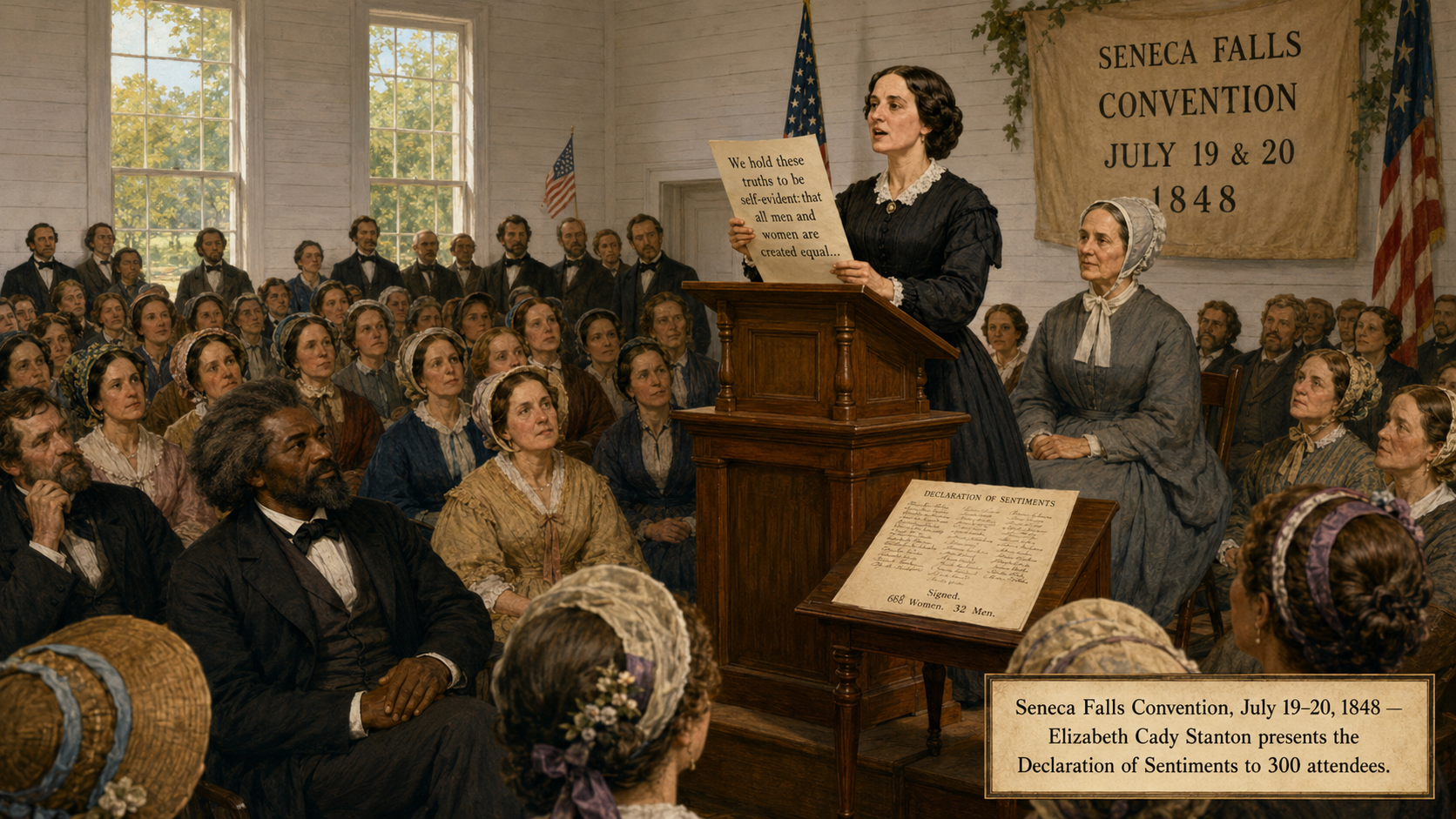
The Seneca Falls Convention (July 1848) was the first women's rights convention in American history, organized by Elizabeth Cady Stanton and Lucretia Mott in Seneca Falls, New York. Approximately 300 people attended, including Frederick Douglass. The convention produced the Declaration of Sentiments, deliberately modeled on the Declaration of Independence, which declared that "all men and women are created equal" and demanded equal rights in education, employment, property ownership, and most controversially, the vote.
The Women's Rights Movement of this period is significant not only for its immediate demands (most of which were not achieved for decades) but for the organizing strategies and intellectual frameworks it developed. Stanton and Susan B. Anthony's National Woman Suffrage Association (founded 1869) would continue the struggle for women's suffrage until the 19th Amendment was ratified in 1920 — 72 years after Seneca Falls.
The Temperance Movement
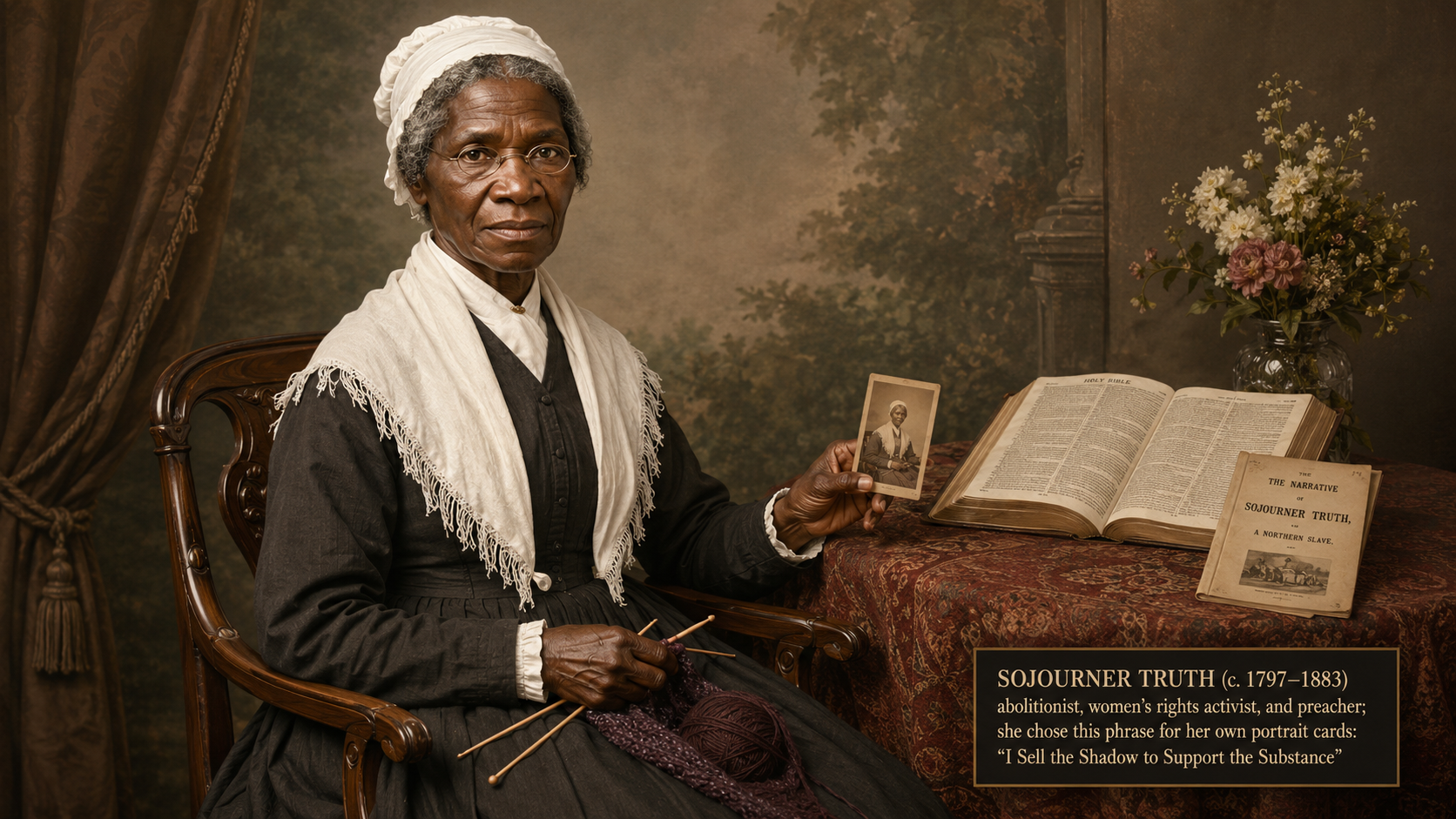
The Temperance Movement sought to reduce or eliminate alcohol consumption, which it linked to poverty, domestic violence, and moral degradation. It drew its energy from evangelical Protestantism and was disproportionately organized by women — who bore the heaviest consequences of male alcohol abuse in a society that gave them few legal protections.
The American Temperance Society (founded 1826) claimed a million members by 1835. Several states passed prohibition laws in the 1850s. The movement's most dramatic victory came in 1919 with the 18th Amendment (Prohibition) — a victory that, as you'll see in Chapter 14, produced massive unintended consequences.
Reform movements and the systems thinking connection
 Notice how reform movements in this era are interconnected systems, not isolated campaigns. Many of the same people — like Frederick Douglass and Elizabeth Cady Stanton — participated in multiple movements simultaneously. Ideas from abolitionism (every person has inherent dignity) fed into women's rights, which fed into temperance. The Second Great Awakening's energy powered all of them. This is a network effect: reform ideas spread faster when reformers are already connected through shared communities and communication networks.
Diagram: Reform Movement Network — 1830–1860
Antebellum Reform Movement Network — Interactive Graph
Type: graph-model
sim-id: reform-movement-network
Library: vis-network
Status: Specified
Purpose: Allow students to explore the interconnections between antebellum reform movements and key individuals, seeing how shared actors, ideas, and organizational networks linked abolitionism, women's rights, temperance, and transcendentalism.
Bloom Level: Analyze (L4) Bloom Verb: Differentiate
Learning Objective: Students differentiate the goals and methods of antebellum reform movements and identify at least three ways they were interconnected through shared participants, ideas, or organizational networks.
Node types: 1. Movement nodes (large circles, gold): Abolitionism, Women's Rights, Temperance, Transcendentalism, Second Great Awakening 2. Person nodes (medium circles, indigo): Frederick Douglass, William Lloyd Garrison, Elizabeth Cady Stanton, Lucretia Mott, Harriet Tubman, William Lloyd Garrison, Henry David Thoreau, Sojourner Truth 3. Organization nodes (small squares, teal): American Anti-Slavery Society, Seneca Falls Convention, The Liberator (newspaper), American Temperance Society 4. Idea nodes (diamonds, amber): Individual Conscience, Natural Rights, Religious Revival
Edges (with labels): - Douglass → Abolitionism: "Leader and speaker" - Douglass → Women's Rights: "Signed Declaration of Sentiments at Seneca Falls" - Stanton → Women's Rights: "Primary organizer" - Stanton → Abolitionism: "Organized through anti-slavery networks" - Garrison → Abolitionism: "Founded The Liberator" - Tubman → Underground Railroad: "Conductor" - Second Great Awakening → Abolitionism, Temperance, Women's Rights: "Religious energy source" - Individual Conscience → Transcendentalism: "Core principle" - Individual Conscience → Civil Disobedience: "Enables"
Interactivity: - Clicking any node shows a detail panel: name, type, 2-sentence description, connections count - Clicking an edge shows the relationship label and a 1-sentence historical explanation - "Show paths" mode: clicking two nodes highlights all paths connecting them - Nodes are draggable; graph is zoomable and pannable - Filter buttons: show only one movement's network; show only person nodes
Color scheme: as specified above. Edge thickness reflects strength of connection (strong = thick, indirect = thin dashed).
Layout: Force-directed (vis-network default) with slight center attraction to keep graph compact.
Implementation: vis-network JavaScript library
Part 3: AP Theme — Geography and the Environment
The AP thematic lens Geography and the Environment asks how physical geography, climate, natural resources, and environmental change have shaped American history. This era provides some of the most vivid examples.
The cotton economy of the antebellum South expanded westward not because of political ideology but because cotton depleted the soil rapidly, requiring planters to constantly move to new land. The Erie Canal transformed the economic geography of the Northeast, making New York City the nation's dominant commercial center. The discovery of gold in California in 1848 triggered a mass migration that would transform the Pacific Coast within a decade.
Geography also constrained reform. The Underground Railroad ran north because that was the direction of freedom — not because of ideology, but because the free states and Canada lay north of the Mason-Dixon line. The Missouri Compromise's 36°30' line was not a moral principle but a geographic compromise tied to a specific line of latitude.
Understanding how geography shaped the options available to historical actors is one of the most important correctives to presentism: people made choices within geographic and environmental constraints that shaped what was even possible to do.
Summary
The antebellum decades were defined by two powerful and contradictory dynamics. Manifest Destiny drove continental expansion — through the Texas Revolution, the Mexican-American War, and the acquisition of half of Mexico's territory — justified by a belief in American divine purpose that conveniently suppressed moral questions about dispossession and slavery.
Simultaneously, the reform movements of the era — abolitionism, women's rights, temperance, transcendentalism — mounted the most sustained moral challenge to American society since the Revolution. These movements shared organizational networks, intellectual foundations in religious revival and Enlightenment thought, and a core argument: that the principles in the Declaration of Independence demanded more than they were currently delivering.
The tension between expansion and reform, between Manifest Destiny and abolitionism, could not be contained indefinitely. The Mexican-American War's territorial gains reopened the slavery question with explosive force. The next chapter follows that fuse to its detonation point.
Knowledge Check 1 — Click to reveal
Question: William Lloyd Garrison called the Constitution "a covenant with death." Frederick Douglass later argued it was an anti-slavery document. Apply historical comparison to evaluate these two positions.
Answer: Both positions reflect careful, if opposing, textual and historical interpretations. Garrison focused on the Three-Fifths Compromise, the fugitive slave clause, and the slave trade protection clause — all explicit constitutional accommodations of slavery. Douglass, influenced by Lysander Spooner's legal analysis, focused on the preamble's promise to "secure the blessings of liberty" and argued that the Constitution's fundamental principles, properly interpreted, demanded freedom for all. Neither man was simply wrong — they were making different interpretive choices about which constitutional elements to weight most heavily. This debate about how to interpret foundational documents within existing systems versus rejecting those systems entirely recurs in every major American reform movement.
Knowledge Check 2 — Click to reveal
Question: The Mexican-American War acquired 525,000 square miles for the United States. Apply systems thinking to trace two second-order effects of this territorial gain.
Answer: Second-order effect 1: The new territory immediately reopened the political question of slavery's expansion, which the Missouri Compromise of 1820 had temporarily settled. The Wilmot Proviso debate, the Compromise of 1850, and ultimately the Kansas-Nebraska Act (1854) all flowed from the problem of what to do with the Mexican cession. Second-order effect 2: The discovery of gold in California (1848, just before the treaty was signed) triggered the California Gold Rush (1849), which brought 300,000 people to California within two years and transformed it from a sparsely settled territory to a state by 1850 — the fastest transition in American history. Neither effect was intended by Polk or by the war's architects.
Chapter 7 Complete!
 You've just navigated one of the most morally complex decades in American history — an era when the country was simultaneously expanding its territory through conquest and confronting its deepest moral contradictions through reform. The abolitionist arguments of Garrison and Douglass, the women's rights demands of Seneca Falls, and the moral philosophy of Thoreau all created intellectual tools that Americans would reach for again and again in the crises ahead. In Chapter 8, those crises arrive.