The Jeffersonian Era and Early Expansion (1800–1828)
Summary
This chapter examines the transition from Federalist to Democratic-Republican dominance, including the landmark Marbury v. Madison decision that established judicial review, the Louisiana Purchase, Jacksonian democracy's rise, and the Indian Removal Act. It also covers the principle of federalism versus states' rights and the evolving role of the Supreme Court as a branch of government.
Concepts Covered
This chapter covers the following 20 concepts from the learning graph:
- Election of 1800
- Jeffersonian Democracy
- Louisiana Purchase
- Lewis and Clark Expedition
- Marbury v. Madison
- War of 1812
- Era of Good Feelings
- Monroe Doctrine
- Missouri Compromise
- Jacksonian Democracy
- Andrew Jackson
- Spoils System
- Nullification Crisis
- Indian Removal Act
- Trail of Tears
- Second Bank of the United States
- Judicial Review
- Federalism vs States Rights
- Supreme Court Role
- Judicial Precedent
Prerequisites
This chapter builds on concepts from: - Chapter 5: Founding the Republic
The democracy expands — for some
 Welcome to Chapter 6! The Jeffersonian and Jacksonian eras are often celebrated as periods of expanding American democracy — and they were, for white male citizens. But the same decades also produced the Indian Removal Act and the Trail of Tears, one of the most devastating episodes of forced displacement in American history. Keeping both stories in view — expansion and dispossession happening simultaneously — is essential historical thinking. Let's investigate the evidence!
The "Revolution of 1800"
Election of 1800
The Election of 1800 was one of the most consequential in American history — and one of the most contentious. Thomas Jefferson and Aaron Burr ran as Democratic-Republicans against incumbent President John Adams. Under the original Electoral College rules, each elector cast two votes for President; the person with the most votes became President, the runner-up became Vice President. Jefferson and Burr tied with 73 electoral votes each, throwing the election to the House of Representatives.
After thirty-six ballots over five days, the House chose Jefferson. Hamilton — who despised Burr and considered him dangerously unprincipled — lobbied Federalists to support Jefferson. The election was eventually resolved peacefully, establishing a precedent of crucial importance: power transferred between opposing political parties without violence. Jefferson called this the "Revolution of 1800" because it demonstrated that democratic self-governance could survive partisan conflict. The 12th Amendment (1804) subsequently changed the Electoral College rules to prevent a repeat.
Jeffersonian Democracy
Jeffersonian Democracy stood for a vision of America as a republic of independent yeoman farmers — small landowners whose economic independence would make them virtuous, self-governing citizens. Jefferson distrusted cities, banks, commerce, and a strong central government. He believed that concentrated wealth and power corrupted republican virtue.
As President (1801–1809), Jefferson's actual governance was more pragmatic than his philosophy suggested. He reduced the federal government's size and debt, repealed most Federalist taxes, and cut the military — but he also used presidential power aggressively when opportunity presented itself.
Part 1: Expansion East and West
The Louisiana Purchase (1803)
The Louisiana Purchase was Jefferson's most consequential act as President — and one that stretched his constitutional principles to the breaking point. France had reacquired the Louisiana Territory from Spain in 1800. When Jefferson learned that Napoleon might close New Orleans to American trade, he sent envoys to buy the city for $10 million. Napoleon, facing renewed war with Britain and needing cash, offered to sell the entire Louisiana Territory — 828,000 square miles — for $15 million.
Jefferson agonized over whether the President had constitutional authority to purchase foreign territory — the Constitution says nothing about such a power. He briefly considered seeking a constitutional amendment but ultimately decided to act first and rationalize later, using Hamilton's implied powers doctrine he had previously opposed. The Senate approved the treaty 26–6.
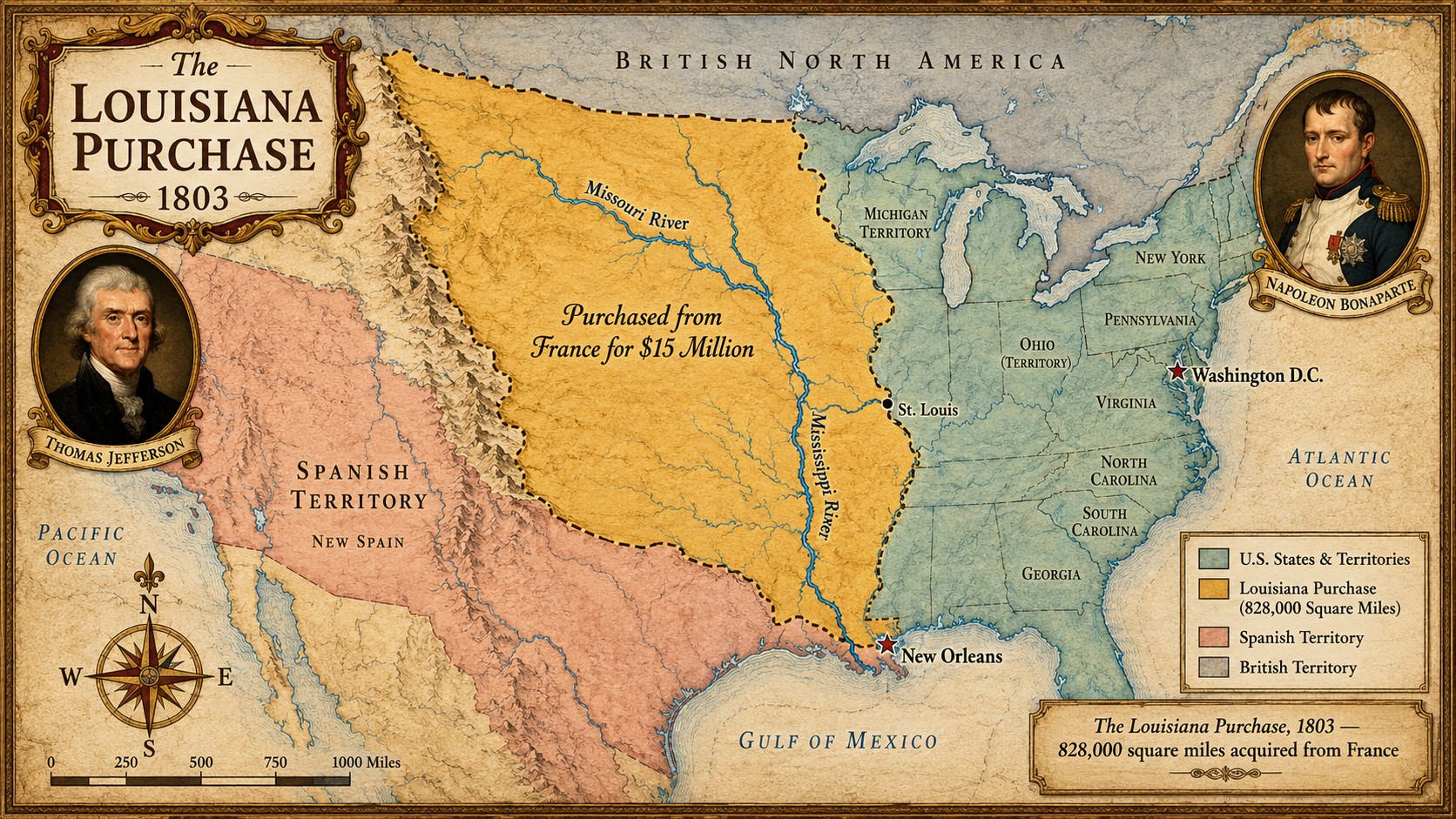
The Louisiana Purchase doubled the size of the United States, removed French power from North America, and opened the continent to westward expansion. Its second-order effects included intensifying conflicts with Indigenous nations across the interior and, eventually, the territorial questions about slavery that would drive the country toward Civil War.
The Lewis and Clark Expedition (1804–1806)
The Lewis and Clark Expedition was Jefferson's initiative to survey and map the Louisiana Territory and find a route to the Pacific Ocean. Meriwether Lewis and William Clark led a Corps of Discovery of approximately 30 people (including Sacagawea, a Shoshone woman who proved invaluable as interpreter and guide)
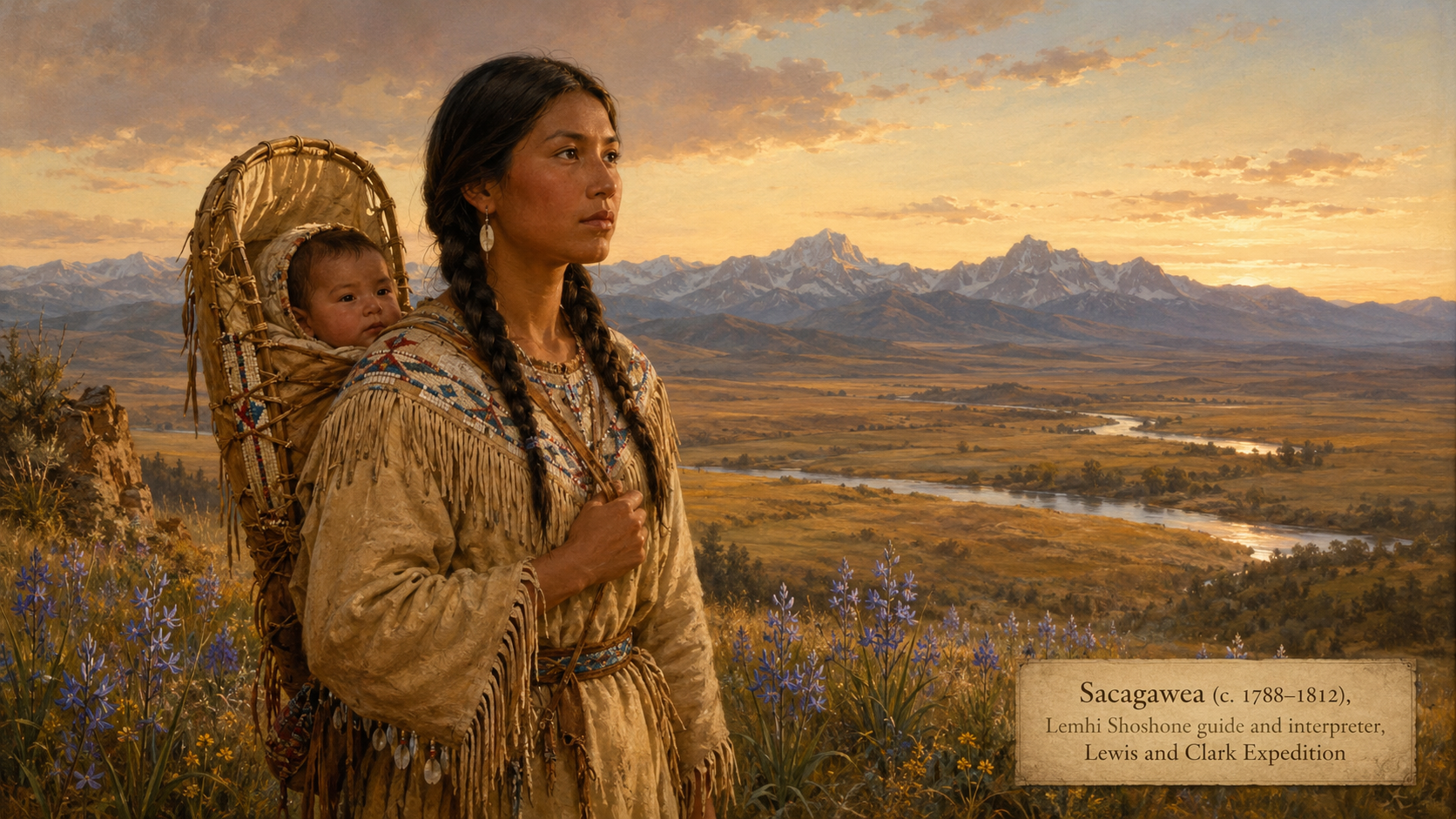 from St. Louis to the Pacific Coast and back.
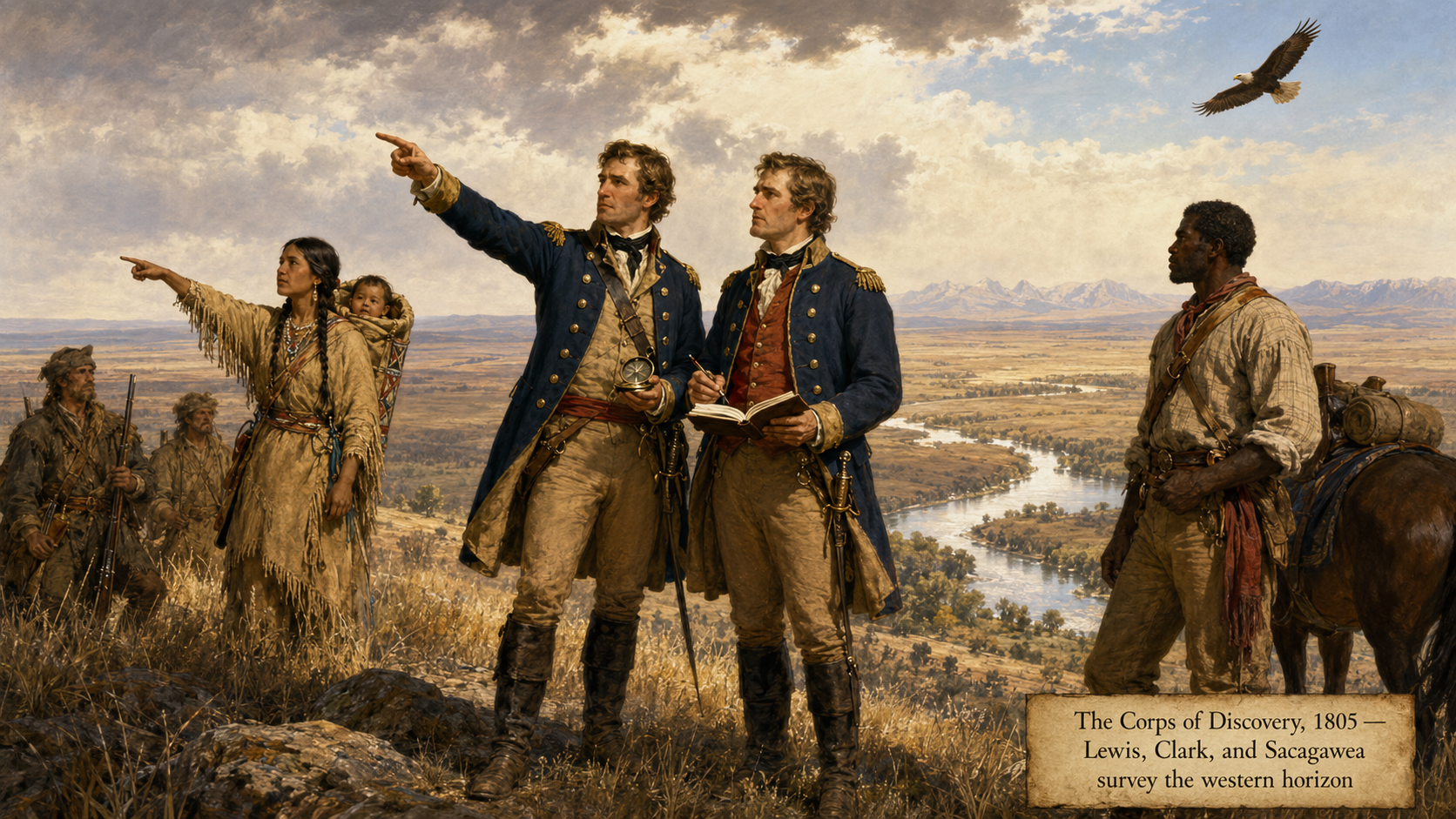
The expedition was simultaneously a scientific survey, a diplomatic mission to Indigenous nations, and a reconnaissance for future American settlement. It returned with maps, scientific specimens, and detailed accounts of the peoples and environments of the American interior — and with clear evidence that the continent was far larger and more inhabited than most Americans had imagined.
Marbury v. Madison and Judicial Review
The Supreme Court's role in American government was not fully established by the Constitution — it emerged through practice, beginning with one of the most consequential judicial decisions in American history.
Marbury v. Madison (1803) arose from a minor dispute: John Adams had appointed William Marbury as a justice of the peace on his last night in office; Jefferson's Secretary of State, James Madison, refused to deliver the commission. Marbury sued, asking the Supreme Court to order Madison to deliver it.
Chief Justice John Marshall's ruling was a masterpiece of judicial strategy. Marshall found that Marbury had a right to his commission — but that the Supreme Court had no jurisdiction to order Madison to deliver it, because the section of the Judiciary Act that Marbury relied upon was unconstitutional.
The ruling against Marbury established the most important power of the federal judiciary: judicial review — the authority of federal courts to declare acts of Congress or the executive branch unconstitutional. This power is not explicitly stated in the Constitution; Marshall derived it from the Constitution's nature as supreme law. By ruling against the petitioner, Marshall avoided a confrontation with Jefferson (who would have ignored a direct order) while establishing a principle of enormous long-term consequence.
Judicial precedent — the principle that courts should follow previous rulings (stare decisis) — is the mechanism that makes Marbury v. Madison relevant today. Every subsequent Supreme Court case is decided in the context of prior rulings, and Marbury established that the Court has the final word on constitutional interpretation.
The Supreme Court's role has been contested throughout American history. Critics from Jefferson onward have argued that an unelected court exercising judicial review is undemocratic. Defenders argue that constitutional rights need protection from majority tyranny that elected politicians, accountable to voters, cannot reliably provide.
Diagram: Judicial Review — How It Works
Judicial Review Explainer — Interactive Flow Diagram
Type: infographic
sim-id: judicial-review-explainer
Library: p5.js
Status: Specified
Purpose: Help students understand how judicial review works by tracing the path of a law from Congress through a constitutional challenge to a Supreme Court ruling, with a step-by-step interactive walkthrough using Marbury v. Madison as the anchor case.
Bloom Level: Understand (L2) Bloom Verb: Explain
Learning Objective: Students explain the process of judicial review using Marbury v. Madison and describe why the power is significant for the balance of power among branches.
Canvas layout: - Responsive width; height approximately 480px - Vertical flow diagram with 6 steps from top to bottom, each as a clickable node - Left side: the general process; right side: the Marbury v. Madison specific example at each step
Step nodes: 1. Congress passes a law / President takes executive action 2. Someone claims the law violates the Constitution 3. Case works through federal court system (District → Circuit → Supreme Court) 4. Supreme Court decides to hear the case (certiorari) 5. Court rules: constitutional (law stands) OR unconstitutional (law struck down) 6. Ruling becomes precedent for future cases
For Marbury v. Madison, the right side shows: 1. Judiciary Act of 1789 grants Supreme Court certain jurisdiction 2. Marbury argues the Act entitles him to his commission 3. Case goes directly to Supreme Court (original jurisdiction claimed) 4. Marshall's Court takes the case 5. Court rules: part of Judiciary Act is unconstitutional; Marbury loses on procedure; Court gains judicial review 6. Marbury v. Madison becomes foundational precedent cited in nearly every major constitutional case
Interactivity: - Clicking each step node shows the detail panel with: process explanation + Marbury-specific example - "Animate" button runs through all 6 steps in sequence with explanations appearing automatically - "Test your knowledge" mode hides the Marbury examples and asks students to fill them in from a word bank
Color scheme: - Step nodes: alternating indigo and gold - Constitutional outcome path: green - Unconstitutional outcome path: red - Marbury panel: white background with dark text
Responsive behavior: On narrow canvas, left and right columns stack; flow becomes single column.
Implementation: p5.js
Part 2: War, Nationalism, and Sectional Tensions
The War of 1812
The War of 1812 grew from long-simmering tensions with Britain: impressment of American sailors into the Royal Navy, British support for Indigenous resistance to American expansion, and a faction of "War Hawks" in Congress (including Henry Clay and John C. Calhoun) who saw war as an opportunity to conquer Canada and expand American territory.
The war's conduct was disastrous. The United States repeatedly failed to invade Canada; the British burned Washington, D.C. (including the White House); and American forces only occasionally distinguished themselves militarily. 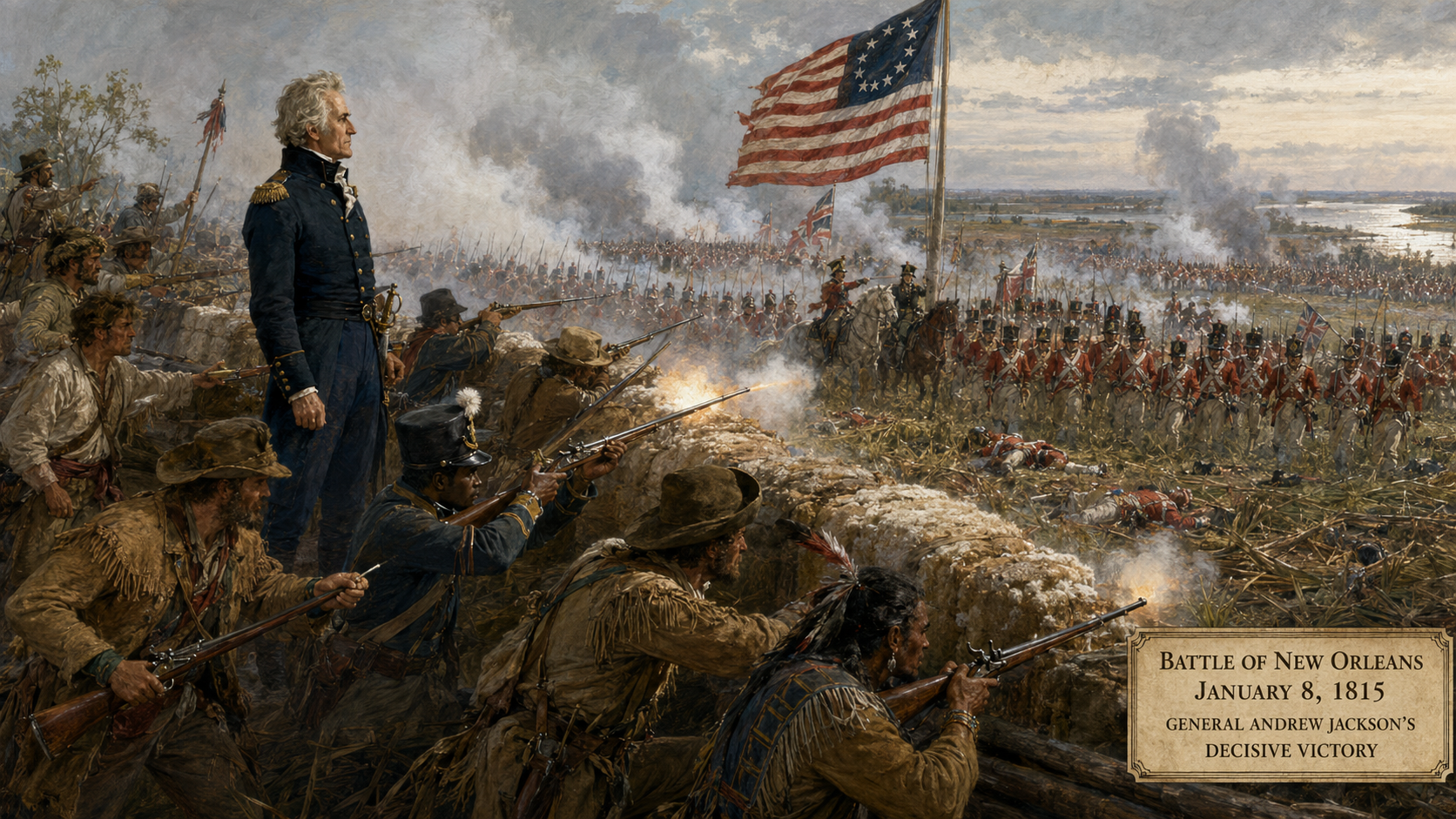
Andrew Jackson's victory at the Battle of New Orleans (January 1815) — fought two weeks after the war-ending Treaty of Ghent had already been signed in Europe — became the war's defining American moment simply because it was a decisive American win.
The war's outcome was essentially a draw: the Treaty of Ghent restored prewar boundaries and resolved nothing explicitly. Yet the war had important consequences: British support for Indigenous resistance in the Northwest Territory effectively ended, opening the region to American settlement; the war produced a surge of American nationalism; and Andrew Jackson became a national hero.
The Era of Good Feelings and the Monroe Doctrine
The years following the War of 1812 are sometimes called the Era of Good Feelings — a period under President James Monroe (1817–1825) when the Federalist Party had collapsed and Democratic-Republicans dominated politics without effective opposition. The name is somewhat misleading: beneath the surface unity, sectional tensions over slavery were building that would rupture the apparent consensus within a decade.
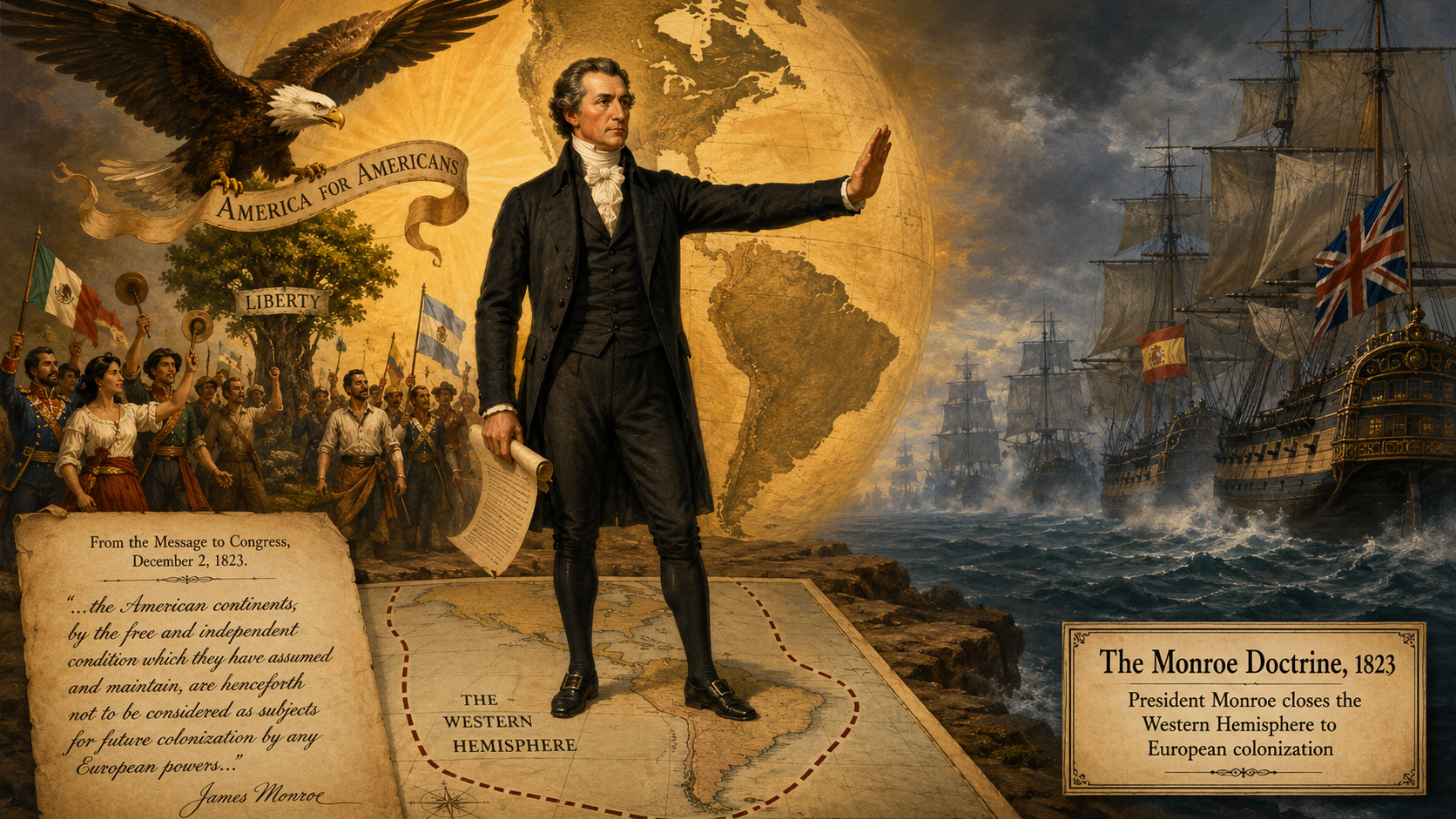
The Monroe Doctrine (1823) was a foreign policy statement asserting that the Western Hemisphere was closed to further European colonization and that any European attempt to extend its political system into the Americas would be considered a threat to U.S. security. It was directed primarily at Spain's attempts to reconquer its former Latin American colonies, which had recently won independence.
The Monroe Doctrine was largely symbolic at the time — the U.S. military could not have enforced it against a major European power. What actually protected the new Latin American nations from reconquest was British naval power (Britain had strong commercial interests in independent Latin America). The doctrine became more consequential in later decades as the United States grew powerful enough to enforce it.
The Missouri Compromise (1820)
The Missouri Compromise was the first major national political crisis driven by the expansion of slavery. When Missouri applied for statehood in 1819 as a slave state, it threatened to upset the balance of slave and free states in the Senate. After bitter debate, Congress reached a compromise: Missouri would enter as a slave state; Maine (previously part of Massachusetts) would enter as a free state; and slavery would be prohibited in all future territories north of latitude 36°30' (Missouri's southern border).
Thomas Jefferson, then 77 years old, wrote that the Missouri Compromise "like a fire bell in the night, awakened and filled me with terror." He saw it as the first fracture of the national political structure along the fault line of slavery — a fracture that, he feared, would eventually split the country. He was right, but the fracture took forty more years to become irreparable.
Part 3: Jacksonian Democracy and Its Shadow
Andrew Jackson and the "Common Man"
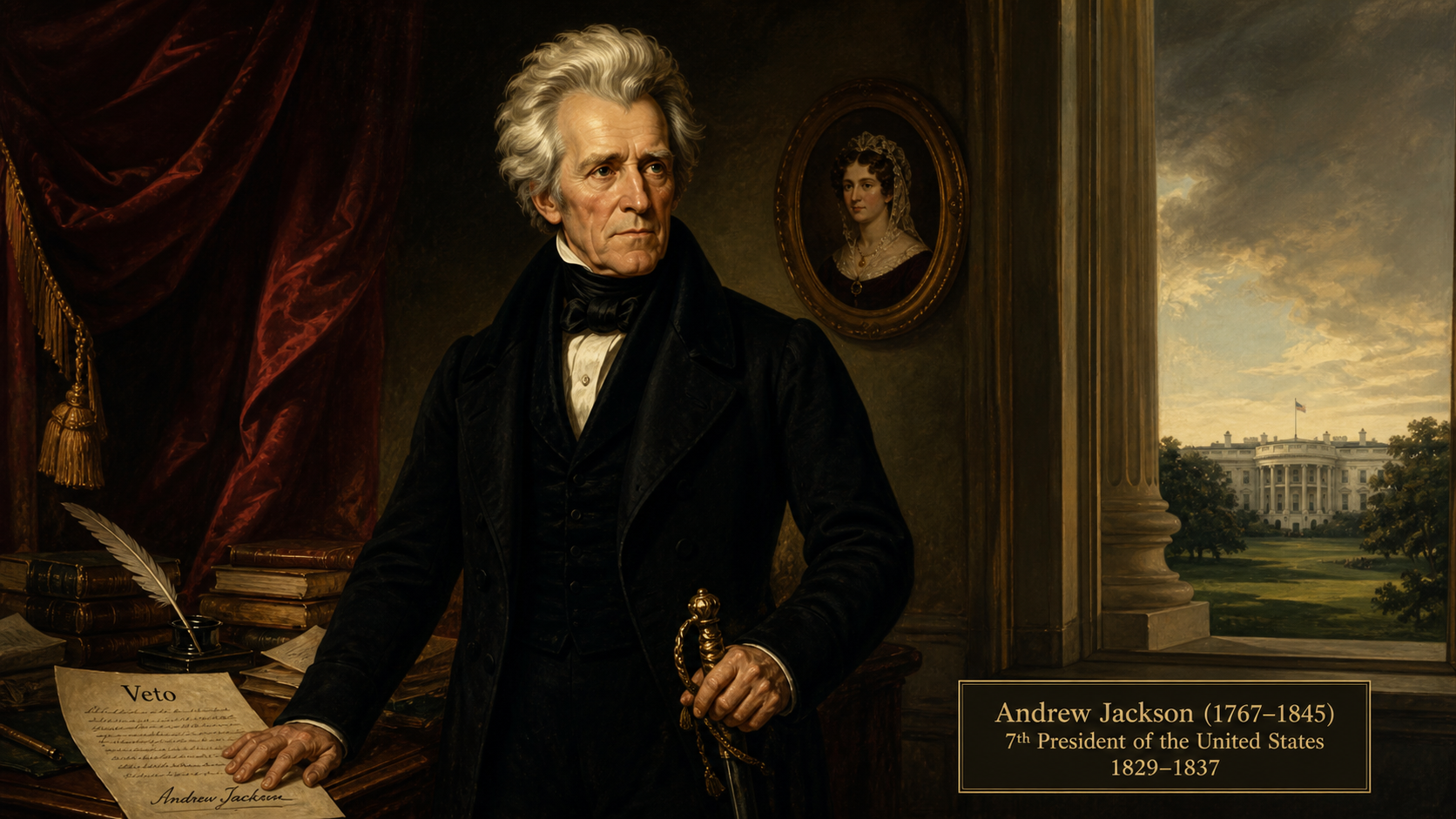
Andrew Jackson's election in 1828 represented a genuine democratizing shift. The expansion of voting rights to virtually all white men (property requirements had been gradually eliminated) brought millions of new voters into the electorate — voters who identified with Jackson as one of their own: a self-made frontiersman from Tennessee who had beaten the British at New Orleans and embodied the values of the American West over the established East.
Jacksonian Democracy celebrated popular sovereignty, majority rule, and the rights of the "common man" — by which it meant white men, explicitly excluding Black Americans (free or enslaved), Indigenous peoples, and women. Jackson's rhetoric of democracy sat alongside his practice of Indian removal and his ownership of enslaved people with a contradiction that his supporters largely chose not to notice. This is in-group favoritism operating at a civilizational scale.
The Spoils System
The spoils system — Jackson's practice of replacing federal government employees with political supporters — was justified by the democratic argument that government jobs should not be the permanent property of an educated elite. Jackson rotated approximately 10 percent of federal officeholders in his first year. "To the victors belong the spoils," declared Senator William Marcy.
The spoils system produced predictable second-order effects: government offices staffed by political loyalists rather than competent administrators, corruption, and inefficiency. The Pendleton Civil Service Reform Act (1883) eventually replaced most patronage positions with merit-based civil service. But the spoils system's legacy — the politicization of executive branch appointments — continues to shape American governance.
The Nullification Crisis (1832–1833)
The Nullification Crisis brought the federalism-versus-states'-rights debate from theory to the edge of armed conflict. South Carolina's legislature declared the Tariff of 1832 null and void within its borders — invoking the nullification doctrine first articulated by Jefferson and Madison in the Virginia and Kentucky Resolutions — and threatened secession if the federal government attempted to collect the tariff by force.
Jackson's response was decisive. He declared nullification "incompatible with the existence of the Union" and requested from Congress the Force Bill authorizing military enforcement of federal law in South Carolina. He simultaneously threatened to hang nullification's leaders "as high as Haman." A compromise tariff eventually defused the immediate crisis.
The Nullification Crisis established two important precedents: that unilateral state nullification of federal law was unconstitutional, and that the President had authority to use force to compel state compliance with federal law. Both precedents became directly relevant in the Civil War.
The Indian Removal Act and the Trail of Tears
The most lasting and devastating policy of the Jackson era was the forced displacement of Indigenous nations from the eastern United States. The Indian Removal Act (1830) authorized the President to negotiate treaties exchanging Indigenous lands east of the Mississippi for lands to the west. "Negotiation" was a euphemism: removal was carried out by force, fraud, and the threat of starvation.
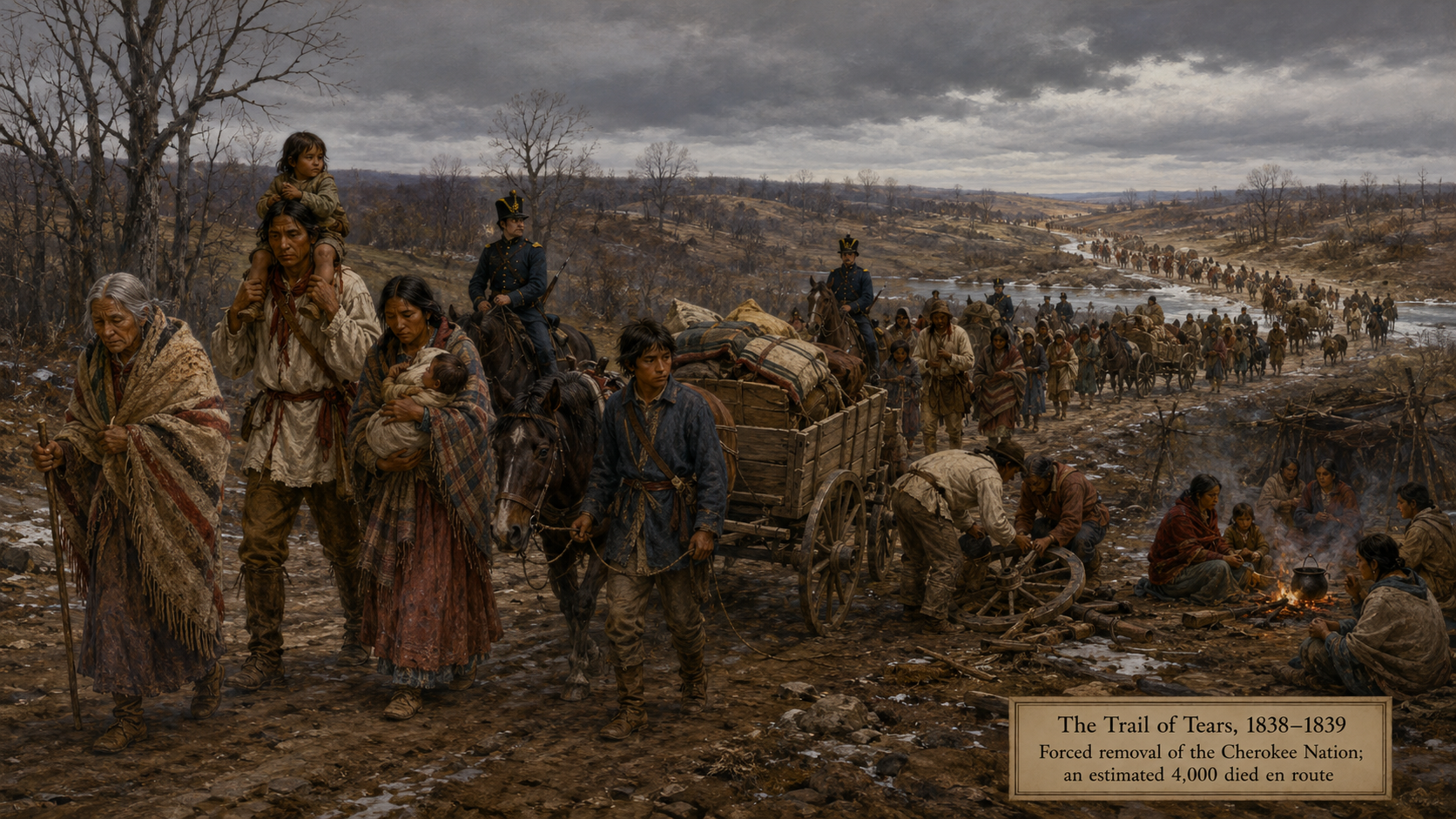
The Trail of Tears (1838–1839) was the forced march of approximately 15,000 Cherokee people from their homelands in Georgia, Tennessee, Alabama, and North Carolina to Indian Territory (present-day Oklahoma). The Cherokee had pursued every legal avenue available to them: they had adopted a written constitution, established schools, and won a Supreme Court ruling (Worcester v. Georgia, 1832) in which Chief Justice Marshall declared that Georgia's seizure of Cherokee lands violated federal treaties. Jackson effectively ignored the ruling. Approximately 4,000 Cherokee died on the forced march — of cold, disease, and starvation.
The Trail of Tears is a foundational case study in several of the analytical tools from Chapter 1. Applied causation reveals how land hunger, racial ideology, and political calculation combined to produce the removal policy. Applied systems thinking shows how the removal produced second-order effects — pushing Indigenous nations into conflict with each other in Indian Territory, destroying economies and cultures, and setting precedents for further dispossession. Applied cognitive bias analysis reveals how in-group favoritism allowed Jackson's contemporaries (including many who called themselves Christians and democrats) to justify a policy they would have recognized as atrocity if applied to white Americans.
Two simultaneous stories
 The Jackson era is typically narrated as either a triumph of democracy (expanding the vote, breaking elite power) or a catastrophe of dispossession (Indian removal, the hardening of slavery). Both narratives are accurate — they describe the same era from different vantage points. The skill of continuity and change helps here: the expansion of white male democracy and the contraction of Indigenous and Black rights were not separate stories. They were part of the same political system, operating simultaneously.
The Second Bank of the United States
Jackson's war against the Second Bank of the United States completed his political program. The Bank — modeled on Hamilton's original — managed the federal government's finances and exercised enormous influence over credit and currency. Jackson viewed it as a corrupt monopoly serving the Eastern financial elite at the expense of ordinary Americans.
When Congress rechartered the Bank in 1832, Jackson vetoed it. His veto message, remarkably, argued that the President — not the Supreme Court — could decide whether a federal law was constitutional, challenging Marbury v. Madison's principle of judicial supremacy. Jackson won reelection decisively, viewing his victory as a popular mandate against the Bank. He then removed federal deposits from the Bank, effectively destroying it. The Bank's charter expired in 1836 without renewal.
Jackson's bank war is a classic example of populism as political strategy: framing a complex institutional question as a battle between "the people" and a corrupt elite. The argument resonated politically even when it was economically questionable — the Bank's destruction contributed to the Panic of 1837.
Summary
The Jeffersonian and Jacksonian eras produced a series of constitutional and political landmarks: judicial review established by Marbury v. Madison, the Louisiana Purchase doubling the nation's territory, the Missouri Compromise drawing the first national line on slavery's expansion, and the Nullification Crisis establishing the limits of state defiance of federal authority.
These decades also produced the Indian Removal Act and the Trail of Tears — the systematic destruction of Indigenous nations in the eastern United States by a government that justified its actions in the language of democracy and progress. The tension between democratic expansion and racial dispossession is not incidental to this period — it is the defining contradiction of Jacksonian America, and its effects persisted for generations.
The federalism vs. states' rights debate that runs through this entire chapter — from the Virginia and Kentucky Resolutions to the Nullification Crisis — will reach its climax in the Civil War, which is covered in Chapter 8.
Knowledge Check 1 — Click to reveal
Question: John Marshall ruled against Marbury in Marbury v. Madison, yet the case is considered one of the Supreme Court's greatest victories. Explain this apparent paradox using what you know about checks and balances and judicial strategy.
Answer: By ruling against Marbury on a technical ground (lack of jurisdiction), Marshall avoided issuing an order that Jefferson would likely have ignored — which would have exposed the Court's weakness and possibly destroyed its authority. By using this case to establish the Court's power of judicial review, Marshall traded a small procedural loss for an enormous structural gain: the Supreme Court's permanent role as the final arbiter of constitutional questions. This is a case where short-term and long-term effects point in opposite directions — a key application of historical causation.
Knowledge Check 2 — Click to reveal
Question: The Cherokee Nation won a Supreme Court case (Worcester v. Georgia) but still suffered the Trail of Tears. What does this tell you about the relationship between legal rights and actual power?
Answer: It tells us that legal rights are only as effective as the political will to enforce them. Chief Justice Marshall's ruling in Worcester v. Georgia established that the federal government had exclusive authority over relations with Indigenous nations and that Georgia's laws encroaching on Cherokee territory were void. But Jackson refused to enforce the ruling, Congress supported removal, and the U.S. Army carried it out. This illustrates a recurring pattern in American history: formal legal protection without political enforcement provides little real protection. The same pattern will appear in the failure to enforce Reconstruction-era civil rights amendments after 1877.
Chapter 6 Complete!
 You've just navigated nearly three decades of early republic history — from Jefferson's Louisiana Purchase to Jackson's Indian Removal — and seen how democratic ideals and brutal dispossession coexisted in the same political system. The constitutional questions you've encountered — judicial review, nullification, executive power — will echo through every chapter that follows. In Chapter 7, westward expansion accelerates and the reform movements that will challenge slavery begin to take shape.